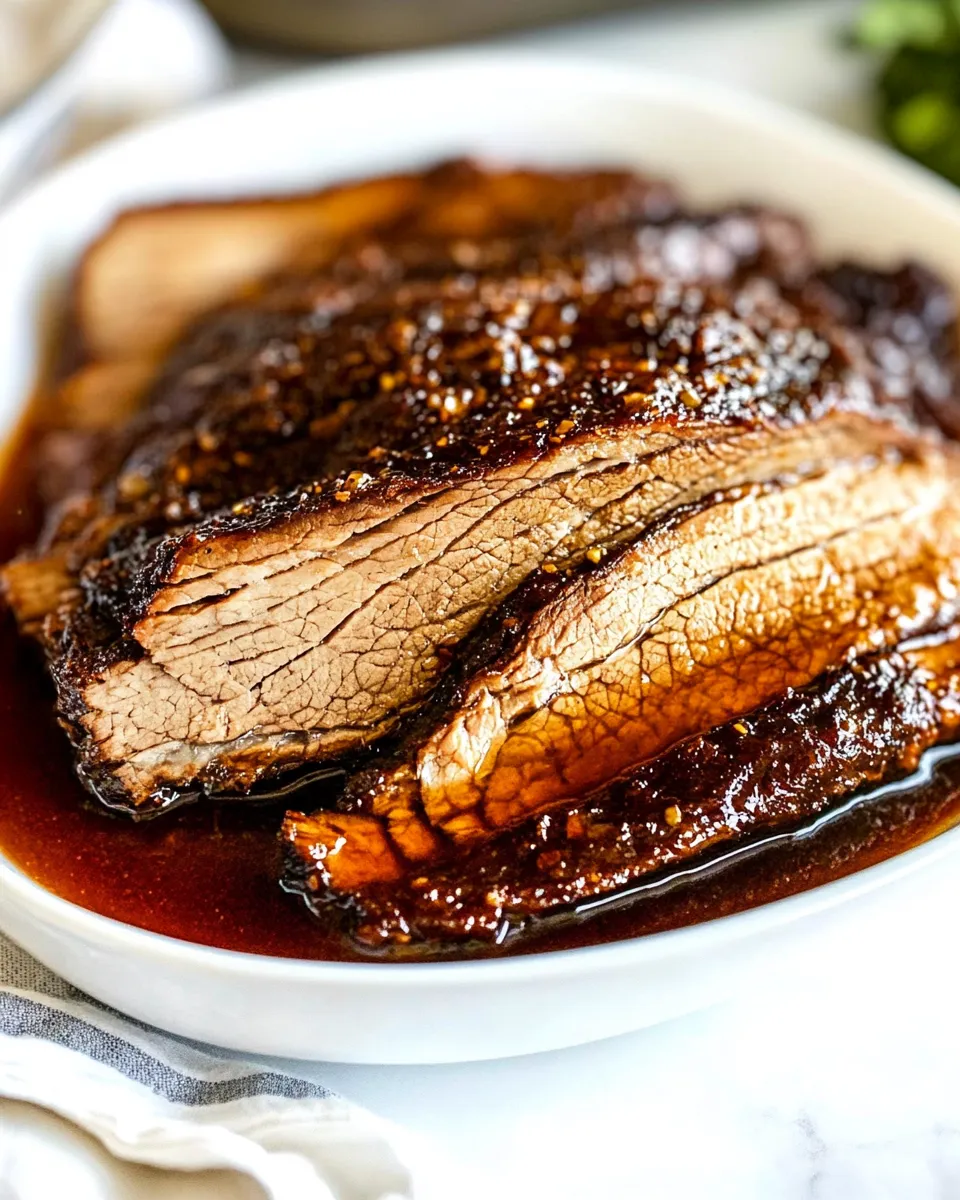
Slow-Cooker Brisket
Slow-cooker brisket is the kind of dish that rewards patience with deep, soulful flavor. You set it up in the morning, go about your day, and come home to a roast that’s meltingly tender and seasoned through. It’s straightforward cooking, but it benefits from a few deliberate moves up front so the final result is impressive without stress.
I’ve written this for people who want a reliable, no-surprises method: clear steps, reliable timing, and tips that actually change the outcome. You’ll find the exact ingredient list and the step-by-step slow-cooker method below, followed by swap ideas, troubleshooting, and make-ahead strategies to fit this into weeknight life or a relaxed weekend dinner.
Ingredient Breakdown

Below is the ingredient list as written for the recipe, with a short note on each item’s role. Read through the notes once so you understand why each component matters; they’re simple, but they build the sauce and the crust that make the brisket worth the wait.
Ingredients
- 3 lb brisket, flat cut, fat cap trimmed to ⅛ to ¼ inch — The main protein; choose a flat cut for even slicing and trim the fat cap to the specified thickness so the meat braises without an overly greasy finish.
- 2 tablespoon black pepper, cracked — Provides surface spice and a coarse texture that helps form a simple crust and counterbalances the sauce’s acidity.
- 1 tablespoon Kosher salt — Essential for seasoning; draws moisture and helps the meat develop a deeper flavor during the long cook.
- 4 cloves garlic, minced — Aromatic backbone; mincing releases flavor that infuses the cooking liquid and the meat.
- ¼ cup soy sauce — Adds savory umami and saltiness to the poaching liquid, contributing depth to the finished sauce.
- 3 tablespoon balsamic vinegar — Brings acidity and a subtle sweetness that brightens the long-cooked beef.
- 2 tablespoon Worcestershire sauce — Concentrated savory notes and a bit of tang; helps mimic a rich braising sauce.
- 2 teaspoon dry mustard — A touch of heat and sharpness to lift the sauce’s flavor profile as it reduces.
Slow-Cooker Brisket — Do This Next
- Rub 2 tablespoons cracked black pepper, 1 tablespoon Kosher salt, and 4 cloves minced garlic evenly over all surfaces of the 3 lb brisket. Use the tip of a sharp knife to cut shallow 1/4-inch slits across the top of the roast, cutting only through the fat cap (trimmed to 1/8–1/4 inch), not into the meat.
- Place the seasoned brisket into the slow cooker.
- In a measuring cup or medium bowl, whisk together 1/4 cup soy sauce, 3 tablespoons balsamic vinegar, 2 tablespoons Worcestershire sauce, and 2 teaspoons dry mustard until the mustard is dissolved.
- Pour the sauce mixture evenly over the brisket in the slow cooker.
- Cover and cook on LOW for 8 to 10 hours, until the brisket is fork-tender.
- Using tongs or a spatula, carefully transfer the cooked brisket to a cutting board. Loosely tent with foil and let rest for about 10 minutes.
- Strain the cooking liquid through a fine-mesh sieve into a fat separator or a medium bowl. If using a fat separator, pour the strained liquid into the separator and discard the fat; then pour the defatted liquid into a medium saucepan. If using a bowl, let the liquid sit briefly so the fat rises, skim off and discard the fat with a spoon, and transfer the defatted liquid to a medium saucepan.
- Bring the sauce in the saucepan to a boil over high heat, then reduce heat to medium and simmer until the sauce has thickened slightly.
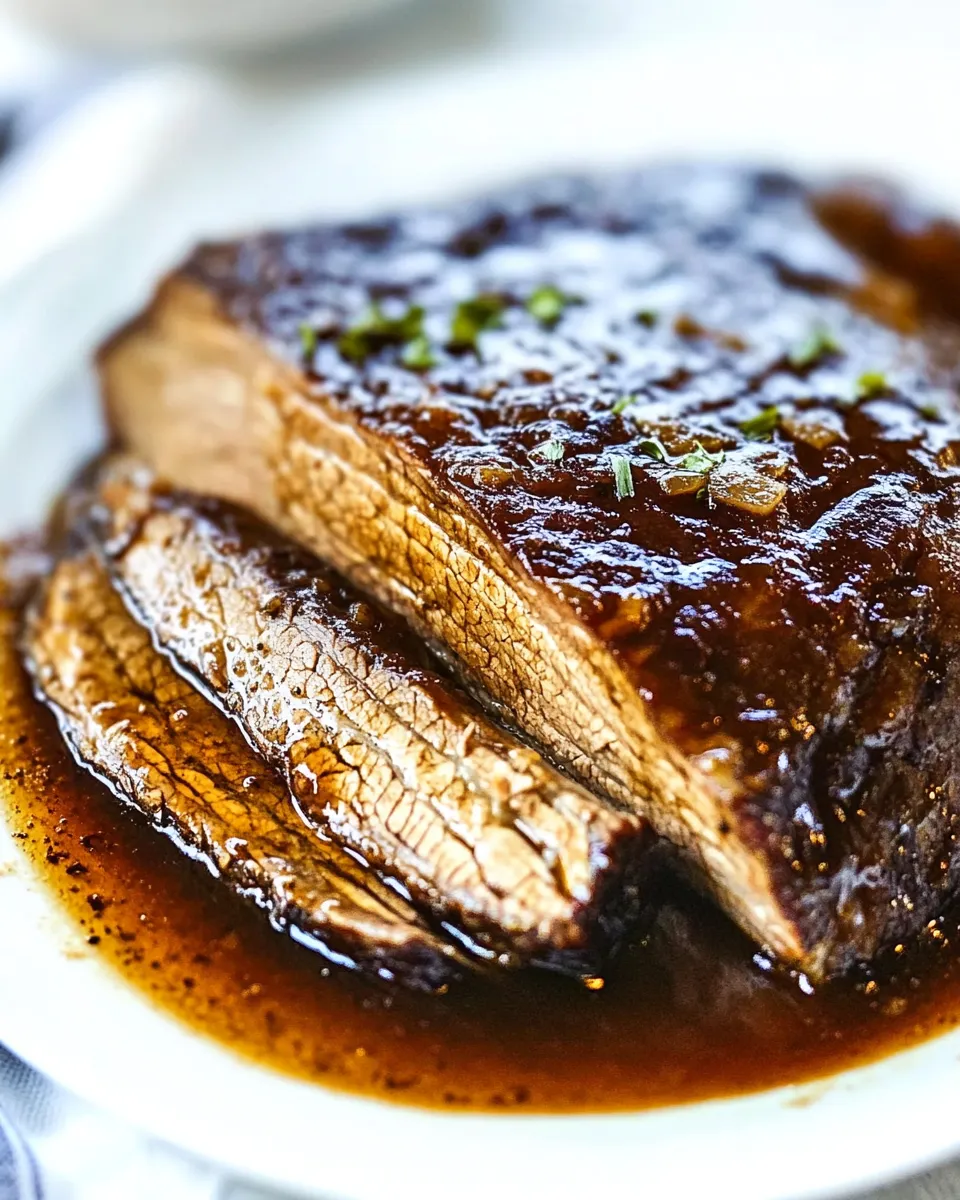
- Slice the rested brisket across the grain into 1/2-inch slices and arrange on a platter. Drizzle some of the reduced sauce over the slices and serve immediately, passing the remaining sauce at the table.
Why You’ll Love This Recipe
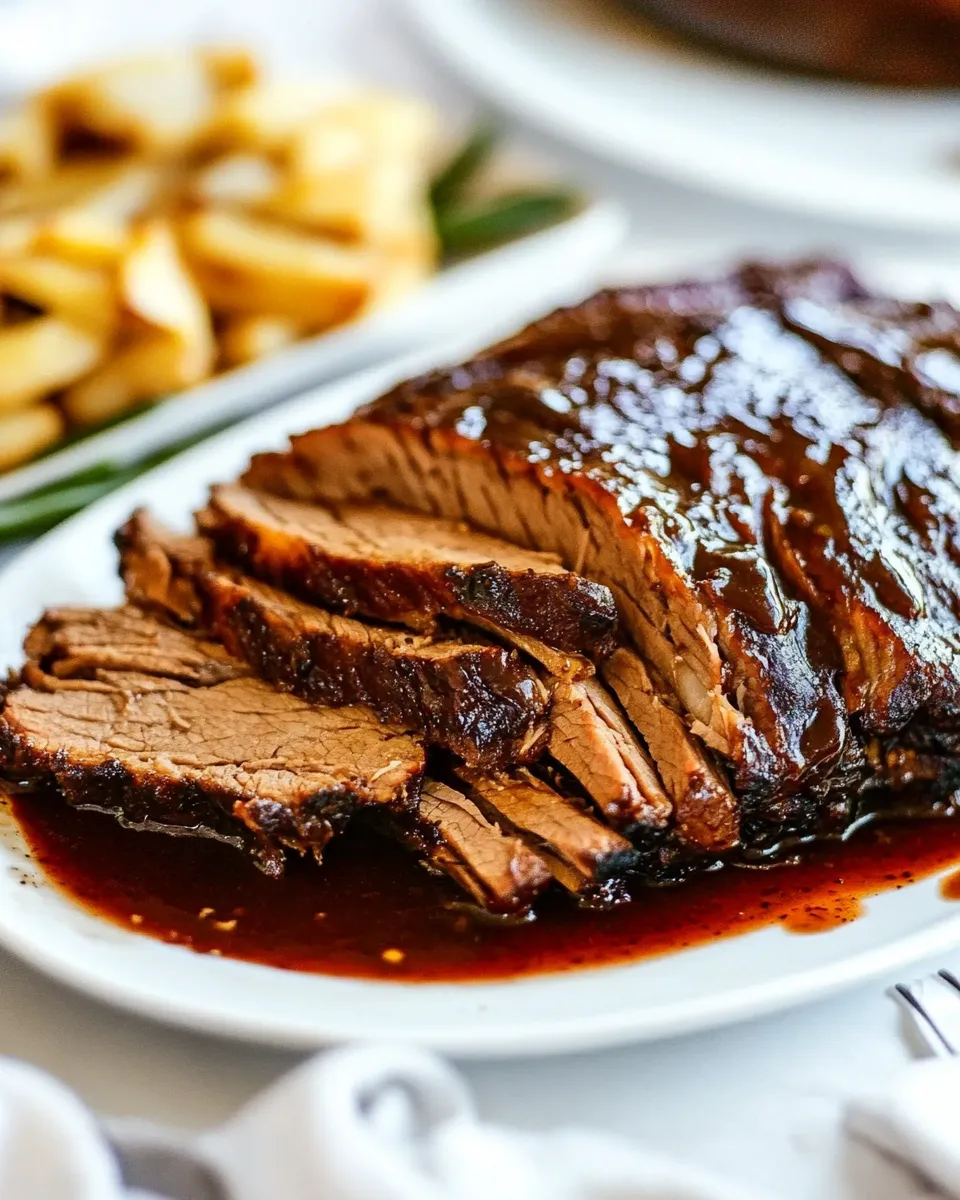
This method gives you predictable, fork-tender brisket with a concentrated, silky sauce. The slow cooker keeps the meat submerged in its own infused liquid so it becomes tender without drying out. The combination of soy, balsamic, and Worcestershire creates umami and tang that play nicely against the beef’s richness.
The recipe is forgiving: timing within the 8 to 10–hour window is flexible, and the resting step makes slicing tidy and the texture uniform. You get the classic braise flavor without tending a pot for hours — set it and forget it until dinner.
What to Use Instead
Substitutions if you don’t have something on hand:
- If you don’t have balsamic vinegar, use a milder vinegar plus a small pinch of sugar (apple cider or red wine vinegar work) — but use less, since balsamic contributes sweetness and body.
- If Worcestershire is unavailable, a splash of extra soy sauce with a tiny pinch of sugar and a dash of hot sauce can approximate the tangy-savoury note.
- For dry mustard, powdered yellow mustard is fine. If you only have prepared mustard, reduce or omit any added liquid in small-batch adjustments.
- If you prefer a different cut, you can use a 3 lb point cut brisket; expect slightly more render and a fattier result that will benefit from skimming fat after cooking.
Appliances & Accessories
What I use and what helps:
- Slow cooker (4–6 quart) — Enough room for a 3 lb brisket without crowding.
- Sharp chef’s knife and cutting board — For trimming, scoring, and slicing across the grain.
- Fine-mesh sieve and fat separator or a heatproof bowl — To strain and degrease the sauce as the recipe directs.
- Medium saucepan — To reduce and finish the sauce after straining.
- Tongs or a spatula — For safe transfer of the hot brisket.
- Aluminum foil — To tent the brisket while it rests.
Learn from These Mistakes
- Skipping the fat trim or leaving a very thick fat cap — A fat cap thicker than 1/4 inch will leave an excess greasy layer that masks flavor. Trim to the specified 1/8–1/4 inch.
- Cutting into the meat when scoring — The slits are only for the fat cap. Slice too deep and you’ll lose juices during the cook.
- Not dissolving the dry mustard — It can clump. Whisk until smooth so it distributes in the sauce.
- Forgetting to skim the fat — Serving the unde-fatted cooking liquid makes the sauce slick and heavy. Always remove the fat as instructed.
- Slicing without resting — Cutting immediately causes juices to run out. Tent and rest for about 10 minutes to keep slices moist.
Year-Round Variations
Small adjustments keep this recipe feeling fresh through different seasons:
- Winter: Add a teaspoon of smoked paprika to the rub or a bay leaf to the sauce while it cooks for warmth and smoke character.
- Spring: Serve thin slices on top of a simple salad of arugula and shaved fennel, using the reduced sauce as a dressing.
- Summer: Slice and serve cold or at room temperature in sandwiches with crisp slaw and pickles — the reduced sauce makes an excellent spread.
- Fall: Pair with roasted root vegetables or mashed sweet potatoes; the balsamic in the sauce pairs well with autumnal produce.
Pro Perspective
A few professional notes to improve consistency:
- Salt early but not excessively. The specified 1 tablespoon of Kosher salt seasons the 3 lb brisket sufficiently. If you use a coarser or finer salt than standard Kosher, adjust cautiously.
- Use the scoring to manage fat, not to flavor the meat directly. The garlic and pepper rubbed on top will flavor the fat cap and the outermost meat; the long cooking time will carry those flavors inward.
- Always strain and then reduce the cooking liquid on the stovetop. That finishing step concentrates flavors and turns the braising liquid into a sauce that can be spooned over slices without being runny.
Make Ahead Like a Pro

This brisket is ideal for making ahead. Cook it a day or two before serving, and you’ll save time on the day of the meal while improving flavor integration.
- Cook through step 5 (the full slow-cook) and complete steps 6 and 7 to remove the meat and defat the liquid. Let both the meat and sauce cool to room temperature.
- Wrap the sliced brisket tightly in plastic wrap and store in an airtight container in the refrigerator for up to 3 days. Refrigerate the defatted sauce separately in a sealed container.
- To reheat, warm the sauce gently in a saucepan, add the brisket slices to the sauce just to heat through (or warm in a low oven covered with foil). Reheat slowly to avoid drying the meat. If you want an impressive finish, reduce some of the sauce further, then spoon over the warmed slices before serving.
Slow-Cooker Brisket Q&A
Q: Can I cook this on HIGH in the slow cooker to speed it up? A: You could, but brisket benefits from low-and-slow. Cooking on HIGH reduces the connective tissue breakdown and can result in a less tender texture. If you must, check at 5–6 hours, but low is best.
Q: How do I know when it’s done? A: The brisket is done when a fork slides into the meat with little resistance and it’s easy to pull apart slightly. The recipe’s 8 to 10 hours on LOW reflects typical slow-cooker performance; cook until fork-tender.
Q: Can I double the sauce amounts for more gravy? A: You can double non-meat liquids in proportion if your slow cooker can handle the volume. Be cautious with soy sauce and salt; you might want to increase sauce ingredients but not double the salt immediately — taste and adjust when reducing the sauce.
Q: Do I have to slice across the grain? A: Yes. Slicing across the grain shortens muscle fibers and makes each bite more tender. Aim for 1/2-inch slices as directed.
Make It Tonight
If you want this on the table tonight, get the brisket into the slow cooker in the morning or early afternoon. The steps are straightforward: rub, score the fat, nestle the roast in the slow cooker, whisk the sauce, pour, and let the cooker do its job. Finish the sauce on the stove and rest the meat before slicing. Serve with mashed potatoes, buttered noodles, or a crisp green salad and you have a meal that looks and tastes like you worked for hours — but didn’t.
Final practical note: keep the reduced sauce on the side so everyone can choose how saucy they like their slice. The brisket holds well and slices attractively, and those simple finishing touches make it feel deliberate and cared-for without extra fuss.
Slow-Cooker Brisket
Ingredients
Ingredients
- 3 lbbrisketflat cut fat cap trimmed to 1/8 to 1/4 inch
- 2 tablespoonblack peppercracked
- 1 tablespoonKosher salt
- 4 clovesgarlicminced
- 1/4 cupsoy sauce
- 3 tablespoonbalsamic vinegar
- 2 tablespoonWorcestershire sauce
- 2 teaspoondry mustard
Instructions
Instructions
- Rub 2 tablespoons cracked black pepper, 1 tablespoon Kosher salt, and 4 cloves minced garlic evenly over all surfaces of the 3 lb brisket. Use the tip of a sharp knife to cut shallow 1/4-inch slits across the top of the roast, cutting only through the fat cap (trimmed to 1/8–1/4 inch), not into the meat.
- Place the seasoned brisket into the slow cooker.
- In a measuring cup or medium bowl, whisk together 1/4 cup soy sauce, 3 tablespoons balsamic vinegar, 2 tablespoons Worcestershire sauce, and 2 teaspoons dry mustard until the mustard is dissolved.
- Pour the sauce mixture evenly over the brisket in the slow cooker.
- Cover and cook on LOW for 8 to 10 hours, until the brisket is fork-tender.
- Using tongs or a spatula, carefully transfer the cooked brisket to a cutting board. Loosely tent with foil and let rest for about 10 minutes.
- Strain the cooking liquid through a fine-mesh sieve into a fat separator or a medium bowl. If using a fat separator, pour the strained liquid into the separator and discard the fat; then pour the defatted liquid into a medium saucepan. If using a bowl, let the liquid sit briefly so the fat rises, skim off and discard the fat with a spoon, and transfer the defatted liquid to a medium saucepan.
- Bring the sauce in the saucepan to a boil over high heat, then reduce heat to medium and simmer until the sauce has thickened slightly.
- Slice the rested brisket across the grain into 1/2-inch slices and arrange on a platter. Drizzle some of the reduced sauce over the slices and serve immediately, passing the remaining sauce at the table.
Equipment
- ▢6 to 8 QT Slow Cooker
- ▢Fat separatoror a spoon to skim grease
Notes
NOTE:
Watch the video near the top of the recipe for visual guidance.
We find the best-tasting brisket has about a ⅛ or ¼-inch layer of fat on the top of the brisket, known as the fat cap. We recommend cutting a few ‘windows’ of the fat cap completely away, so the meat is exposed. This allows the seasoning to penetrate through the meat. The fat will cook down as it slowly cooks, flavoring the roast and keeping it extremely moist.
We recommend getting a ‘flat’ cut of brisket from your butcher. If you only have access to a brisket with no fat left, don’t worry, it will still be delicious, just not quite as tender.
The brisket can be prepped up to 48 hours in advance of cooking. Simply cover and place in the fridge until you are ready to start slow cooking.
You can cook the roast on HIGH for 4 to 6 hours. You won’t get as fall-apart tender of a roast that you would from cooking on LOW, but it will still be delicious.
This can also be slow-cooked in the oven. We recommend a Dutch oven with a lid. Cook at 325°F for 3 hours. Check periodically to make sure the sauce is not burning. If it is, turn the temperature down to 275°F. This usually happens when an oven cooks at a higher temperature than what you set it at.