
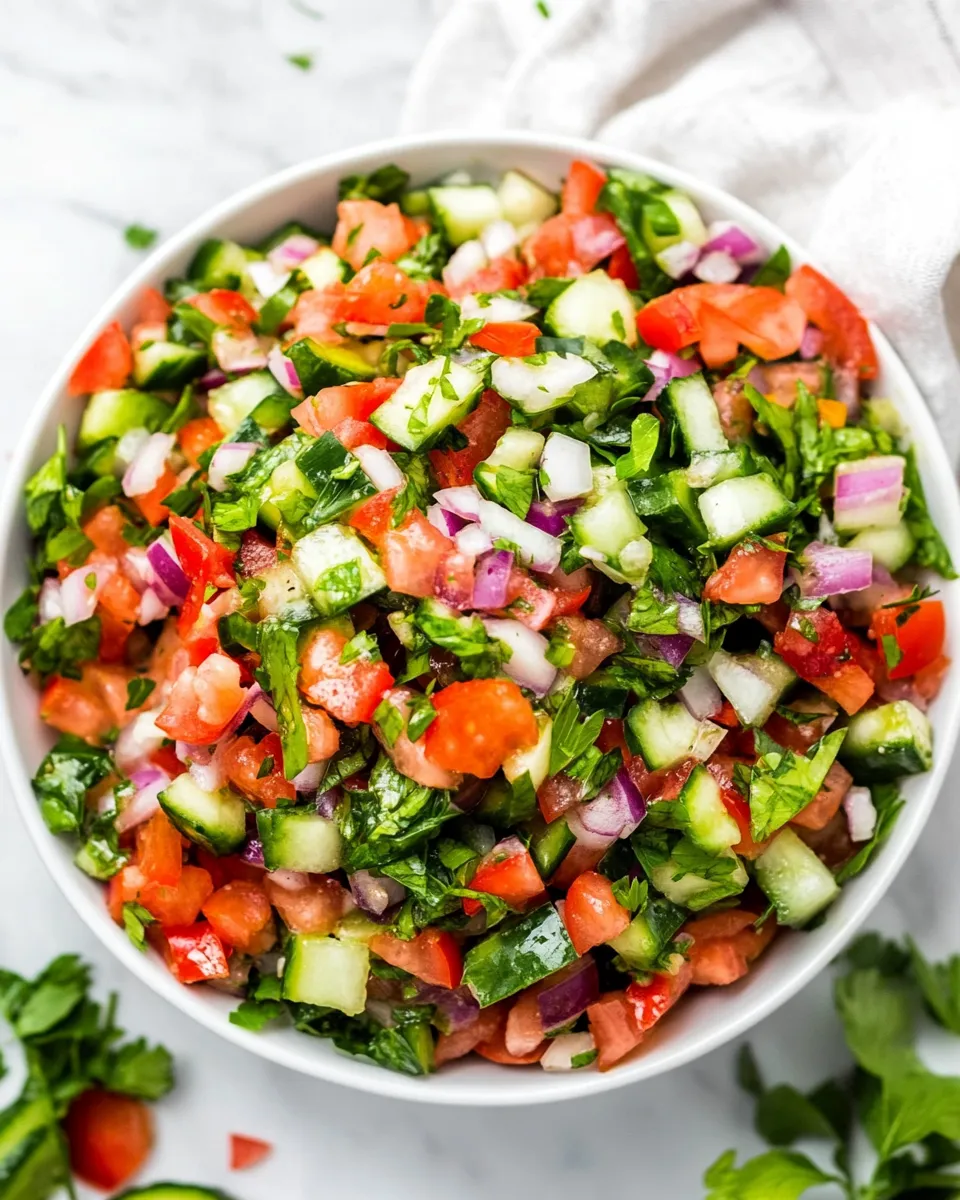
Shirazi Salad
I fell in love with Shirazi Salad the first time I tasted it: clean, bright, and impossibly simple. It’s one of those salads that makes fresh vegetables sing without a lot of fuss. I make it year-round, scaling up or down depending on what’s in the crisper and who’s coming to the table.
This post is practical and straightforward. I’ll walk you through the exact ingredients and the stepwise method I use, show what to buy, troubleshoot common hiccups, and offer small, sensible tweaks so the salad works for your kitchen and palate.
No gimmicks. Just a reliable approach to a classic Persian salad that’s crunchy, lemony, and perfect as a side or on its own for a light lunch.
Ingredients

- 1 English cucumber, chopped, or 4 Persian cucumbers — provides crunch and bulk; Persian cucumbers are crisper and less watery.
- 4 tomatoes, chopped — use ripe but firm tomatoes so they hold their shape and don’t turn the salad to juice.
- 1 red onion, chopped — gives bite and contrast; peel it first if you prefer a milder flavor.
- ¼ cup parsley, chopped — adds herbaceous brightness; flat-leaf works best.
- 2 tablespoons extra virgin olive oil — smooths and binds the dressing; use a good-quality oil for flavor.
- 3 tablespoons freshly squeezed lemon juice — the acidic backbone; fresh juice tastes noticeably better than bottled.
- 1 teaspoon dried mint — classic aroma for Shirazi Salad; dried is traditional and convenient.
- ½ teaspoon salt — seasons and balances; adjust to taste depending on your tomatoes.
- ¼ teaspoon ground black pepper — a finishing heat to lift the other flavors.
What to Buy
Buy vegetables that are firm and fragrant. For cucumbers: look for taut, glossy skin and avoid ones with soft spots. If your grocery carries Persian cucumbers, they’re a great choice because they’re thin-skinned and less watery than English cucumbers. If you buy an English cucumber, you can peel it if you want less moisture and a softer texture.
Choose tomatoes that are ripe but still hold their shape; beefsteak or vine-ripened slicing tomatoes are good. For onions, red onion is traditional for its color and sharpness; if you want to tame the bite, buy a smaller onion and soak it briefly in cold water after chopping (see troubleshooting).
Stock up on fresh lemons for the 3 tablespoons freshly squeezed lemon juice—bottled lemon juice won’t give the same brightness. Use a quality extra virgin olive oil since it contributes noticeably to flavor. Dried mint is traditional in Shirazi Salad; it should smell fresh and minty when you open the jar.
Shirazi Salad Made Stepwise
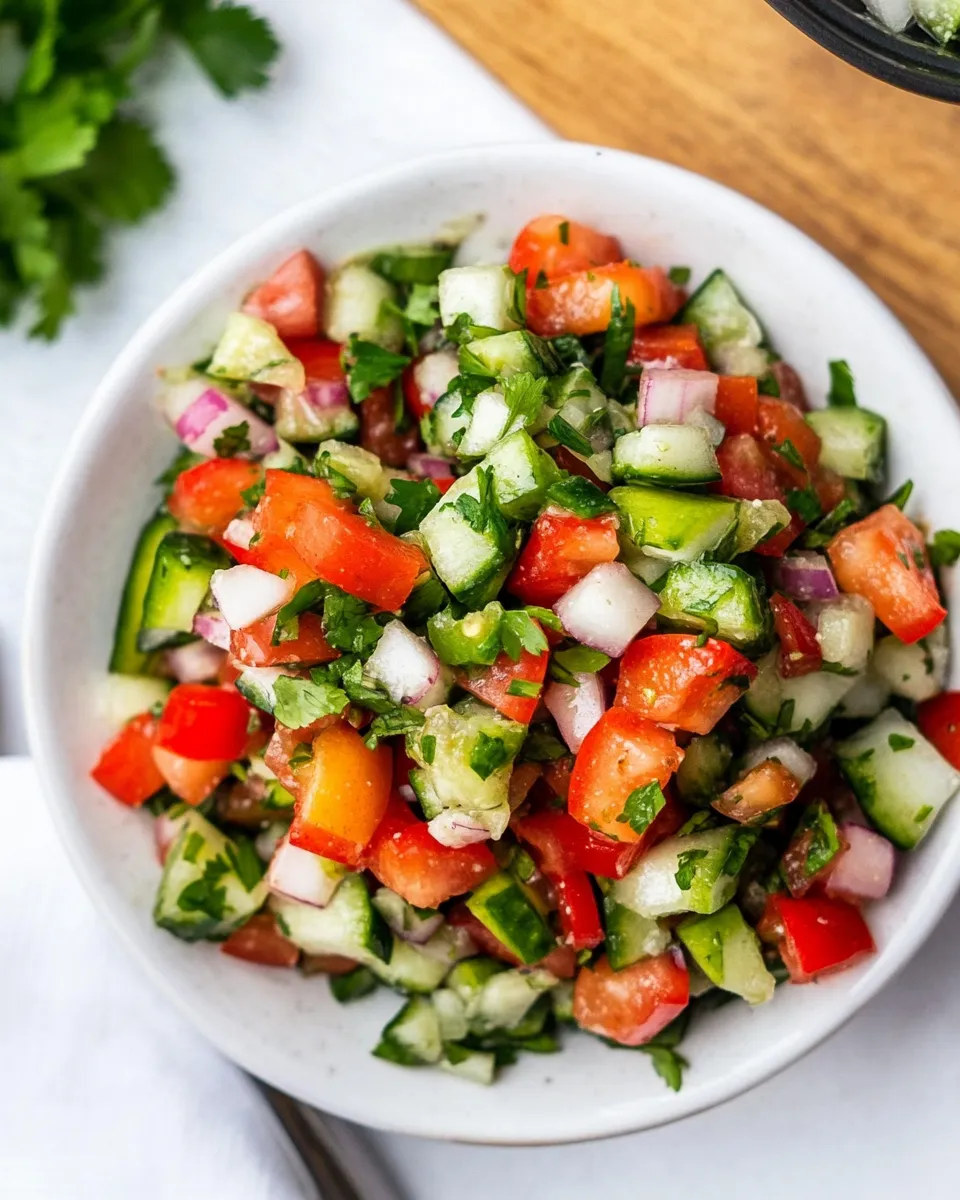
- Wash the vegetables. Peel the red onion if you prefer a milder bite.
- Finely dice or chop into small, bite-sized pieces: 1 English cucumber (or 4 Persian cucumbers), 4 tomatoes, 1 red onion, and chop ¼ cup parsley. Add all chopped vegetables and parsley to a large mixing bowl.
- In a small bowl or measuring jug, combine 2 tablespoons extra virgin olive oil, 3 tablespoons freshly squeezed lemon juice, 1 teaspoon dried mint, ½ teaspoon salt, and ¼ teaspoon ground black pepper.
- Whisk the dressing until combined (use a whisk if you want it emulsified) or stir well with a fork.
- Pour the dressing over the chopped vegetables and toss thoroughly with salad tongs or two large spoons until everything is evenly coated.
- Serve immediately, or cover and let the salad sit at room temperature for up to 30 minutes to allow the flavors to meld before serving.
Why Cooks Rave About It
Shirazi Salad is celebrated because it delivers a big flavor payoff for very little effort. The textures — crisp cucumber, juicy tomato, and crunchy onion — contrast in every bite. Lemon and olive oil unify those textures without masking them. Dried mint gives it a distinct, aromatic edge that sets it apart from generic green salads.
It’s also endlessly adaptable. It can sit on a mezze spread, accompany grilled meats, brighten roasted vegetables, or stand alone as a light, refreshing lunch. Because there’s no mayonnaise or dairy binder, the salad stays lively and refreshing even on warm days.
International Equivalents
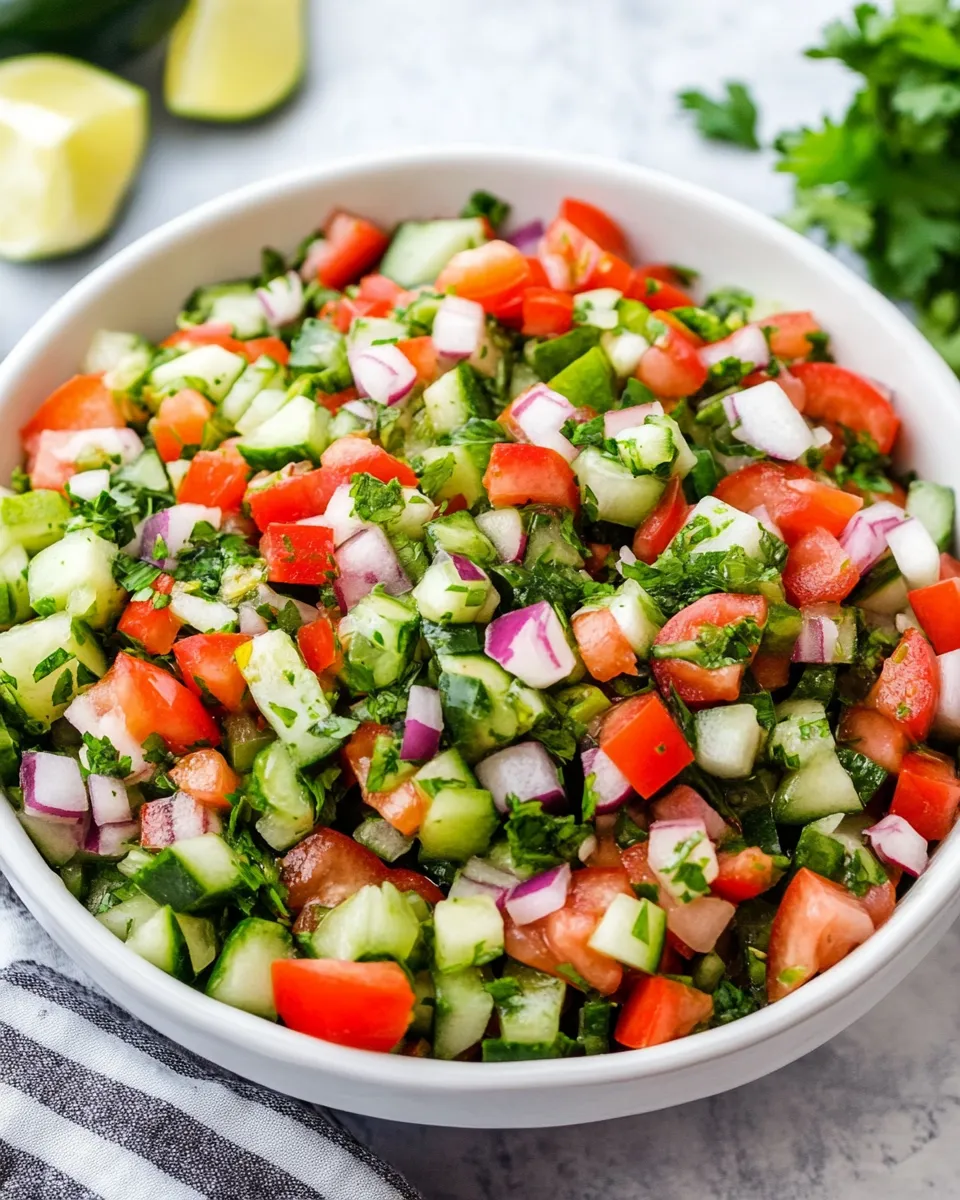
This salad is essentially the Persian take on chopped-vegetable salads found around the Mediterranean and Middle East. Israeli salad (tomato-and-cucumber salad) is its closest relative — both rely on finely chopped vegetables, lemon, and olive oil. Turkish çoban salatası (shepherd’s salad) shares the same core idea, often adding green pepper and sometimes a touch of sumac. In Mexico, pico de gallo uses tomatoes, onion, and chilies with lime and cilantro; the concept of chunky, dressed raw vegetables is universal.
Kitchen Gear Checklist
- Large mixing bowl — room to toss without spilling.
- Cutting board and chef’s knife — for clean, even dicing.
- Small bowl or measuring jug — to mix the dressing.
- Whisk or fork — to emulsify or combine the dressing.
- Salad tongs or two large spoons — for tossing.
- Measuring spoons — to keep the seasoning consistent.
Troubleshooting Tips
- Too watery: Cucumbers can release liquid. Use Persian cucumbers when possible. If using English cucumber, peel and seed if necessary, or chop and then drain briefly in a colander.
- Onion too sharp: Peel the red onion and slice or chop. If it’s too pungent after chopping, soak the pieces in cold water for 5–10 minutes, then drain and add to the salad.
- Flat flavor: Taste and adjust. A little more lemon juice brightens, a pinch more salt can balance, and a touch more olive oil smooths the dressing.
- Vegetables too large: Aim for small, bite-sized dice so every spoonful has a balanced mix of ingredients and dressing.
Make It Your Way
You don’t need to reinvent the wheel. Small adjustments make Shirazi Salad fit your meal. Chop everything slightly smaller for an almost-salsa texture. Peel the cucumber if you prefer a softer mouthfeel. If you like a more pronounced herb note, increase the dried mint a bit and let the salad sit for up to 30 minutes so the herbs rehydrate and bloom.
Adjust the lemon-to-oil ratio to your taste: more lemon if you want a brighter, tangier salad; a touch more olive oil if you want a silkier mouthfeel. If you want less onion bite, peel the onion first or reduce the quantity slightly.
Cook’s Notes
The salad is fast to make but benefits from a short rest: letting it sit at room temperature for up to 30 minutes allows the lemon and mint to marry with the vegetables. That said, it’s perfectly pleasant served immediately. Use a generous, quality olive oil — since the dressing is simple, the oil’s character comes through.
Chopping consistency matters. When the pieces are similarly sized, each bite delivers a balanced combination of cucumber, tomato, onion, and parsley. If you’re prepping for a crowd, you can scale the recipe linearly and toss just before serving.
Meal Prep & Storage Notes
If you need to prepare ahead, chop everything and store the vegetables separately in airtight containers in the refrigerator. Dress the salad shortly before serving so the vegetables don’t become soggy. Once dressed, Shirazi Salad is best eaten within the same day while the textures remain crisp.
Quick Q&A
Can I use fresh mint instead of dried? Yes. If you swap in fresh mint, use it sparingly and chop it finely; fresh mint is more assertive than dried.
Can I add cucumber seeds or keep them? You can remove the seeds if your cucumbers are especially watery. For Persian cucumbers, leave them in; they add crunch without excess moisture.
Is this vegan and gluten-free? Yes — the ingredients are naturally vegan and gluten-free.
Before You Go
Shirazi Salad is one of those dishes you’ll return to because it’s fast, fresh, and forgiving. Keep the ingredients simple and high quality, cut to consistent sizes, and don’t be afraid to taste and adjust the seasoning. It lifts almost any meal and is an easy way to make vegetables feel like the star.
If you try this version, tell me how you served it and what little tweaks you made. I love hearing practical adaptations from real kitchens.
Shirazi Salad
Ingredients
Ingredients
- ?1 English cucumberchopped or 4 Persian cucumbers
- ?4 tomatoeschopped
- ?1 red onionchopped
- ?1/4 cupparsleychopped
- ?2 tablespoonsextra virgin olive oil
- ?3 tablespoonsfreshly squeezed lemon juice
- ?1 teaspoondried mint
- ?1/2 teaspoonsalt
- ?1/4 teaspoonground black pepper
Instructions
Instructions
- Wash the vegetables. Peel the red onion if you prefer a milder bite.
- Finely dice or chop into small, bite-sized pieces: 1 English cucumber (or 4 Persian cucumbers), 4 tomatoes, 1 red onion, and chop ¼ cup parsley. Add all chopped vegetables and parsley to a large mixing bowl.
- In a small bowl or measuring jug, combine 2 tablespoons extra virgin olive oil, 3 tablespoons freshly squeezed lemon juice, 1 teaspoon dried mint, ½ teaspoon salt, and ¼ teaspoon ground black pepper.
- Whisk the dressing until combined (use a whisk if you want it emulsified) or stir well with a fork.
- Pour the dressing over the chopped vegetables and toss thoroughly with salad tongs or two large spoons until everything is evenly coated.
- Serve immediately, or cover and let the salad sit at room temperature for up to 30 minutes to allow the flavors to meld before serving.
Equipment
- Large Mixing Bowl
- small bowl or measuring jug
- Whisk
- Fork
- Salad Tongs
- two large spoons
Notes
Add more fresh herbs such as cilantro, dill, and mint leaves. This is not traditional but can be a tasty addition.
Serve this salad with rice dishes such asMujadara, or stews,Middle Eastern pastries,hummus, and soups.