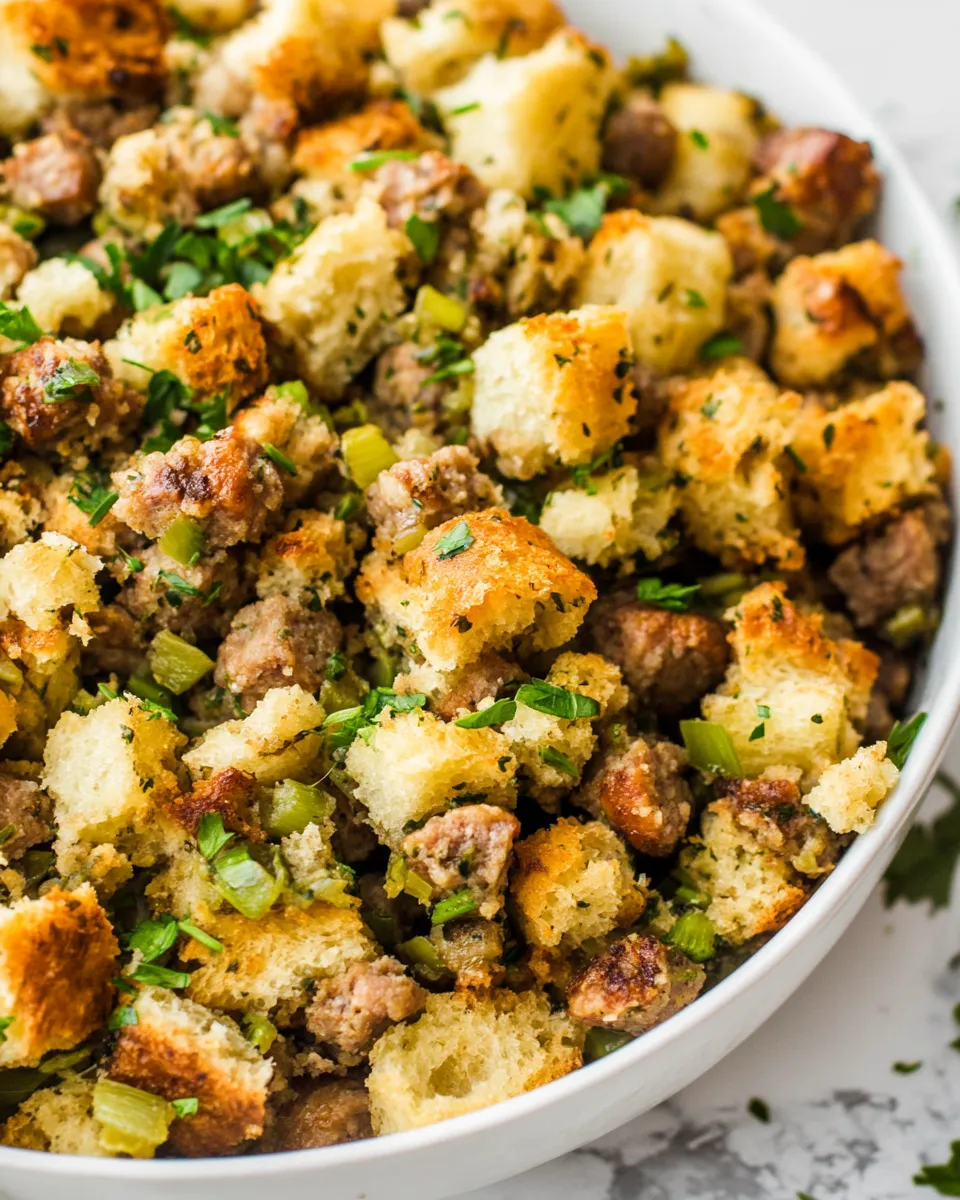
Sausage Stuffing
This sausage stuffing is the kind of recipe I reach for when I want a side that feels both comforting and deliberate—hearty bread, savory sausage, bright herbs, and a little sweetness from cranberries if you like contrast. It’s forgiving, reliable, and built on simple technique: dry the bread, brown the meat, sweat the aromatics, and hydrate gently with broth. Follow those steps and you get consistently good texture and flavor.
I aim for practical instructions and predictable results. You don’t need special skills—just a little planning (toast the bread first) and a skillet you trust. The flavors are straightforward, so small adjustments—sausage heat level, herb amounts, or whether you add cranberries—make it yours without breaking the method.
Below you’ll find the exact ingredients, step-by-step directions, and tips for swaps, gear, storage, and troubleshooting. Read through the shopping guide and the “Why It Works” section if you want to understand the logic. Otherwise, jump straight to the From Start to Finish steps and get baking.
Ingredients

- 10 cups 1-inch bread cubes (French, Italian or Sourdough) — the bulk of the dish; toasts so it soaks up broth without getting soggy.
- 1 lb sweet or spicy sausage, casings removed — primary savory element; choose sweet or spicy based on the heat you want.
- ½ cup unsalted butter — provides richness and helps carry the aromatics.
- 2 cups diced yellow onion (2 small onions) — adds sweetness and body when softened.
- 1 cup chopped celery (3 celery ribs) — classic stuffing texture and mild celery flavor.
- 3 cloves garlic, minced — sharpness and depth; add at the end of the vegetables so it doesn’t burn.
- 2 tablespoons chopped flat-leaf parsley — fresh herb lift; stir in for brightness.
- 1 tablespoon chopped fresh sage — the stuffing herb; small amount goes a long way.
- 1 teaspoon kosher salt — seasons the whole mixture; taste before adding more.
- 1/2 teaspoon freshly ground black pepper — balances the salt and highlights sausage spices.
- 2 cups chicken broth — hydrates the bread and adds savory base notes.
- 3/4 cup dried cranberries, optional — optional sweet-tart contrast; stir in at the end if you like a pop of fruit.
Your Shopping Guide
Buy a sturdy, crusty loaf for the best texture. French, Italian, or sourdough are all listed, and each gives a slightly different crumb and chew: sourdough adds tang; French is neutral; Italian is dependable. Cut into roughly 1-inch cubes so they toast evenly and absorb broth predictably.
Pick the sausage based on the personality you want. A sweet Italian sausage keeps the profile traditional and mild. A spicy sausage adds a warming kick that pairs well with cranberries. Remove casings yourself to control texture—press and crumble in the skillet.
Other pantry items are straightforward: unsalted butter lets you control salt, and fresh sage and parsley make a big difference versus dried. If you can, grab fresh herbs. Chicken broth should be full-flavored; low-sodium is easier to adjust at the end.
From Start to Finish: Sausage Stuffing
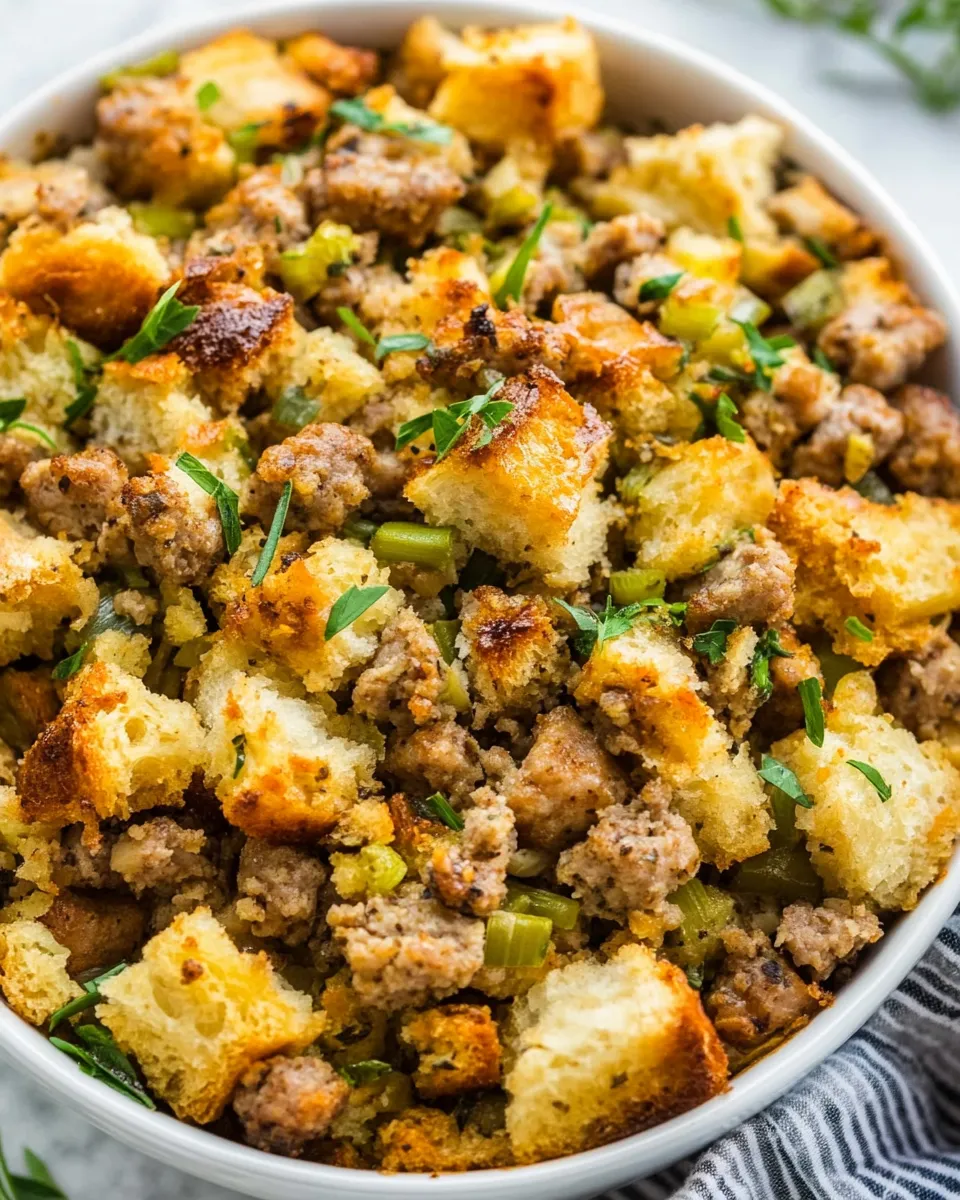
- Preheat oven to 300°F (150°C). Spread 10 cups 1-inch bread cubes (French, Italian, or sourdough) in a single layer on a large baking sheet. Bake 7–10 minutes, until dried and lightly toasted. Remove from oven and increase oven temperature to 350°F (175°C).
- While the bread toasts, heat a large skillet over medium heat. Add 1 lb sweet or spicy sausage (casings removed) and cook, breaking up with a wooden spoon or spatula, until browned and cooked through, about 10 minutes.
- Transfer the cooked sausage to a plate lined with paper towels to drain excess grease. Pour off most of the fat from the skillet, leaving any browned bits.
- In the same skillet, melt ½ cup unsalted butter over medium heat. Add 2 cups diced yellow onion and 1 cup chopped celery. Cook, stirring occasionally, until the vegetables are tender, about 5–7 minutes.
- Add 3 cloves minced garlic, 2 tablespoons chopped flat-leaf parsley, 1 tablespoon chopped fresh sage, 1 teaspoon kosher salt, and ½ teaspoon freshly ground black pepper to the skillet. Cook, stirring, until the garlic is cooked but not browned, about 3–5 minutes.
- In a large bowl, combine the toasted bread cubes, drained sausage, and the cooked vegetable mixture. Pour 2 cups chicken broth over the mixture and stir gently until the bread is evenly moistened and the liquid is mostly absorbed. Stir in 3/4 cup dried cranberries, if using.
- Transfer the stuffing to a greased 9×13-inch baking dish and spread evenly. Bake at 350°F (175°C) for 30–35 minutes, until the top is browned and the stuffing is heated through.
- Remove from oven and serve warm.
Why It Works Every Time
There’s a clear sequence: dry the bread, cook the meat, build flavor with butter and aromatics, and then hydrate just enough. Toasting the bread first removes surface moisture so the cubes absorb broth instead of becoming gloopy. Browning the sausage creates Maillard flavor—those caramelized bits left in the pan boost savory depth when you cook the onions in the same skillet.
Butter carries flavor and softens the vegetables. The timing of the garlic matters: add it late so it releases aroma without turning bitter. A controlled amount of broth (2 cups for 10 cups of cubes) ensures the final texture is moist but not soupy. Baking the assembled stuffing crisps the top and finishes any internal pockets that need a bit of heat.
Dairy-Free/Gluten-Free Swaps
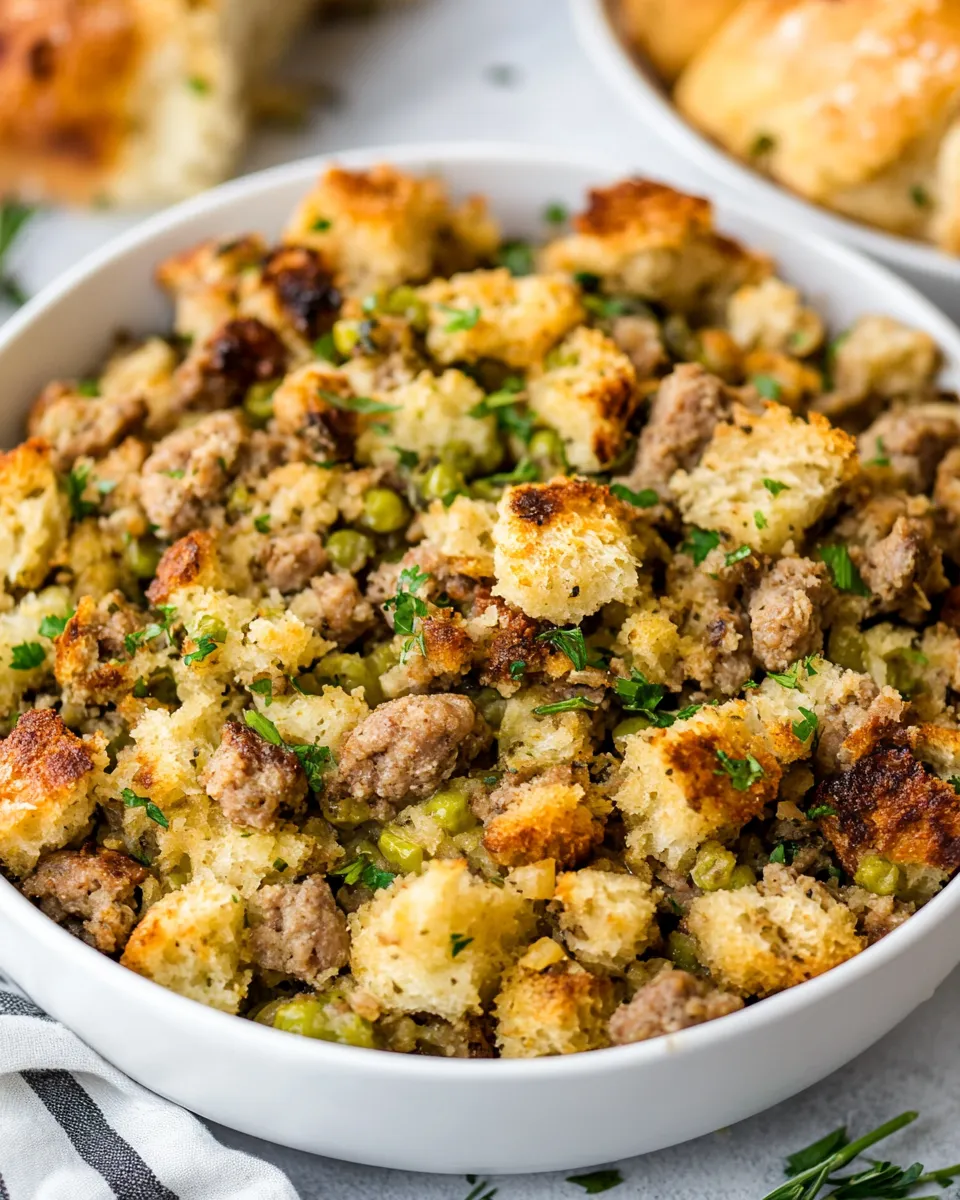
Dairy-free: Replace the unsalted butter with a 1:1 plant-based butter or ½ cup olive oil. Flavor will be slightly different; butter adds a rounder mouthfeel while oil keeps things lighter.
Gluten-free: Use 10 cups of sturdy gluten-free bread cubes that hold up to toasting. Gluten-free breads vary in absorbency, so you may need to add chicken broth a little at a time until the texture feels right.
Protein swaps: If you need a meatless option, use your preferred plant-based sausage and a rich vegetable broth. If you do that, check salt levels since store-bought alternatives and broths vary widely.
What’s in the Gear List
- Large baking sheet — for toasting the bread cubes in a single layer.
- Large skillet — to brown the sausage and cook the aromatics; a heavy-bottomed pan is best for even heat.
- 9×13-inch baking dish, greased — to bake the stuffing and develop a browned top.
- Large mixing bowl — to combine bread, sausage, and vegetables before baking.
- Wooden spoon or spatula — for breaking up the sausage and stirring gently.
- Measuring cups and spoons — to make sure the bread-to-broth ratio is consistent.
- Chef’s knife and cutting board — for dicing onion, chopping celery, and herbs.
Errors to Dodge
Don’t skip toasting the bread. Un-toasted cubes will soak up too much liquid and become heavy. Also, avoid adding all the broth at once if you’re unsure of your bread’s absorbency—stir and judge the texture. Too wet is not fixable; too dry can be corrected with a little more broth.
Don’t burn the garlic. Add it late and watch it closely. Burnt garlic turns bitter and will undo the harmony of flavors. Finally, don’t overcrowd the skillet when browning sausage; crowding steams the meat instead of browning it. Work in a hot pan with space so you get color and flavor.
Customize for Your Needs
Want a crunch? Stir in toasted pecans or chopped walnuts just before baking. Prefer extra herbiness? Double the parsley and add a tablespoon more of sage. Like the top crispy? Sprinkle a little extra butter or a few breadcrumbs across the surface before baking. If your household prefers less salt, use low-sodium chicken broth and taste before adding extra at the end.
If you’re making this ahead: assemble, cover, and refrigerate up to 24 hours before baking. Allow the dish to come back to room temperature for 20–30 minutes before placing in a hot oven so it heats evenly.
Recipe Notes & Chef’s Commentary
I wrote this recipe to be straightforward and forgiving. The biggest variable you’ll encounter is bread: denser loaves absorb differently than airy ones. That’s why the method calls for pouring the broth over the combined mixture and stirring gently until the bread is evenly moistened. Look for the liquid to be mostly absorbed, not pooling.
Drain most of the sausage fat but keep the browned bits in the pan. Those caramelized fragments carry a lot of flavor into the butter and vegetables. Use unsalted butter so you control the seasoning; sometimes the sausage brings plenty of salt on its own.
Storage Pro Tips
Cool any leftovers quickly and refrigerate in an airtight container for up to 3–4 days. To reheat, add a splash of broth or a pat of butter, cover with foil, and warm in a 350°F (175°C) oven until heated through—about 15–20 minutes depending on portion size. For individual portions, microwave briefly and then crisp under a broiler for a minute if you miss the oven-top texture.
To freeze: cool completely, transfer to a freezer-safe container, and freeze up to 2 months. Thaw in the refrigerator overnight before reheating in the oven.
Popular Questions
Can I make this vegetarian?
Yes. Substitute plant-based sausage and use vegetable broth instead of chicken broth. Watch salt levels, as vegetarian sausage and broths can be salty or mild depending on the brand.
How do I keep the stuffing from getting soggy?
Toast the bread cubes until they’re dried and lightly toasted first. Also, pour the broth gradually and aim for mostly absorbed rather than visibly wet. Baking uncovered at the end helps the top set and crispen.
Can I add other mix-ins like apples or nuts?
Absolutely. Chopped apples add a sweet-tart note and hold up well; stir them in with the toasted bread. Toasted nuts add crunch—fold them in before baking or sprinkle on top to toast in the oven for a minute or two.
See You at the Table
Make this Sausage Stuffing when you want something dependable, flavorful, and slightly flexible. It pairs wonderfully with roasted poultry or a simply dressed green salad. Prep the day before if you’re juggling a big meal; the flavors meld and it’s forgiving to reheat. Send a picture if you try any customizations—I love seeing how readers make recipes their own. Enjoy.
Sausage Stuffing
Ingredients
Ingredients
- 10 cups1-inch bread cubes French, Italian or Sourdough
- 1 lbsweet or spicy sausage casings removed
- 1/2 cupunsalted butter
- 2 cupsdiced yellow onion 2 small onions
- 1 cupchopped celery 3 celery ribs
- 3 clovesgarlic minced
- 2 tablespoonschopped flat-leaf parsley
- 1 tablespoonchopped fresh sage
- 1 teaspoonkosher salt
- 1/2 teaspoonfreshly ground black pepper
- 2 cupschicken broth
- 3/4 cupdried cranberries optional
Instructions
Instructions
- Preheat oven to 300°F (150°C). Spread 10 cups 1-inch bread cubes (French, Italian, or sourdough) in a single layer on a large baking sheet. Bake 7–10 minutes, until dried and lightly toasted. Remove from oven and increase oven temperature to 350°F (175°C).
- While the bread toasts, heat a large skillet over medium heat. Add 1 lb sweet or spicy sausage (casings removed) and cook, breaking up with a wooden spoon or spatula, until browned and cooked through, about 10 minutes.
- Transfer the cooked sausage to a plate lined with paper towels to drain excess grease. Pour off most of the fat from the skillet, leaving any browned bits.
- In the same skillet, melt 1/2 cup unsalted butter over medium heat. Add 2 cups diced yellow onion and 1 cup chopped celery. Cook, stirring occasionally, until the vegetables are tender, about 5–7 minutes.
- Add 3 cloves minced garlic, 2 tablespoons chopped flat-leaf parsley, 1 tablespoon chopped fresh sage, 1 teaspoon kosher salt, and 1/2 teaspoon freshly ground black pepper to the skillet. Cook, stirring, until the garlic is cooked but not browned, about 3–5 minutes.
- In a large bowl, combine the toasted bread cubes, drained sausage, and the cooked vegetable mixture. Pour 2 cups chicken broth over the mixture and stir gently until the bread is evenly moistened and the liquid is mostly absorbed. Stir in 3/4 cup dried cranberries, if using.
- Transfer the stuffing to a greased 9×13-inch baking dish and spread evenly. Bake at 350°F (175°C) for 30–35 minutes, until the top is browned and the stuffing is heated through.
- Remove from oven and serve warm.
Equipment
- Large baking sheet
- Large Skillet
- 9x13 inch Baking Dish
- Wooden spoon or spatula
- Large Bowl