Sauce Vierge
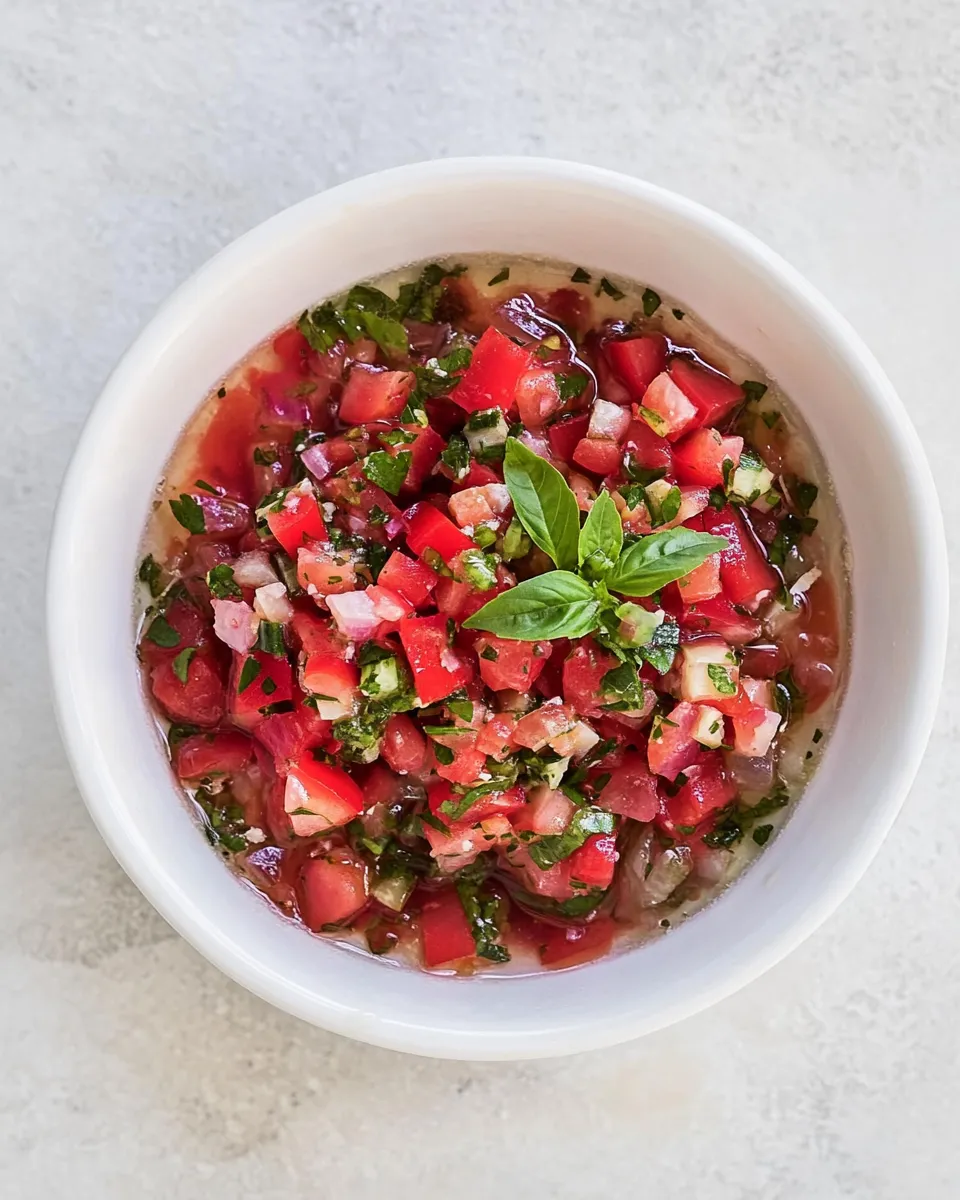
Sauce Vierge is one of those effortless condiments that transforms plain things into memorable bites. It’s bright, herb-forward, and forgiving — a bright, uncooked tomato-herb dressing that sings on grilled fish, roasted vegetables, or simply spooned over crusty bread. I reach for this whenever I want freshness without fuss.
Make no mistake: this is a restaurant-worthy finishing sauce you can pull together in under ten minutes of active work. The technique is straightforward: prep clean, ripe tomatoes, a fine shallot dice, snip fresh herbs, and finish with good olive oil and lemon. Then give it a short rest so the flavors settle and marry.
Below I’ll walk you through the exact ingredients, step-by-step instructions, and practical tips I use in my kitchen. You’ll find options for small tweaks, troubleshooting, and ideas for serving. No frills, just reliable, flavorful guidance so you get Sauce Vierge right every time.
The Essentials

At its heart, Sauce Vierge is summer in a bowl: bright tomato, fresh basil, parsley, a little sharpness from capers, and silky olive oil. The key is the balance — acidity, oil, salt, and herb aroma. Temperatures matter too: serve it at room temperature so the oil feels silky and the herbs release their scent.
Use the freshest ingredients you can find, especially tomatoes and herbs. If tomatoes are mealy or underripe, the sauce won’t sing. Likewise, a harsh or bitter oil will flatten the flavors, so choose a fruity extra-virgin olive oil that you enjoy by the spoon.
Ingredients
- 3 medium tomatoes — seeded and diced; provide fresh body and bright acidity.
- 1 small shallot — finely chopped; adds gentle oniony bite without overpowering.
- 3 tablespoons fresh basil — chopped; offers aromatic, sweet herb lift.
- 2 tablespoons fresh parsley — chopped; adds herbaceous freshness and color.
- 1 1/2 teaspoons capers in vinegar — chopped; brings briny balance and a touch of umami.
- 2 1/2 tablespoons extra-virgin olive oil — emulsifies and carries flavor; use a clean, fruity oil.
- 1 tablespoon fresh lemon juice — brightens and balances the oil.
- Pinch of salt — enhances all flavors; add to taste.
- Pinch of black pepper — adds gentle spiciness; grind fresh if possible.
How to Prepare Sauce Vierge
- Prepare the ingredients: seed and dice 3 medium tomatoes; finely chop 1 small shallot; chop 3 tablespoons fresh basil and 2 tablespoons fresh parsley; if not already chopped, chop 1 1/2 teaspoons capers in vinegar.
- In a bowl, add the diced tomatoes, chopped shallot, basil, parsley, and chopped capers.
- Drizzle 2 1/2 tablespoons extra-virgin olive oil and 1 tablespoon fresh lemon juice over the mixture.
- Season with a pinch of salt and a pinch of black pepper.
- Gently mix with a spoon or spatula to combine, taking care not to crush the tomatoes.
- Taste and, if desired, add more olive oil and/or adjust the salt and pepper to your preference.
- Let the sauce sit at room temperature, undisturbed, for 1 hour to allow the flavors to meld, then stir gently and serve.
Why It’s Crowd-Pleasing
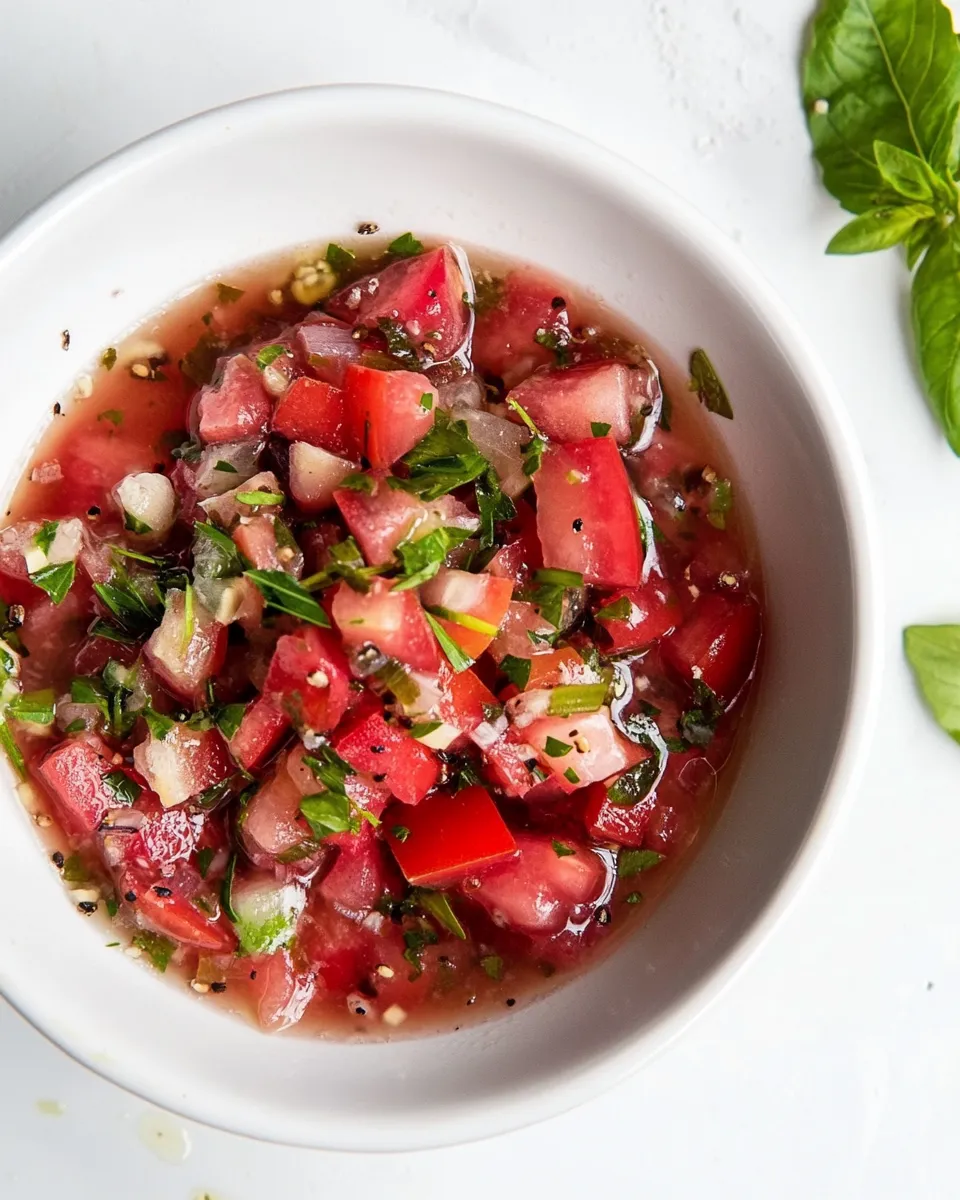
Sauce Vierge is a universal pal because it does three things well: it brightens, it freshens, and it complements without competing. The acidity from lemon and tomatoes cuts through rich foods. The olive oil adds silk and depth. Fresh herbs lend aroma and green notes that make a dish feel alive.
It’s also visually appealing. The red of tomatoes, green herbs, and glossy oil look impressive tossed over grilled fish or spooned on small plates. Guests immediately recognize it as something handcrafted and fresh, which elevates the whole meal.
Finally, it’s flexible. It pairs with seafood, chicken, roasted vegetables, and simple grilled bread. That versatility makes it a safe, reliable choice when cooking for groups or when you want a quick finishing sauce with maximum payoff.
Flavor-Forward Alternatives
Keep the framework — tomato, acid, oil, herbs — and vary one element at a time to tune the sauce to the dish.
- Make it citrusy: Replace half the lemon juice with orange or grapefruit juice for a sweeter, more aromatic profile.
- Add heat: Stir in a pinch of red pepper flakes or a small diced fresh chili for a spicy lift.
- Oil swap: Use a lighter olive oil and finish with a teaspoon of toasted sesame oil for an intriguing twist (use sparingly).
- Herb variations: Try chives and dill instead of basil and parsley for a fresher, more delicate finish that suits seafood.
- Umami boost: Fold in a teaspoon of finely grated anchovy or a splash of fish sauce to deepen the savory backbone—use cautiously.
Tools & Equipment Needed
- Chef’s knife — for dicing tomatoes and finely chopping shallot and herbs.
- Cutting board — use a clean, stable surface to prep all ingredients.
- Mixing bowl — large enough to toss the tomatoes and oil without spilling.
- Spoon or spatula — to gently combine the sauce without crushing the tomatoes.
- Measuring spoons — for accurate oil and lemon juice amounts.
- Citrus juicer or reamer (optional) — speeds and cleans up lemon juice extraction cleanly.
Watch Outs & How to Fix
- Problem: Sauce is watery. Fix: Drain excess tomato juice before mixing or let it sit in a sieve for 10 minutes. You can also spoon off the watery layer after it rests.
- Problem: Tomatoes are mealy or tasteless. Fix: Add a touch more lemon and salt to amp the flavor, or macerate the tomatoes briefly with a pinch of sugar and salt to draw out sweetness.
- Problem: Olive oil tastes bitter. Fix: Use a fresher, fruitier oil; as a quick patch, add a little more lemon juice to balance bitterness.
- Problem: Too salty from capers. Fix: Add extra diced tomatoes and a small splash more olive oil to dilute, or rinse capers briefly before chopping next time.
- Problem: Sauce is flat after resting. Fix: Stir in a little more fresh herb and a small squeeze of lemon right before serving to brighten it back up.
Holiday-Friendly Variations
During holidays you want sauces that add color and freshness amid richer mains. Sauce Vierge adapts easily.
- For roast meats: Add roasted garlic (smashed and mashed) to the mix for a mellow, savory element that stands up to beef or lamb.
- For winter gatherings: Swap fresh tomatoes for finely diced peeled roasted tomatoes to keep the charred-sweet tomato flavor when summer tomatoes aren’t available.
- For celebratory seafood: Fold in finely diced preserved lemon (rinsed) for an exotic tang that pairs beautifully with whole roasted fish.
Chef’s Rationale
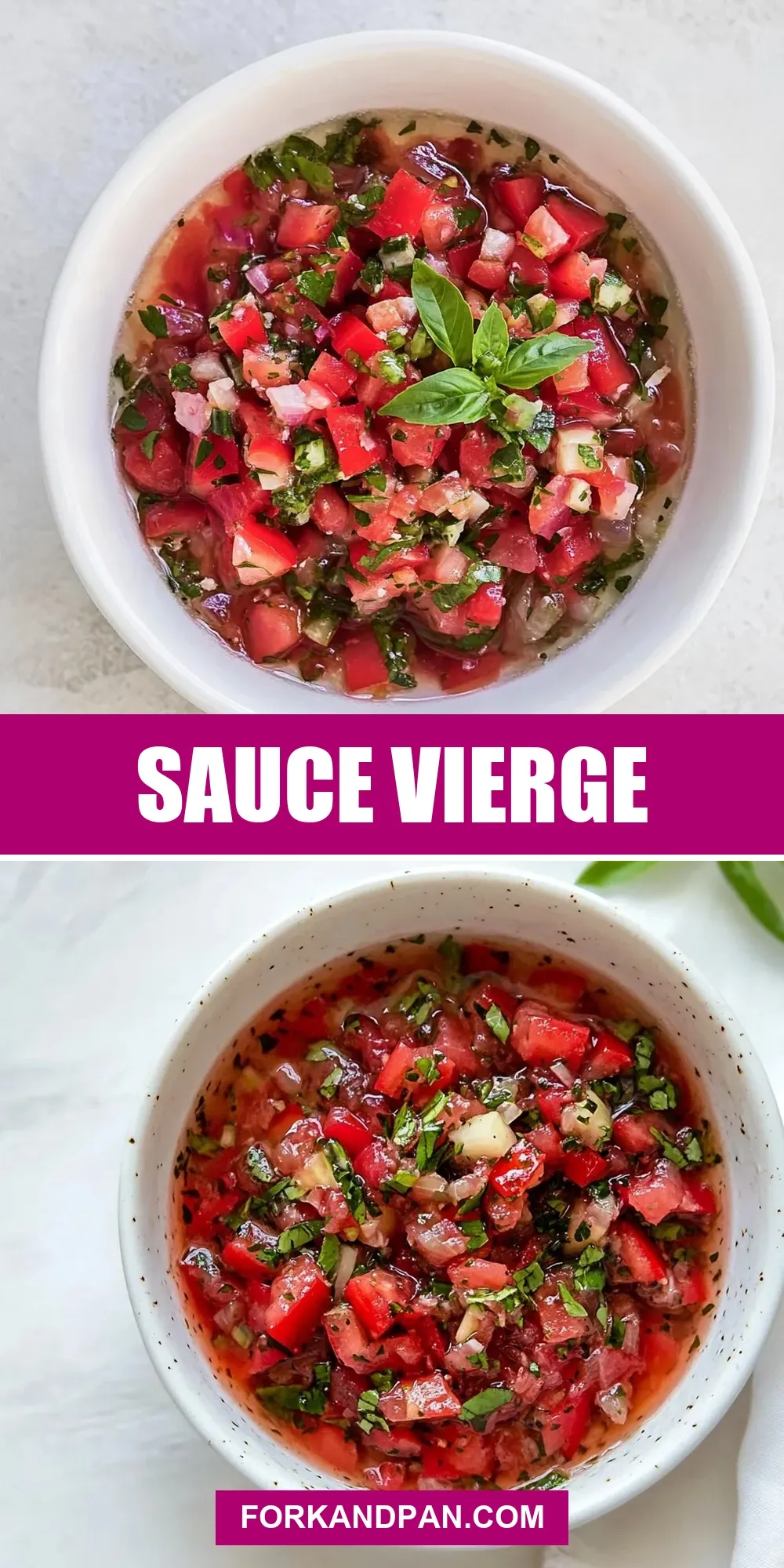
I use minimal ingredients and a short rest because the sauce’s strength comes from clarity. I want the tomatoes to be present but not pulpy; the herbs should be aromatic but not pulverized. The capers give a briny counterpoint without dominating.
The quantities are calibrated to keep the oil-to-acid ratio balanced so the sauce coats rather than drowns. Letting it sit for an hour allows the citrus and olive oil to soften the sharp edges of raw shallot and meld the flavors without cooking anything. It’s a small step that makes a noticeable difference.
Make Ahead Like a Pro
Sauce Vierge benefits from a short sit at room temperature, but you can prepare most of it ahead with a few caveats. Combine everything up to and including the seasoning, then cover and refrigerate for up to 24 hours. Take it out 30–60 minutes before serving to come back to room temperature and stir gently to re-integrate the oil.
If you need to make it farther in advance, prepare the tomato mix without the olive oil and lemon. Store the chopped tomato, shallot, herbs, and capers in the fridge for up to 24 hours, then add the oil and lemon, season, and rest for an hour before serving. This keeps the texture fresher.
Sauce Vierge Q&A
Can I use canned tomatoes?
Fresh is best for texture and brightness. Canned tomatoes will make the sauce too soft and lose the fresh-tomato bite; use roasted canned tomatoes carefully if you have no fresh option.
How long will it keep?
In the refrigerator, stored in an airtight container, the sauce will keep for 2–3 days. The herbs brown and tomatoes soften over time, so it is best eaten within that window.
Can I omit capers?
Yes. If you omit them, consider adding a small pinch of salt and a teaspoon of briny ingredient—like a dash of olive brine—to replace the missing sharpness.
Is it gluten-free and vegan?
Yes. The recipe is naturally gluten-free and vegan as written.
What if I don’t have shallot?
Use a mild red onion or a small sweet onion finely minced, but use slightly less to avoid overpowering the sauce. Shallot is preferred for its subtlety.
Bring It to the Table
Spoon Sauce Vierge over grilled or pan-seared fish, especially firm white fish like sea bass or cod, for a classic pairing. It also finishes grilled chicken breasts beautifully and elevates roasted vegetables. For a simple appetizer, heap it on toasted slices of baguette or crostini with a drizzle of additional olive oil.
When plating, use the sauce as a finishing touch. Spoon it over the center of the protein, not under it, so the oil and herbs remain visible and aromatic. Serve extra on the side so guests can add more if they like.
Enjoy Sauce Vierge as a small ritual that brightens your meal: a few minutes of prep, an hour of gentle patience, and a fresh, versatile sauce that lifts whatever it’s paired with.
Sauce Vierge
Ingredients
Ingredients
- 3 medium tomatoesseeded and diced
- 1 small shallotfinely chopped
- 3 tablespoonsfresh basilchopped
- 2 tablespoonsfresh parsleychopped
- 1 1/2 teaspoonscapers in vinegarchopped
- 2 1/2 tablespoonsextra-virgin olive oil
- 1 tablespoonfresh lemon juice
- Pinchof salt
- Pinchof black pepper
Instructions
Instructions
- Prepare the ingredients: seed and dice 3 medium tomatoes; finely chop 1 small shallot; chop 3 tablespoons fresh basil and 2 tablespoons fresh parsley; if not already chopped, chop 1 1/2 teaspoons capers in vinegar.
- In a bowl, add the diced tomatoes, chopped shallot, basil, parsley, and chopped capers.
- Drizzle 2 1/2 tablespoons extra-virgin olive oil and 1 tablespoon fresh lemon juice over the mixture.
- Season with a pinch of salt and a pinch of black pepper.
- Gently mix with a spoon or spatula to combine, taking care not to crush the tomatoes.
- Taste and, if desired, add more olive oil and/or adjust the salt and pepper to your preference.
- Let the sauce sit at room temperature, undisturbed, for 1 hour to allow the flavors to meld, then stir gently and serve.