Salmon Marinade
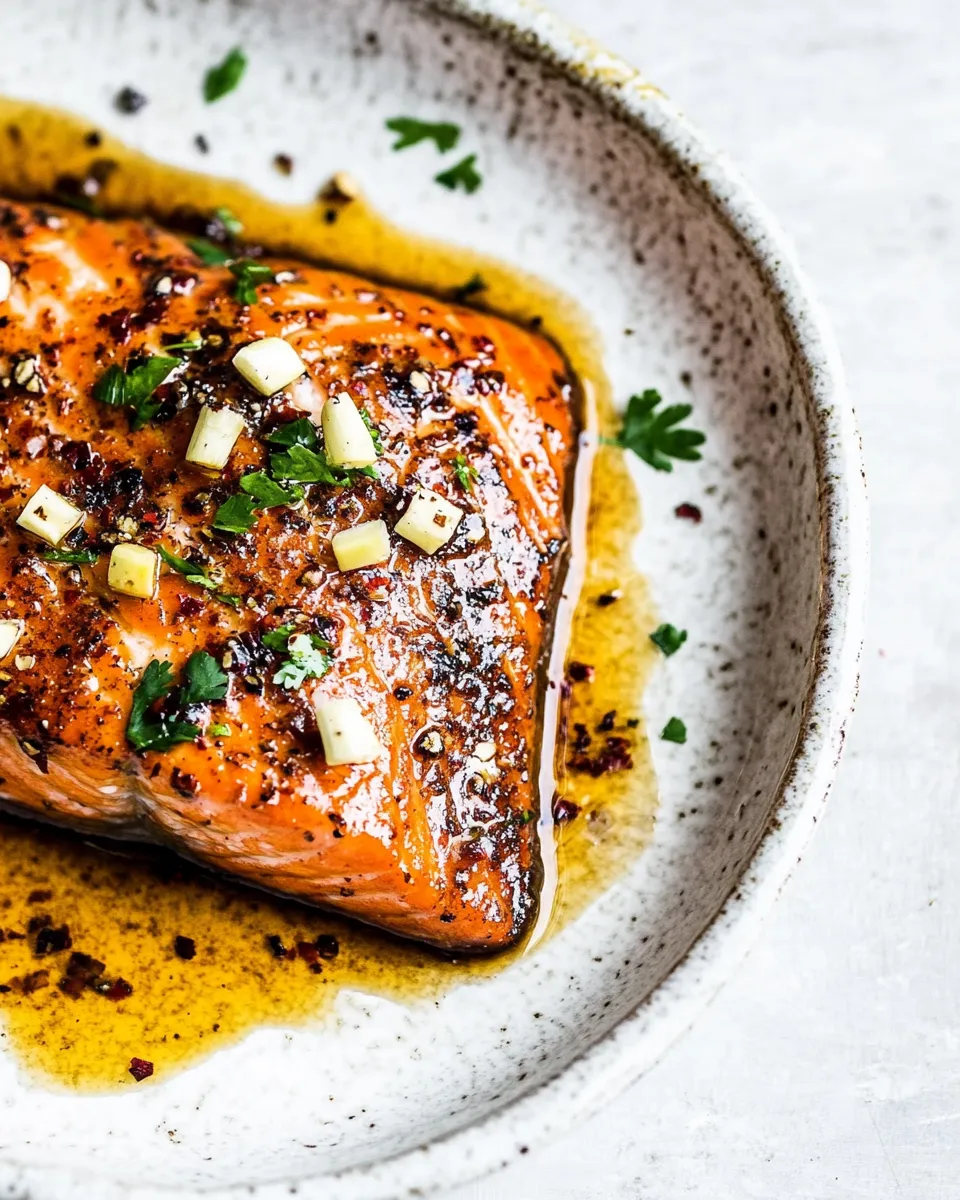
I cook a lot of fish, and simple marinades are my secret for dependable, flavorful salmon every time. This one lands right in the sweet‑savory neighborhood: olive oil and Dijon for silk and tang, soy sauce for umami, and a touch of honey or maple for a glossy finish. It’s forgiving, fast, and plays well whether you bake or grill.
The method is straightforward and built to fit real weeknight rhythms: pat the fish dry, whisk the liquid seasonings, let it sit briefly, and then bake or sear. There’s no long sit time required, so you won’t over-marinate and end up with mushy fish. That balance is what makes this marinade a keeper.
Below I’ll list exactly what you need and walk you through every step, plus troubleshooting tips, equipment notes, storage ideas, and answers to the questions I get asked most. If you want dinner that tastes elevated but doesn’t demand much time, this Salmon Marinade will do the job.
What Goes In

Think of this as a compact flavor kit. The ingredients give you fat for silkiness, a salty umami base, sweetness to balance, a little mustard to brighten, and simple seasonings to round everything. Gather them before you start and you’ll move through the steps without fuss.
Ingredients
- 1 ½ pounds salmon — either 1 single portion (side of salmon) or 4 (6-ounce) fillets; the recipe is written for either format.
- ¼ cup extra-virgin olive oil — provides fat for mouthfeel and helps the marinade coat the fish evenly.
- 3 tablespoons low sodium soy sauce — brings savory, salty depth without overwhelming the fish.
- 2 tablespoons honey or pure maple syrup — adds a touch of sweetness and helps the exterior caramelize.
- 2 tablespoons Dijon mustard — adds brightness and a gentle tang that balances the sweet and salty.
- ½ teaspoon garlic powder — an easy, pantry-friendly garlic note without fresh chopping.
- ⅛ teaspoon ground black pepper — just enough pepper to round the flavors.
Salmon Marinade in Steps
- Pat the salmon dry with paper towels and place it in a large zip-top bag (one single 1½-pound side or up to four 6-ounce fillets).
- In a measuring cup with a spout or a mixing bowl, whisk together the extra-virgin olive oil, low-sodium soy sauce, honey or pure maple syrup, Dijon mustard, garlic powder, and ground black pepper until combined.
- Pour the marinade into the bag with the salmon, seal the bag while removing as much air as possible, and gently massage the bag so the marinade coats the fish evenly.
- Set the sealed bag in a dish or on a plate to catch any drips. Let the salmon marinate at room temperature for 30 minutes, or refrigerate for up to 1 hour. (If you must, you can refrigerate up to 4 hours, but the fish may become mushy after 1 hour.)
- When ready to cook, preheat your oven to 400°F if baking, or preheat your grill to high heat if grilling. Remove the salmon from the bag and discard the used marinade.
- For oven cooking: Line a 9×13-inch baking dish with parchment paper and place the salmon in the center (if using fillets, make sure they do not touch). Bake at 400°F for 11 to 14 minutes for 6-ounce fillets or 15 to 18 minutes for a single 1½-pound side, until an instant-read thermometer inserted into the thickest part reads 135°F (the FDA recommends 145°F). Remove from the oven and let rest 5 minutes before serving.
- For grilling: Place the salmon skin-side down on the hot grill. Cook without disturbing until the salmon releases easily from the grates, about 6 to 7 minutes. Flip and cook on the flesh side about 2 to 4 minutes more, depending on grill temperature, until an instant-read thermometer inserted into the thickest part reads 135°F (or to your desired doneness). Remove to a plate and let rest 5 minutes before serving.
What You’ll Love About This Recipe
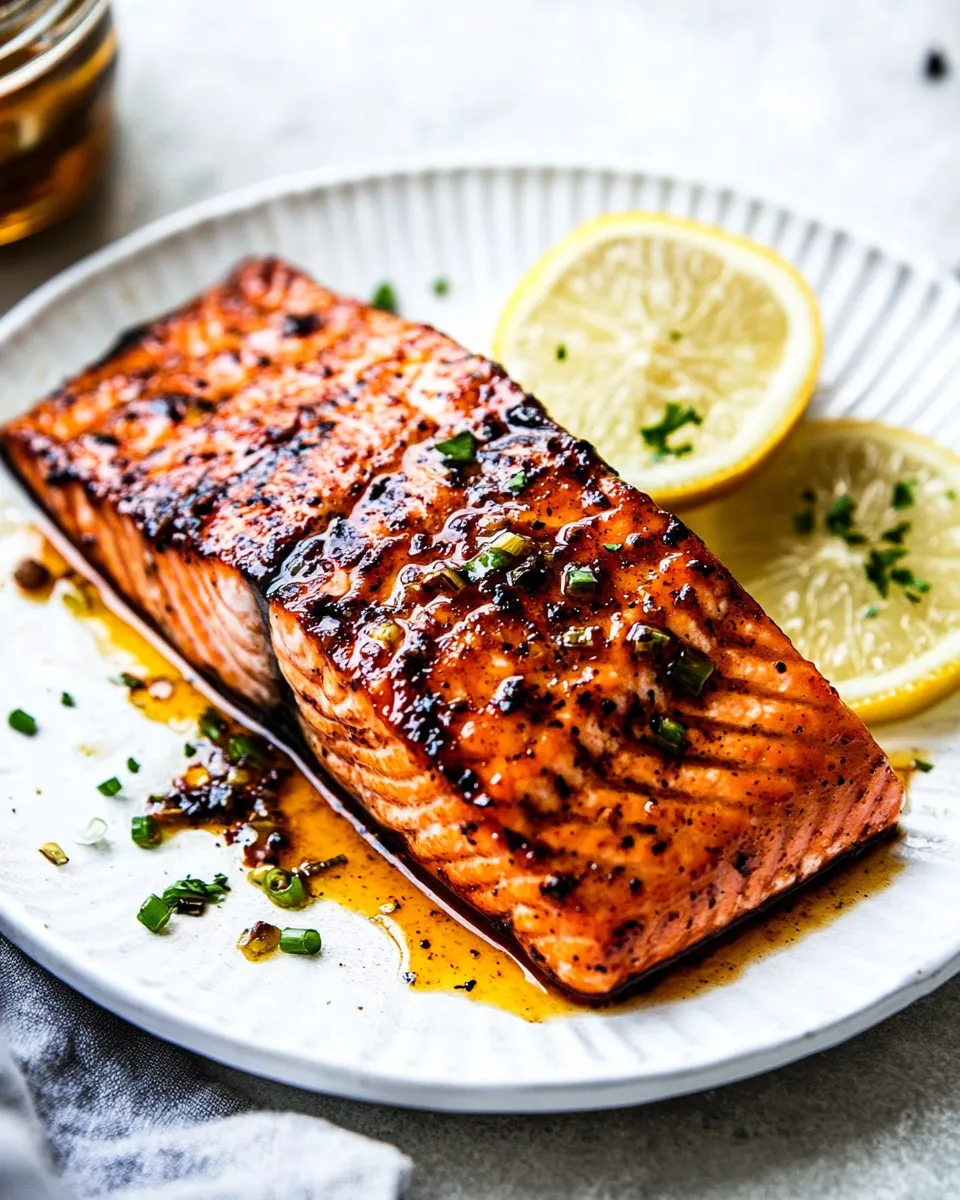
Quick: active prep takes just a few minutes. You whisk the marinade, bag the fish, and the rest is passive time. That 30‑minute room-temperature soak gives the salmon flavor without compromising texture.
Flexible: the recipe works for a 1½-pound side or for four individual fillets. It adapts to oven or grill effortlessly, so you can use whatever method fits your kitchen or the weather.
Balanced flavor: the olive oil smooths the mouthfeel, soy sauce brings savory depth, Dijon cuts through the sweetness, and the honey or maple gives a glossy finish and slight caramelization. It’s strong enough to be interesting and gentle enough to let the salmon shine.
If You’re Out Of…
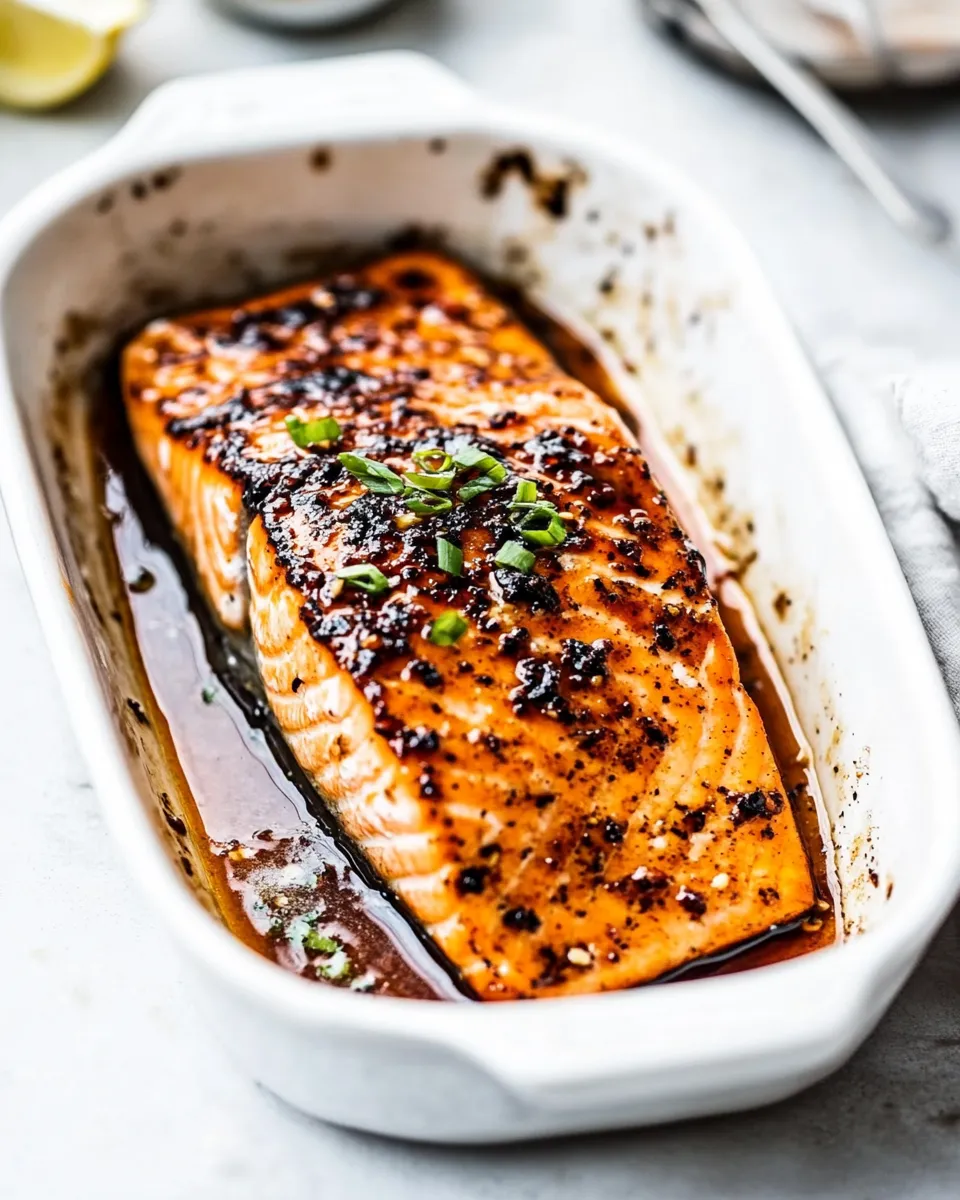
If you run out of one of the items, there are straightforward workarounds that keep you moving without derailing dinner.
- If you’re out of honey, use the pure maple syrup option listed in the ingredients.
- If you only have a whole side or only fillets, the recipe accounts for both formats—choose the cook time that matches.
- If you don’t have low-sodium soy sauce, use what you have but taste and avoid adding extra salt elsewhere; the marinade is already salty-forward.
- If you don’t have extra-virgin olive oil on hand, use another cooking oil you use in daily cooking—the oil’s role is primarily to carry flavors and help coat the fish.
Equipment at a Glance
- Large zip-top bag — for easy marinating and cleanup.
- Measuring cup with a spout or mixing bowl and whisk — to combine the marinade without spills.
- Paper towels — to pat the salmon dry so the marinade adheres.
- Instant-read thermometer — the most reliable way to check doneness (aim for 135°F for medium, or follow the FDA’s 145°F recommendation if you prefer).
- 9×13-inch baking dish lined with parchment or a hot grill — depending on your cooking method.
Mistakes That Ruin Salmon Marinade
Over-marinating is the most common mistake. The recipe gives a maximum fridge time of 1 hour for best texture; beyond that the acid and salt can start to “cook” and break down the fish, leaving it mushy. If you’re short on time, 30 minutes at room temperature is ideal.
Not drying the salmon first. Excess surface moisture prevents the marinade from clinging and dilutes flavor. Pat the fish dry with paper towels before bagging it.
Cooking straight from the fridge without a short rest can make the fish take longer to cook and lead to uneven doneness. Let it sit a few minutes at room temperature while the oven or grill heats.
Discarding the marinade early and then slathering it back on the fish during cooking. Do discard the used marinade that’s been in contact with raw fish—do not use it as a sauce unless you boil it for safety. If you want a glaze, reserve a portion of the marinade before adding the raw fish and warm that reserved amount before serving.
Allergy-Friendly Swaps
Here are practical ideas if someone at the table has dietary needs—keep in mind the goal is to preserve texture and balance.
- For those who avoid honey: the recipe already lists pure maple syrup as an alternative, so use that one-for-one.
- If soy is a concern: omit the soy sauce and increase the Dijon slightly to maintain depth, or keep the soy sauce minimal and focus on oil and mustard to carry flavor. Taste as you go; you don’t need exact amounts for these adjustments.
- If garlic is an issue: leave out the garlic powder and rely on the mustard and soy-honey pairing; the fish will still have a bright, savory profile.
Author’s Commentary
I reach for this marinade when I want salmon that tastes restaurant-level without a lot of work. The Dijon is a subtle but important player—don’t skip it. It adds an acid-sharpness that keeps the honey from making the dish one-dimensional.
For weeknight dinners I favor the fillet route because individual pieces cook faster and are easier to portion. For a crowd or a more dramatic presentation, the whole side is satisfying and feeds more people with less fuss.
One small habit I recommend: always reserve a little of the marinade before adding the raw fish if you plan to spoon a glaze over the finished salmon. That way you can heat and pour a safe, glossy finish over the cooked fish.
Storage Pro Tips
Cooked salmon keeps well in the fridge for 3 to 4 days in an airtight container. To reheat without drying it out, warm gently in a 275°F oven for 10–12 minutes or flake cold over salads and bowls.
Raw, marinated salmon should be cooked within the recommended marinating window—up to 1 hour refrigerated—because extended contact with salty and acidic components can degrade texture. If you’ve marinated longer than advised, cook and eat sooner rather than later; do not refreeze raw fish that has been marinated.
If you want to prep ahead: mix the marinade and keep it in the fridge, separated from the fish, for up to 24 hours. Add the fish when you’re ready to start the 30‑ to 60‑minute marinating window.
Common Qs About Salmon Marinade
Q: Can I use this on other fish? A: The balance of fat, salt, and sweet works well on many firm-fleshed fish. Adjust marinating time down for more delicate fish and keep an eye on texture.
Q: Is it safe to marinate at room temperature? A: The recipe allows a 30‑minute room-temperature soak—this short window is safe and helps flavors penetrate. For longer marinating, refrigerate and use within the one-hour refrigerated time indicated.
Q: What doneness should I aim for? A: The steps recommend an instant-read thermometer target of 135°F, with a note that the FDA recommends 145°F. Personally, I like a slightly lower temp for juicier salmon, but follow your comfort level and any household guidelines.
Q: Can I reuse leftover marinade as a sauce? A: Only if you reserve some before adding raw fish. Any marinade that has touched raw fish must be discarded unless brought to a vigorous boil for several minutes to ensure safety.
See You at the Table
This marinade is one of those small, repeatable recipes that becomes a reliable weeknight hero. It’s quick, dependable, and forgiving—everything I want in a go-to. Try it once as written, then tweak the balance of sweet and tang to match your taste. I use it year-round: grilled on hot nights and roasted on cool evenings.
When you make it, keep notes on timing and temperature that match your oven or grill. Small adjustments make a big difference in texture. Enjoy the ease, and enjoy the salmon.
Salmon Marinade
Ingredients
Ingredients
- 1 1/2 poundssalmoneither 1 single portion side of salmon or 4 (6-ounce) fillets
- 1/4 cupextra-virgin olive oil
- 3 tablespoonslow sodium soy sauce
- 2 tablespoonshoney or pure maple syrup
- 2 tablespoonsDijon mustard
- 1/2 teaspoongarlic powder
- 1/8 teaspoonground black pepper
Instructions
Instructions
- Pat the salmon dry with paper towels and place it in a large zip-top bag (one single 1½-pound side or up to four 6-ounce fillets).
- In a measuring cup with a spout or a mixing bowl, whisk together the extra-virgin olive oil, low-sodium soy sauce, honey or pure maple syrup, Dijon mustard, garlic powder, and ground black pepper until combined.
- Pour the marinade into the bag with the salmon, seal the bag while removing as much air as possible, and gently massage the bag so the marinade coats the fish evenly.
- Set the sealed bag in a dish or on a plate to catch any drips. Let the salmon marinate at room temperature for 30 minutes, or refrigerate for up to 1 hour. (If you must, you can refrigerate up to 4 hours, but the fish may become mushy after 1 hour.)
- When ready to cook, preheat your oven to 400°F if baking, or preheat your grill to high heat if grilling. Remove the salmon from the bag and discard the used marinade.
- For oven cooking: Line a 9×13-inch baking dish with parchment paper and place the salmon in the center (if using fillets, make sure they do not touch). Bake at 400°F for 11 to 14 minutes for 6-ounce fillets or 15 to 18 minutes for a single 1½-pound side, until an instant-read thermometer inserted into the thickest part reads 135°F (the FDA recommends 145°F). Remove from the oven and let rest 5 minutes before serving.
- For grilling: Place the salmon skin-side down on the hot grill. Cook without disturbing until the salmon releases easily from the grates, about 6 to 7 minutes. Flip and cook on the flesh side about 2 to 4 minutes more, depending on grill temperature, until an instant-read thermometer inserted into the thickest part reads 135°F (or to your desired doneness). Remove to a plate and let rest 5 minutes before serving.
Equipment
- large zip-top bag
- measuring cup or mixing bowl
- Whisk
- dish or plate
- Oven or grill
- instant-read thermometer (optional)
Notes
TO REHEAT: Very gently rewarm salmon in a skillet on the stovetop over medium-low heat or in the microwave.
TO FREEZE: Freeze salmon in an airtight freezer-safe storage container for up to 3 months. Let thaw overnight in the refrigerator before reheating.