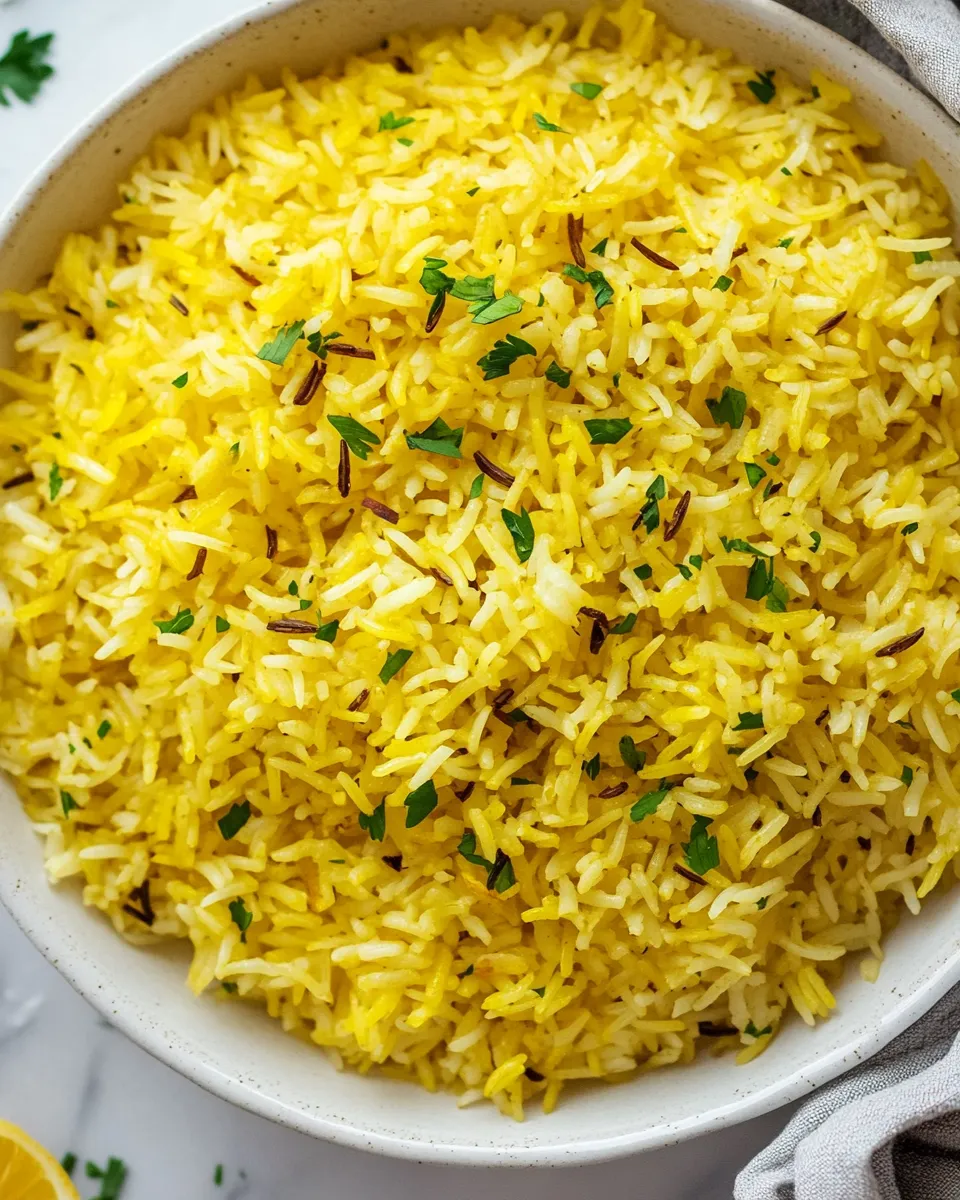
Saffron Rice
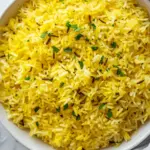
Saffron rice is the kind of side that quietly makes a meal feel special. It’s bright in color, fragrant without being fussy, and surprisingly simple to pull off when you follow a few disciplined steps. I make this whenever I want a cozy dinner to feel elevated—no last-minute scrambling, just one pot and patient timing.
The saffron in this recipe is handled deliberately: a small amount, gently released into hot water, then folded into the rice so every grain picks up that golden hue and floral perfume. The onion is cooked low and slow until it begins to caramelize, giving sweet depth that balances the subtle saffron notes.
This post walks you through the exact ingredients and steps I use, common mistakes to avoid, tools that make the job easier, and practical serving ideas for every season. You’ll get a dependable method that yields fluffy, separate grains and a beautiful plate every time.
What Goes Into Saffron Rice

- 1/4 teaspoon good quality saffron threads — the star flavor and color; grind a portion and steep to extract maximum color and aroma.
- 1/4 cup hot water — used to bloom the saffron so its oils and color infuse the rice.
- 2 tablespoons extra virgin olive oil — browns the onion and coats the rice for a glossy finish and subtle richness.
- 3/4 cup minced yellow onion — sweated slowly to build sweetness and body in the rice.
- 2 cups white basmati rice — long-grain rice that yields separate, fluffy grains when rinsed and cooked properly.
- 3 cups chicken stock or vegetable stock (if using vegetable stock, choose a golden colored stock such as “no chicken” broth) — provides savory depth; choose a clear, lightly flavored stock for the best result.
- 3/4 teaspoon salt (if using a low sodium stock, adjust salt to 1 tsp) — seasons the rice; adjust based on how salty your stock already is.
From Start to Finish: Saffron Rice
- Measure 1/4 teaspoon saffron threads. Put 1/8 teaspoon saffron in a mortar and grind with a pestle to a powder; add the remaining 1/8 teaspoon saffron threads to the mortar without crushing them. Pour 1/4 cup hot water into the mortar and let the saffron soak for 5 minutes.
- Meanwhile, sort the 2 cups white basmati rice to remove any debris, then rinse it in a colander under cold water until the water runs clear. Drain the rice well.
- In a large heavy pot, heat 2 tablespoons extra virgin olive oil over medium heat. Add 3/4 cup minced yellow onion and sauté, stirring frequently, for about 10 minutes until the onion is very soft and beginning to caramelize.
- Add the drained rice to the pot and sauté for 1 minute, stirring to coat the rice with the oil and onion.
- Pour the saffron and its soaking liquid evenly over the rice and stir gently to distribute the color and flavor.
- Add 3 cups chicken stock or vegetable stock (if using vegetable stock, choose a golden-colored stock such as “no chicken” broth) and 3/4 teaspoon salt (use 1 teaspoon salt if your stock is low sodium). Stir once to combine.
- Increase heat to medium-high and bring the pot to a boil. Let it boil gently for 30 seconds.
- Cover the pot with a tight-fitting lid, reduce heat to low, and cook undisturbed for 20 minutes.
- Turn off the heat and keep the pot covered; let the rice steam for 10 minutes more. Uncover and fluff the rice with a fork, stirring gently to break up any clumps and incorporate the cooked onion before serving.
Why You’ll Love This Recipe
This saffron rice is dependable and elegant. It requires no special technique beyond attention to timing and a few careful motions: blooming saffron, rinsing rice, and respecting steam time. The result is fragrant grains that carry a subtle floral note without overwhelming the plate.
The texture is what sells it — individual, tender grains with a soft sheen and bits of sweet, almost caramelized onion scattered through. It’s a versatile companion: it doesn’t compete with stronger flavors but lifts them. And because the list of active steps is short, it’s perfect for weeknight dinners or holiday spreads alike.
No-Store Runs Needed
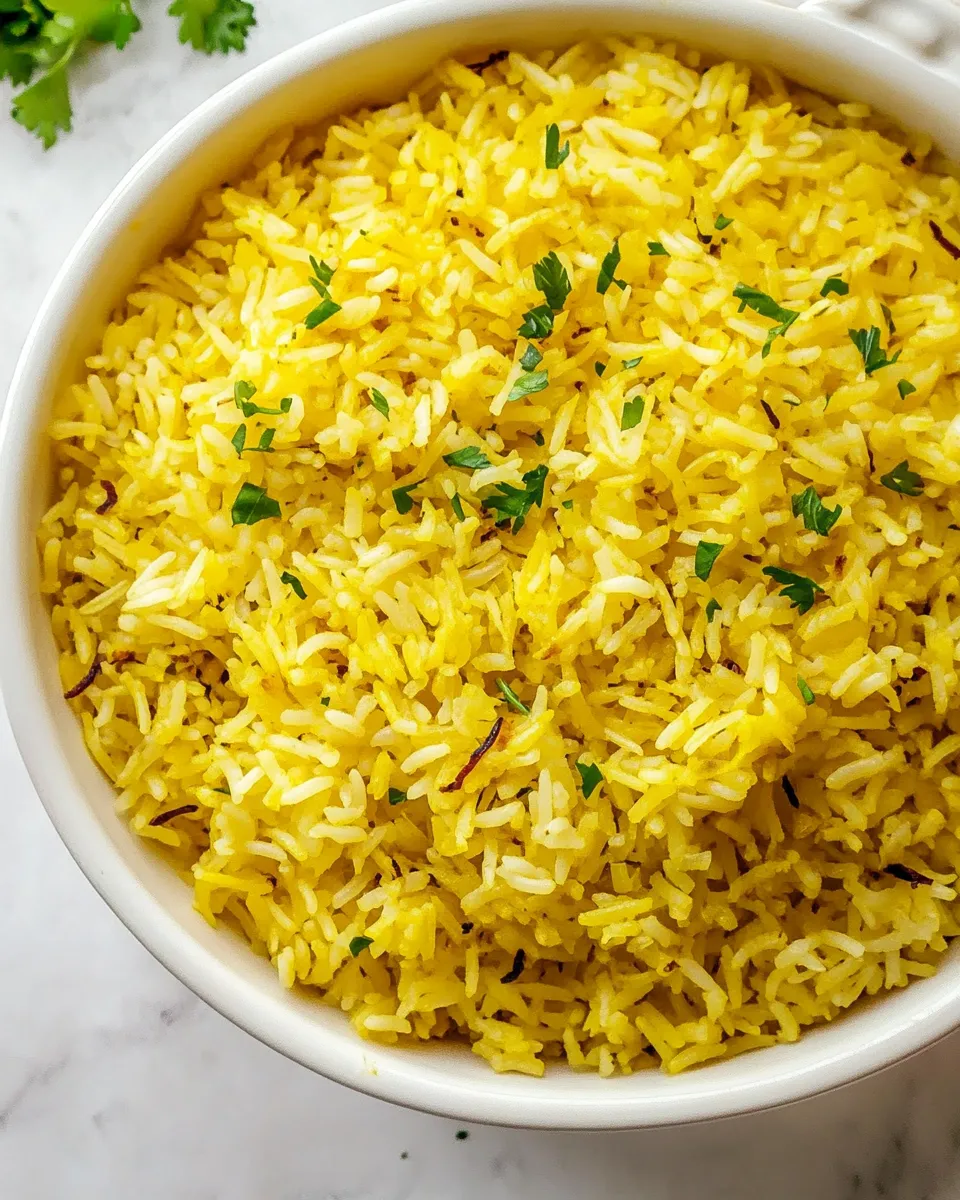
If you keep a well-stocked kitchen, you likely already have everything for this dish. The core list is short: basmati rice, stock, an onion, oil, salt, and saffron. The only ingredient that might prompt a quick store run is saffron. A small pinch lasts a long time—buy a little and store it carefully. Otherwise, this cooks with typical pantry staples and a single pot.
Tools & Equipment Needed
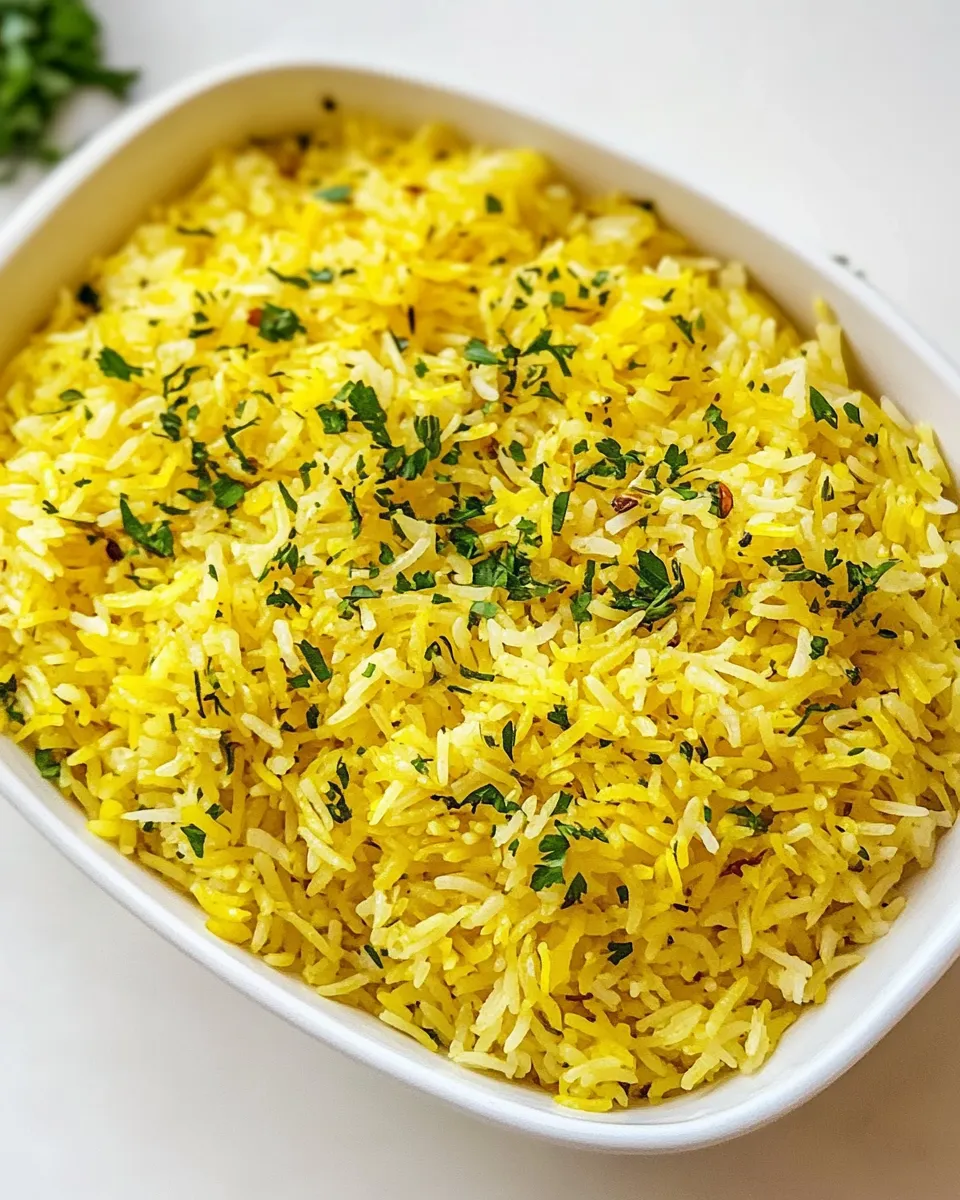
- Large heavy pot with a tight-fitting lid — even heat and a sealed lid prevent steam loss for perfect cooking.
- Mortar and pestle — to grind half of the saffron threads and gently release flavor; if you don’t have one, a small spice grinder or back of a spoon works carefully.
- Measuring spoons and cups — accurate amounts matter for saffron and salt.
- Colander — for rinsing the basmati until the water runs clear.
- Fork — to fluff the rice at the end without mashing grains.
Mistakes That Ruin Saffron Rice
- Using too much saffron: Saffron is potent. Excess flattens its delicate perfume and can taste medicinal. Stick to 1/4 teaspoon as written.
- Crushing all the threads: Grind only 1/8 teaspoon and leave the rest whole in the soak. Crushing everything can intensify bitterness.
- Skipping the rinse: Unrinsed basmati clings with extra starch and cooks gummy. Rinse until the water runs clear.
- Cooking with a loose lid or peeking: Lifting the lid during the 20-minute cook time releases steam and upsets the water-to-rice balance.
- Not letting it steam after turning off the heat: The 10-minute rest is critical for even moisture and separate grains.
- High heat while boiling for too long: Bring to a boil, then gently boil for only 30 seconds before reducing to low. Too vigorous a boil can cause uneven cooking.
Spring–Summer–Fall–Winter Ideas
Think of saffron rice as a neutral, fragrant base that shifts with the season.
- Spring: Serve alongside bright, herb-heavy dishes or lemon-forward sauces. The rice pairs well with anything that benefits from a delicate, floral counterpoint.
- Summer: Use it with light grilled proteins or simply spoon it next to fresh, chilled vegetable salads to balance heat and richness.
- Fall: Let the rice accompany roasted root vegetables or richly flavored braises where its subtlety offsets heavier elements.
- Winter: Add it to a platter with slow-cooked meats and warm spices; its color helps a winter table feel sunny and inviting.
Notes on Ingredients
Every ingredient in this recipe has a clear role.
- Saffron threads: Small in quantity but key in effect. Blooming saffron in hot water unlocks color and aroma efficiently.
- Hot water: The vehicle for saffron extraction. Use just hot enough to color and flavor the liquid; no need for boiling fury.
- Extra virgin olive oil: Provides richness and a lightly fruity base. It also helps the rice grains separate and gives a glossy finish.
- Minced yellow onion: Cooked slowly, it gives sweet depth and a soft texture contrast among the grains.
- White basmati rice: Chosen for its long grains and fragrant baseline. Proper rinsing and draining matter more than any elaborate technique.
- Chicken or vegetable stock: Controls the savory backbone. A golden-hued vegetable stock is recommended if avoiding chicken so the rice stays visually warm and clean.
- Salt: Simple seasoning, but adjust if your stock is low sodium. The recipe specifies 3/4 teaspoon, increasing to 1 teaspoon for low-sodium stock to keep flavor balanced.
How to Store & Reheat
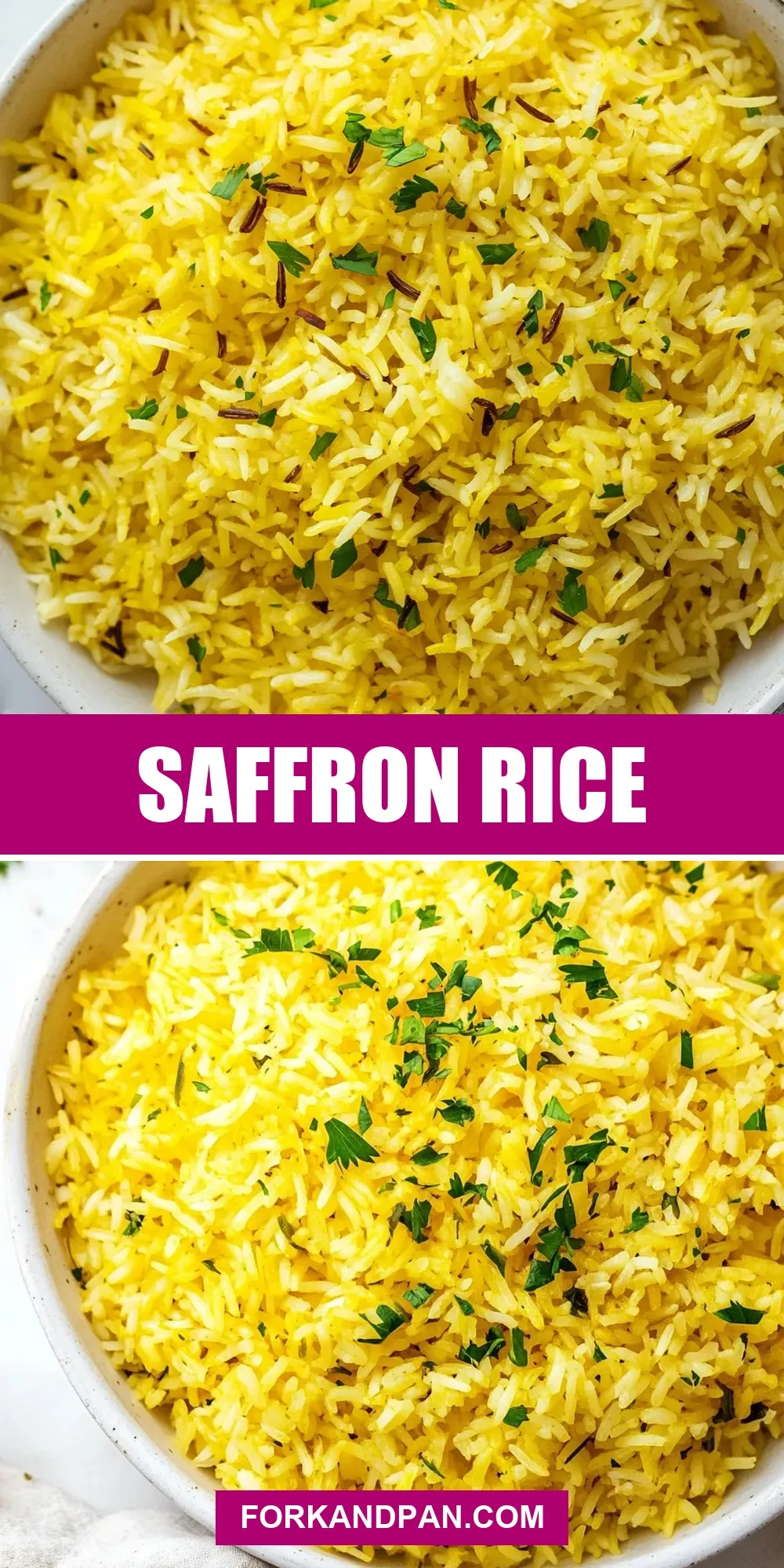
Storage is straightforward and forgiving.
- Refrigerator: Cool rice to room temperature within two hours, then store in an airtight container for up to 4 days.
- Freezer: For longer storage, portion rice into freezer-safe containers and freeze for up to 2 months. Thaw in the refrigerator before reheating.
- Reheat on the stovetop: Place rice in a saucepan with a splash of water or stock, cover, and warm over low heat, stirring gently until heated through to preserve grains.
- Reheat in the microwave: Add a teaspoon of water per cup of rice, cover loosely, and microwave in 30–45 second bursts, fluffing between intervals until hot.
Your Top Questions
Is the saffron amount really that small? Yes. Saffron packs intensity. Use the specified 1/4 teaspoon and bloom it properly for full effect.
Can I use a different rice? Basmati is preferred for its long grains and aromatic profile. Short-grain or brown rice will change cooking times and texture; follow their package instructions for water and timing instead of this recipe.
What if I only have low-sodium stock? The recipe notes to increase salt to 1 teaspoon when using low-sodium stock. Adjust to taste if your stock is exceptionally bland or very salty.
Do I have to grind some of the saffron? Grinding 1/8 teaspoon helps release more aroma quickly. Leaving the rest whole in the soak gives a layered release of flavor and prevents an overly bitter concentration.
Can I make this ahead? Yes. Cooked saffron rice keeps well in the fridge for a few days and reheats cleanly. For the freshest texture, finish the fluffing just before serving and add a tiny splash of water if the rice seems dry when reheating.
Final Thoughts
This saffron rice is one of my go-to side dishes because it feels special without requiring special effort. A careful start—with rinsed rice, gently caramelized onion, and a proper saffron bloom—returns flattering results every time. Keep the routine: rinse, sweat, bloom, simmer, rest. Follow those steps and you’ll have a bowl of bright, fragrant rice that elevates weeknight meals and sits proudly at the center of a celebratory spread.
Make it once exactly as written to understand the balance, then adjust small details to your taste. Saffron rice likes patience more than technique, and that makes it one of the most satisfying dishes to cook and serve.
Saffron Rice
Ingredients
Ingredients
- 1/4 teaspoongood quality saffron threads
- 1/4 cuphot water
- 2 tablespoonsextra virgin olive oil
- 3/4 cupminced yellow onion
- 2 cupswhite basmati rice
- 3 cupschicken stock or vegetable stock if using vegetable stock, choose a golden colored stock such as "no chicken" broth
- 3/4 teaspoonsalt if using a low sodium stock, adjust salt to 1 tsp
Instructions
Instructions
- Measure 1/4 teaspoon saffron threads. Put 1/8 teaspoon saffron in a mortar and grind with a pestle to a powder; add the remaining 1/8 teaspoon saffron threads to the mortar without crushing them. Pour 1/4 cup hot water into the mortar and let the saffron soak for 5 minutes.
- Meanwhile, sort the 2 cups white basmati rice to remove any debris, then rinse it in a colander under cold water until the water runs clear. Drain the rice well.
- In a large heavy pot, heat 2 tablespoons extra virgin olive oil over medium heat. Add 3/4 cup minced yellow onion and sauté, stirring frequently, for about 10 minutes until the onion is very soft and beginning to caramelize.
- Add the drained rice to the pot and sauté for 1 minute, stirring to coat the rice with the oil and onion.
- Pour the saffron and its soaking liquid evenly over the rice and stir gently to distribute the color and flavor.
- Add 3 cups chicken stock or vegetable stock (if using vegetable stock, choose a golden-colored stock such as "no chicken" broth) and 3/4 teaspoon salt (use 1 teaspoon salt if your stock is low sodium). Stir once to combine.
- Increase heat to medium-high and bring the pot to a boil. Let it boil gently for 30 seconds.
- Cover the pot with a tight-fitting lid, reduce heat to low, and cook undisturbed for 20 minutes.
- Turn off the heat and keep the pot covered; let the rice steam for 10 minutes more. Uncover and fluff the rice with a fork, stirring gently to break up any clumps and incorporate the cooked onion before serving.
Equipment
- Mortar and Pestle
- Colander
- large heavy pot
- tight-fitting lid
- Fork
Notes
Serving size
: 1/2 cup. Recipe makes about 6 cups of cooked rice.
Nutrition calculated
using chicken stock and 3/4 tsp salt.
Note
: it's important to use a good quality saffron for this recipe. There are several types of "faux safrron" on the market which are inexpensive, but flavorless. True saffron is very pricey, but you only need a little to add a lot of flavor.