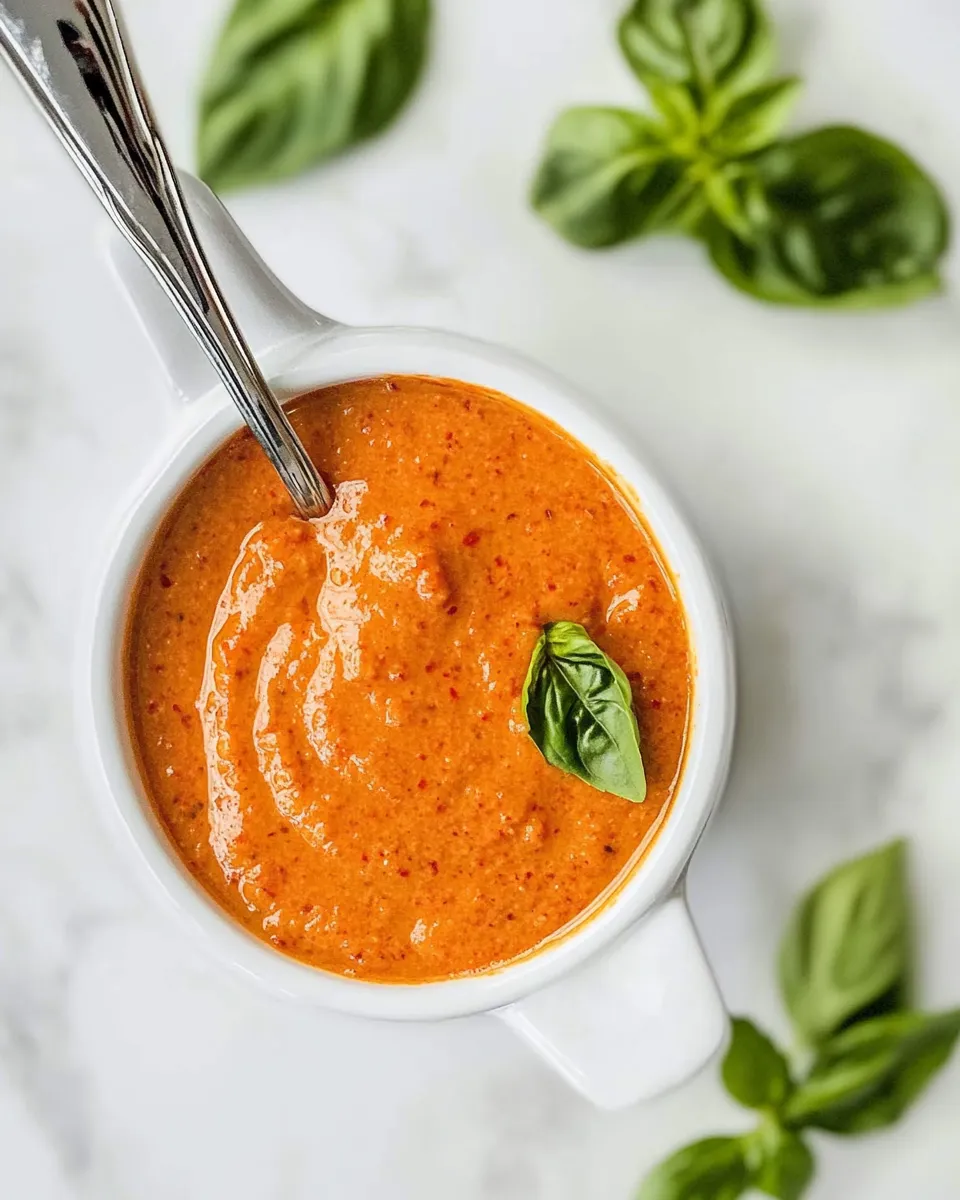
Red Pepper Coulis
I make this Red Pepper Coulis whenever I want a fast, confident sauce that lifts weeknight dinners and weekend grazing boards alike. It’s bright, silky, and short on fuss—sautéed aromatics, roasted peppers, a splash of cream and balsamic, all blended until smooth and gently reduced. The result is a versatile coulis that plays well with grilled proteins, roasted vegetables, crostini, and even eggs.
What I love most is how quickly the flavors come together. The sauté softens the onion and tames the garlic, while the roasted peppers bring sweetness and a roasted depth you can’t fake with raw peppers. A little cream smooths edges and a whisper of balsamic adds acid and complexity. It’s an elegant finishing sauce that feels restaurant-worthy but is simple enough for a busy evening.
Below you’ll find a clear ingredient list with practical notes, step-by-step instructions taken from my tested method, and focused tips to help you nail the texture and flavor every time. Read the equipment and gotchas sections before you start—those two things save me time and frustration when I’m cooking for guests.
Ingredient Breakdown

Ingredients
- 4 1/2 tablespoons extra-virgin olive oil, divided — Use a good-quality oil; one tablespoon sautés the aromatics, the rest finishes the sauce for silkiness and flavor.
- 1 cup white onion, chopped — Provides a sweet, savory base; chop evenly so it softens uniformly.
- 2 cloves garlic, chopped — Adds aromatic lift; chop fine so it releases into the oil without burning.
- 2 roasted red bell peppers, about 16 ounces total, chopped — The backbone of the coulis. Roasted peppers give sweetness and a smoky note—char and peel them well for smooth texture.
- 1/2 teaspoon kosher salt — Balances and enhances the peppers; adjust to taste after blending if needed.
- 1 1/2 tablespoons heavy cream — Smooths and enriches the sauce; adds mouthfeel without making it overtly creamy.
- 1 tablespoon fresh basil leaves, chopped — Bright herbal lift; fold in before blending for a fresh finish.
- 2 teaspoons balsamic vinegar — Adds acidity and a touch of sweetness; stirred in during the heating stage to marry flavors.
- Vegetable stock, as needed (optional) — Use a splash to thin the coulis to your desired consistency; add gradually and simmer briefly after each addition.
Mastering Red Pepper Coulis: How-To
- Heat 1 tablespoon of the extra-virgin olive oil in a skillet over medium heat.
- Add the chopped white onion (1 cup) and chopped garlic (2 cloves). Sauté, stirring occasionally, until the onion is soft and translucent, about 5–7 minutes. Remove the skillet from the heat and let the mixture cool for 1–2 minutes.
- Transfer the sautéed onion and garlic to a food processor.
- Add the roasted red bell peppers (about 16 ounces, chopped), kosher salt (1/2 teaspoon), heavy cream (1 1/2 tablespoons), chopped fresh basil leaves (1 tablespoon), and the remaining extra-virgin olive oil to the processor. (You used 1 tablespoon for sautéing; add the rest of the 4 1/2 tablespoons.)
- Blend the mixture until completely smooth, scraping down the sides of the processor as needed.
- Pour the blended mixture into a small saucepan. Stir in the balsamic vinegar (2 teaspoons).
- Heat the saucepan over medium-low heat and simmer, stirring occasionally, until the coulis thickens slightly, about 10 minutes. If you prefer a thinner coulis, stir in vegetable stock a little at a time until you reach the desired consistency, simmering briefly after each addition.
- Remove from heat and serve the coulis warm.
What Makes This Recipe Special

This Red Pepper Coulis hits the sweet spot between simplicity and impact. There are three things that set it apart. First, the use of roasted peppers gives authentic depth that raw peppers simply can’t match—you’re tasting caramelized sugars and gentle smoke. Second, the brief sauté of onion and garlic builds a mellow savory base; it softens sharp edges and layers the flavor. Third, finishing the blended mixture with a low simmer concentrates the sauce and melds the components so the coulis feels cohesive rather than just pureed vegetables.
The balance of cream and balsamic is intentionally modest. The cream rounds acidity and rounds mouthfeel, while the balsamic brightens and adds complexity. Those small additions transform a pureed vegetable into a sauce that can stand beside steaks, fish, or roasted cauliflower without disappearing into the background.
Ingredient Flex Options
- Roasted peppers: If you have jarred roasted red peppers, they work—rinse briefly to remove excess packing liquid and drain well. Fresh peppers you roast yourself will give the best flavor.
- Onion: Yellow or sweet onions are fine if you don’t have white; keep the sauté gentle to avoid browning.
- Garlic: For a milder garlic profile, reduce to 1 clove or sauté longer at low heat to soften its bite.
- Oil: Any neutral or fruity oil can replace extra-virgin olive oil, but choose something with good flavor to carry the sauce.
- Herbs: If basil isn’t available, a small handful of parsley will add freshness; add the herb before blending to keep it integrated.
- Thickness: Vegetable stock thins cleanly; for a richer thinness, use a bit of reserved pepper roasting liquid if you roasted them yourself.
Must-Have Equipment
- Skillet: A medium nonstick or stainless skillet for sautéing the onion and garlic evenly.
- Food processor or high-speed blender: Essential for achieving a completely smooth coulis—blending time affects texture.
- Small saucepan: For the gentle simmer that finishes the sauce and concentrates flavors.
- Heatproof spatula: For scraping the processor and stirring the saucepan.
- Fine sieve (optional): If you prefer an ultra-silky finish, press the blended coulis through a sieve before simmering.
Easy-to-Miss Gotchas
- Burning the garlic: Garlic becomes bitter if it browns. Keep heat at medium for the onion, and stir often. Remove from heat to cool briefly before transferring to the processor.
- Too-thick or too-thin texture: The blended coulis will thicken as it simmers. If it becomes too thick, add vegetable stock a little at a time. If too thin, simmer a few minutes longer over low heat.
- Watery jarred peppers: Some jarred roasted peppers carry extra liquid; drain them well or the coulis will be too loose and dilute the flavor.
- Over-reducing: Simmer gently and watch closely in the last few minutes—10 minutes is usually enough to thicken slightly without losing vibrancy.
- Salt timing: I recommend blending with the stated 1/2 teaspoon kosher salt, then taste after warming. Salt perception changes with heat; adjust only after the brief simmer.
Allergy-Friendly Swaps
If you’re accommodating dietary needs, the coulis is forgiving.
- Dairy-free: Replace the heavy cream with an equal amount of canned full-fat coconut milk or a neutral plant-based cream. Expect a subtle coconut note with coconut milk; coconut cream is richer and keeps the texture silky.
- Oil-free: You can sauté the aromatics in a tablespoon of vegetable stock or water, then add more stock for finishing instead of oil. The texture will be lighter and less glossy.
- Low-sodium: Reduce the kosher salt and taste after simmering, or use a low-sodium vegetable stock when thinning instead of regular stock.
Chef’s Rationale
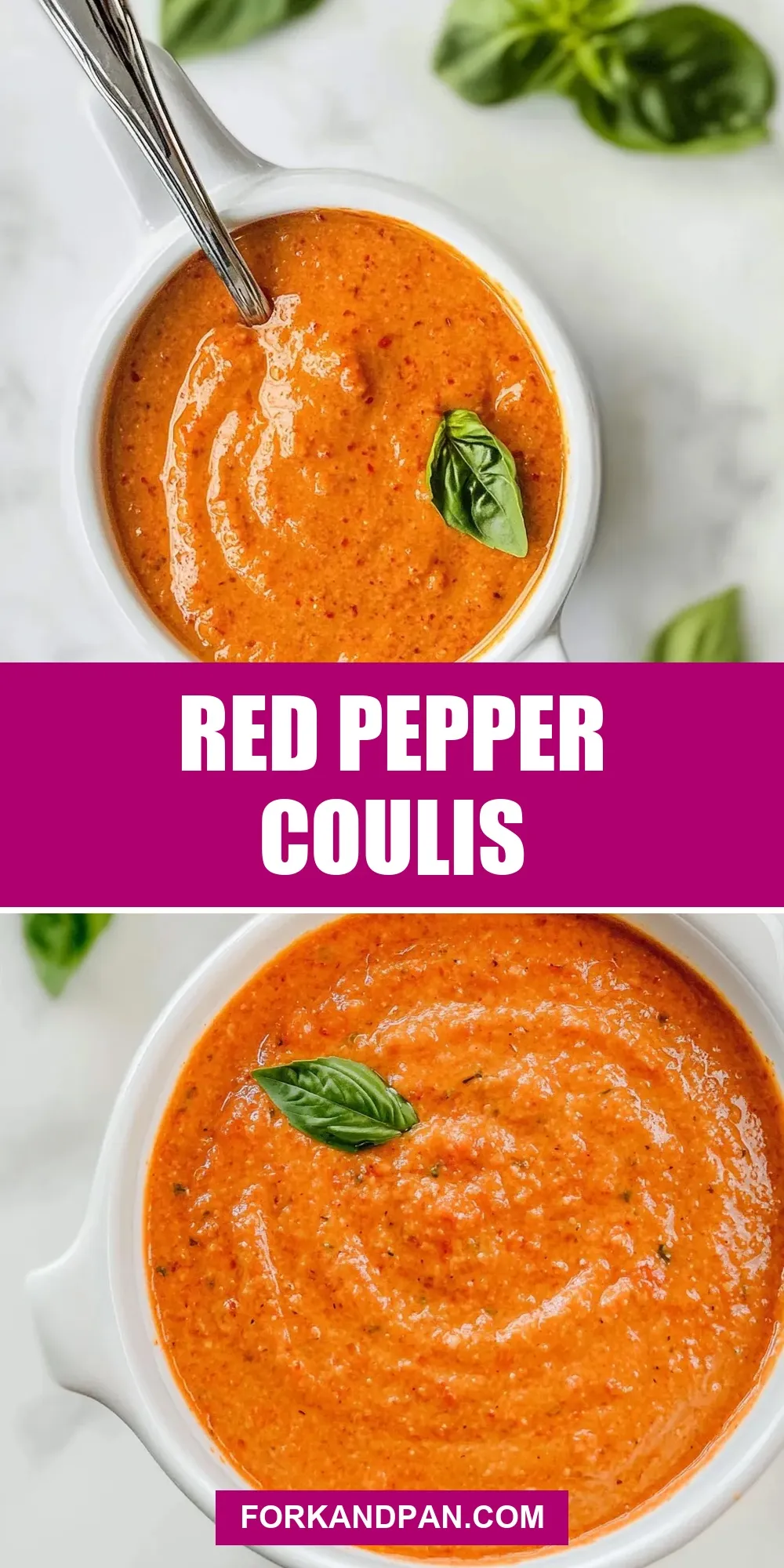
I build this recipe around three principles: clarity, balance, and texture. Clarity means each ingredient has a distinct job—the roasted peppers give primary flavor and body; the sautéed aromatics supply savory depth; basil gives a bright note; balsamic and salt sharpen and balance. Balance is about proportion: a small amount of cream enough to smooth but not dominate, a touch of oil to carry fat-soluble flavors, and a short simmer to integrate without dulling brightness.
Texture is what separates a chunky puree from a proper coulis. Blending until completely smooth and gently simmering produces a sauce that clings to food and finishes dishes rather than simply pooling. I favor a food processor for control; a high-speed blender works well but may require slightly more liquid to achieve smoothness.
Leftovers & Meal Prep
Storage
Cool the coulis to room temperature, then transfer it to an airtight container. It will keep in the refrigerator for up to 4–5 days. For longer storage, freeze in small portions—ice cube trays work well—then transfer frozen cubes to a zip-top bag for up to 3 months. Label with the date so you use the oldest first.
Reheating & Uses
Reheat gently over low heat, stirring frequently. If the sauce thickens too much after refrigeration, add a splash of vegetable stock or water and whisk until it loosens. Use reheated coulis as a finishing sauce for fish, chicken, roasted vegetables, or as a colorful base for crostini topped with goat cheese or ricotta. It’s also excellent drizzled over grain bowls and salads or folded into pasta with a squeeze of lemon.
FAQ
- Can I make this ahead? Yes. The coulis stores well in the refrigerator up to 4–5 days and freezes perfectly. Make a double batch and freeze portions for quick dinners.
- Do I need to peel roasted peppers? Peeling improves texture and removes bitter char bits. If you roast at high heat or blister the skin, let them steam in a covered bowl or plastic bag, then peel for easiest removal.
- Can I use raw red bell peppers? You can, but raw peppers will give a brighter, greener note and a different texture; roasting is recommended for the sweet, smoky depth that defines this coulis.
- How do I get a perfectly smooth coulis? Blend thoroughly in a processor or high-speed blender, scrape the sides, and optionally press through a fine mesh sieve. Simmer briefly to let air bubbles dissipate and flavors marry.
- Is this suitable for brunch? Yes—use it to dress eggs, shakshuka-style dishes, or dolloped over burrata on toast for a savory brunch plate.
Final Thoughts
This Red Pepper Coulis is a little bit of technique for a lot of payoff. It’s forgiving, fast, and adaptable—exactly the kind of sauce I keep in rotation. Roast or buy good peppers, sauté the aromatics gently, and don’t rush the final simmer—those small steps give you a sauce that feels intentional and polished. Make a batch, freeze a few portions, and you’ll have an instant upgrade for last-minute meals whenever you need one.
Happy cooking—I hope this coulis becomes a pantry staple for you the way it is for me. If you try it, pair it with something simple and confident: roasted fish, grilled bread with cheese, or a tray of seasonal vegetables. It’s a small lift that makes an ordinary dish feel finished.
Red Pepper Coulis
Ingredients
Ingredients
- 4 1/2 tablespoonsextra-virgin olive oildivided
- 1 cupwhite onionchopped
- 2 clovesgarlicchopped
- 2 roasted red bell peppersabout 16 ounces total chopped
- 1/2 teaspoonkosher salt
- 1 1/2 tablespoonsheavy cream
- 1 tablespoonfresh basil leaveschopped
- 2 teaspoonsbalsamic vinegar
- Vegetable stockas needed optional
Instructions
Instructions
- Heat 1 tablespoon of the extra-virgin olive oil in a skillet over medium heat.
- Add the chopped white onion (1 cup) and chopped garlic (2 cloves). Sauté, stirring occasionally, until the onion is soft and translucent, about 5–7 minutes. Remove the skillet from the heat and let the mixture cool for 1–2 minutes.
- Transfer the sautéed onion and garlic to a food processor.
- Add the roasted red bell peppers (about 16 ounces, chopped), kosher salt (1/2 teaspoon), heavy cream (1 1/2 tablespoons), chopped fresh basil leaves (1 tablespoon), and the remaining extra-virgin olive oil to the processor. (You used 1 tablespoon for sautéing; add the rest of the 4 1/2 tablespoons.)
- Blend the mixture until completely smooth, scraping down the sides of the processor as needed.
- Pour the blended mixture into a small saucepan. Stir in the balsamic vinegar (2 teaspoons).
- Heat the saucepan over medium-low heat and simmer, stirring occasionally, until the coulis thickens slightly, about 10 minutes. If you prefer a thinner coulis, stir in vegetable stock a little at a time until you reach the desired consistency, simmering briefly after each addition.
- Remove from heat and serve the coulis warm.
Equipment
- Skillet
- Food Processor
- Small Saucepan