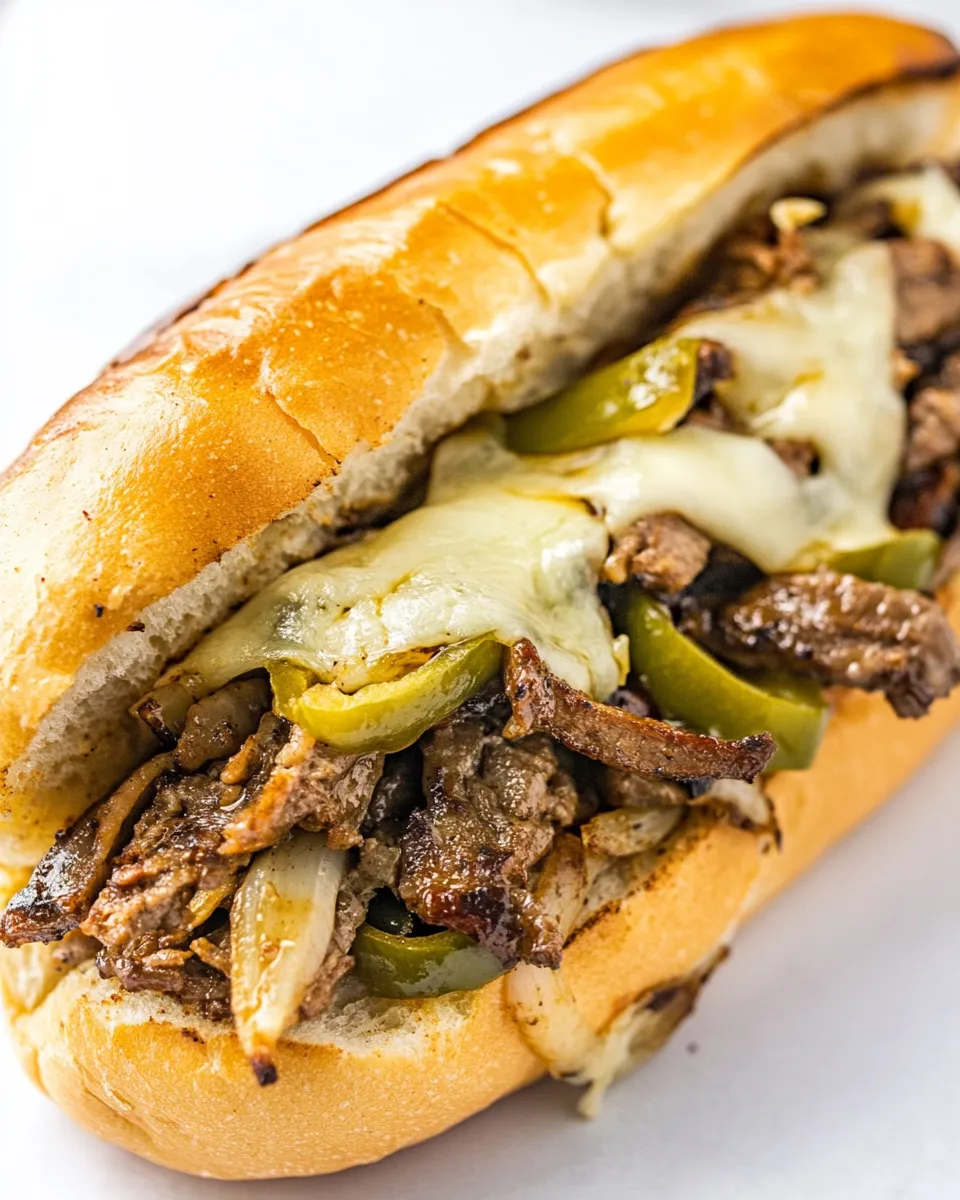
Philly Cheesesteak
I grew up on sandwiches that were more about comfort than ceremony. The Philly cheesesteak is one of those very honest, very satisfying meals: thinly sliced steak, soft toasted rolls, sautéed onions and peppers, and a blanket of melty cheese. It’s straightforward, fast, and forgiving—perfect for weeknight dinners or a relaxed weekend lunch.
In this post I give you a compact, practical version that sticks to the essentials. I’ll walk through the exact ingredients and a clear, step-by-step method so you get a reliable result every time. I also include tips, common mistakes to avoid, and small tweaks for different diets or equipment.
What Goes Into Philly Cheesesteak

This section shows the ingredients you’ll need and a quick note on why each one matters. Keep the measurements exact for the best balance of flavor and texture.
Ingredients
- 1 pound (450g) ribeye steak — tender, well-marbled beef; slice very thinly against the grain for the best texture.
- 4 hoagie rolls — soft rolls that hold the filling; keep one side attached when slicing so the sandwich stays together.
- 2 tablespoons butter, softened — spreads on the cut sides for toasting and adds rich flavor.
- 4 teaspoons canola oil, divided — use half to sauté the vegetables and half to sear the steak; neutral oil with a high smoke point.
- ½ teaspoon salt — seasons the steak; distribute evenly over the meat for balanced flavor.
- ¼ teaspoon ground black pepper — simple seasoning that heightens the beef’s taste; freshly ground if possible.
- 1 medium yellow onion, thinly sliced — softens and sweetens as it sautés, creating the base flavor for the sandwich.
- 1 green bell pepper, thinly sliced — adds brightness and a mild crunch; slices thin so they cook evenly with the onions.
- 8 ounces mushrooms, sliced — optional but recommended for extra umami and texture; brown them well for the best flavor.
- 8 slices provolone cheese — about two slices per sandwich; melts smoothly and complements the beef without overpowering it.
Make Philly Cheesesteak: A Simple Method
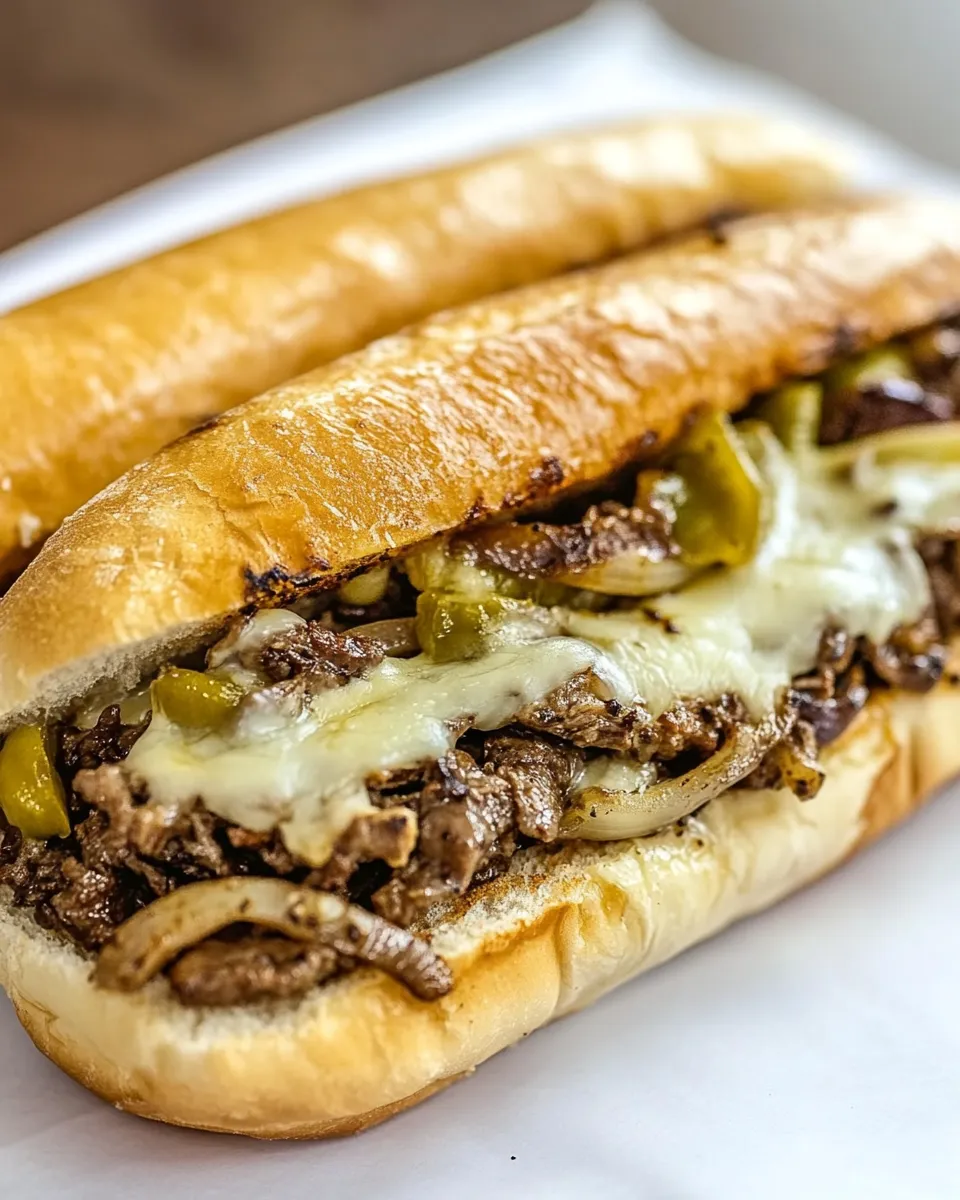
- Slice the 1 pound ribeye very thinly against the grain; set the sliced steak aside.
- Cut the 4 hoagie rolls lengthwise, keeping one side attached. Spread the 2 tablespoons softened butter on the cut sides and toast the cut sides in a hot skillet until lightly browned and golden. Remove the rolls and set aside.
- In the same skillet, heat 2 teaspoons of the canola oil over medium-high heat. Add the thinly sliced medium yellow onion, sliced green bell pepper, and 8 ounces sliced mushrooms. Sauté, stirring occasionally, until the vegetables are lightly browned and the onions are translucent (about 5–7 minutes). Transfer the vegetables to a plate and set aside.
- Wipe the skillet if it is excessively browned, then heat the remaining 2 teaspoons canola oil over medium-high heat. Spread the sliced steak in a single layer in the skillet (work in batches if necessary to avoid overcrowding). Evenly season the steak with the ½ teaspoon salt and ¼ teaspoon ground black pepper.
- Cook the steak until browned on the first side, about 1–2 minutes, then flip and cook the other side until the strips are cooked through, another 1–2 minutes.
- Return the sautéed vegetables to the skillet with the cooked steak and stir to combine. Remove the skillet from the heat.
- Arrange the 8 slices of provolone cheese over the steak-and-vegetable mixture (about 2 slices per sandwich). Cover the skillet briefly (or place a lid over it) for about 1 minute, until the cheese has gently melted.
- Divide the warm cheesy steak mixture evenly among the toasted hoagie rolls, stuffing each roll. Serve immediately.
Why You’ll Love This Recipe
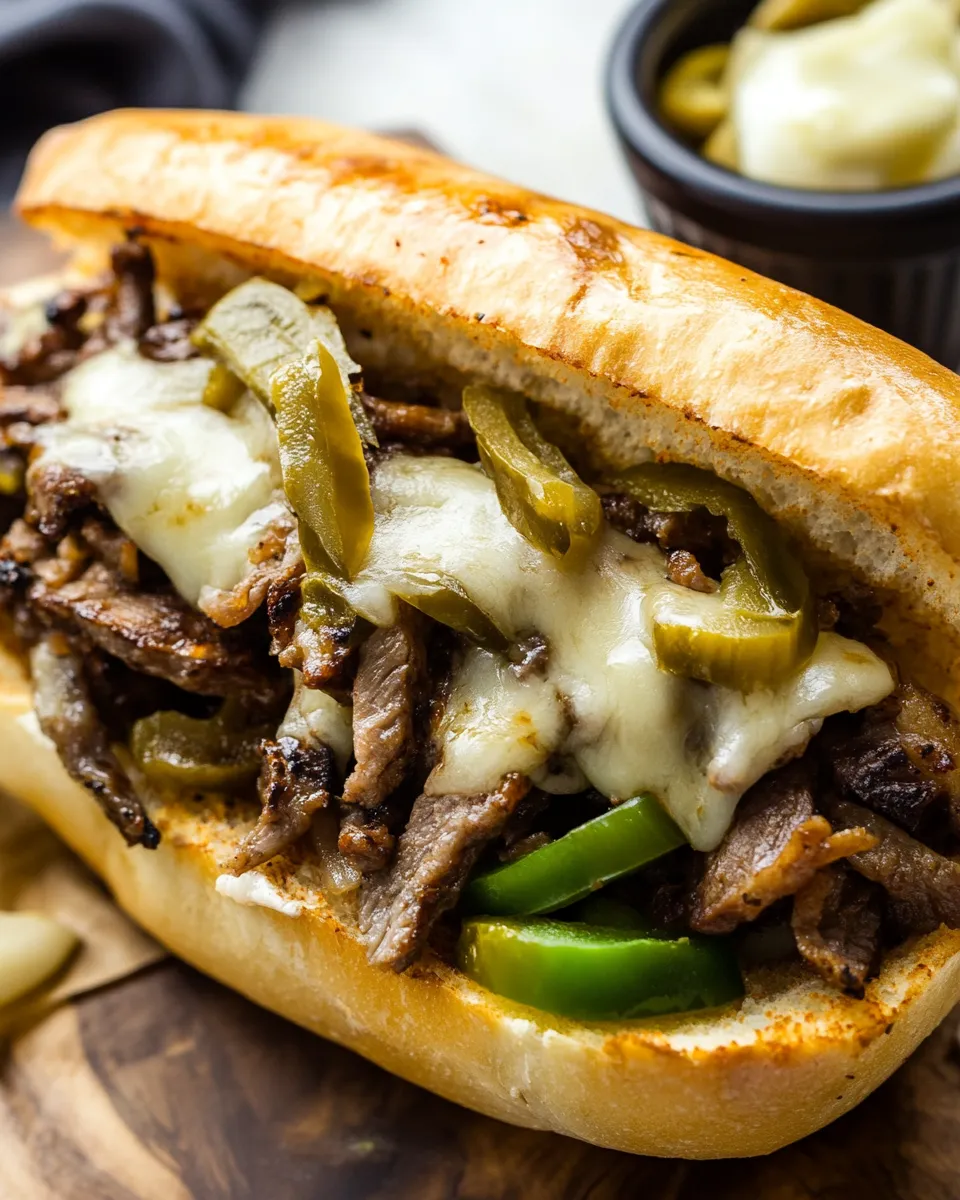
This Philly cheesesteak delivers straightforward comfort without complicated steps. The thinly sliced ribeye cooks quickly and stays tender because you slice against the grain. Browning the onions, peppers, and mushrooms builds a sweet and savory base that complements the beef rather than competing with it.
Toasting the cut sides of the rolls in butter adds texture and a little richness—don’t skip it. And the provolone melts into the meat and veg, tying everything together into a warm, cohesive bite. It’s not fussy. It’s honest food that hits the spot whether you’re feeding a crowd or treating yourself.
International Equivalents
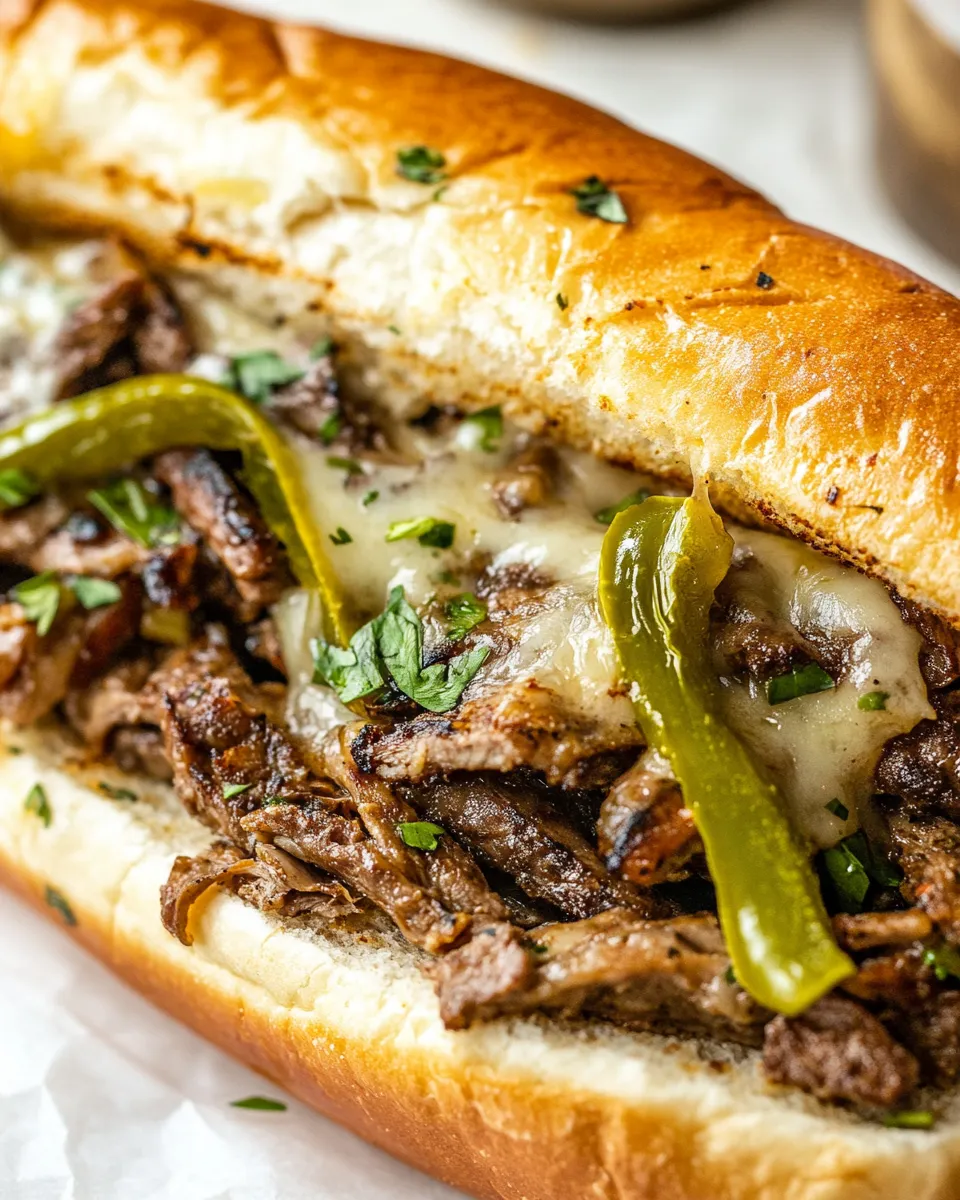
The idea of steak and bread appears all over the world, but the Philly cheesesteak has its own identity: thin strips of beef, sautéed vegetables, and melty cheese in a soft roll. If you travel, look for similar concepts that adapt local ingredients.
- United Kingdom: Steak sandwiches often appear in cafés using sliced roast beef or steak on crusty bread with onions or mushrooms; they lean toward heartier, crusted rolls.
- France: A steak sandwich might surface as a “steak-frites” influenced roll or pan bagnat-style variations; expect a denser bread and sometimes raw onions or Dijon mustard in place of melted cheese.
- Italy: Think of panini with grilled steak or bresaola—cured or quickly seared meats, often with softer cheeses or olive oil instead of the molten provolone.
The technique—thin meat, high-heat sear, softened aromatics, melted cheese—translates well. Swap bread or seasonings to match local flavors while keeping the cooking approach the same.
Gear Up: What to Grab
- Heavy skillet (cast iron preferred) — holds heat and gives a good sear for the steak.
- Sharp chef’s knife — essential for thin, even slices of ribeye.
- Cutting board — stabilize the meat; chill the steak briefly if it’s too soft to slice thinly.
- Spatula or tongs — use whatever lets you flip strips without tearing them.
- Plate or shallow bowl — to rest cooked vegetables and keep the workflow organized.
- Lid for skillet — helps melt the cheese quickly and evenly over the mixture.
- Measuring spoons — to keep salt, pepper, oil, and butter amounts accurate for consistent results.
Learn from These Mistakes
- Overcrowding the pan — when too much steak hits the skillet it steams instead of browning. Cook in batches to keep a good sear.
- Slicing across the grain — cuts against the grain for tenderness. If you slice with the grain, the texture will be chewier.
- Skipping the toast — un-toasted rolls become soggy under hot filling. Toasting the cut sides with butter adds structure and flavor.
- Adding cheese too soon — melt the cheese at the end. If it goes on while the meat is still steaming, it won’t get that silky texture.
- Not resting the steak briefly after slicing — slicing very thin can make pieces fragile. Keep them lightly chilled or handle gently to maintain form.
Make It Diet-Friendly
You can make small changes to cut calories or carbs without losing the essence of the sandwich. Keep the core ingredients and alter portions or prep techniques.
- Reduce cheese — use one slice per sandwich instead of two to lower saturated fat while keeping the melty finish.
- Cut the butter — spread less butter on the rolls or skip it and toast the cut sides in a dry skillet. The rolls will still crisp though with slightly less richness.
- Use less oil — sauté vegetables with 1 teaspoon of oil or use a non-stick pan to reduce added fats during cooking.
- Open-faced option — serve the filling over a single halved roll or a small portion of bread to lower carbohydrate intake while keeping the full meaty flavor.
Behind the Recipe
I learned to make this version because it’s reliable and fast. Ribeye is indulgent, yes, but its marbling keeps the thin slices juicy when they hit the pan for only a minute or two per side. The order of operations matters: toast the bread first so it has time to cool slightly and hold up to the hot filling, and saute the veggies in the same pan so you keep those browned fond bits for extra flavor.
Over the years I’ve tested small timing tweaks—cutting the steak thinner, using a lid to finish the cheese, and dividing the oil—to simplify the process without changing the result. This is the version I turn to when I want maximal comfort with minimal fuss.
Shelf Life & Storage
If you have leftovers, separate the components where possible. Store the steak-and-vegetable mixture in an airtight container in the refrigerator for up to 3–4 days. Keep toasted rolls in a paper bag at room temperature for a day to preserve some texture; refrigerating bread can dry it out.
To reheat the filling, warm a skillet over medium and stir the mixture until heated through; cover briefly to help the cheese re-melt. Re-toast the rolls if they lost their crunch. Avoid refrigerating a fully assembled sandwich—warming becomes uneven and the bread can get soggy.
Ask the Chef
- Q: Can I use a different cut of beef?
A: Yes, but ribeye is chosen for its marbling and flavor. If you use a leaner cut, slice thinner and watch the cooking time to avoid dryness. - Q: Is provolone necessary?
A: Provolone melts nicely and is mild. If you need a swap, pick a cheese with good melting properties, but keep in mind it will change the flavor profile. - Q: What if I don’t have a cast-iron skillet?
A: Use any heavy-bottomed skillet with good heat retention. Non-stick works for vegetables and cheese, but for a strong sear a stainless or cast-iron pan is best. - Q: How thin should the steak be?
A: Very thin—think sashimi-thin or deli-sliced. If your slices are thicker, the steak will take longer and could become tough.
The Takeaway
This Philly cheesesteak is a simple, reliable sandwich you can make on a weeknight and still feel accomplished. Follow the ingredient list and the eight-step method, prioritize thin slicing and a hot skillet, and toast those rolls. Small adjustments—less cheese, less butter, or open-faced service—let you tailor it to your needs without losing the core flavors. Make it once, and you’ll have a go-to that’s both comforting and practical.
Philly Cheesesteak
Ingredients
Ingredients
- ?1 pound 450 gribeye steakNote 1
- ?4 hoagie rollsNote 2
- ?2 tablespoonsbuttersoftened
- ?4 teaspoonscanola oildivided
- ?1/2 teaspoonsalt
- ?1/4 teaspoonground black pepper
- ?1 mediumyellow onionthinly sliced
- ?1 green bell pepperthinly sliced
- ?8 ouncesmushroomssliced
- ?8 slicesprovolone cheeseNote 3
Instructions
Instructions
- Slice the 1 pound ribeye very thinly against the grain; set the sliced steak aside.
- Cut the 4 hoagie rolls lengthwise, keeping one side attached. Spread the 2 tablespoons softened butter on the cut sides and toast the cut sides in a hot skillet until lightly browned and golden. Remove the rolls and set aside.
- In the same skillet, heat 2 teaspoons of the canola oil over medium-high heat. Add the thinly sliced medium yellow onion, sliced green bell pepper, and 8 ounces sliced mushrooms. Sauté, stirring occasionally, until the vegetables are lightly browned and the onions are translucent (about 5–7 minutes). Transfer the vegetables to a plate and set aside.
- Wipe the skillet if it is excessively browned, then heat the remaining 2 teaspoons canola oil over medium-high heat. Spread the sliced steak in a single layer in the skillet (work in batches if necessary to avoid overcrowding). Evenly season the steak with the ½ teaspoon salt and ¼ teaspoon ground black pepper.
- Cook the steak until browned on the first side, about 1–2 minutes, then flip and cook the other side until the strips are cooked through, another 1–2 minutes.
- Return the sautéed vegetables to the skillet with the cooked steak and stir to combine. Remove the skillet from the heat.
- Arrange the 8 slices of provolone cheese over the steak-and-vegetable mixture (about 2 slices per sandwich). Cover the skillet briefly (or place a lid over it) for about 1 minute, until the cheese has gently melted.
- Divide the warm cheesy steak mixture evenly among the toasted hoagie rolls, stuffing each roll. Serve immediately.
Equipment
- Skillet
- Plate
- Lid
Notes
When slicing the hoagie rolls, don’t slice all the way through, the buns should be attached from one side. So only slice like ¾ through.
Use American cheese in place of the provolone for a creamier texture. Or smoked provolone cheese for more flavor.