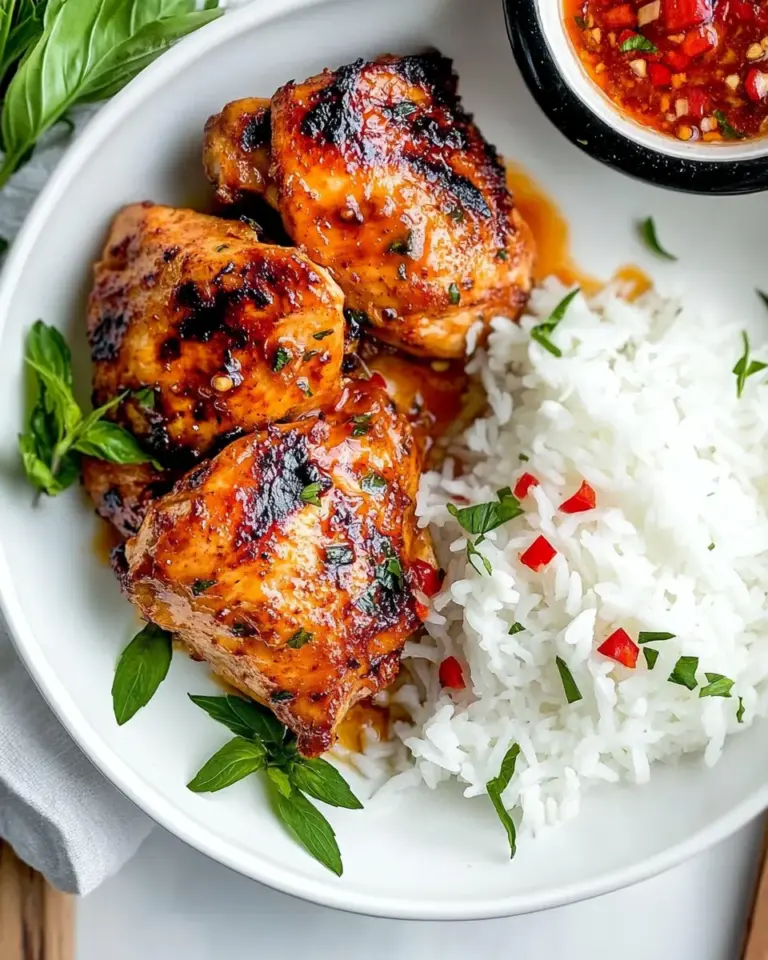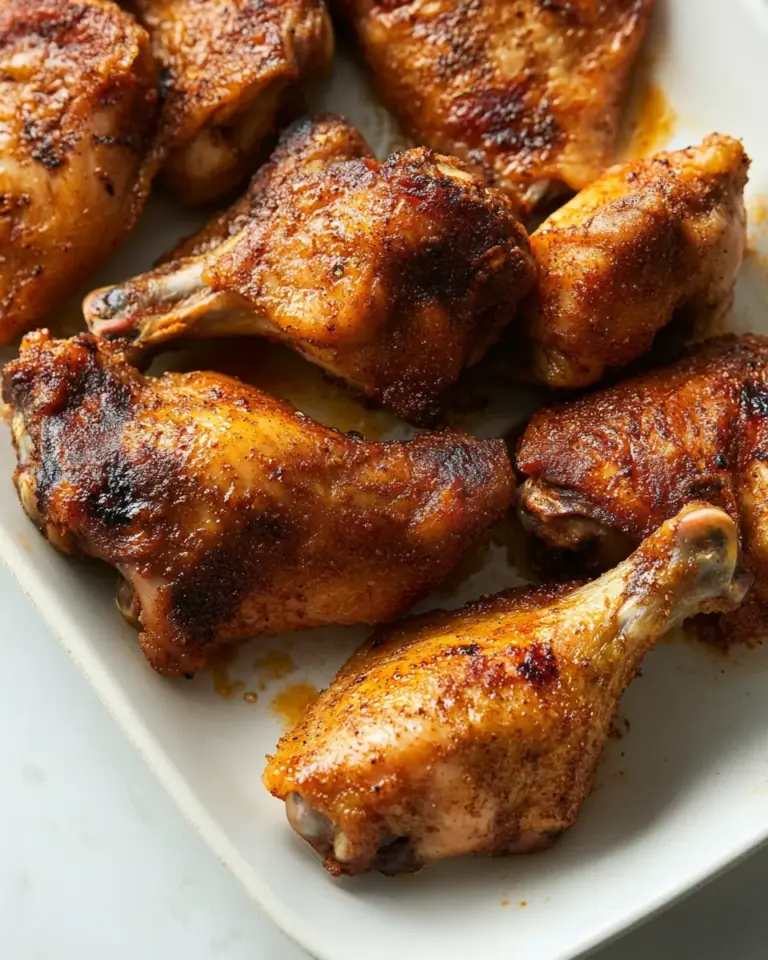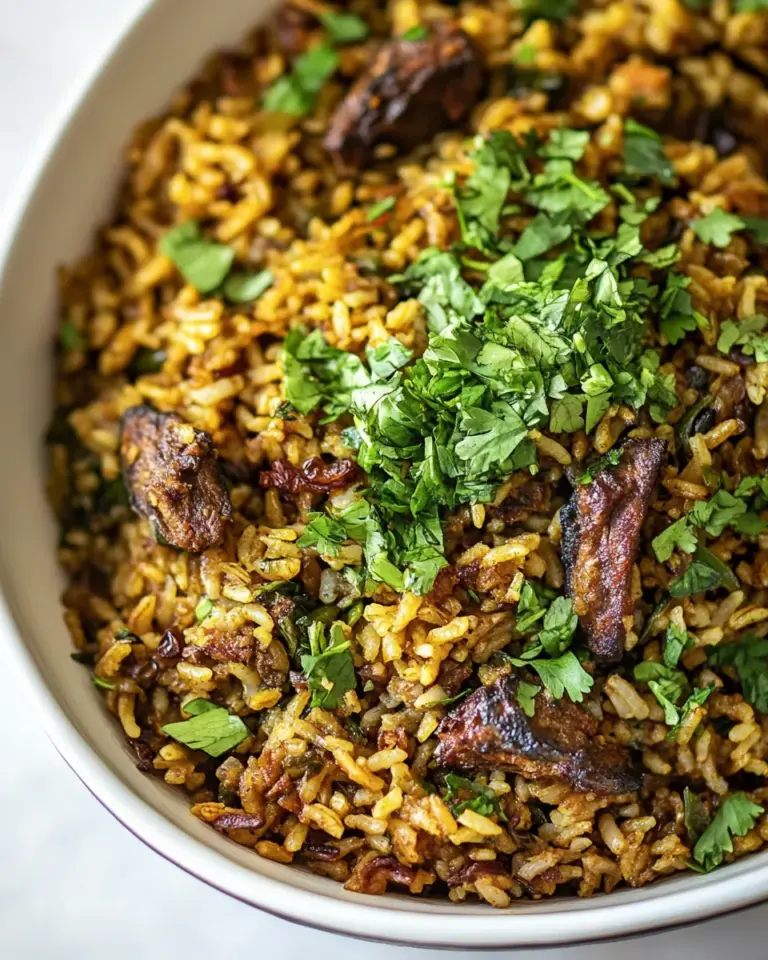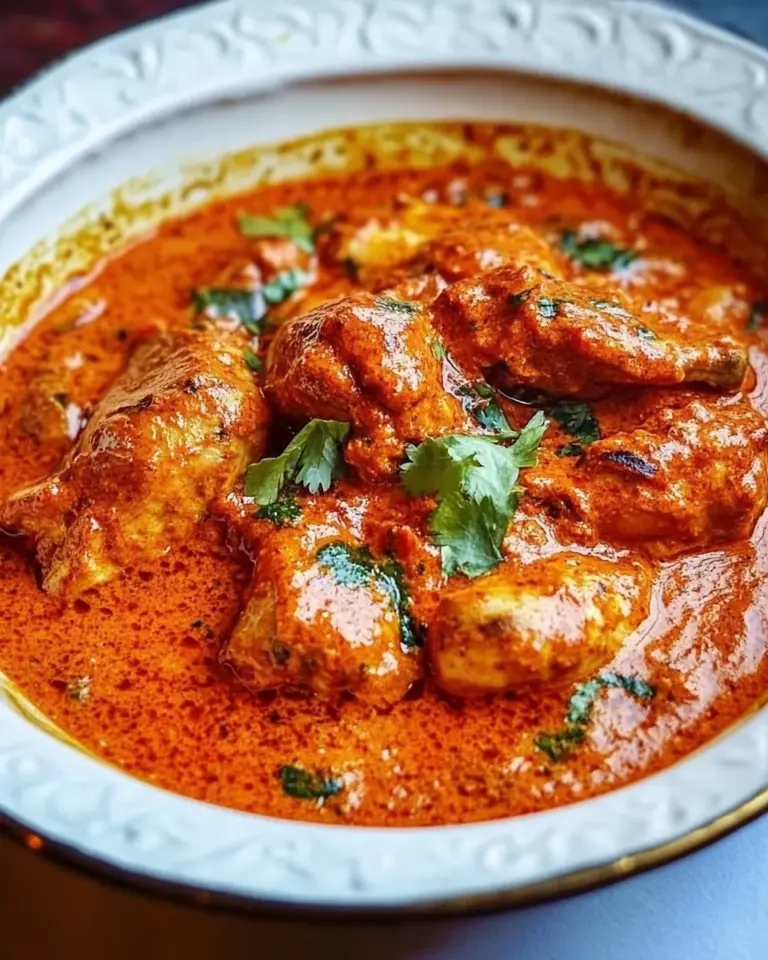
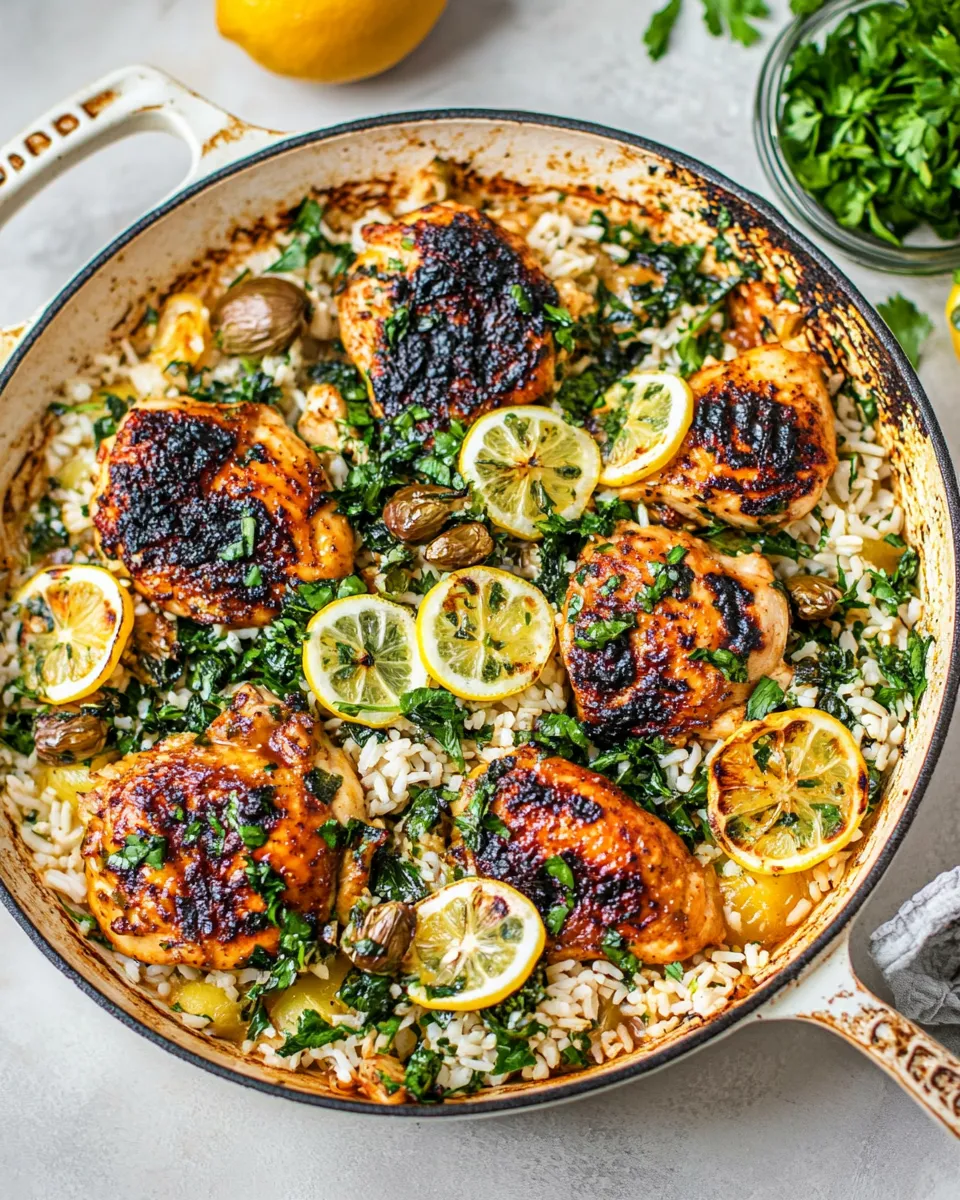
One Skillet Greek Lemon Chicken and Rice.
Weeknight dinners should be honest: quick to start, forgiving in the middle, and worth the clean plate at the end. This one-skillet Greek lemon chicken and rice delivers on all three. It caramelizes the chicken, toasts rice and orzo for texture, and finishes in the oven so you get tender grain and perfectly cooked meat without babysitting the stove.
I love recipes that build flavor in stages. You sear the chicken to lock in juices, brown butter with lemon for a golden, slightly nutty edge, then fold in spinach, olives, and feta for the bright, briny finish Greek food is famous for. The finishing mixture—crushed green olives, feta, basil and lemon juice—goes on right at the end. It adds freshness and keeps the cheese from melting into a single bland puddle.
This post walks you through why each step matters, what can go wrong, and simple fixes so your skillet comes out exactly as intended. I’ll also share small swaps and seasonal ideas that keep this dish adaptable from spring through winter.
The Ingredient Lineup

Ingredients
- 2 tablespoons extra virgin olive oil — for a high-heat sear and base flavor; use good quality for aroma.
- 1 pound boneless chicken breasts or thighs — main protein; breasts cook faster, thighs stay juicier.
- 2 teaspoons dried oregano — classic Greek herb that seasons the chicken.
- 1 teaspoon paprika — adds color and a mild smoky note.
- 1/2 teaspoon cayenne pepper — provides a controlled heat; reduce or omit for milder spice.
- 2 tablespoons fresh thyme leaves — split between chicken and rice for bright herbal layers.
- salt and black pepper — essential seasoning; season at two stages to build depth.
- 4 tablespoons salted butter — used in two additions; contributes richness and helps brown the lemon.
- 1 lemon, sliced — browning slices with butter gives a caramelized citrus note.
- 1/2 cup dry orzo — toasted with rice to add body and slightly chewy texture.
- 1 cup dry rice — the bulk of the grains; toasts then simmers in broth.
- 2 shallots, thinly sliced — milder and sweeter than onion; they soften into the rice.
- 4 cloves garlic, chopped — aromatic backbone; add with the shallots for toasty garlic flavor.
- 3-4 cups low sodium chicken broth — liquid for cooking grains; start with 3 cups and add up to 4 if needed.
- 2 cups chopped spinach — folded in for color, nutrients, and a tender green layer.
- 1/2 cup pitted green olives, crushed — bright, salty, and a key Greek flavor note in the finishing mix.
- 1/2 cup crumbled feta cheese — tangy topping that contrasts the buttery rice.
- 1/2 cup fresh basil leaves — fresh herb for the finishing mixture; adds sweet, peppery lift.
- 2 tablespoons lemon juice — brightens the olive–feta topping and balances richness.
Stepwise Method: One Skillet Greek Lemon Chicken and Rice.
- Preheat the oven to 425°F. Use a large oven-safe skillet.
- Pat the 1 pound chicken dry. In a bowl or on a plate, toss the chicken with 2 teaspoons dried oregano, 1 teaspoon paprika, 1/2 teaspoon cayenne pepper, 1 tablespoon fresh thyme leaves, salt, and black pepper to taste.
- Heat 2 tablespoons extra virgin olive oil in the oven-safe skillet over high heat until shimmering. Sear the chicken 3–5 minutes per side, until golden brown. Transfer the chicken to a plate and reserve any juices.
- Reduce heat to medium. Add 3 tablespoons salted butter to the skillet. When melted, add 1/2 cup dry orzo, 1 cup dry rice, 2 thinly sliced shallots, 4 chopped garlic cloves, and the remaining 1 tablespoon fresh thyme. Cook, stirring frequently, until the rice and orzo are lightly toasted, about 3–4 minutes.
- During the last 2 minutes of toasting, add the final 1 tablespoon salted butter and the slices from 1 lemon to the skillet. Allow the butter to brown slightly around the lemon slices, watching carefully to avoid burning.
- Pour in 3 cups low-sodium chicken broth and stir to combine. Add 2 cups chopped spinach and season with salt and pepper. Bring the mixture to a boil, scraping up any browned bits from the pan.
- Slide the seared chicken and any reserved juices back into the skillet, nestling the pieces into the rice mixture. Bring briefly to a simmer, then cover the skillet and reduce the stovetop heat to the lowest setting. Let cook for 10 minutes, until most of the liquid is absorbed but the rice is not fully done. If the mixture looks dry before this, add up to 1 more cup broth (total 3–4 cups) as needed.
- Transfer the uncovered skillet to the preheated 425°F oven and bake 10–15 minutes, until the chicken is cooked through and the rice is tender (chicken should reach 165°F or no longer be pink in the center).
- While the skillet is baking, combine 1/2 cup pitted green olives (crushed), 1/2 cup crumbled feta cheese, 1/2 cup fresh basil leaves, and 2 tablespoons lemon juice in a small bowl. Season with a little salt and black pepper to taste.
- Remove the skillet from the oven. Spoon the olive–feta–basil mixture over the chicken and rice and serve immediately.
What Makes This Recipe Special
This dish uses three simple tricks that lift it above a basic chicken-and-rice weeknight meal. First: searing the chicken creates Maillard browning and flavor you can’t get from baking alone. Second: toasting the orzo and rice in butter gives a nutty backbone and improves texture so the grains don’t turn mushy. Third: the final olive–feta–basil topping introduces brightness and contrast—the salty, creamy finish that keeps every bite balanced.
It’s also forgiving. The stovetop-to-oven sequence means you can control how tender you want the rice and how deeply cooked the chicken gets. The recipe calls for 3–4 cups of broth to accommodate differences in rice varieties and pan moisture, so there’s built-in flexibility.
Smart Substitutions
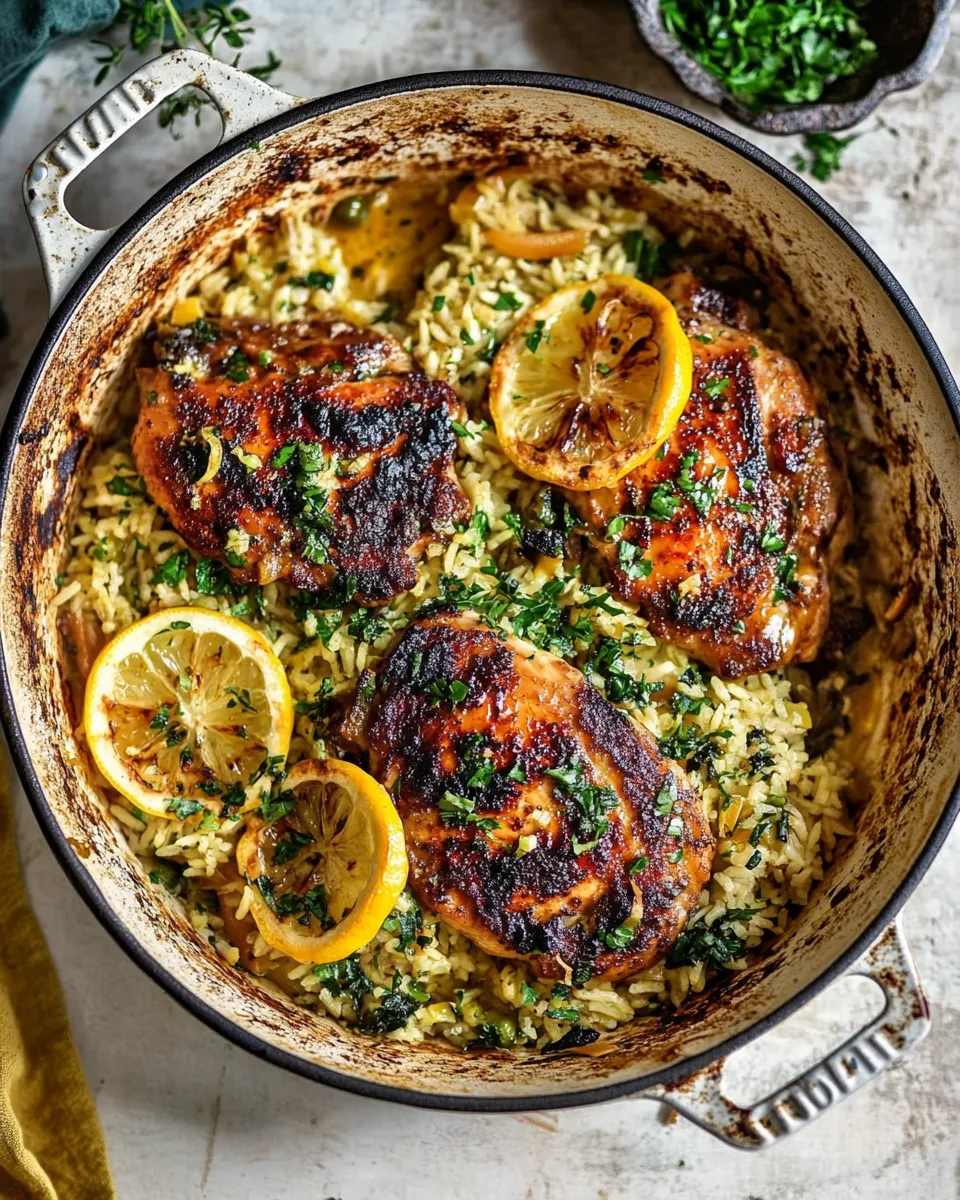
- Chicken choice — the recipe already allows breasts or thighs. Choose thighs for juicier meat and breasts for leaner, faster cooking.
- Grains — you can vary the orzo-to-rice ratio if you prefer more of one texture over the other; keep total grain volume similar.
- Heat level — reduce the 1/2 teaspoon cayenne or skip it if you prefer mild flavors; the dish will still sing with oregano and lemon.
- Butter vs. oil — this recipe uses both; if you prefer, you can reduce butter by 1 tablespoon and increase olive oil slightly—though you’ll lose some of the nutty browned butter flavor.
- Less salt — using low-sodium broth and tasting before adding extra salt keeps the dish balanced, especially because olives and feta bring saltiness.
What’s in the Gear List
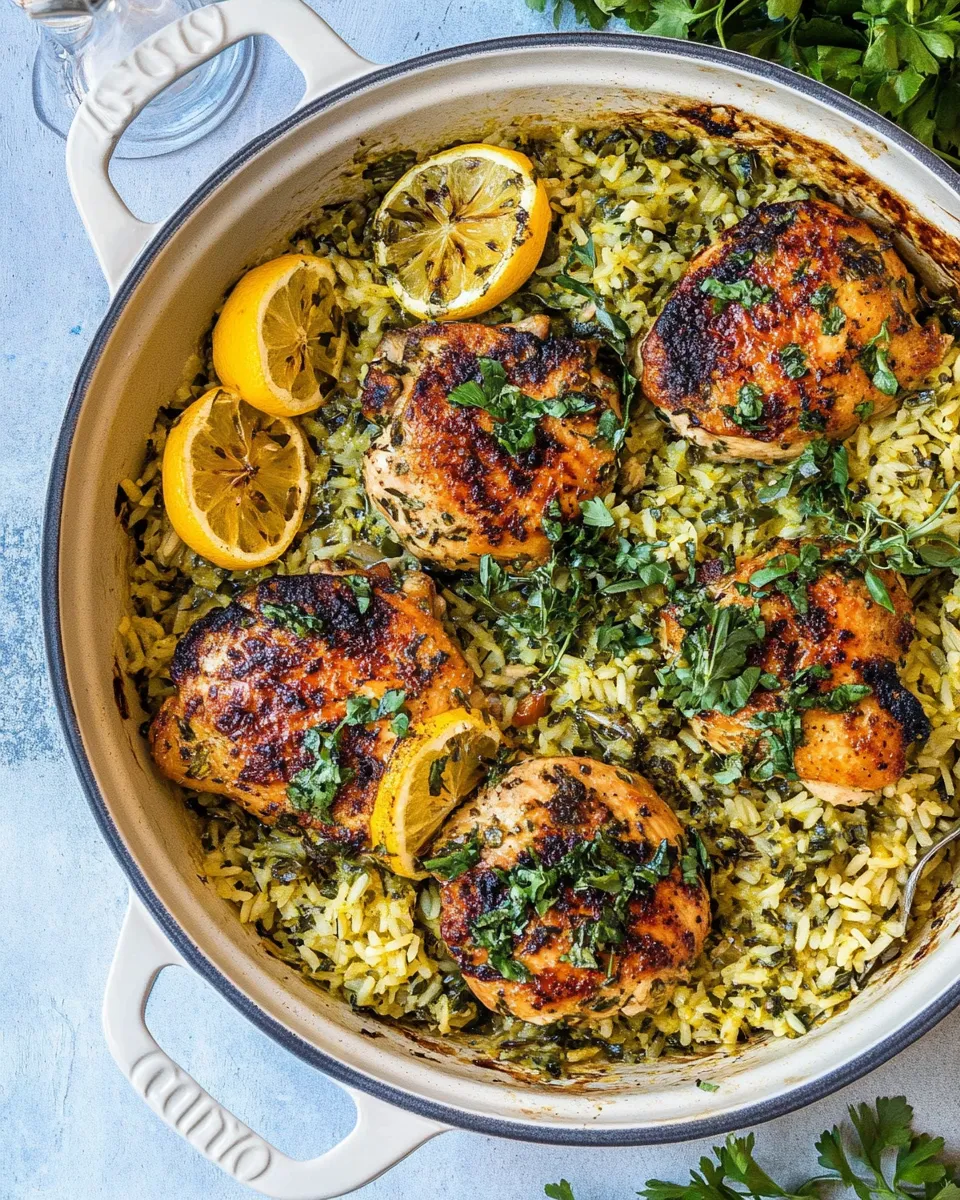
- Large oven-safe skillet (10–12 inch) — central to the method; cast iron or stainless steel works best for even browning.
- Tongs or spatula — to turn and move the chicken.
- Measuring cups and spoons — to keep proportions accurate, especially rice to liquid.
- Sharp knife and cutting board — for lemon, shallots, garlic, and chopping spinach.
- Small bowl — to combine the olive–feta–basil finishing mixture while the skillet bakes.
- Instant-read thermometer (optional) — useful to ensure chicken reaches 165°F.
Missteps & Fixes
Burnt butter or blackened garlic
If your butter turns dark fast and the garlic smells acrid, reduce the heat. The recipe calls for watching the lemon slices when butter browns—brown is good, black is burned. If it burns, wipe the pan, start the toasting step again with fresh fat, and proceed.
Rice undercooked after stovetop phase
If the rice is still hard after the 10 minutes on the lowest heat, that’s expected to some degree. The oven finish completes it. But if it looks bone dry early, add up to the additional 1 cup of broth (use the full 4 cups if needed) and continue the covered simmer a few minutes before transferring to the oven.
Chicken not browning
If chicken sticks instead of searing, the pan wasn’t hot enough. Remove the chicken, let the skillet heat longer, add oil, then re-sear. Don’t overcrowd the pan—you want a single layer so pieces brown properly.
Too salty
Olives and feta add salt. If the finished dish tastes too salty, stir in a squeeze more lemon or add a small handful of fresh spinach to the skillet to dilute intensity and add freshness.
Seasonal Twists
Spring: add a handful of thinly sliced asparagus in with the shallots for a crisp, green lift. It wilts quickly and keeps the dish light.
Summer: fold in halved cherry tomatoes at the end for a pop of sweetness and color—adds freshness against the briny olives.
Autumn/Winter: boost heartiness by stirring in a cup of cooked beans (drained and rinsed) right before serving, or add a handful of chopped kale in place of some spinach and cook a touch longer so it softens.
If You’re Curious
Why both orzo and rice? Orzo adds bite and a different mouthfeel; it swells but stays a touch al dente compared to rice. Toasting both in butter develops a subtle nuttiness that rounds the lemon and herb notes.
Why finish in the oven? The oven gives even, gentle heat to finish both the chicken and the grains without drying the chicken on direct stovetop heat. It’s the easiest way to ensure doneness and tender rice.
Shelf Life & Storage
Refrigerate leftovers in an airtight container for up to 3 days. The rice will firm up; gently reheat in a skillet over low heat with a splash of broth or water to loosen it and bring back creaminess. The olive–feta topping is best added fresh, so store it separately when possible.
Freeze? I don’t recommend freezing this with the olives and feta mixed in—the texture of the dairy and olives changes. If you must, freeze only the chicken and rice (without the fresh toppings) in a freezer-safe container for up to 1 month. Thaw overnight in the fridge and reheat gently.
Reader Questions
- Can I use brown rice? — Brown rice needs more liquid and a longer cook time. If you swap it in, increase broth and expect a longer stovetop simmer before the oven finish.
- Can I make this stovetop only? — Yes, but you’ll need to simmer covered until the rice is tender; keep an eye on liquid levels and add more broth as needed.
- What if I don’t have fresh thyme? — Use 1 teaspoon dried thyme if necessary, but fresh gives a brighter flavor. If you use dried, add it earlier so it rehydrates in the toasting stage.
- How do I keep chicken moist? — Don’t overcook on the stovetop; the sear is about color. Finish in the oven briefly and use an instant-read thermometer to avoid overshooting 165°F.
Before You Go
This One Skillet Greek Lemon Chicken and Rice is one of those recipes that rewards attention in the small moments: the sear, the quick toast of grains, the browning butter with lemon slices. It’s straightforward, but those steps make a noticeable difference. The olive–feta–basil finish is optional technically, but don’t skip it—its brightness is what pulls everything together.
Try the recipe as written the first time, then tweak the heat, grain ratios, or herb mix to make it yours. If you cook it, I’d love to know which variation you landed on and how the lemon butter turned out. Happy cooking—and enjoy the easy cleanup.
One Skillet Greek Lemon Chicken and Rice.
Ingredients
Ingredients
- 2 tablespoonsextra virgin olive oil
- 1 poundboneless chicken breasts or thighs
- 2 teaspoonsdried oregano
- 1 teaspoonpaprika
- 1/2 teaspooncayenne pepper
- 2 tablespoonsfresh thyme leaves
- salt and black pepper
- 4 tablespoonssalted butter
- 1 lemon sliced
- 1/2 cupdry orzo
- 1 cupdry rice
- 2 shallots thinly sliced
- 4 clovesgarlic chopped
- 3-4 cupslow sodium chicken broth
- 2 cupschopped spinach
- 1/2 cuppitted green olives crushed
- 1/2 cupcrumbled feta cheese
- 1/2 cupfresh basil leaves
- 2 tablespoonslemon juice
Instructions
Instructions
- Preheat the oven to 425°F. Use a large oven-safe skillet.
- Pat the 1 pound chicken dry. In a bowl or on a plate, toss the chicken with 2 teaspoons dried oregano, 1 teaspoon paprika, 1/2 teaspoon cayenne pepper, 1 tablespoon fresh thyme leaves, salt, and black pepper to taste.
- Heat 2 tablespoons extra virgin olive oil in the oven-safe skillet over high heat until shimmering. Sear the chicken 3–5 minutes per side, until golden brown. Transfer the chicken to a plate and reserve any juices.
- Reduce heat to medium. Add 3 tablespoons salted butter to the skillet. When melted, add 1/2 cup dry orzo, 1 cup dry rice, 2 thinly sliced shallots, 4 chopped garlic cloves, and the remaining 1 tablespoon fresh thyme. Cook, stirring frequently, until the rice and orzo are lightly toasted, about 3–4 minutes.
- During the last 2 minutes of toasting, add the final 1 tablespoon salted butter and the slices from 1 lemon to the skillet. Allow the butter to brown slightly around the lemon slices, watching carefully to avoid burning.
- Pour in 3 cups low-sodium chicken broth and stir to combine. Add 2 cups chopped spinach and season with salt and pepper. Bring the mixture to a boil, scraping up any browned bits from the pan.
- Slide the seared chicken and any reserved juices back into the skillet, nestling the pieces into the rice mixture. Bring briefly to a simmer, then cover the skillet and reduce the stovetop heat to the lowest setting. Let cook for 10 minutes, until most of the liquid is absorbed but the rice is not fully done. If the mixture looks dry before this, add up to 1 more cup broth (total 3–4 cups) as needed.
- Transfer the uncovered skillet to the preheated 425°F oven and bake 10–15 minutes, until the chicken is cooked through and the rice is tender (chicken should reach 165°F or no longer be pink in the center).
- While the skillet is baking, combine 1/2 cup pitted green olives (crushed), 1/2 cup crumbled feta cheese, 1/2 cup fresh basil leaves, and 2 tablespoons lemon juice in a small bowl. Season with a little salt and black pepper to taste.
- Remove the skillet from the oven. Spoon the olive–feta–basil mixture over the chicken and rice and serve immediately.