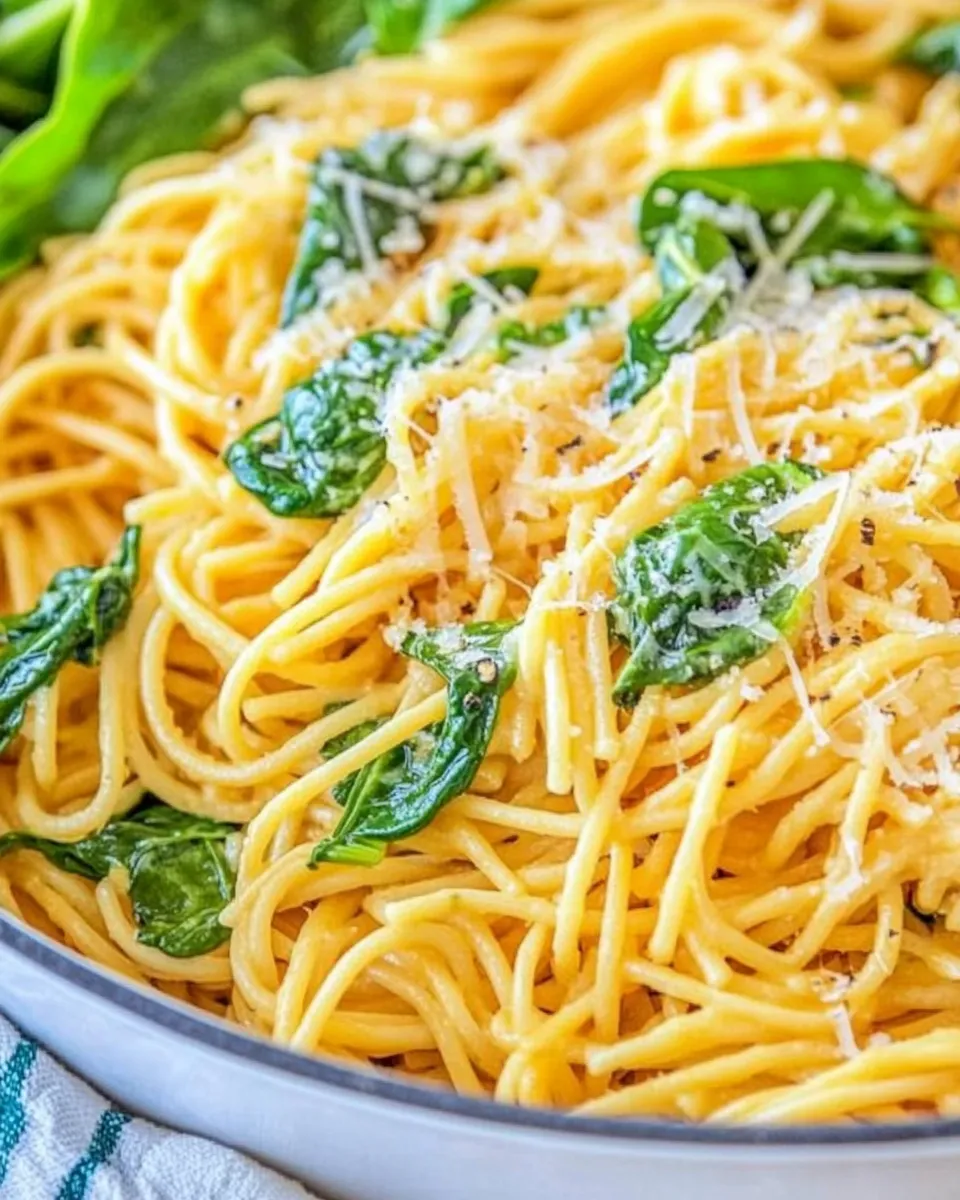
One-Pot Pasta with Spinach
This is the kind of weeknight dinner I reach for when I want something that looks and tastes thoughtful but doesn’t demand an evening in the kitchen. It’s quick, bright, and forgiving—spaghetti, cherry tomatoes, tender spinach, and parsley all coming together in one pot so the flavors concentrate and the cleanup is minimal.
I like this version because it balances fresh, simple ingredients with straightforward technique. You get a lightly sauced pasta where the tomatoes pop, the spinach wilts into silky ribbons, and a hit of Parmesan (if you have it) brings it all home. The method is deliberate yet uncomplicated: everything goes in, a little water does the work, and you stir until it’s done.
No extraneous steps, no separate sauce pan. It’s practical cooking that still tastes like you cared. Read on for what I use, exact ingredients, the step-by-step method, and tips to keep this dish bright and satisfying every time.
What We’re Using

Simple tools and pantry staples. The goal is to keep things streamlined: one large pot, a little olive oil, and fresh herbs if you have them. This is a no-fuss dinner that leans on technique (stirring, reducing, tasting) rather than long simmer times.
The recipe highlights quick-cooking produce—cherry tomatoes and baby spinach—which wilt and soften in minutes. That means the pasta finishes around the same time the vegetables reach perfect texture. No babysitting required, just a little stirring every minute or two.
Ingredients
- 8oz.spaghetti — the backbone of the dish; cooks in the same pot with the other ingredients.
- 12oz.cherry tomatoescut in half — burst with heat and form the light sauce as they soften.
- ½mediumonionvery thinly sliced — adds savory depth without overpowering freshness.
- 2garlic clovesvery thinly sliced — quick to flavor the oil and cook through in minutes.
- 4oz.baby spinach — wilts rapidly and adds color, volume, and a gentle vegetal note.
- ⅓cupchopped parsley — bright, herbaceous finish; stir in at the end for lift.
- 2tbsp.extra virgin olive oil — carries flavor and helps the tomatoes and aromatics bloom.
- ¾tsp.saltor to taste — seasons throughout; start here and adjust at the end.
- ¾tsp.pepperor to taste — a base seasoning; add more if you prefer a bit more bite.
- ¼tsp.red pepper flakesor to taste — optional heat; tweak to your tolerance.
- 4cupswater — the single liquid for cooking the pasta and forming the sauce.
- 1cupgrated Parmesanoptional — adds umami and creaminess when stirred in off the heat.
The Method for One-Pot Pasta with Spinach
- In a large pot or Dutch oven add the spaghetti, halved cherry tomatoes, very thinly sliced onion, very thinly sliced garlic, baby spinach, chopped parsley, extra virgin olive oil, salt, pepper, and red pepper flakes. Pour 4 cups water over the ingredients so the pasta is mostly submerged; press the pasta down gently if needed.
- Bring the pot to a boil over high heat.
- Reduce the heat to medium-low to maintain a gentle simmer. Leave the pot uncovered and stir every 1–2 minutes, scraping the bottom, until the pasta is cooked through, the spinach is wilted, the tomatoes have softened, and most of the liquid has reduced, about 8–10 minutes total (timing may vary).
- Remove the pot from the heat. If using Parmesan, stir in the 1 cup grated Parmesan until melted and evenly incorporated. Taste and adjust seasoning with more salt, pepper, or red pepper flakes if desired.
- Serve immediately. Garnish with additional Parmesan and a drizzle of olive oil if you like.
Top Reasons to Make One-Pot Pasta with Spinach
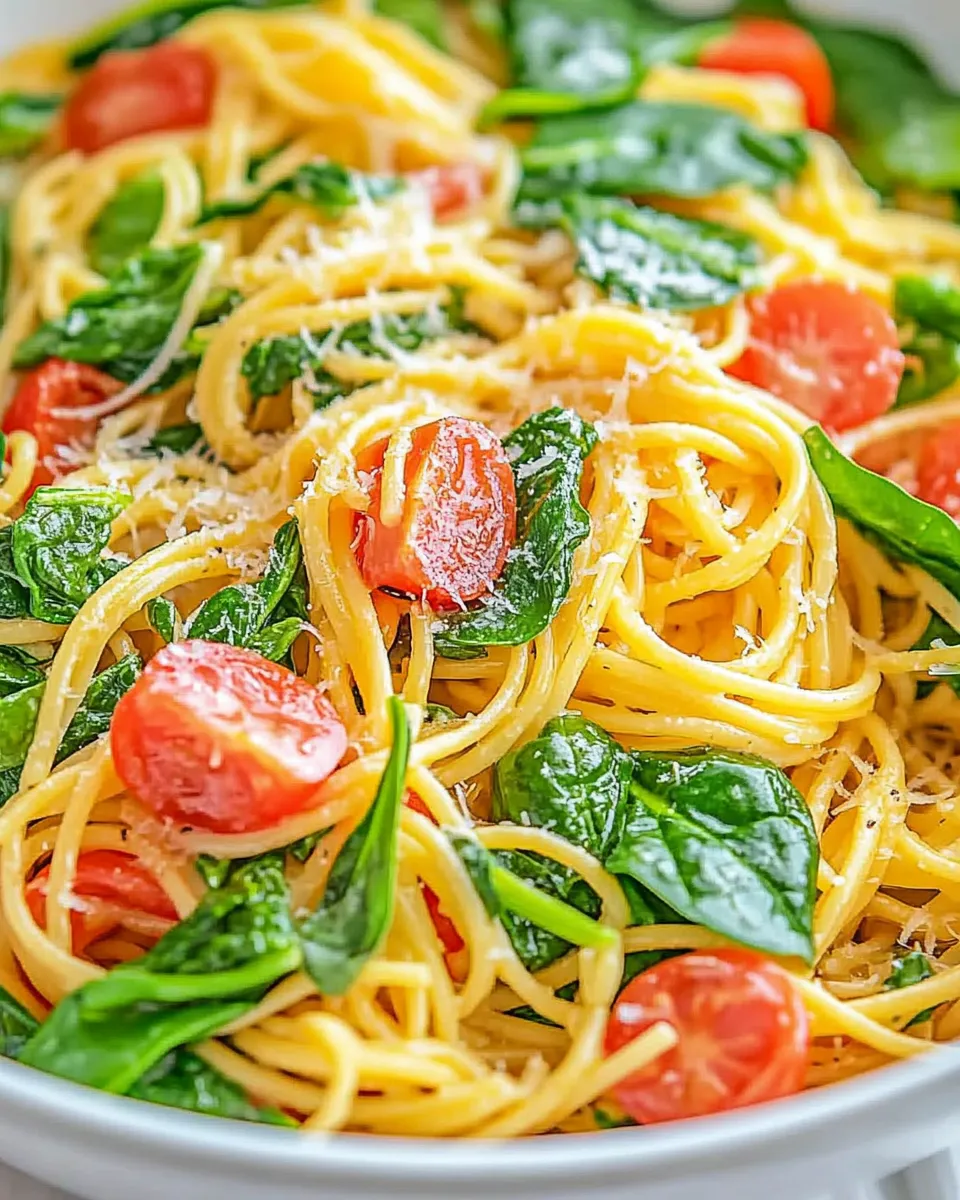
- Minimal cleanup: everything cooks in one vessel. No straining, no separate sauce pan.
- Speed: it’s a complete meal in about 15–20 minutes from start to finish.
- Fresh flavor profile: tomatoes and parsley keep the dish bright, while spinach adds body.
- Flexible: it works as a weeknight staple and scales up for casual dinner company.
- Comfort without heaviness: Parmesan rounds it off without overpowering the vegetables.
If You’re Out Of…
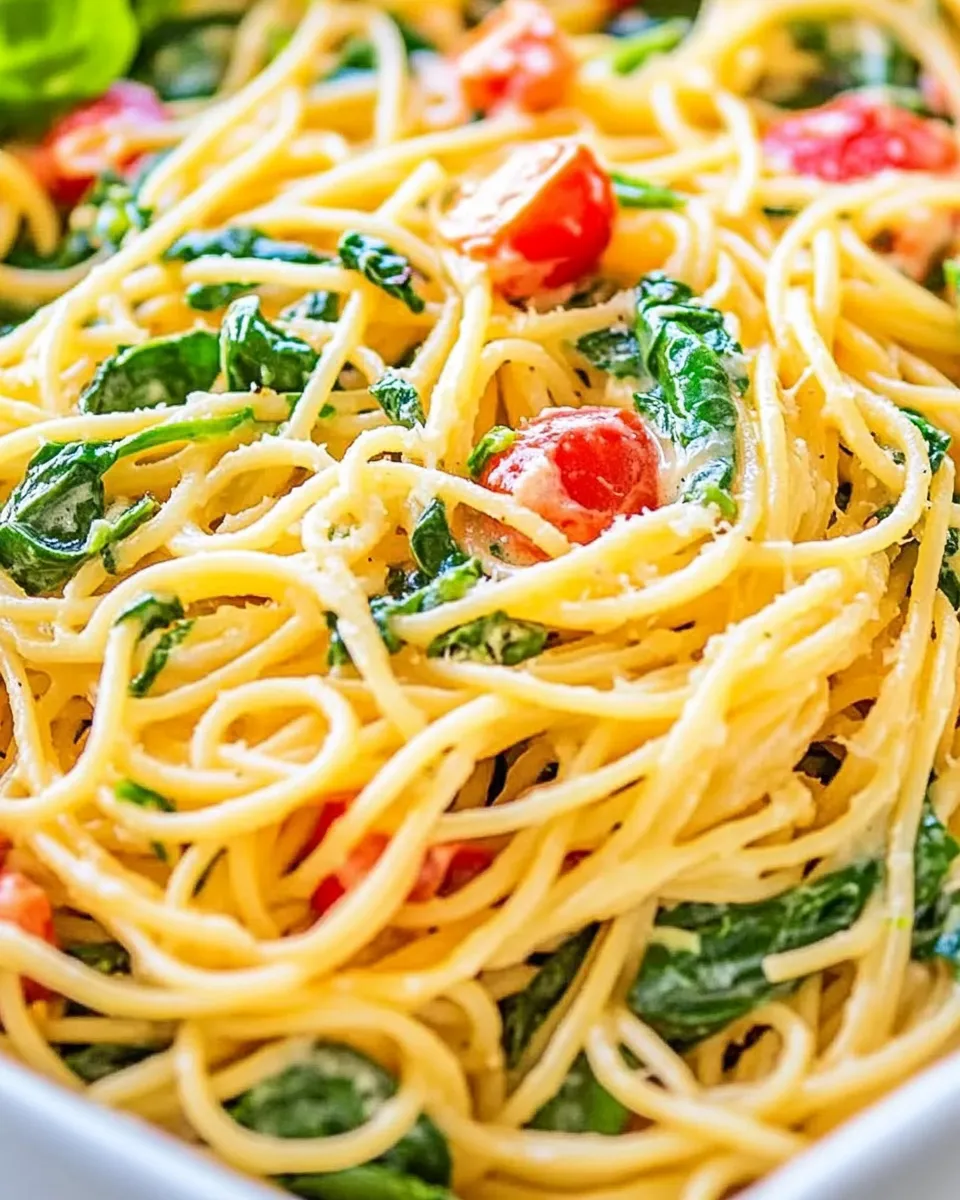
- If you’re out of Parmesan — you can skip it. The dish remains satisfying; increase the olive oil slightly and finish with the parsley for brightness.
- If you’re out of baby spinach — use the same technique but add greens a little earlier or later depending on toughness; tougher greens will take longer to become tender.
- If you don’t have fresh parsley — omit it and finish with extra red pepper flakes or a pinch more salt to lift the flavors.
- If you want less heat — reduce or omit the red pepper flakes; the tomatoes and garlic still deliver depth.
Setup & Equipment
Keep equipment to a minimum. That’s part of the appeal.
Must-haves
- A large pot or Dutch oven — tall enough for spaghetti to fit with some water.
- A heatproof spatula or wooden spoon — for stirring and scraping the bottom.
- A colander is optional if you plan to rinse anything, though you won’t need one for this method.
Nice-to-haves
- Tongs — helpful for lifting and serving long pasta.
- Microplane or fine grater — for fresh Parmesan if you choose to use it.
Steer Clear of These
- Don’t overfill the pot. The pasta needs room to hydrate and move so it cooks evenly.
- Don’t turn the heat too high once boiling starts. A rolling boil can cause uneven cooking and foam over; maintain a gentle, lively simmer.
- Don’t stop stirring. Frequent stirring prevents sticking and ensures the tomatoes and pasta meld into a sauce rather than a soggy mess.
- Avoid adding all the salt at the very end. Start with the listed amount, then adjust after the cheese if used—this keeps flavors balanced.
In-Season Flavor Ideas
- When tomatoes are at their peak: choose the sweetest, ripest cherry tomatoes you can find; they’ll need less cooking to release their juices.
- When herbs are abundant: increase the parsley and add more at the end for a herb-forward finish.
- When greens are plentiful: toss in extra baby spinach for volume; the texture will remain silky if you stir while it wilts.
Chef’s Rationale
The one-pot approach here is about extraction and concentration. By cooking the pasta directly with tomatoes, garlic, onion, and a measured amount of water, you let the pasta absorb flavor as it hydrates. The tomatoes release liquid and natural sweetness while breaking down, which creates an instant, lightly textured sauce. Stirring every minute or two does two things: it prevents sticking and encourages the starches released by the pasta to emulsify the remaining liquid into a glossy coating that clings to the noodles.
Finishing with Parmesan off the heat takes advantage of residual warmth to melt the cheese gently, integrating fat and salt into the sauce without making it grainy. The parsley and olive oil you add at the end provide lift and roundness so the dish reads fresh, not heavy.
Refrigerate, Freeze, Reheat
- Refrigerate: store leftovers in an airtight container for up to 3 days. The pasta will absorb more liquid and thicken as it cools.
- Freeze: I don’t recommend freezing this one—spinach and fresh tomatoes lose their texture and can become watery on thawing.
- Reheat: gently rewarm on the stove over low heat with a splash of water or olive oil to loosen the sauce. Heat slowly and stir to avoid clumping. You can also reheat in short bursts in the microwave, stirring between intervals.
Frequently Asked Questions
- Can I use a different pasta shape? Yes. Shorter shapes will work but may change cook time slightly. Make sure the pasta is mostly submerged before cooking and adjust the simmer time to reach al dente.
- What if the pasta is undercooked but the liquid is gone? Add a splash of hot water, cover briefly to lift the temperature, and continue stirring until the pasta reaches the desired texture.
- How do I prevent the pasta from sticking? Stir every 1–2 minutes as instructed and keep the simmer even. Using a pot that gives the pasta room to move helps too.
- Can I make this vegan? Yes—omit the Parmesan and finish with extra olive oil and parsley for richness.
- Is the 8–10 minute timing strict? It’s an estimate. Pasta brand, pot size, and stovetop output affect timing. Taste a strand toward the end to be sure.
Final Bite
This One-Pot Pasta with Spinach is the kind of recipe that earns a permanent spot in the rotation because it’s fast, forgiving, and reliably delicious. It’s particularly good when you want a fresh dinner that still feels a little special—no fussy steps, just good technique and bright, seasonal ingredients. Make it on a busy night. Share it with someone who appreciates straightforward cooking. And if you end up adding a garnish of extra Parmesan and a finishing drizzle of olive oil, know that I do the same.

One-Pot Pasta with Spinach
Ingredients
Ingredients
- 8 oz.spaghetti
- 12 oz.cherry tomatoescut in half
- 1/2 mediumonionvery thinly sliced
- 2 garlic clovesvery thinly sliced
- 4 oz.baby spinach
- 1/3 cupchopped parsley
- 2 tbsp.extra virgin olive oil
- 3/4 tsp.saltor to taste
- 3/4 tsp.pepperor to taste
- 1/4 tsp.red pepper flakesor to taste
- 4 cupswater
- 1 cupgrated Parmesanoptional
Instructions
Instructions
- In a large pot or Dutch oven add the spaghetti, halved cherry tomatoes, very thinly sliced onion, very thinly sliced garlic, baby spinach, chopped parsley, extra virgin olive oil, salt, pepper, and red pepper flakes. Pour 4 cups water over the ingredients so the pasta is mostly submerged; press the pasta down gently if needed.
- Bring the pot to a boil over high heat.
- Reduce the heat to medium-low to maintain a gentle simmer. Leave the pot uncovered and stir every 1–2 minutes, scraping the bottom, until the pasta is cooked through, the spinach is wilted, the tomatoes have softened, and most of the liquid has reduced, about 8–10 minutes total (timing may vary).
- Remove the pot from the heat. If using Parmesan, stir in the 1 cup grated Parmesan until melted and evenly incorporated. Taste and adjust seasoning with more salt, pepper, or red pepper flakes if desired.
- Serve immediately. Garnish with additional Parmesan and a drizzle of olive oil if you like.
Equipment
- Large Pot or Dutch Oven
Notes
HELPFUL TIPS AND TRICKS
Stir the pasta while cooking.
Stir the pasta every few minutes to make sure it doesn’t get stuck together, since there is no extra water used in this recipe.
Adjust the seasonings to your taste.
Skip the red pepper flakes, if you are not a fan. Add a bit of your favorite seasoning, if you wish.
Add more water, if necessary.
There are some types of pasta that tend to cook longer and may require some extra water to fully cook. If you feel that the pasta needs more cooking, just keep adding more water until it cooks through.
Add proteins.
You can also add some chicken, sausage, or kielbasa pieces with the rest of the ingredients.