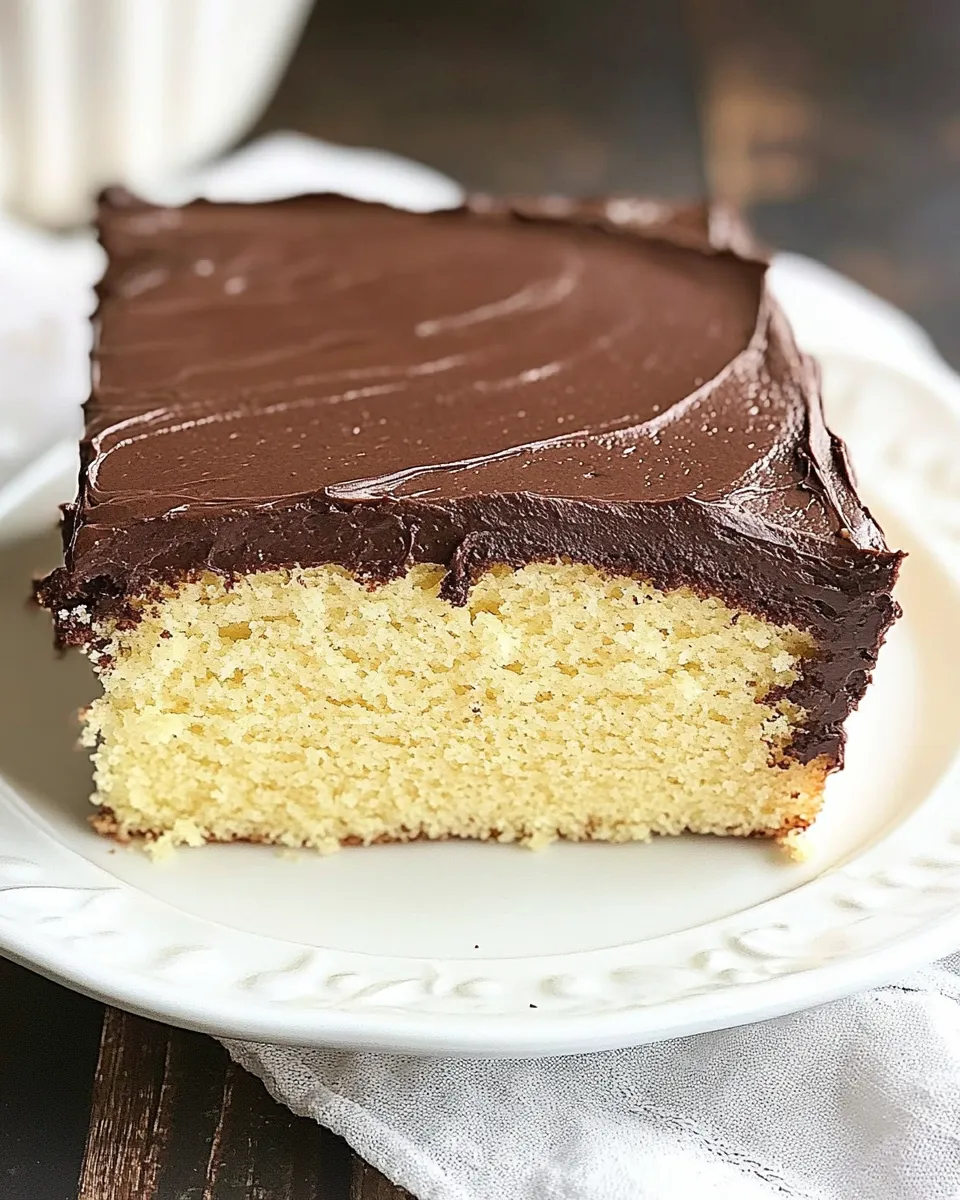
One Layer Yellow Cake with Chocolate Frosting
This is a straightforward, dependable single-layer yellow cake with chocolate frosting — the kind of cake I make when I want something classic, unfussy, and reliably delicious. It bakes in a 13×9-inch pan, yields a tender crumb, and pairs perfectly with a simple chocolate frosting spread over the top. No stacking, no elaborate piping: just good cake and good chocolate.
I like this recipe for weeknight birthdays, casual gatherings, or whenever you want a homey dessert that looks like effort without a lot of drama. The combination of butter and oil gives the cake both flavor and moisture; the buttermilk adds a gentle tang and helps the crumb stay tender. The timing and order in the directions are important — follow them and you’ll get consistent results.
Below you’ll find the ingredients as provided, the exact step-by-step directions, and practical notes from my kitchen so you can troubleshoot, swap smartly, and store the cake without losing texture. Let’s get into it — you’ll be eating cake within an hour and a half.
What You’ll Need

Ingredients
- 4 large eggs + 2 large egg yolks — eggs add structure, lift, and richness; the extra yolks deepen color and tenderness.
- ½ cup buttermilk — provides acidity to react with leaveners and contributes a moist, tender crumb.
- 1 tablespoon vanilla extract — flavor enhancer; use good-quality vanilla for the best aroma.
- 2 ¼ cups cake flour — lower-protein flour that keeps the cake light and soft.
- 1 ¾ cups sugar — sweetens and helps with browning and texture.
- 1 ¼ teaspoons baking powder — the primary leavening agent; ensures rise and lightness.
- ¼ teaspoon baking soda — works with buttermilk acidity to fine-tune lift and browning.
- ½ teaspoon table salt — balances sweetness and enhances other flavors.
- 8 tablespoons butter, softened — adds flavor, mouthfeel, and tender crumb; soften but don’t melt.
- ½ cup vegetable oil — keeps the cake moist, especially when stored.
Cook One Layer Yellow Cake with Chocolate Frosting Like This
- Preheat the oven to 350°F (175°C). Position a rack in the center of the oven. Grease a 13×9-inch baking pan and dust with flour, or spray it with a nonstick baking spray.
- In a medium bowl, whisk together the 4 large eggs, 2 large egg yolks, ½ cup buttermilk, and 1 tablespoon vanilla extract until combined. Set aside.
- In the bowl of a stand mixer, whisk together 2¼ cups cake flour, 1¾ cups sugar, 1¼ teaspoons baking powder, ¼ teaspoon baking soda, and ½ teaspoon salt until evenly mixed.
- Fit the mixer with the paddle attachment. Add the 8 tablespoons softened butter and ½ cup vegetable oil to the dry ingredients.
- Mix on low speed just until the fats are incorporated, then increase the speed and beat until the mixture is light in color and fluffy (about 1–2 minutes).
- Reduce the mixer speed to low and slowly pour the egg-buttermilk mixture into the mixer bowl, mixing just until incorporated.
- Scrape down the sides and bottom of the mixer bowl with a spatula. Beat on medium-high speed until the batter lightens in color and thickens, about 2–3 minutes.
- Scrape the batter into the prepared 13×9-inch pan and smooth the top with an offset spatula. Tap or rap the pan on the counter 2–3 times to release any large air bubbles.
- Bake in the preheated oven for 28–32 minutes, or until a toothpick inserted into the center comes out with just a few moist crumbs.
- Remove the cake from the oven and let it cool in the pan for 10 minutes. Then loosen the edges, transfer the cake to a wire rack, and cool completely.
- If you plan to use chocolate frosting (note: frosting ingredients are not included in the ingredient list), spread your prepared frosting over the completely cooled cake, then chill briefly to let the frosting set.
Why It Works Every Time
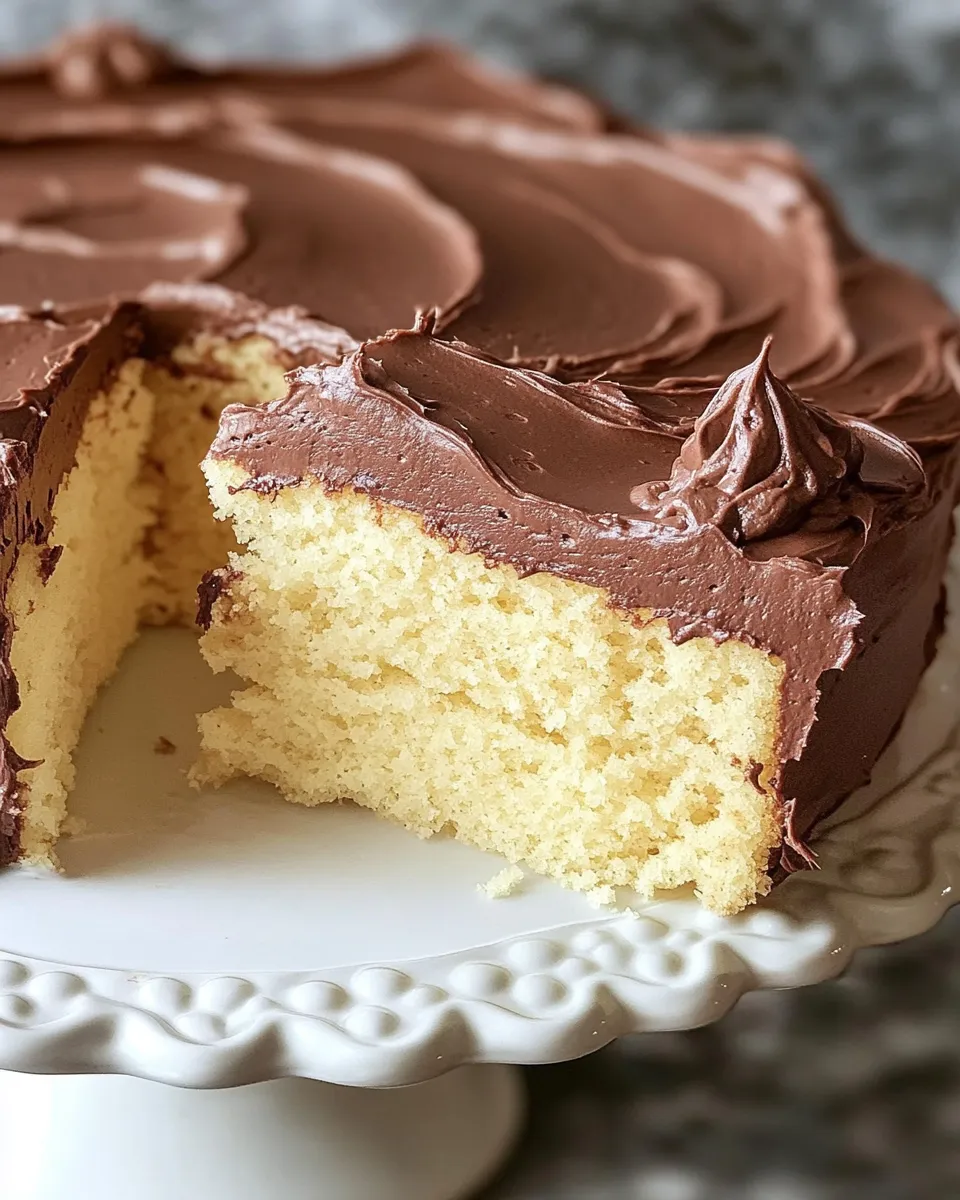
This formula balances structure, moisture, and flavor intentionally. Cake flour provides a lower protein base so the crumb stays tender rather than chewy. The combination of butter and vegetable oil is clever: butter gives the cake that buttery flavor we love, while oil keeps the crumb moist even after refrigeration or a day on the counter.
Eggs and extra yolks supply lift and richness; the yolks add fat and emulsifiers that make the cake cohesive and silky. Buttermilk introduces acidity that reacts with a touch of baking soda for a more even rise and subtle tenderness. Mixing order matters: creaming the fats with dry ingredients then adding the liquid eggs slowly prevents over-developing gluten and keeps batter airy.
What to Use Instead

- Buttermilk — if you don’t have cultured buttermilk, use ½ cup milk plus ½ tablespoon lemon juice or vinegar as a quick substitute; let it sit 5 minutes (this is a common swap; use the same volume).
- Vegetable oil — light-flavored oils like canola or sunflower work similarly. Avoid strong-flavored oils that will change the cake’s taste.
- Butter — if you need to reduce saturated fat, you can decrease butter slightly and increase oil, but flavor will be milder. For a dairy-free version, replace butter with an equal amount of a dairy-free butter substitute and use dairy-free milk for the buttermilk swap noted above.
- Cake flour — if you only have all-purpose flour, remove 3 tablespoons per cup of AP flour and replace with the same amount of cornstarch to approximate cake flour, or sift AP flour extra times; the texture will be a touch firmer but still pleasant.
Gear Up: What to Grab
- 13×9-inch baking pan — the recipe is tailored for this size for even baking.
- Stand mixer with paddle attachment (or a hand mixer) — recommended for the creaming and aeration steps.
- Medium mixing bowl — to whisk the eggs, buttermilk, and vanilla.
- Offset spatula — for smoothing batter and later spreading frosting.
- Wire rack — for cooling the cake completely before frosting.
- Toothpick or cake tester — to check doneness in the center.
Troubleshooting Tips
Common issues and quick fixes
- Cake sinks in the center: This can happen if the oven temperature is too low or if you opened the oven during baking. Use an oven thermometer to confirm accuracy, and avoid opening the door in the first 20–25 minutes.
- Gummy or underbaked center: Check that you used the correct pan size and that the cake reached the full baking time. If the top is browning too fast, tent with foil and continue baking until a toothpick shows a few moist crumbs.
- Dry cake: Overbaking is the usual suspect. Remove the cake as soon as a toothpick shows a few moist crumbs. Also confirm you measured flour correctly — spoon the flour into the measuring cup and level off rather than scooping.
- Uneven rise: Make sure your baking powder is fresh and that ingredients are at room temperature; cold eggs or butter can affect batter consistency and rise.
Dietary Customizations
Here are sensible swaps depending on needs; they change texture somewhat but keep the cake enjoyable.
- Dairy-free: Use a plant-based butter substitute and make the buttermilk substitute with plant milk plus acid (as noted above).
- Lower sugar: You can reduce sugar slightly (up to 15%) but expect a change in browning and texture; sugar also tenderizes and affects crumb, so avoid drastic cuts.
- Egg-free: This recipe relies on eggs for structure; for an egg-free version you’ll need a tested vegan formula rather than simple swaps — egg replacers or flax eggs will change rise and texture significantly.
Recipe Notes & Chef’s Commentary
Small choices make a difference: bring eggs and butter to room temperature before starting. Room-temp ingredients emulsify and incorporate more easily, giving you a smoother, lighter batter. When you add the egg-buttermilk mix slowly on low, you’re preventing the batter from breaking and encouraging even distribution of moisture.
Take the 10-minute cooling time seriously before turning out. That short rest relaxes the cake and reduces the risk of tearing. Always cool completely before frosting — a warm cake will make frosting slide off or melt into the crumb.
If you’re frosting, consider chilling the frosted cake briefly to let the frosting set, especially if you plan to stack slices for serving. This cake also handles simple decoration well: a dusting of cocoa or a scattering of chocolate shavings adds polish without much fuss.
Best Ways to Store
- Room temperature: If unfrosted, wrap tightly or store in an airtight container for up to 2 days. Keep away from direct heat and sunlight.
- Refrigerator: If frosted or in warm weather, cover loosely and refrigerate up to 4–5 days. Bring to room temperature before serving for the best flavor and texture.
- Freezing: Wrap individual slices tightly in plastic and foil, or freeze the whole cake (unfrosted) wrapped well for up to 2 months. Thaw in the refrigerator overnight, then bring to room temperature before serving.
Popular Questions
Can I make this as cupcakes?
Yes, you can, but baking time will change. Fill cupcake liners 2/3 full and start checking at around 15–18 minutes. Watch closely and use the toothpick test.
Why is there both baking powder and baking soda?
Baking powder provides the main lift. The small amount of baking soda reacts with the buttermilk for additional lift and subtle browning; together they balance rise and texture.
Can I halve the recipe?
Yes. If you halve, use a smaller pan like an 8×8-inch and reduce baking time; check doneness earlier. Keep mixing times similar but be mindful that smaller volumes can reach doneness sooner.
Ready, Set, Cook
This recipe is designed to be approachable and reliable. Follow the steps as written, mind your oven temperature, and give the cake time to cool before frosting. The result is a tender, moist yellow cake that carries chocolate frosting beautifully — unpretentious, satisfying, and perfectly suited to everyday celebrations.
When you make it, let me know how it turned out: did you frost it thick, thin, or go with a simple glaze? Happy baking — and enjoy a generous slice for me.
One Layer Yellow Cake with Chocolate Frosting
Ingredients
Ingredients
- 4 large eggs + 2 large egg yolks
- 1/2 cup buttermilk
- 1 tablespoon vanilla extract
- 2 1/4 cups cake flour
- 1 3/4 cups sugar
- 1 1/4 teaspoons baking powder
- 1/4 teaspoon baking soda
- 1/2 teaspoon table salt
- 8 tablespoons butter softened
- 1/2 cup vegetable oil
Instructions
Instructions
- Preheat the oven to 350°F (175°C). Position a rack in the center of the oven. Grease a 13x9-inch baking pan and dust with flour, or spray it with a nonstick baking spray.
- In a medium bowl, whisk together the 4 large eggs, 2 large egg yolks, ½ cup buttermilk, and 1 tablespoon vanilla extract until combined. Set aside.
- In the bowl of a stand mixer, whisk together 2¼ cups cake flour, 1¾ cups sugar, 1¼ teaspoons baking powder, ¼ teaspoon baking soda, and ½ teaspoon salt until evenly mixed.
- Fit the mixer with the paddle attachment. Add the 8 tablespoons softened butter and ½ cup vegetable oil to the dry ingredients.
- Mix on low speed just until the fats are incorporated, then increase the speed and beat until the mixture is light in color and fluffy (about 1–2 minutes).
- Reduce the mixer speed to low and slowly pour the egg-buttermilk mixture into the mixer bowl, mixing just until incorporated.
- Scrape down the sides and bottom of the mixer bowl with a spatula. Beat on medium-high speed until the batter lightens in color and thickens, about 2–3 minutes.
- Scrape the batter into the prepared 13x9-inch pan and smooth the top with an offset spatula. Tap or rap the pan on the counter 2–3 times to release any large air bubbles.
- Bake in the preheated oven for 28–32 minutes, or until a toothpick inserted into the center comes out with just a few moist crumbs.
- Remove the cake from the oven and let it cool in the pan for 10 minutes. Then loosen the edges, transfer the cake to a wire rack, and cool completely.
- If you plan to use chocolate frosting (note: frosting ingredients are not included in the ingredient list), spread your prepared frosting over the completely cooled cake, then chill briefly to let the frosting set.
Equipment
- Stand mixer
- Paddle Attachment
- Medium Bowl
- 13x9-inch baking pan
- Offset Spatula
- Spatula
- Wire Rack