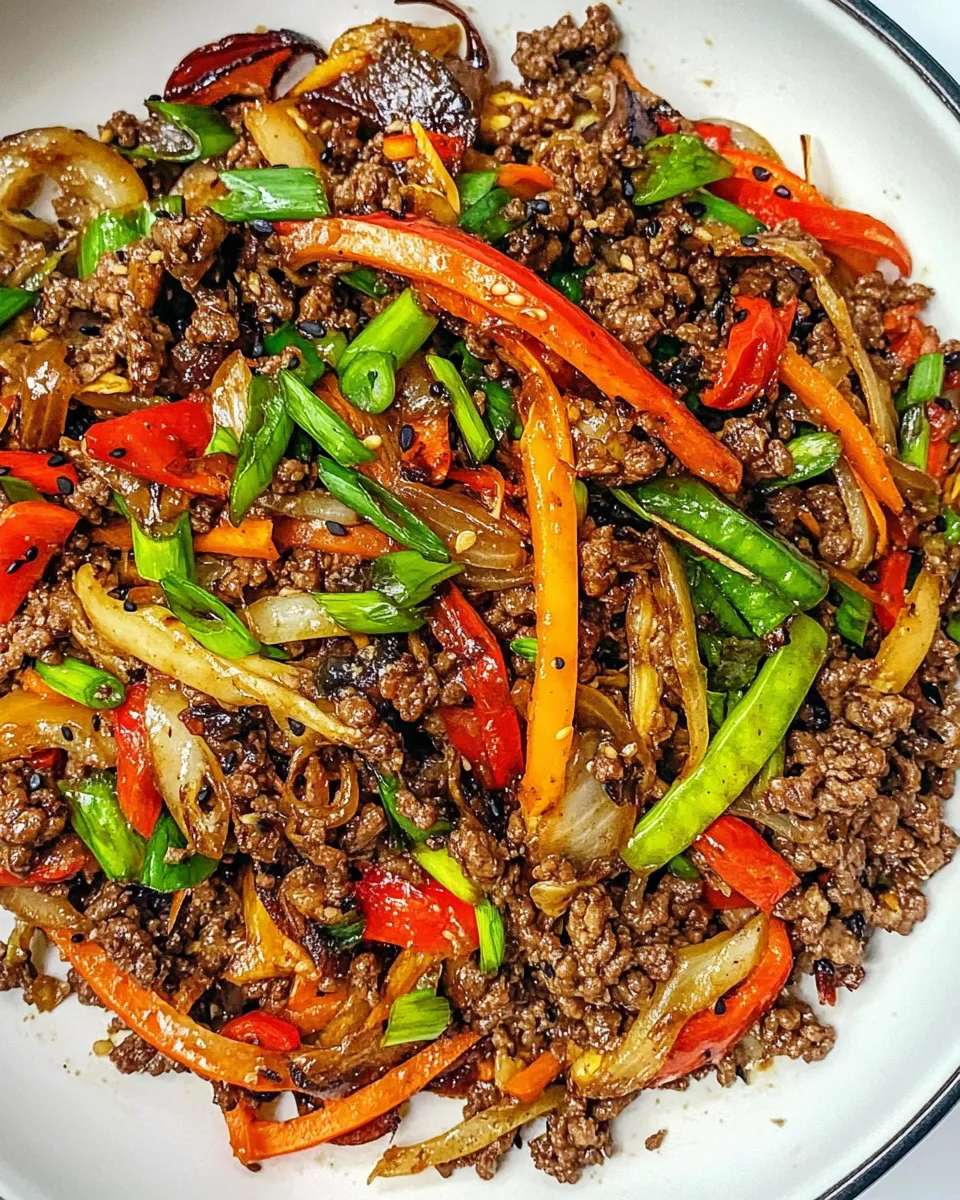
Korean Ground Beef Stir-Fry
I fell in love with this dish the first time I tossed a quick sauce with browned beef and whatever vegetables I had on hand. It’s unfussy, fast, and bright-flavored—everything I want on a weeknight when I’m juggling grocery lists, laundry, and feeding happy, hungry people. The sauce is bold: salty soy, deep brown sugar, a hint of sesame oil and a touch of gochujang for warmth. It clings to the beef and the vegetables and makes rice or noodles feel like a hug.
What I appreciate most is how reliable it is. There are no fussy steps, and the timing is forgiving. The bulk of the work is hands-off: whisk the sauce, brown the beef, stir-fry the veg, combine, and you’re done. That means you can prep earlier in the day or bring kids to the table without standing at the stove for an hour.
This recipe scales well, reheats cleanly, and the flavor actually settles and deepens if you make it a day ahead. Below I walk you through the exact ingredients and steps, share why it’s my go-to, offer safe swaps using the ingredients listed, and point out the few things that can go sideways so you can avoid them. Let’s get cooking.
Ingredient Checklist

- ¼ cup soy sauce or low-sodium soy sauce — provides the savory backbone; use low-sodium if you prefer less salt.
- ¼ cup dark brown sugar — adds sweetness and molasses depth to balance the soy.
- 1 tablespoon sesame oil — a small amount for toasty sesame flavor; potent so a little goes a long way.
- 1 tablespoon gochujang — brings chile-umami heat and gloss; stir into the sauce until smooth.
- 1 lb ground beef, 85% to 93% lean — the main protein; fat level affects flavor and how much rendered grease you’ll discard.
- 1 tablespoon vegetable oil or canola — for high-heat stir-frying the vegetables; neutral and stable at high temp.
- 1 medium onion, chopped — sweetens as it cooks and gives texture.
- 1 red bell pepper, seeded and chopped — bright color and crisp-sweet bite.
- 2 medium carrots, peeled and shredded — add crunch and natural sweetness; shredding helps them cook fast.
- 8 oz mushrooms, sliced — soak up the sauce and add savory earthiness.
- 2 teaspoon garlic, minced — aromatic foundation; add with ginger for best fragrance.
- 2 teaspoon ginger, fresh, minced — bright, zesty counterpoint to the sweet-salty sauce.
- ½ cup scallions, chopped — most stirred in at the end for freshness; reserve some for garnish.
- steamed rice or cooked noodles — the vehicle for the stir-fry; either works beautifully.
- 1 tablespoon toasted sesame seeds — finishing touch for crunch and sesame aroma.
From Start to Finish: Korean Ground Beef Stir-Fry
- In a small bowl, whisk together 1/4 cup soy sauce, 1/4 cup dark brown sugar, 1 tablespoon sesame oil, and 1 tablespoon gochujang. Set the sauce aside.
- Heat a wok or large skillet over medium-high heat. Add 1 lb ground beef and use a spatula to break it into pieces. Cook, stirring occasionally, until no longer pink, about 5–7 minutes.
- Carefully pour off and discard the rendered grease. Transfer the cooked beef to a plate and set aside.
- Return the wok or skillet to high heat and add 1 tablespoon vegetable oil. Heat until shimmering.
- Add 1 medium chopped onion, 1 chopped red bell pepper, 2 medium shredded carrots, and 8 oz sliced mushrooms. Stir-fry until the vegetables are softened, about 2–4 minutes.
- Stir in 2 teaspoons minced garlic and 2 teaspoons minced fresh ginger. Stir-fry for 30 seconds to 1 minute more, until fragrant.
- Add the cooked beef back to the wok and stir to combine with the vegetables.
- Pour the prepared sauce over the beef and vegetables and stir-fry for 2–3 minutes, until everything is heated through and the sauce coats the mixture.
- Turn off the heat and stir in most of 1/2 cup chopped scallions, reserving some for garnish.
- Serve immediately over steamed rice or cooked noodles. Garnish with the remaining scallions and 1 tablespoon toasted sesame seeds.
Why It’s My Go-To
When time is tight I want maximum flavor for minimal effort, and this recipe delivers. The sauce components—soy sauce, dark brown sugar, sesame oil, and gochujang—are simple but layered. Together they make a broad, savory-sweet glaze that doesn’t need extra seasonings. The cooking sequence separates browning the meat from the vegetables so each element cooks properly and nothing steams into sogginess.
It’s also flexible in how you serve it: rice or noodles, a bowl or plate, and it’s equally good fresh or reheated the next day. Meal-prep-wise, it stores neatly in the fridge and reheats quickly without losing texture. For busy households, this is a weeknight superhero.
Swap Guide
Keep swaps confined to what’s already in the ingredient list so flavors stay balanced.
- Soy sauce choice — use low-sodium soy sauce instead of regular if you’re watching salt.
- Oil for stir-frying — the recipe notes vegetable oil or canola; either works fine for high heat.
- Adjust heat — leave out or reduce the gochujang if you want a milder dish; it still has depth from the brown sugar and soy.
- Scallion timing — add most scallions at the end for fresh brightness; reserve some raw for garnish.
Essential Tools for Success
A few simple tools make this faster and cleaner:
- Wok or large skillet — gives surface area for quick browning and stir-frying.
- Sharp knife and cutting board — if your veggies are prepped uniformly, everything finishes at the same time.
- Spatula or wooden spoon — for breaking up the beef and stirring the mixture without smashing the vegetables.
- Small bowl and whisk — for the sauce; it’s faster to mix in a separate bowl than try to emulsify in the pan.
Pitfalls & How to Prevent Them
There are only a few ways this can go off track, and they’re easy to avoid.
- Grease left in the pan: After browning the beef, pour off the rendered fat. If you skip this, the vegetables will become greasy and the dish tastes heavy. The recipe says to discard the grease—do it carefully and briefly.
- Overcrowding the pan: If you pack too many vegetables into a small pan, they’ll steam instead of stir-fry. Use a large skillet or work in two batches if necessary.
- Undercooked aromatics: Garlic and ginger burn quickly. Add them after the vegetables have softened a bit and stir for only 30–60 seconds.
- Sauce imbalance: The measurements in the sauce are calibrated. If you tweak quantities, taste as you go; dark brown sugar balances the salty soy, and gochujang adds both heat and sweetness.
Spring to Winter: Ideas
This recipe leans on four or five vegetables listed in the ingredients, and you can emphasize seasonal produce from that list:
- Spring: Keep things light by focusing on the red bell pepper and scallions—add them later so they stay crisp and fresh.
- Summer: Let the peppers shine; use them at peak sweetness. Serve over cool noodles for a lighter feel.
- Fall: Lean into the mushrooms and onions for earthier, heartier bowls as the weather cools.
- Winter: The carrots and mushrooms give body and sweetness; serve over steaming rice for comfort.
Pro Perspective
Two small pro moves that make a big difference:
- Heat management: Toast the vegetables quickly over high heat so they develop color without becoming floppy. High heat preserves texture and concentrates flavor.
- Timing the sauce: Have the sauce ready before you start cooking. Adding it at the end ensures it reduces just enough to coat the mixture without turning into a burnt syrup.
Shelf Life & Storage
Leftovers store well. Put cooled stir-fry in an airtight container and refrigerate for 3–4 days. Reheat gently in a skillet over medium heat, adding a splash of water if the mixture seems dry—this loosens the sauce without changing the flavor.
If you want to freeze: cool completely, then transfer to a freezer-safe container for up to 2 months. Thaw overnight in the refrigerator before reheating. Note that mushrooms may lose some texture after freezing, but the dish will still taste great.
Helpful Q&A
Q: Can I skip the gochujang?
A: Yes. The dish will be milder without it but still tasty because of the soy and brown sugar. If you skip it, taste at the end and decide whether you want a touch more brown sugar or a pinch of something salty.
Q: My beef released a lot of liquid—what happened?
A: That usually happens when the pan is overcrowded or the heat is too low. Cook in a hot, wide pan and give the beef space to brown so moisture can evaporate. If liquid accumulates, increase heat and let it reduce, then drain the excess.
Q: Can I prep ahead?
A: Absolutely. Whisk the sauce, chop the vegetables, and brown the beef earlier in the day. Store components separately in the fridge; combine and finish the stir-fry just before serving for the best texture.
Serve & Enjoy
To serve, mound steamed rice or cooked noodles in a shallow bowl or plate and spoon the stir-fry over the top so each bite gets the sauce. Scatter the reserved scallions and the 1 tablespoon toasted sesame seeds across the dish for color and crunch. Eat while hot.
This is one of those recipes that rewards small attentions—a millisecond less on the heat for the garlic, a quick strain of grease, a sprinkle of scallion at the end—and you get a dependable, satisfying meal. It’s fast, homey, and exactly what I reach for when tonight needs to be both simple and delicious. Enjoy.
Korean Ground Beef Stir-Fry
Ingredients
Ingredients
- 1/4 cupsoy sauceor low-sodium soy sauce
- 1/4 cupdark brown sugar
- 1 tablespoonsesame oil
- 1 tablespoongochujang
- 1 lbground beef85% to 93% lean
- 1 tablespoonvegetable oilor canola
- 1 mediumonionchopped
- 1 red bell pepperseeded and chopped
- 2 mediumcarrotspeeled and shredded
- 8 ozmushroomssliced
- 2 teaspoongarlicminced
- 2 teaspoongingerfresh minced
- 1/2 cupscallionschopped
- steamed riceor cooked noodles
- 1 tablespoontoasted sesame seeds
Instructions
Instructions
- In a small bowl, whisk together 1/4 cup soy sauce, 1/4 cup dark brown sugar, 1 tablespoon sesame oil, and 1 tablespoon gochujang. Set the sauce aside.
- Heat a wok or large skillet over medium-high heat. Add 1 lb ground beef and use a spatula to break it into pieces. Cook, stirring occasionally, until no longer pink, about 5–7 minutes.
- Carefully pour off and discard the rendered grease. Transfer the cooked beef to a plate and set aside.
- Return the wok or skillet to high heat and add 1 tablespoon vegetable oil. Heat until shimmering.
- Add 1 medium chopped onion, 1 chopped red bell pepper, 2 medium shredded carrots, and 8 oz sliced mushrooms. Stir-fry until the vegetables are softened, about 2–4 minutes.
- Stir in 2 teaspoons minced garlic and 2 teaspoons minced fresh ginger. Stir-fry for 30 seconds to 1 minute more, until fragrant.
- Add the cooked beef back to the wok and stir to combine with the vegetables.
- Pour the prepared sauce over the beef and vegetables and stir-fry for 2–3 minutes, until everything is heated through and the sauce coats the mixture.
- Turn off the heat and stir in most of 1/2 cup chopped scallions, reserving some for garnish.
- Serve immediately over steamed rice or cooked noodles. Garnish with the remaining scallions and 1 tablespoon toasted sesame seeds.
Equipment
- ▢Wokor a large skillet
Notes
NOTE:
Watch the video near the top of the recipe for visual guidance.
Gochujang can be found in the Asian section of many well-stocked supermarkets, in Asian markets, or
online
. It has a lot of flavor but is not too spicy. For extra heat, add a pinch or two of red pepper flakes.
Be sure to have everything prepped before you start to stir-fry. The dish comes together very quickly once you begin preparing it.
Leftovers are delicious and will keep in an air-tight container in the fridge for 3 to 5 days. Reheat on the stove in a skillet over medium heat or in the microwave. Add a splash of broth if the leftovers are mixed with rice.