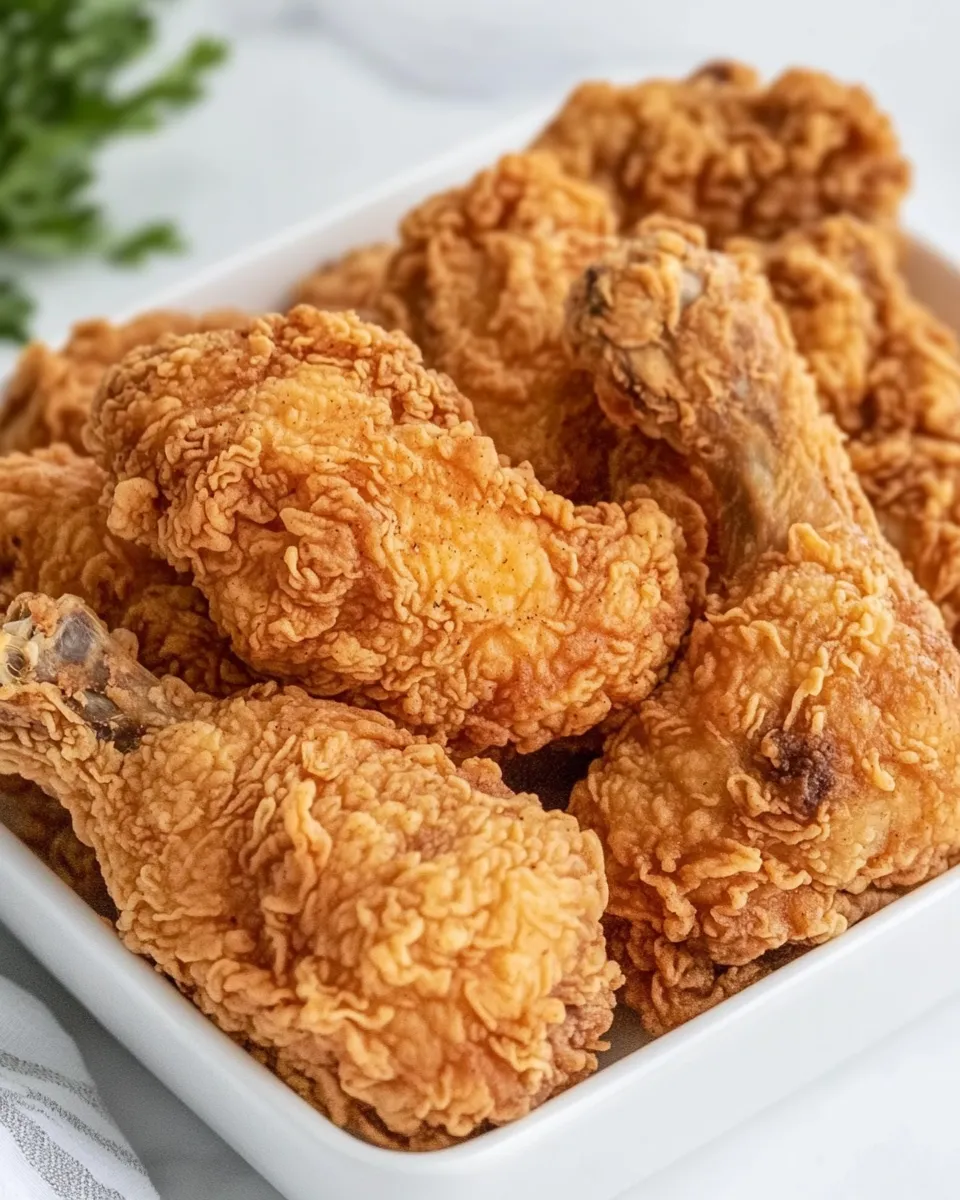
Kentucky Fried Chicken
I learned to make this at home because nothing beats hot, crisp fried chicken fresh from the pan. It’s straightforward, forgiving, and gives you that golden, peppery crust with a juicy interior—exactly what you want when company’s coming or when you simply refuse to order takeout. You don’t need fancy tools. You need a plan, a thermometer, and patience.
This recipe leans on a short but effective buttermilk soak and a seasoned flour dredge that holds up in hot oil. It’s the mix of spices—paprika, garlic, white and black pepper, herbs, and a hint of mustard—that makes the coating sing without needing mysterious additives. Follow the timed frying and oven-holding steps and you’ll get consistent results.
What Goes In

- 1 whole chicken (cut up into 8 pieces*) — Use a fresh or fully thawed chicken; cutting into 8 pieces gives consistent frying times.
- 1 cup buttermilk (**) — Acidic soak tenderizes and helps the flour adhere; don’t skip or dilute unless substituting carefully.
- 1 large egg (beaten) — Binds the buttermilk so the coating clings better.
- 2 cups all-purpose flour — The main body of the crust; measure by spooning into the cup and leveling for accuracy.
- Vegetable oil (for frying***) — Neutral oil with a high smoke point; enough to reach about 3 inches deep in your pot.
- ¼ cup ground paprika — Gives color and a mild sweet pepper note to the crust.
- 2 tablespoons garlic powder — Brings savory depth without added moisture.
- 2 tablespoons ground white pepper — Provides a sharp, earthy heat that’s different from black pepper.
- 1 tablespoon celery salt — Salty, aromatic finish—helps season the crust evenly.
- 1 tablespoon ground black pepper — Classic peppery bite in the spice mix.
- 1 tablespoon dry ground mustard — Adds a subtle tang and sharpness to lift the other flavors.
- 2 teaspoons kosher salt — Primary seasoning for the flour mix; adjust if you use table salt.
- 2 teaspoons onion powder — Adds mellow savory sweetness to the coating.
- 2 teaspoons dried thyme — Earthy-herbal note often found in Southern poultry seasonings.
- 2 teaspoons dried basil — Balances the mix with a green, slightly sweet character.
- 1½ teaspoons dried oregano — Gives structure to the herb profile without overwhelming.
- 1 teaspoon ground ginger — Adds warm, slightly spicy complexity.
- ½ teaspoon MSG (optional) — Optional umami enhancer; leave it out if you prefer no added glutamates.
Stepwise Method: Kentucky Fried Chicken
- Pat the whole chicken dry and cut it into 8 pieces (2 breasts, 2 thighs, 2 drumsticks, 2 wings); discard the carcass or reserve it for another use.
- In a large bowl whisk together 1 cup buttermilk and 1 beaten egg until combined. Add the chicken pieces, toss to coat, cover with plastic wrap, and refrigerate for at least 30 minutes or up to overnight.
- While the chicken marinates, combine 2 cups all-purpose flour with ¼ cup ground paprika, 2 tablespoons garlic powder, 2 tablespoons ground white pepper, 1 tablespoon celery salt, 1 tablespoon ground black pepper, 1 tablespoon dry ground mustard, 2 teaspoons kosher salt, 2 teaspoons onion powder, 2 teaspoons dried thyme, 2 teaspoons dried basil, 1½ teaspoons dried oregano, 1 teaspoon ground ginger, and ½ teaspoon MSG (optional) in a separate large bowl; mix thoroughly.
- Preheat the oven to 175°F. Line a baking sheet with aluminum foil and set an oven-safe wire rack on top; set aside.
- In a deep fryer or a large Dutch oven, pour in enough vegetable oil to reach about 3 inches deep. Heat the oil over medium-high until it reaches 350°F on a thermometer.
- Working one piece at a time, remove a piece of chicken from the buttermilk mixture and let excess drip off. Press the chicken into the flour mixture and turn it to coat all sides, pressing so the flour adheres. Shake off excess flour.
- Carefully lower the coated chicken into the hot oil. Fry 3–4 pieces at a time (do not overcrowd), cooking 12–15 minutes total and turning once halfway through, until the coating is golden brown and the internal temperature of the thickest part (avoid touching bone) reaches 165°F on an instant-read thermometer. If a piece has not reached 165°F after 12–15 minutes, continue frying until it does.
- Use tongs to transfer cooked pieces to the wire rack on the prepared baking sheet and place the sheet in the oven to keep warm. Allow the oil to return to 350°F before starting the next batch.
- Repeat dredging and frying with the remaining chicken pieces, following steps 6–8, until all pieces are cooked to 165°F.
- When all pieces are fried and have reached 165°F, keep them on the wire rack in the 175°F oven for about 10–15 minutes to rest and maintain temperature before serving.
Why This Recipe is a Keeper
This recipe balances a simple brine-soak with a well-seasoned dredge. The buttermilk and beaten egg soften and slightly acid-break the proteins, which keeps the meat tender even after the high-heat frying. Pressing the flour onto each piece creates a thick, adhesive crust that browns evenly and stays crisp during the brief oven hold.
The spice blend is built to be bold without masking the chicken: paprika for color, white and black pepper for layered heat, garlic and onion powders for backbone, and dried herbs for a subtle Southern note. The frying time and single-turn method keep each piece crisp across textures—skin, flesh, and crust.
Finally, holding the cooked pieces on a rack in a low oven prevents steam from softening the crust and keeps everything at a safe serving temperature. That small step makes the difference between soggy and satisfyingly crunchy fried chicken.
What to Use Instead
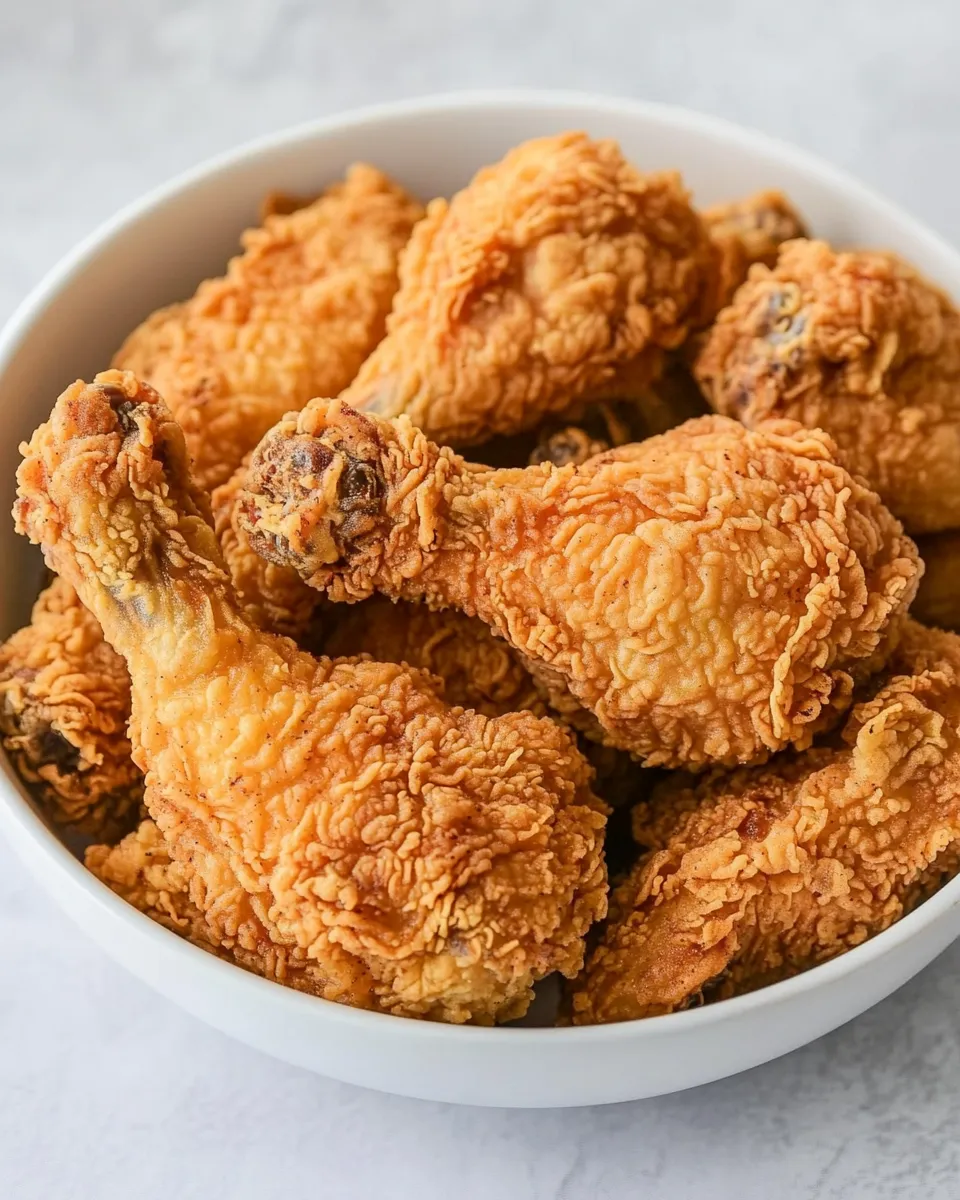
- Chicken pieces: If you can’t or don’t want to cut a whole chicken, buy 8 bone-in pieces of similar size (e.g., 2 breasts halved, 2 thighs, 2 drumsticks, 2 wings) so frying times stay consistent.
- Vegetable oil: Swap with any neutral high–smoke-point oil you have on hand (such as canola, peanut, or sunflower) if vegetable oil isn’t available.
- MSG: Omit it entirely if you avoid it—flavor depth will still be excellent thanks to the combined spices.
- Buttermilk: If you don’t have buttermilk, a yogurt or cultured dairy alternative can work if thinned to about the consistency of standard buttermilk; however, stick to the 1 cup measurement for soak volume.
Equipment Breakdown
- Deep fryer or large Dutch oven — For maintaining steady oil temperature and accommodating several pieces at once.
- Instant-read thermometer — Critical for checking the internal temperature of the thickest part without guessing.
- Large bowls — One for the buttermilk soak and one for the seasoned flour; a third for work space helps with organization.
- Wire rack and baking sheet — Keeps fried pieces elevated so air circulates and crust stays crisp while holding in the oven.
- Tongs and slotted spoon/spider — For safely lowering and lifting pieces out of hot oil.
- Thermometer for the oil — Preferably an oven-safe probe or a candy/deep-fry thermometer to monitor 350°F accurately.
Troubleshooting Tips
- Soggy crust after frying: Make sure oil is at 350°F before adding chicken and don’t overcrowd the pot. Transfer pieces to a wire rack immediately and keep them in the warm oven on a rack—do not stack them.
- Coating falls off: Press the flour firmly into the chicken during dredging and allow excess to shake off; a light, even coating of the buttermilk mixture helps the flour adhere. Work one piece at a time for best results.
- Over-browned exterior but undercooked inside: Oil too hot. Keep oil at 350°F and use pieces of similar size so cooking is even. If a piece browns too quickly, lower the heat slightly and finish in the oven or check internal temperature frequently.
- Oil temperature drops when adding chicken: Allow the oil to come back up to 350°F between batches, as directed. Frying too many pieces at once both lengthens cook time and produces greasy chicken.
- Dry meat: Avoid overcooking—monitor the internal temperature and pull at 165°F. Resting for 10–15 minutes in the low oven after frying lets juices redistribute.
Make It Fit Your Plan
Time management: Marinate for at least 30 minutes if you’re short on time; overnight gives best flavor and tenderness. Start heating your oil after the chicken has marinated so you’re not standing around. Multitask by prepping the spice mix while the chicken soaks.
Feeding a crowd: Double the recipe and fry in consistent batches. Keep finished pieces warm on multiple racks or transfer to warming drawers if you have them. Plan about 2–3 pieces per adult, depending on appetites and sides.
Weeknight adaptation: Use fewer pieces and a shallower oil depth in a smaller pan for quicker clean-up. You’ll still follow the same temperature and timing principles.
Cook’s Notes
Measure spices carefully. The ¼ cup paprika and the tablespoons of garlic and pepper create the backbone of the crust—alter carefully if you reduce the recipe. The ½ teaspoon MSG is listed as optional; it boosts umami but is unnecessary if you prefer not to use it.
Always check the internal temperature at the thickest, meatiest spot and avoid touching the bone with the probe for an accurate reading. The recipe’s 12–15 minute guideline per batch is a target; trust the thermometer over the clock.
Refrigerate, Freeze, Reheat
Refrigerate: Store cooled pieces in an airtight container or wrapped loosely in foil for up to 3 days. Keep them on a rack or paper towel so they don’t sit in excess oil.
Freeze: Cool completely and flash-freeze on a sheet tray, then transfer to a freezer bag for up to 2 months. Reheat from frozen in a 375°F oven on a rack until heated through, about 25–35 minutes depending on size, to help the crust crisp back up.
Reheat: For refrigerated leftovers, reheat in a 375°F oven on a rack for 10–15 minutes until internal temperature reaches 165°F and the skin is crisp. Avoid microwaving; it will soften the crust.
Reader Questions
- Can I use boneless chicken? — Yes, but cooking times will drop and breading adhesion can behave differently; watch the internal temperature closely and adjust frying time.
- What if I don’t have a thermometer? — A thermometer is strongly recommended for safety and consistent results. If you must, cut into one piece to check doneness, but juices should run clear and meat should not be pink near the bone.
- How important is the oven holding step? — It prevents steam from softening the crust and keeps the chicken warm without overcooking. Skip it and the crust will dull quickly.
Bring It Home
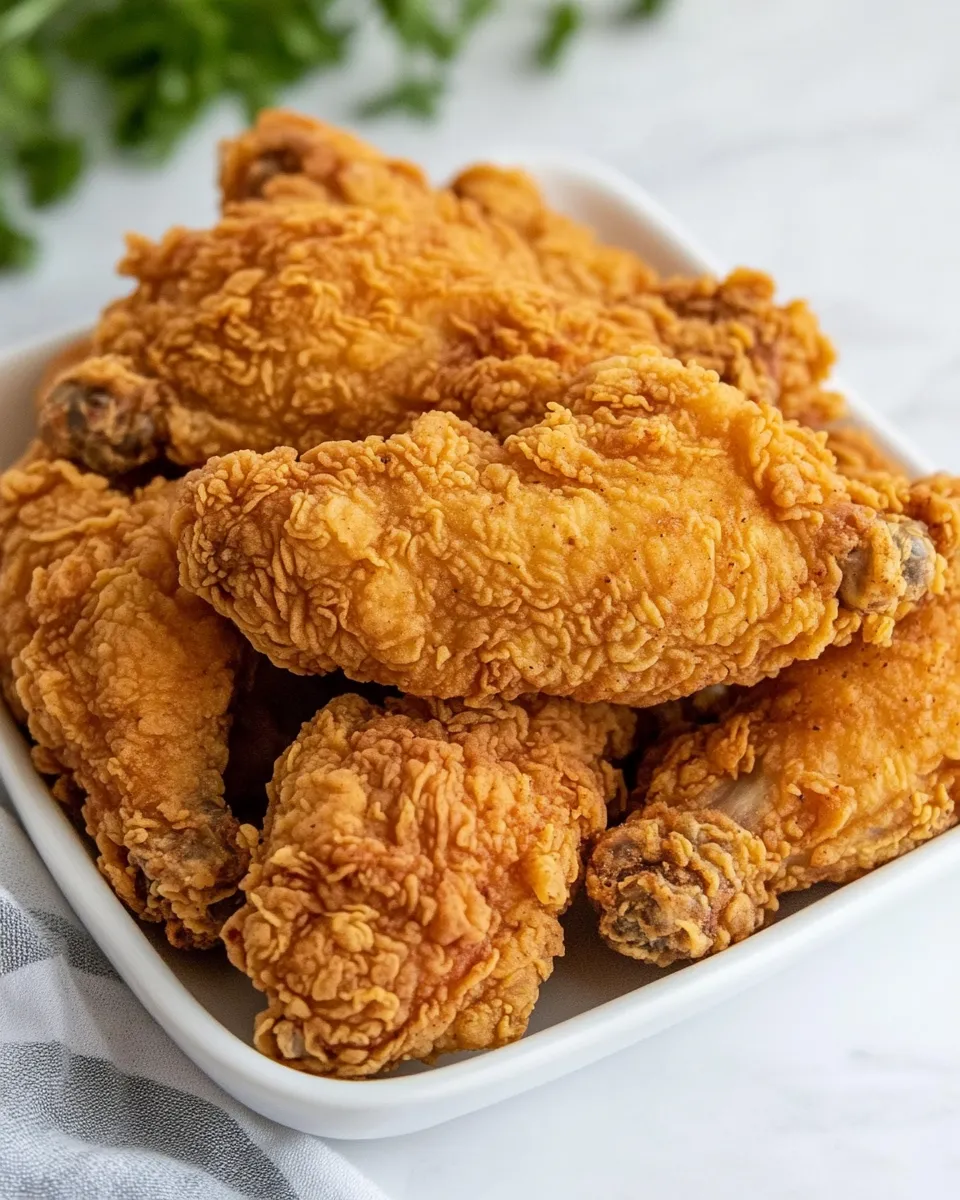
This Kentucky Fried Chicken method is practical and repeatable. It gives you crunchy, well-seasoned coating and moist meat without complicated techniques. Make a batch, time it once, and you’ll have a reliable plan for every family dinner or weekend gathering. Serve with classic sides—coleslaw, mashed potatoes, biscuits—and let the chicken be the star. If you try it, tweak small things to match your taste, but keep the soak, the seasoned flour, and the oil temperature—those are the non-negotiables for great fried chicken.
Kentucky Fried Chicken
Ingredients
Ingredients
- 1 whole chicken cut up into 8 pieces*
- 1 cupbuttermilk **
- 1 largeegg beaten
- 2 cupsall-purpose flour
- Vegetable oil for frying***
- 1/4 cupground paprika
- 2 tablespoonsgarlic powder
- 2 tablespoonsground white pepper
- 1 tablespooncelery salt
- 1 tablespoonground black pepper
- 1 tablespoondry ground mustard
- 2 teaspoonskosher salt
- 2 teaspoonsonion powder
- 2 teaspoonsdried thyme
- 2 teaspoonsdried basil
- 1 1/2 teaspoonsdried oregano
- 1 teaspoonground ginger
- 1/2 teaspoonMSG optional
Instructions
Instructions
- Pat the whole chicken dry and cut it into 8 pieces (2 breasts, 2 thighs, 2 drumsticks, 2 wings); discard the carcass or reserve it for another use.
- In a large bowl whisk together 1 cup buttermilk and 1 beaten egg until combined. Add the chicken pieces, toss to coat, cover with plastic wrap, and refrigerate for at least 30 minutes or up to overnight.
- While the chicken marinates, combine 2 cups all-purpose flour with ¼ cup ground paprika, 2 tablespoons garlic powder, 2 tablespoons ground white pepper, 1 tablespoon celery salt, 1 tablespoon ground black pepper, 1 tablespoon dry ground mustard, 2 teaspoons kosher salt, 2 teaspoons onion powder, 2 teaspoons dried thyme, 2 teaspoons dried basil, 1½ teaspoons dried oregano, 1 teaspoon ground ginger, and ½ teaspoon MSG (optional) in a separate large bowl; mix thoroughly.
- Preheat the oven to 175°F. Line a baking sheet with aluminum foil and set an oven-safe wire rack on top; set aside.
- In a deep fryer or a large Dutch oven, pour in enough vegetable oil to reach about 3 inches deep. Heat the oil over medium-high until it reaches 350°F on a thermometer.
- Working one piece at a time, remove a piece of chicken from the buttermilk mixture and let excess drip off. Press the chicken into the flour mixture and turn it to coat all sides, pressing so the flour adheres. Shake off excess flour.
- Carefully lower the coated chicken into the hot oil. Fry 3–4 pieces at a time (do not overcrowd), cooking 12–15 minutes total and turning once halfway through, until the coating is golden brown and the internal temperature of the thickest part (avoid touching bone) reaches 165°F on an instant-read thermometer. If a piece has not reached 165°F after 12–15 minutes, continue frying until it does.
- Use tongs to transfer cooked pieces to the wire rack on the prepared baking sheet and place the sheet in the oven to keep warm. Allow the oil to return to 350°F before starting the next batch.
- Repeat dredging and frying with the remaining chicken pieces, following steps 6–8, until all pieces are cooked to 165°F.
- When all pieces are fried and have reached 165°F, keep them on the wire rack in the 175°F oven for about 10–15 minutes to rest and maintain temperature before serving.
Equipment
- Baking Sheet
- Deep Fryer(OR)
- Dutch Oven
- Deep Fry Oil Thermometer
- Instant-read thermometer
Notes
After marinating, pat the chicken dry using paper towels. This will help the seasoned flour stick, so you get crunchy breading while frying.
Use a thermometer to monitor the oil temperature. If the oil is too hot, the chicken will burn on the outside while remaining raw in the middle. Too low, and the breading will get soggy.
Be sure not to overcrowd the pot while frying. This will reduce the oil temperature, leading to oily, soggy chicken.
Resist the urge to turn the chicken over until you see a golden brown line all the way around the sides of the chicken. This line tells you that the breading is evenly crispy.
Place the chicken pieces in a warm oven to keep them crisp while you continue frying the rest of the chicken.
Fully cooked chickenshould reach an internal temp of 165°F before consuming. Dark meat pieces are best when cooked to 170-180°F.
Nutritional information does not include optional ingredients.