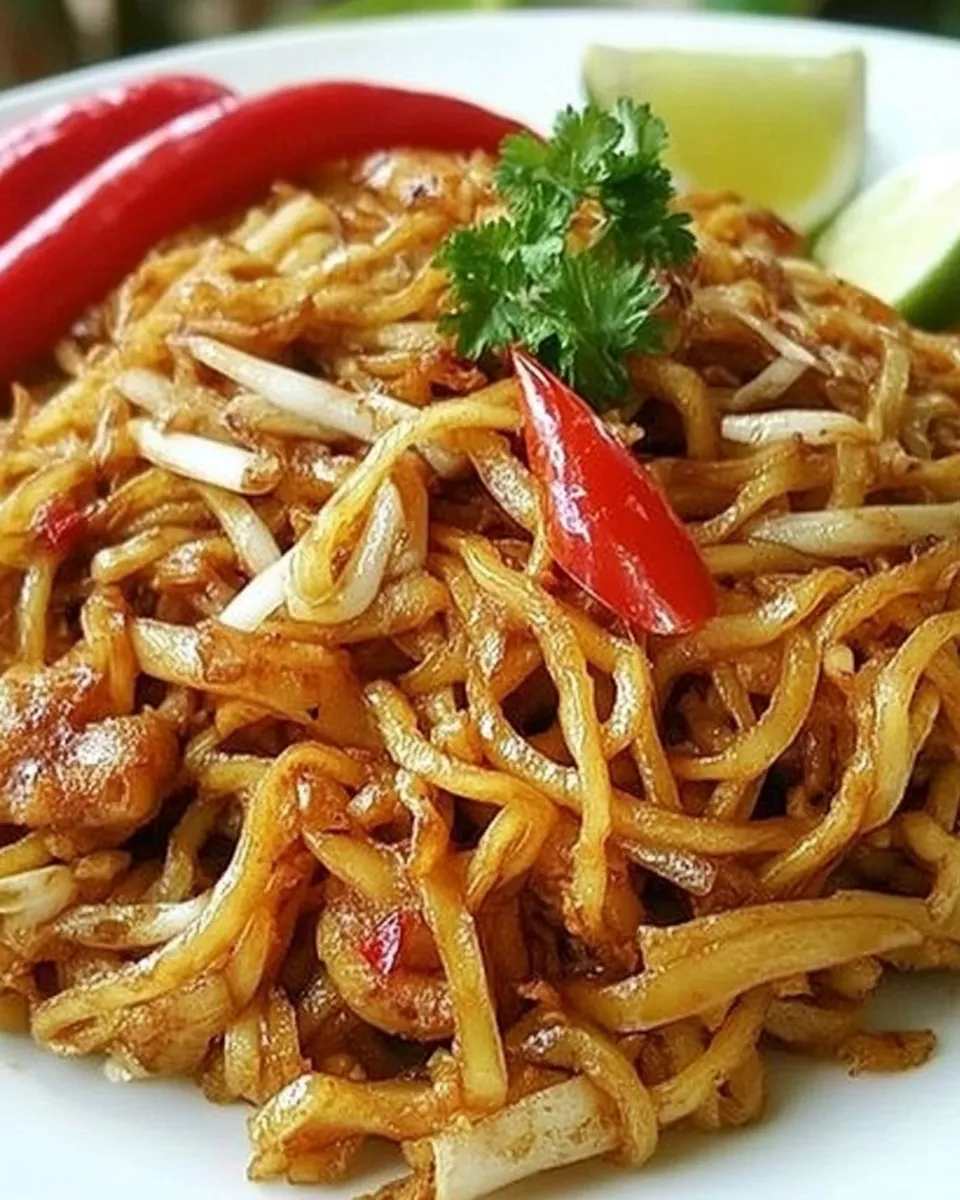
Indonesian Fried Noodles (Mie Goreng)
Simple, savory, and perfectly balanced — that’s how I think of mie goreng. This Indonesian fried noodle dish is a weekday hero: quick to pull together, forgiving on ingredient swaps, and bold in flavor. It’s the kind of meal where the sauce sings and the leftovers are even better the next day.
I love keeping the core technique consistent: very high heat, a slick of oil, and vigorous tossing so the noodles pick up every bit of the paste and kecap manis. The version below is straightforward and very true to a common home-style preparation: chicken and shrimp for protein, cabbage and optional bean sprouts for crunch, and a good nasi goreng paste to bring that unmistakable Southeast Asian spice profile.
Read on for an exact ingredient list from my source, precise step-by-step instructions, and practical tips to make this reliable every time. If you want to swap proteins or lighten it up, scroll to the Smart Substitutions and Health-Conscious Tweaks sections; I give clear options so you can adapt without guesswork.
Shopping List

- 2 tablespoons oil — for high-heat stir-frying; use a neutral oil with a high smoke point.
- 2 cloves garlic, minced — provides the aromatic base; mince finely so it browns quickly without burning.
- 4 oz (125 g) chicken meat, cut into small pieces — quick-cooking white meat; small pieces ensure fast, even cooking.
- 6 medium-sized shrimp, shelled and deveined — adds sweetness and texture; cook until pink and opaque.
- 2 oz (60 g) cabbage, shredded — gives crunch and body; shred thin so it wilts quickly.
- 6 oz (175 g) bean sprouts, rinsed with cold water and roots removed (optional) — for fresh crunch; optional but traditional.
- 1 lb (500 g) yellow egg noodles, rinsed with cold water and drained — the noodle backbone; rinsing helps separate strands and prevents clumping.
- 3 tablespoons nasi goreng paste — concentrated flavor and spice; this is where the dish’s signature character comes from.
- 1 1/2 tablespoon kecap manis, Indonesian sweet soy sauce — sweet-salty glaze that caramelizes; essential for authentic flavor.
- 1/4 teaspoon salt — seasoning to taste; complements the other salty components.
- tomato wedges, garnishing — fresh acidity to cut the richness; serve on the side.
- scallion, chopped, garnishing — bright herbaceous finish; scatter over just before serving.
Indonesian Fried Noodles (Mie Goreng) in Steps
Ingredients
- 2 tablespoons oil — for high-heat stir-frying; use a neutral oil with a high smoke point.
- 2 cloves garlic, minced — provides the aromatic base; mince finely so it browns quickly without burning.
- 4 oz (125 g) chicken meat, cut into small pieces — quick-cooking white meat; small pieces ensure fast, even cooking.
- 6 medium-sized shrimp, shelled and deveined — adds sweetness and texture; cook until pink and opaque.
- 2 oz (60 g) cabbage, shredded — gives crunch and body; shred thin so it wilts quickly.
- 6 oz (175 g) bean sprouts, rinsed with cold water and roots removed (optional) — for fresh crunch; optional but traditional.
- 1 lb (500 g) yellow egg noodles, rinsed with cold water and drained — the noodle backbone; rinsing helps separate strands and prevents clumping.
- 3 tablespoons nasi goreng paste — concentrated flavor and spice; this is where the dish’s signature character comes from.
- 1 1/2 tablespoon kecap manis, Indonesian sweet soy sauce — sweet-salty glaze that caramelizes; essential for authentic flavor.
- 1/4 teaspoon salt — seasoning to taste; complements the other salty components.
- tomato wedges, garnishing — fresh acidity to cut the richness; serve on the side.
- scallion, chopped, garnishing — bright herbaceous finish; scatter over just before serving.
Instructions
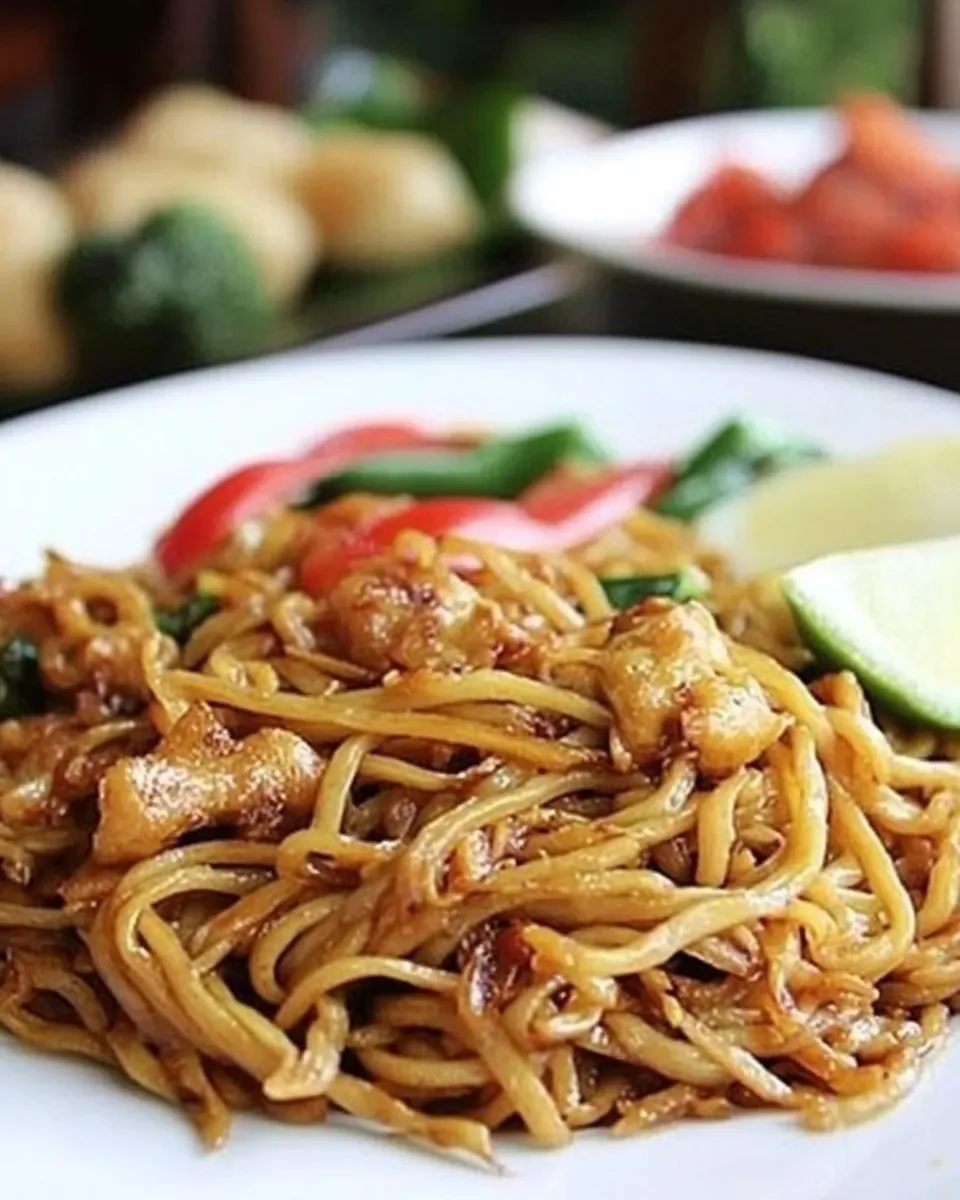
- Heat 2 tablespoons oil in a wok or large skillet over high heat until hot.
- Add 2 cloves minced garlic and stir-fry about 10–20 seconds, until fragrant.
- Add 4 oz (125 g) chicken pieces and 6 shrimp. Stir constantly 2–3 minutes until the chicken is mostly cooked through and the shrimp turn pink and opaque.
- Add 2 oz (60 g) shredded cabbage, the optional 6 oz (175 g) rinsed bean sprouts (if using), and 1 lb (500 g) rinsed and drained yellow egg noodles. Stir-fry about 10 seconds to combine and begin heating the noodles.
- Add 3 tablespoons nasi goreng paste, 1 1/2 tablespoons kecap manis, and 1/4 teaspoon salt. Toss or stir vigorously, using a spatula to lift and turn the noodles and other ingredients, about 1 minute or until everything is evenly coated and heated through.
- Transfer to a serving plate, garnish with chopped scallion and tomato wedges, and serve immediately.
Why It’s My Go-To
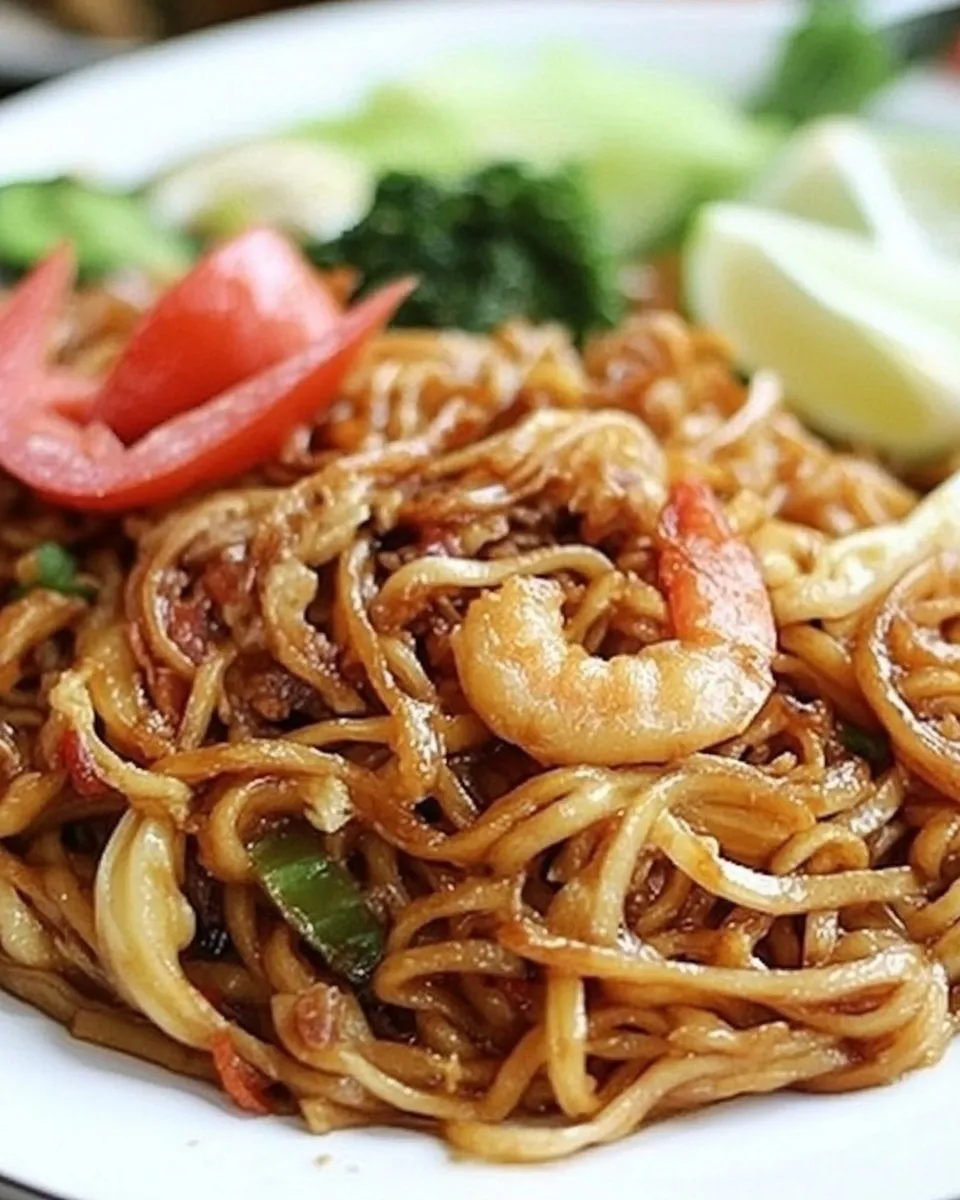
This recipe hits the sweet spot between speed and depth. The nasi goreng paste gives a layered, savory-spicy base so you get big flavor without a long ingredient list. Noodles cook fast and the proteins are in small pieces so the whole dish finishes in under 10 minutes of active stove time.
It’s also flexible. You can stretch it with more vegetables or lean on the protein — either way the kecap manis creates that sticky, caramelized coating on the noodles that makes every forkful satisfying. For busy nights, it’s the kind of dish I trust to please picky eaters and still feel like a proper home-cooked dinner.
Smart Substitutions
- Protein swaps — Replace the chicken and shrimp with tofu (pressed and cubed) or thinly sliced beef. Adjust cooking time: tofu needs browning; thin beef cooks almost instantly.
- Noodles — If you don’t have yellow egg noodles, use fresh wheat noodles or even thicker rice noodles; rinse and drain the alternative so it doesn’t clump.
- Nasi goreng paste — If unavailable, a mix of sambal oelek plus a little kecap manis and a pinch of shrimp paste (or fish sauce) approximates the flavor — but try to source the paste for best authenticity.
- Kecap manis — If you can’t access Indonesian sweet soy sauce, mix regular soy sauce with a touch of brown sugar or molasses to add sweetness and viscosity.
- Oil — Any neutral high-smoke-point oil works. Avoid extra-virgin olive oil — it smokes and its flavor doesn’t suit this stir-fry.
Recommended Tools
- Wok or large skillet — The high sides and surface area of a wok make tossing easy and help concentrate heat.
- Spatula or wok chuan — A sturdy spatula lets you lift and turn noodles quickly so everything gets evenly coated.
- Sharp knife and cutting board — For small, uniform pieces of chicken and tidy vegetable prep.
- Colander and running water — For rinsing noodles and bean sprouts; proper draining prevents steam and sogginess.
- Serving plate — A large plate or shallow bowl keeps the noodles spread out so heat dissipates and garnishes sit well.
Watch Outs & How to Fix
Problem: Garlic burned. Fix: Garlic cooks in seconds at high heat. If it browns too quickly, remove the wok from the heat for a few seconds, or lower the flame. Scrape any bitter bits away and add a splash of liquid (water or a little kecap manis) to deglaze and mellow the flavor.
Problem: Noodles clumped together. Fix: Make sure noodles are well-rinsed and drained before adding. If they’re already in the pan, use your spatula to separate and lift them; add a small splash of oil to help lubricate strands and keep tossing on high heat.
Problem: Sauce not coating evenly. Fix: Toss vigorously and use the spatula to lift and turn the noodles. If you need more sauce coverage, add a teaspoon of water and keep tossing; the steam helps distribute the paste and kecap manis.
Health-Conscious Tweaks
Want a lighter plate? Reduce the oil to 1 tablespoon and swap half the egg noodles for extra shredded cabbage or spiralized vegetables. Use low-sodium kecap manis if you’re watching salt, or cut the kecap manis to 1 tablespoon and finish with a squeeze of lime for brightness.
If you want more fiber, add more shredded cabbage, sliced carrots, or snap peas. For lower fat protein, use skinless chicken breast or a higher-ratio of vegetables to protein. The key is maintaining high heat and quick cooking so vegetables stay crisp and noodles don’t go mushy.
Pro Perspective
Heat and timing are everything. A screaming-hot wok gives you that distinct wok hei — the smoky, slightly charred flavor you get from searing at high heat — and quick tossing prevents stewing. Cook proteins in small, even pieces so they all finish at the same time. When you add the sauce, toss with intention: lift, flip, and rotate so every strand gets covered.
Plating & finishing
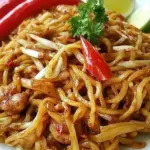
Serve immediately. Scatter chopped scallion for freshness and tomato wedges for acidity. The contrast of warm, sweet, umami-rich noodles with the bright tomato really lifts the dish.
Save for Later: Storage Tips
Leftovers keep well for 1–2 days in the fridge. Cool quickly, store in an airtight container, and reheat in a skillet over medium-high heat with a teaspoon of oil to restore texture. Avoid microwaving cold fried noodles straight from the fridge without a splash of water or oil — they can dry out or clump.
Freeze? It’s possible but not ideal: the texture of the noodles and bean sprouts can suffer. If you must freeze, flash-cool, portion into airtight containers, and use within a month. Thaw overnight in the fridge and reheat in a hot pan with a little oil.
Reader Q&A
Q: Can I make this vegetarian? A: Yes. Omit chicken and shrimp and add firm tofu or extra vegetables. Keep the rest of the seasonings the same; nasi goreng paste often contains shrimp paste, so check the label if you need fully vegetarian ingredients.
Q: My nasi goreng paste is mild. How do I turn up the heat? A: Add a teaspoon or two of sambal oelek or sliced fresh chilies when you add the garlic. Taste and adjust — the paste is concentrated so start small.
Q: The noodles got soggy. What went wrong? A: Likely too much liquid, under-draining, or low heat. Rinse and drain noodles well. Ensure your wok is hot before adding noodles and toss quickly to avoid steaming them.
The Takeaway
Mie goreng is a fast, adaptable stir-fry that rewards precision with huge flavor. Use high heat, small even cuts of protein, and vigorous tossing so the nasi goreng paste and kecap manis cling to every noodle. Follow the exact ingredient list and steps above for a reliable base, then feel free to personalize with protein swaps or extra veg. Keep garnishes simple — scallion and tomato wedges do a lot of work — and serve immediately for the best texture.
Make it once as written, and you’ll have a template for dozens of delicious variations. That’s why this is one of my absolute weeknight go-tos.
Indonesian Fried Noodles (Mie Goreng)
Ingredients
Ingredients
- 2 tablespoonsoil
- 2 clovesgarlic minced
- 4 oz 125 gchicken meat, cut into small pieces
- 6 medium-sized shrimp shelled and deveined
- 2 oz 60 gcabbage, shredded
- 6 oz 175 gbean sprouts, rinsed with cold water and roots removed (optional)
- 1 lb 500 gyellow egg noodles, rinsed with cold water and drained
- 3 tablespoonsnasi goreng paste
- 1 1/2 tablespoonkecap manis Indonesian sweet soy sauce
- 1/4 teaspoonsalt
- tomato wedges garnishing
- scallion chopped, garnishing
Instructions
Instructions
- Heat 2 tablespoons oil in a wok or large skillet over high heat until hot.
- Add 2 cloves minced garlic and stir-fry about 10–20 seconds, until fragrant.
- Add 4 oz (125 g) chicken pieces and 6 shrimp. Stir constantly 2–3 minutes until the chicken is mostly cooked through and the shrimp turn pink and opaque.
- Add 2 oz (60 g) shredded cabbage, the optional 6 oz (175 g) rinsed bean sprouts (if using), and 1 lb (500 g) rinsed and drained yellow egg noodles. Stir-fry about 10 seconds to combine and begin heating the noodles.
- Add 3 tablespoons nasi goreng paste, 1 1/2 tablespoons kecap manis, and 1/4 teaspoon salt. Toss or stir vigorously, using a spatula to lift and turn the noodles and other ingredients, about 1 minute or until everything is evenly coated and heated through.
- Transfer to a serving plate, garnish with chopped scallion and tomato wedges, and serve immediately.
Equipment
- Wok or large skillet
- Spatula
Notes
World Foods Nasi Goreng pasteWorld Foods is a Malaysian brand, with its manufacturing facility in Thailand. It offers a range of Asian-flavored sauces and pastes for everyday cooking. The products are available worldwide. In the United States, you can find them at Whole Foods markets and other outlets, or online.