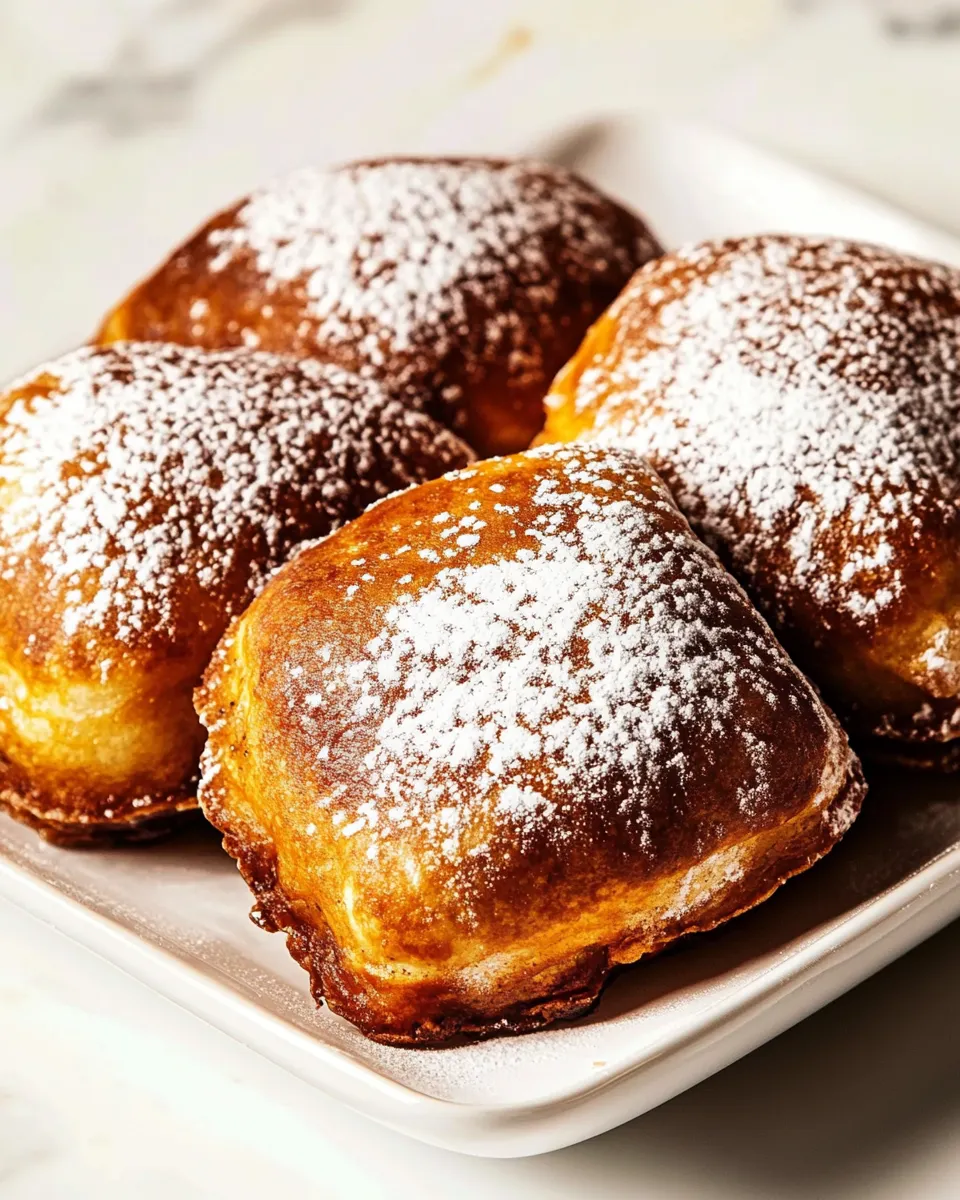
How to Make Beignets
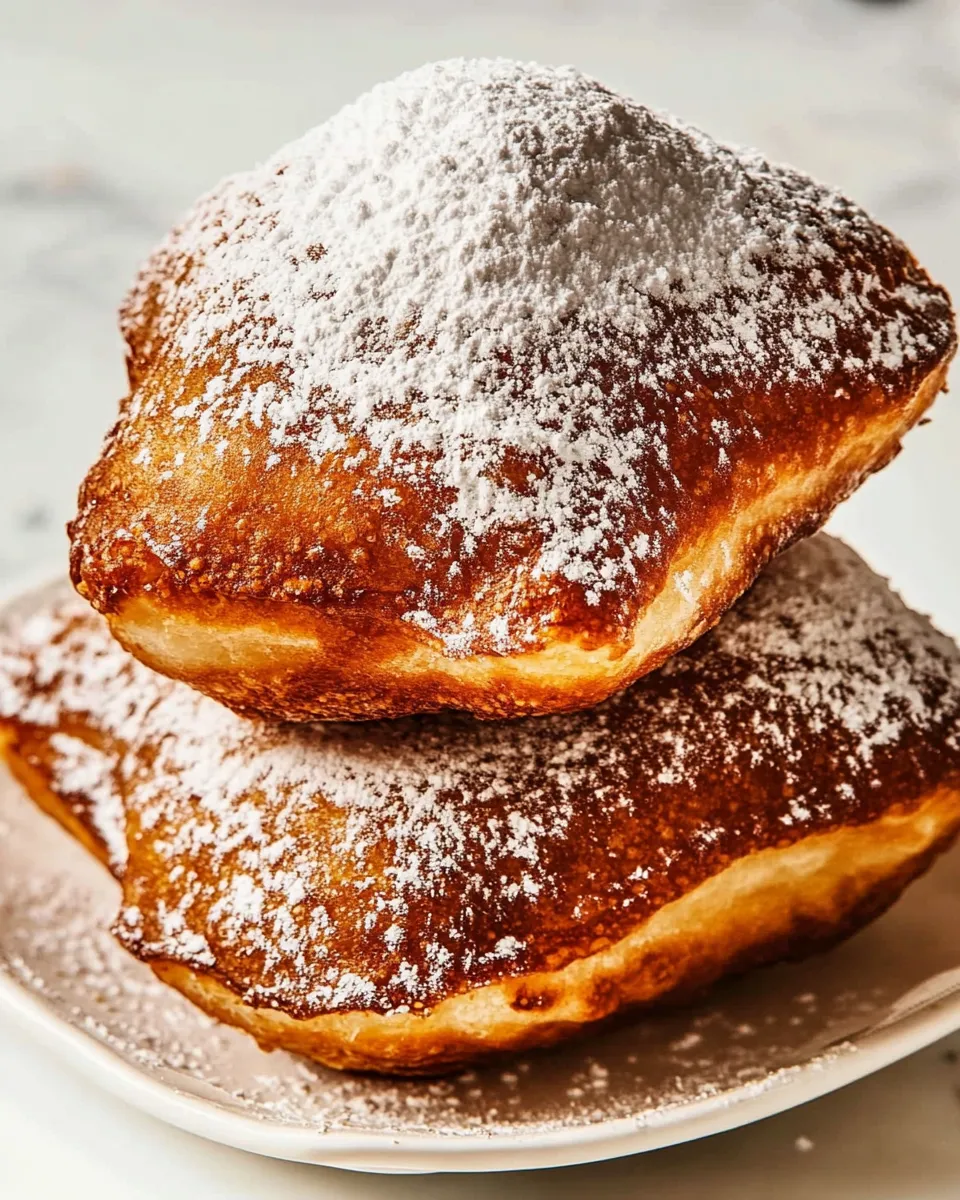
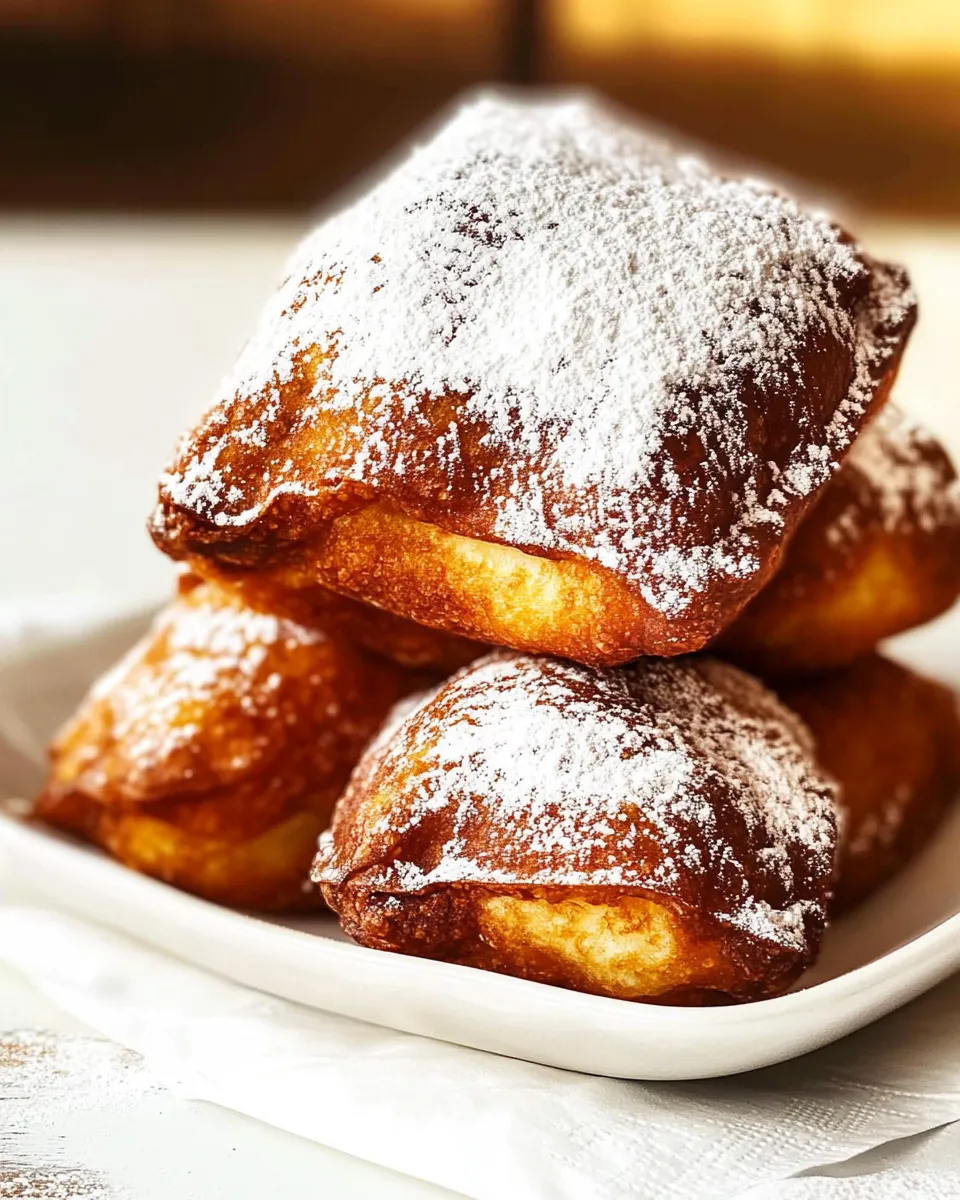
Beignets are the kind of treat that lands you immediate praise: pillowy inside, crisp at the edges, and dusted in a blizzard of powdered sugar. They’re a weekend project worth the time because the payoff is immediate and communal — warm beignets are best served and eaten right away, with friends or family hovering nearby to snag the first one.
This recipe walks you through the dough, the rises, and the frying with practical notes and troubleshooting so you don’t waste ingredients or time. I wrote it after many tests to balance patience with efficiency: the dough is straightforward, but small technique points matter — yeast activation, dough tackiness, oil temperature, and timing in the fryer.
Read through the steps once, prep your mise en place, and you’ll be rewarded with golden, tender beignets. I’ll also share swap ideas, tools that make the process easier, and fixes if something goes sideways.
Ingredient Checklist

- 1 cup warm water (between 110 and 115 degrees (F)) — activates the yeast; temperature is critical for a good foam.
- 1/2 cup granulated sugar — feeds the yeast and sweetens the dough.
- 1 1/2 teaspoons active dry yeast — the leavener; check freshness if it won’t foam.
- 1 large egg + 1 egg yolk — at room temperature, slightly beaten; adds richness and structure.
- 2/3 cup evaporated milk — room temperature; gives body and a slightly creamier crumb than regular milk.
- 2 teaspoons pure vanilla extract — flavor anchor.
- 1 teaspoon salt — balances sweetness and strengthens the dough.
- 1/2–1 teaspoon ground cinnamon — optional; warm spice note if you like it.
- 1/4 teaspoon ground nutmeg — optional; a little goes a long way.
- 670 grams bread flour (SEE NOTES!) — the structural flour; see tips on measuring and hydration.
- 3 tablespoons unsalted butter — softened; enriches the dough and adds tenderness.
- vegetable, canola or cottonseed oil — for frying; choose a neutral oil with a high smoke point.
- 2 cups powdered sugar — for heavy dusting; use immediately after frying for that classic exterior.
How to Prepare Beignets
- In the bowl of a stand mixer, whisk together 1 cup warm water (110–115°F), 1/2 cup granulated sugar, and 1 1/2 teaspoons active dry yeast; set aside about 10 minutes until the mixture is bubbly and foamy. If it does not foam, the water temperature or the yeast may be wrong.
- Add 1 large egg plus 1 egg yolk (slightly beaten), 2/3 cup evaporated milk (room temperature), 2 teaspoons pure vanilla extract, 1 teaspoon salt, and the optional 1/2–1 teaspoon ground cinnamon and 1/4 teaspoon ground nutmeg, plus approximately half of the 670 grams bread flour to the foamy yeast mixture.
- Fit the mixer with the dough hook and mix on low to medium-low until the ingredients are combined.
- With the mixer still on low, add 3 tablespoons softened unsalted butter, then add the remaining bread flour; continue mixing until incorporated.
- Increase the mixer speed to medium and knead the dough about 2 minutes, until smooth, slightly tacky, and pulling away from the bowl. If the dough seems too wet, add additional flour 1 tablespoon at a time, up to 1/4 cup.
- Use a spatula to transfer the sticky dough to a large, lightly greased bowl (it will be too sticky to handle with your hands). Cover the bowl.
- Let the dough rise in a warm place until doubled in volume, about 2–4 hours.
- (Make-ahead option) If you prefer to refrigerate: cover the dough (before the first rise) and store in the refrigerator up to 3 days. Remove the dough when ready, let it come to room temperature about 1–2 hours, then proceed to the next step.
- Punch down the dough, cover, and let it rise again for another 30 minutes.
- While the dough finishes the second rise, prepare the oil and draining area: in a large deep fryer or a heavy Dutch oven, preheat about 3 inches of vegetable/canola/cottonseed oil over medium-high heat to 350°F; use a candy thermometer to monitor the temperature. Line a wire rack with layers of paper towels and set aside.
- On a well-floured work surface, roll the dough out to a 1/4-inch thickness (flour the rolling pin if it sticks). Cut the dough into 2 1/2-inch squares with a pizza cutter or knife.
- Fry the beignets in batches of about 5–6 pieces, keeping the oil temperature between 350°F and 360°F. Flip the pieces every ~20 seconds and fry until golden brown, about 1 minute total (adjust timing as needed to reach a golden color).
- Using a spider strainer or slotted spoon, transfer the fried beignets to the paper towel–lined wire rack and let drain for a few seconds, then heavily dust or toss them with the 2 cups powdered sugar.
- Serve the beignets immediately while warm.
Why It’s Crowd-Pleasing
Beignets hit multiple pleasure points: they’re soft, deep-fried, and generously sugared — textures and flavors people respond to instantly. The contrast of a warm, airy interior and a slightly crisp exterior coated in powdered sugar feels indulgent but uncomplicated. They’re also easy to share: you can fry a batch and set them on a rack for people to pop one after another.
Another reason: the sensory cues are immediate. The aroma of frying dough, the sight of golden pillows, and the tactile fun of shaking powdered sugar over them create a ritual. That ritual is social and makes guests linger — perfect for brunches, late breakfasts, or dessert-first gatherings.
Quick Replacement Ideas
- Evaporated milk — if you must, you can use whole milk in place of the 2/3 cup evaporated milk. Expect slightly less richness.
- Unsalted butter — if you only have salted butter, reduce added salt slightly or omit the extra pinch in the dough (the recipe uses 1 teaspoon salt).
- Spices (cinnamon, nutmeg) — omit if you prefer plain dough, or add up to 1 teaspoon cinnamon for a stronger spice note.
- Frying oil — use canola or vegetable if cottonseed isn’t available; stick to neutral oils with high smoke points.
Toolbox for This Recipe
- Stand mixer with dough hook — recommended for handling sticky dough effortlessly.
- Digital instant-read or candy thermometer — critical for oil temperature control (350–360°F).
- Heavy Dutch oven or deep fryer — choose what gives you stable heat; at least 3 inches of oil depth.
- Spider strainer or slotted spoon — for safe, quick transfers from oil to rack.
- Wire cooling rack and paper towels — for draining and avoiding soggy bottoms.
- Rolling pin and pizza cutter or sharp knife — for sizing squares evenly (2 1/2-inch recommended).
Watch Outs & How to Fix
Yeast didn’t foam
If the initial mixture doesn’t bubble in about 10 minutes, your yeast is likely inactive or the water was too hot/cold. Discard and start again with fresh yeast and water between 110–115°F. Don’t skip the foam check — it’s the simplest way to avoid a dense dough.
Dough too sticky or too dry
The dough should be slightly tacky and pull away from the bowl after kneading. If it’s very wet, add flour 1 tablespoon at a time up to 1/4 cup, as the recipe notes. If it’s dry and won’t come together, add a teaspoon of water at a time until it does.
Oil temperature fluctuates
Keep a candy thermometer in the oil and adjust heat to maintain 350–360°F. If the oil cools, beignets absorb oil and turn greasy; if too hot, they brown too quickly and stay raw inside. Fry in small batches to minimize temperature drop.
Beignets not puffing
Puffing depends on proper rise and hot oil. If you under-proved the dough, let it rise longer until doubled. If the oil isn’t hot enough, it won’t set quickly and trap steam — bubbles won’t form.
Smart Substitutions
- Bread flour — the recipe specifies 670 grams; if you only have all-purpose, you can use it, but the texture will be slightly less chewy and may require a bit less added flour during kneading. Watch dough feel rather than adding a fixed amount.
- Evaporated milk — whole milk is the closest swap for texture. If using skim, expect a leaner crumb.
- Butter — you can use a neutral-flavored oil if you’re out of butter, but add a tablespoon less, since oil is 100% fat and butter has water; the flavor will differ.
- Powdered sugar — for serving, you can sift in a little cocoa or cinnamon into the powdered sugar for a flavored dusting.
What Could Go Wrong
Here are common failures and short explanations so you can avoid them. Most problems trace back to temperature control (either in rising or frying) or dough hydration.
- Dense, heavy beignets: Likely under-proofed yeast or dead yeast. Check foam at the start and give the dough the full 2–4 hours for the first rise.
- Greasy beignets: Oil too cool or beignets fried in too-large batches. Keep batches small and monitor oil temp.
- Overly dark outside, raw inside: Oil too hot. Lower heat to maintain 350–360°F and adjust frying time.
- Too sweet or cloying: If too much powdered sugar is used or spices are strong. Dust more lightly or reduce spice amounts next time.
Storing Tips & Timelines
Beignets are at their best within an hour of frying. If you need to store leftovers:
- Room temperature: Store in a single layer at room temperature for up to 24 hours, but note they’ll lose crispness.
- Reheating: Re-crisp in a 350°F oven for 5–8 minutes on a wire rack. Do not microwave unless you accept a chewier texture.
- Dough storage: The recipe allows refrigeration of the dough up to 3 days before the first rise. This is my favorite make-ahead method — it lets you plan ahead and fry fresh when guests arrive.
Ask & Learn
Common questions I get:
- Can I freeze beignets? You can freeze baked beignets wrapped tightly, but the texture suffers. Better to freeze shaped, unfried dough squares on a tray, then store in a bag for up to 1 month and fry from cold (add extra frying time).
- Why use bread flour? Bread flour has higher protein for more gluten development, which gives beignets structure and chew without collapsing in the fryer.
- Can I make them smaller or larger? Yes. Adjust frying times accordingly — smaller pieces will need less time, larger pieces slightly more. Keep an eye on color rather than strict timing.
Ready to Cook?
If you’ve read through the steps and prepped your ingredients, start by proofing the yeast and lining your draining station. The real work is mostly patience: two rises and careful frying. Once you hit the rhythm of rolling, cutting, and frying in small batches, the process becomes quick and satisfying.
Make a pot of coffee, invite company, and keep the powdered sugar close. Serve hot, watch the smiles, and learn what tweaks your household prefers — a bit more spice, a slightly larger square, or a lighter dusting of sugar. Enjoy your Beignets.

How to Make Beignets
Ingredients
Ingredients
- 1 cupwarm waterbetween 110 and 115 degrees F
- 1/2 cupgranulated sugar
- 1 1/2 teaspoonsactive dry yeast
- 1 large egg + 1 egg yolkat room temperature slightly beaten
- 2/3 cupevaporated milkat room temperature
- 2 teaspoonspure vanilla extract
- 1 teaspoonsalt
- 1/2-1 teaspoonground cinnamon optional
- 1/4 teaspoonground nutmeg optional
- 670 gramsbread flour SEE NOTES!
- 3 tablespoonsunsalted butter softened
- vegetable canola or cottonseed oilfor frying
- 2 cupspowdered sugar
Instructions
Instructions
- In the bowl of a stand mixer, whisk together 1 cup warm water (110–115°F), 1/2 cup granulated sugar, and 1 1/2 teaspoons active dry yeast; set aside about 10 minutes until the mixture is bubbly and foamy. If it does not foam, the water temperature or the yeast may be wrong.
- Add 1 large egg plus 1 egg yolk (slightly beaten), 2/3 cup evaporated milk (room temperature), 2 teaspoons pure vanilla extract, 1 teaspoon salt, and the optional 1/2–1 teaspoon ground cinnamon and 1/4 teaspoon ground nutmeg, plus approximately half of the 670 grams bread flour to the foamy yeast mixture.
- Fit the mixer with the dough hook and mix on low to medium-low until the ingredients are combined.
- With the mixer still on low, add 3 tablespoons softened unsalted butter, then add the remaining bread flour; continue mixing until incorporated.
- Increase the mixer speed to medium and knead the dough about 2 minutes, until smooth, slightly tacky, and pulling away from the bowl. If the dough seems too wet, add additional flour 1 tablespoon at a time, up to 1/4 cup.
- Use a spatula to transfer the sticky dough to a large, lightly greased bowl (it will be too sticky to handle with your hands). Cover the bowl.
- Let the dough rise in a warm place until doubled in volume, about 2–4 hours.
- (Make-ahead option) If you prefer to refrigerate: cover the dough (before the first rise) and store in the refrigerator up to 3 days. Remove the dough when ready, let it come to room temperature about 1–2 hours, then proceed to the next step.
- Punch down the dough, cover, and let it rise again for another 30 minutes.
- While the dough finishes the second rise, prepare the oil and draining area: in a large deep fryer or a heavy Dutch oven, preheat about 3 inches of vegetable/canola/cottonseed oil over medium-high heat to 350°F; use a candy thermometer to monitor the temperature. Line a wire rack with layers of paper towels and set aside.
- On a well-floured work surface, roll the dough out to a 1/4-inch thickness (flour the rolling pin if it sticks). Cut the dough into 2 1/2-inch squares with a pizza cutter or knife.
- Fry the beignets in batches of about 5–6 pieces, keeping the oil temperature between 350°F and 360°F. Flip the pieces every ~20 seconds and fry until golden brown, about 1 minute total (adjust timing as needed to reach a golden color).
- Using a spider strainer or slotted spoon, transfer the fried beignets to the paper towel–lined wire rack and let drain for a few seconds, then heavily dust or toss them with the 2 cups powdered sugar.
- Serve the beignets immediately while warm.
Equipment
- Stand mixer
- dough hook
- Spatula
- Large Bowl
- deep fryer or heavy Dutch oven
- Candy thermometer
- Wire Rack
- Paper Towels
- Rolling Pin
- pizza cutter or knife
- spider strainer or slotted spoon
Notes
Please usebread flour:Its higher protein content and Vitamin C strengthen the gluten structure in the flour, improving dough elasticity, helping the beignets hold their shape during rising and frying for extra puffy beignets.
Weigh the flour.There are too many variables when measuring flour, so please weigh it with a kitchen scale. If you don’t weigh the flour, I guarantee you will use too much which creates dense homemade beignets.
To speed up the dough rising process: Heat your oven to 200°F. Turn off the oven and place your dough (in a greased, oven safe bowl) inside, close the door. This creates a warm environment for your dough and will help it rise more quickly.
Don’t worry about them being identical.It’s difficult to create a perfect rectangle, so naturally cutting the dough into squares will yield some irregular shapes and sizes, which just adds to their rustic charm.
Make ahead:Making beignet dough ahead of time is my favorite way to make this recipe. Follow the recipe up through transferring the dough to a greased bowl. Cover with plastic wrap and store in the refrigerator for up to three days, during this time, the dough will rise slowly. When ready to enjoy, let the dough come to room temperature (1-2 hours), then proceed with the recipe.
To freeze dough:Cut the dough into squares on a parchment paper lined sheet pan. Freeze for 1-2 hours until solid. Transfer to an airtight container or freezer bag with parchment paper between the layers. When ready to make, transfer the desired number of squares to the counter without touching each other to thaw completely. Fry per the instructions.