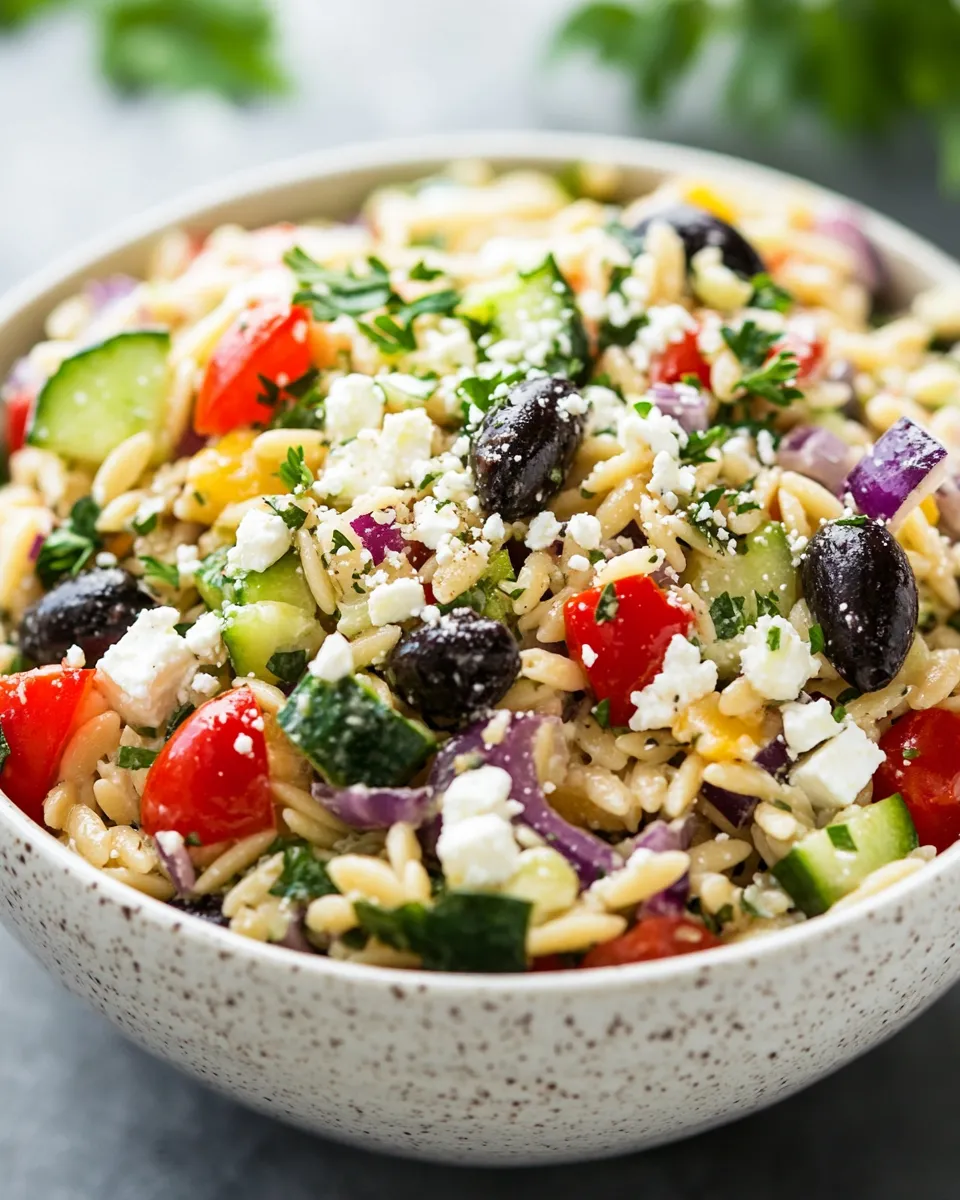
Greek Orzo Salad
This Greek Orzo Salad is an everyday kind of Mediterranean side that reliably brightens a weeknight dinner or makes a potluck contribution disappear. It balances tender, slightly chewy orzo with salty crumbled feta, juicy halved grape tomatoes, crisp diced English cucumber, and the savory bite of kalamata and red onion — all dressed in a simple lemon-olive oil vinaigrette. No fuss, straightforward flavors, and forgiving timing.
I make this when I want something that holds up — it keeps its texture in the fridge and actually tastes better after the flavors sit for a few hours. You can make it in the morning for dinner, or the night before for the next-day lunch. The dressing is purposely simple so the ingredients sing without competing.
Below you’ll find the exact ingredients and method I follow, plus practical notes on swaps that the recipe itself already allows, common pitfalls and how to avoid them, the tools I reach for, and how long you can store the salad. This is a practical guide: clear, usable, and written from the kitchen so you get consistent results.
Ingredient Rundown

Ingredients
- 1/3 cup olive oil — builds the dressing’s body and carries flavor; use a good quality olive oil for the best mouthfeel.
- 3 Tbsp fresh lemon juice — provides bright acidity to lift the salad; squeeze and measure for consistent tang.
- 1 clove garlic, minced — adds a gentle savory note; mince fine so it disperses through the dressing.
- Salt and freshly ground black pepper — essential for seasoning; add in stages and taste before serving.
- 1 1/4 cups (8 oz) dry orzo — the pasta base; cook to al dente so it keeps a slight bite once chilled.
- 1 cup (5 oz) crumbled feta — salty, creamy contrast to the vegetables and orzo; fold in gently to avoid clumping.
- 1 medium English cucumber, diced — brings cool crunch and freshness; dice uniformly for even bites.
- 1 (10.5 oz) package grape tomatoes, halved — juicy sweetness; halving exposes their juices to the dressing for flavor distribution.
- 1/2 cup sliced kalamata olives (or 3/4 cup sliced black olives) — salty umami element; the parenthetical gives the exact alternative the recipe allows.
- 1/2 cup chopped red onion — sharpness and crunch; chop small so it’s present without overpowering.
- 3 Tbsp chopped fresh basil — aromatic herb note; add for freshness and color.
- 3 Tbsp chopped fresh parsley — herbaceous balance to basil; provides green brightness and texture.
The Method for Greek Orzo Salad
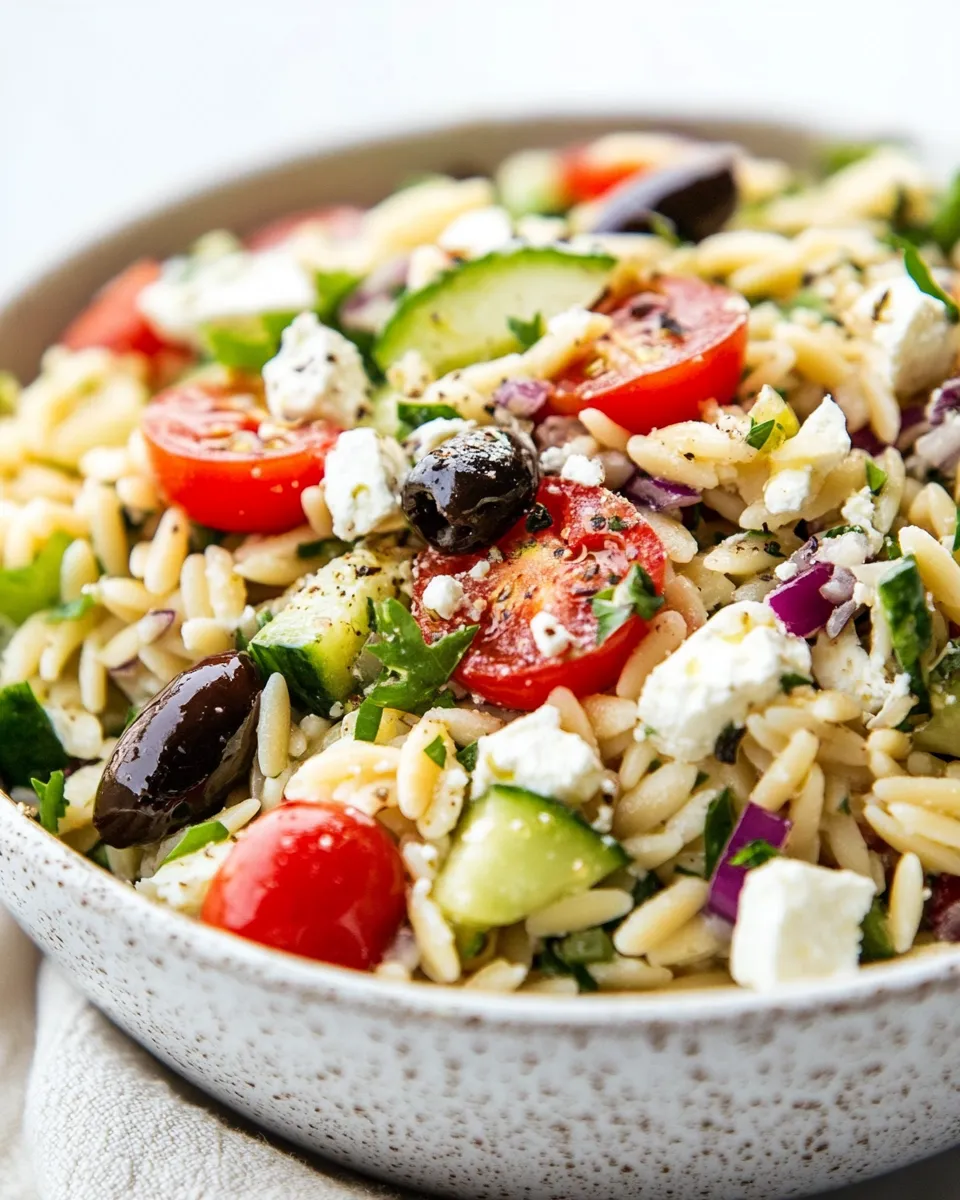
- In a medium mixing bowl, whisk together 1/3 cup olive oil, 3 Tbsp fresh lemon juice, 1 clove minced garlic, and salt and freshly ground black pepper to taste. Set the dressing aside.
- Cook 1 1/4 cups (8 oz) dry orzo according to package directions until al dente. Drain the orzo in a colander, rinse under cold water for about 10 seconds to stop the cooking, and drain well.
- In a large bowl, combine the cooked orzo with 1 cup (5 oz) crumbled feta, 1 medium diced English cucumber, 1 (10.5 oz) package halved grape tomatoes, 1/2 cup sliced kalamata olives (or 3/4 cup sliced black olives), 1/2 cup chopped red onion, 3 Tbsp chopped fresh basil, and 3 Tbsp chopped fresh parsley. Toss gently to combine.
- Pour the reserved dressing over the salad and toss again until everything is evenly coated. Taste and adjust salt and pepper if needed.
- Cover and refrigerate. Store up to 2 days.
The Upside of Greek Orzo Salad
This salad’s biggest advantage is its balance of textures and flavors: tender orzo, creamy feta, crisp cucumber, and the popping sweetness of grape tomatoes. The lemon-olive oil dressing is intentionally light so each component remains distinct rather than masked. It’s fast to assemble once the orzo is cooked, and it’s forgiving — if you under-salt slightly at first, you can correct after tossing with the dressing.
Another upside is portability. Because the salad uses a dry orzo cooked then chilled, it holds together well in a container for lunches or a short-term buffet. The fresh herbs keep it lively for a day or two, and the dressing doesn’t congeal or separate in cold storage the way some emulsions do.
Quick Replacement Ideas
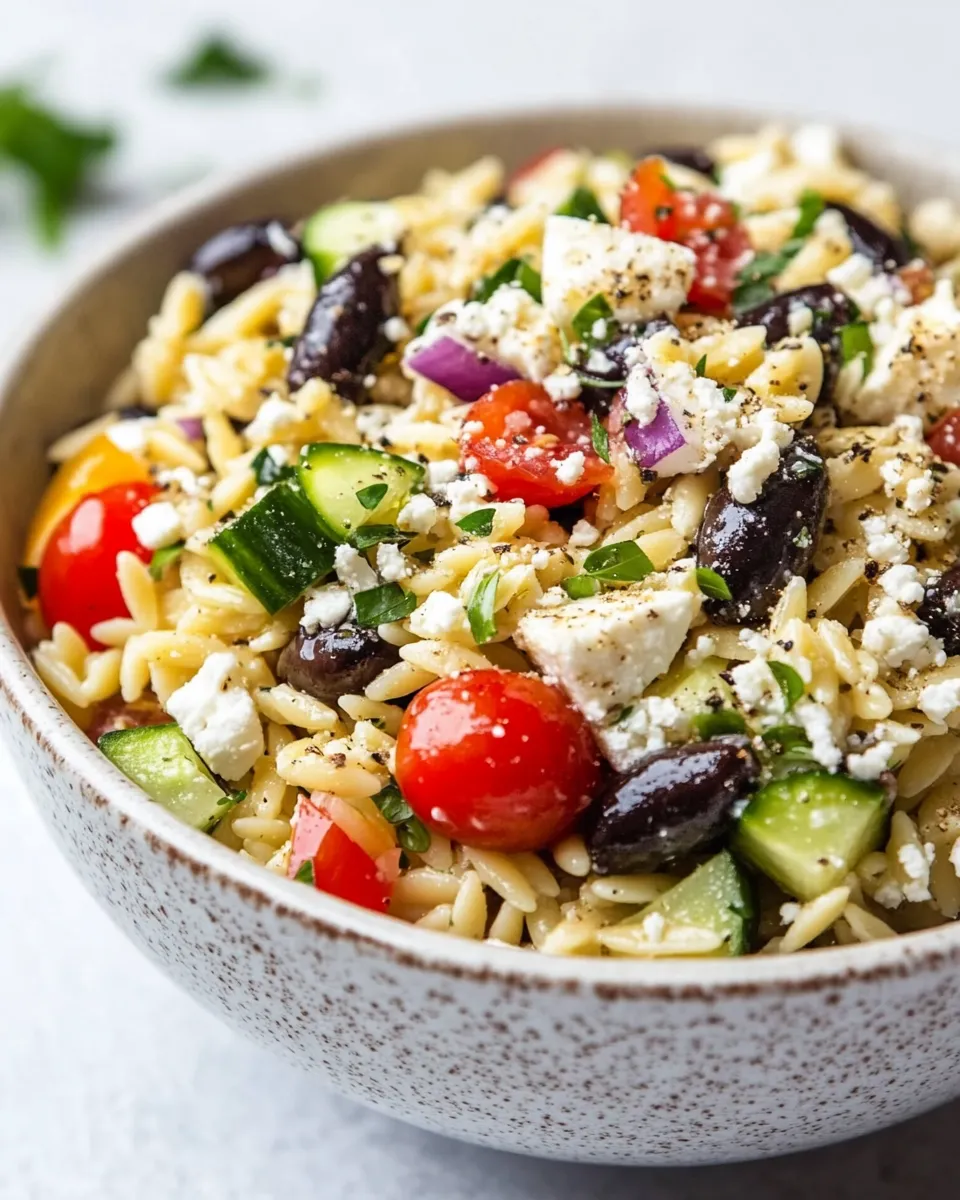
- Swap kalamata olives for the provided option: 3/4 cup sliced black olives — use the exact amounts listed if you choose black olives.
- If you prefer less onion punch, rinse the chopped red onion briefly under cold water after chopping and then drain — this softens the sharpness without removing the texture.
- If you want a more pronounced herb presence, adjust the balance between the listed 3 Tbsp chopped fresh basil and 3 Tbsp chopped fresh parsley to suit your taste, keeping the total herb volume similar.
- Follow the recipe’s own optionality: where the ingredient list provides an either/or, use the specified alternative amounts as written.
Appliances & Accessories
- Large pot — for boiling the orzo to al dente. Choose a pot with enough water for the pasta to move freely.
- Colander — to drain the cooked orzo quickly and rinse under cold water for about 10 seconds.
- Medium mixing bowl — to whisk and hold the dressing while you cook and prep the rest of the salad.
- Large mixing bowl — for combining orzo, vegetables, cheese, and herbs; gives you room to toss without spilling.
- Sharp knife and cutting board — an even dice on the English cucumber and uniform chopping of the onion and herbs make for even bites.
- Measuring spoons and cups — use the exact amounts listed for consistent results, especially the 1/3 cup olive oil and 3 Tbsp lemon juice.
Things That Go Wrong
Overcooked orzo: The orzo becomes mushy when boiled past al dente, and it will only get softer in the fridge. To avoid this, follow package directions closely and check a minute or two early; it should be tender with a slight bite. After draining, rinse only briefly under cold water — about 10 seconds — to stop the cooking but not to wash away flavor.
Undersigned dressing: Because the dressing is simple, it needs careful seasoning. Add salt and pepper in stages. Taste after tossing the salad with the dressing and then adjust. Feta contributes saltiness too, so keep that in mind when you season initially.
Herbs lost in the mix: If the herbs are too large, their flavor won’t distribute evenly. Chop the basil and parsley finely (the recipe lists 3 Tbsp of each) so they blend throughout the salad and release their aromatics.
Better Choices & Swaps
Stick to the ingredient amounts listed when possible; they’re calibrated for balance. The one explicit choice the recipe offers is olives: 1/2 cup sliced kalamata olives or 3/4 cup sliced black olives. Follow those quantities so you don’t throw off the salt balance.
If you want stronger lemon notes without changing quantities, zest the lemon before juicing and add a small amount of zest to the dressing — use restraint so the acidity balance remains intact. For milder garlic presence, reduce the minced garlic slightly or let the garlic sit in the dressing for a minute before tossing so its bite mellows.
Chef’s Rationale
This recipe favors clarity: each component has a specific role. Orzo is the neutral canvas that carries the salt, acid, and herb flavors. Feta supplies the creamy and salty contrast that makes salads feel substantial without heavy dressing. English cucumber and halved grape tomatoes introduce fresh texture and pocketed juices that the light lemon-olive oil dressing highlights. Olives and red onion deliver savory, briny, and bright notes so the salad isn’t bland.
The dressing is intentionally simple — oil, lemon, garlic, salt and pepper — because the mix of strong ingredients (feta, olives, onion) needs a clean, bright counterpoint rather than a heavy one. The two-herb approach (basil and parsley) keeps the flavor layered and aromatic without becoming overly herbal.
Prep Ahead & Store
Make the dressing and cook the orzo up to a day ahead. Store the dressing in the refrigerator and bring it to room temperature before whisking if the olive oil solidifies slightly. The recipe’s instruction to cover and refrigerate and store up to 2 days is intentionally conservative; the salad will be at its best within that window due to the freshness of the herbs and the texture of the cucumber. After about 48 hours the vegetables will release more liquid and the orzo will continue to soften.
If you’re prepping for a gathering, assemble the salad a few hours before serving and refrigerate; toss again briefly with any accumulated juices and check seasoning just before serving.
Quick Questions
- Can I use other pasta? The recipe specifically calls for 1 1/4 cups (8 oz) dry orzo so follow that for the intended texture and portion. Using a different shape may change the salad’s balance and mouthfeel.
- How salty will this be? Feta and olives bring salt. The dressing needs only modest salt initially — taste after tossing and adjust to preference.
- Can I skip the herbs? The recipe includes 3 Tbsp chopped fresh basil and 3 Tbsp chopped fresh parsley for brightness; omitting them will make the salad flatter. If you have one herb only, use the amount listed for that herb.
- How long does it keep? Cover and refrigerate; store up to 2 days per the recipe instructions.
- Do I need to rinse the orzo? The method instructs rinsing under cold water for about 10 seconds to stop the cooking — this prevents carryover cooking and helps the orzo cool enough to combine with fresh ingredients.
Wrap-Up
Greek Orzo Salad is an easy, reliable dish that plays well in many settings: weeknight sides, make-ahead lunches, or part of a small gathering. The recipe is deliberately straightforward so the quality of the ingredients shines through: a good olive oil, bright lemon juice, ripe grape tomatoes, and fresh herbs will make this salad sing. Follow the method as written for consistent results, mind the small timing points (like rinsing the orzo and tasting before final seasoning), and you’ll have a fresh, balanced salad that keeps well and travels easily.
Greek Orzo Salad
Ingredients
Ingredients
- 1/3 cupolive oil
- 3 Tbspfresh lemon juice
- 1 clovegarlic minced
- Salt and freshly ground black pepper
- 1 1/4 cups 8 ozdry orzo
- 1 cup 5 ozcrumbled feta
- 1 mediumEnglish cucumber diced
- 1 10.5 oz pkg.grape tomatoes, halved
- 1/2 cupsliced kalamata olives or 3/4 cup sliced black olives
- 1/2 cup choppedred onion
- 3 Tbspchopped fresh basil
- 3 Tbspchopped fresh parsley
Instructions
Instructions
- In a medium mixing bowl, whisk together 1/3 cup olive oil, 3 Tbsp fresh lemon juice, 1 clove minced garlic, and salt and freshly ground black pepper to taste. Set the dressing aside.
- Cook 1 1/4 cups (8 oz) dry orzo according to package directions until al dente. Drain the orzo in a colander, rinse under cold water for about 10 seconds to stop the cooking, and drain well.
- In a large bowl, combine the cooked orzo with 1 cup (5 oz) crumbled feta, 1 medium diced English cucumber, 1 (10.5 oz) package halved grape tomatoes, 1/2 cup sliced kalamata olives (or 3/4 cup sliced black olives), 1/2 cup chopped red onion, 3 Tbsp chopped fresh basil, and 3 Tbsp chopped fresh parsley. Toss gently to combine.
- Pour the reserved dressing over the salad and toss again until everything is evenly coated. Taste and adjust salt and pepper if needed.
- Cover and refrigerate. Store up to 2 days.
Equipment
- Medium mixing bowl
- Whisk
- Colander
- Large Bowl
Notes
Other pastas you can use in this recipe are spiral, penne, bowtie or macaroni pasta (using the same weight). Even a cheese-filled tortellini would be delicious (use double the weight listed).
Recipe makes about 10 cups.