Glazed Donut Recipe
I bake a lot, and glazed donuts remain one of my favorite comforts: warm, pillowy rounds with a glossy vanilla sheen. They’re surprisingly approachable once you know the rhythm—proof the yeast, roll the dough to the right thickness, and fry carefully. This recipe walks you through each stage so you can get consistent, delicious results at home.
No fuss, no gimmicks. I’ll cover the exact ingredient list, the step-by-step method that works, and practical troubleshooting tips I use when testing in a busy kitchen. If you want bakery-style donuts with a tender interior and a thin, shiny glaze, stick with the method below.
Expect about two to three hours from start to finish because of rising time, but hands-on time is concentrated and straightforward. Read through the tips before you begin so you’re not scrambling while the dough rises.
Ingredient Checklist

- 1 cup warm milk (107-110° F) — feeds the yeast and sets dough temperature; too hot will kill the yeast.
- 2 ¼ teaspoons active dry yeast — the leavener; bloom it in the warm milk for a reliable rise.
- 2 tablespoons granulated sugar, divided — sugar fuels the yeast and gently sweetens the dough; one teaspoon goes with the yeast for blooming.
- ¼ cup melted butter, cooled — adds tenderness and flavor; allow it to cool so it doesn’t stun the yeast.
- 2-3 cups bread flour — provides structure and chew; add gradually to reach a tacky but not sticky dough.
- ½ teaspoon salt — balances flavor and tightens gluten for better structure.
- Vegetable oil for frying — a neutral oil with a high smoke point; you need several inches in a deep pot.
- 2 cups powdered sugar — the base of the glaze; sift if it’s clumpy for a smooth finish.
- 2 tablespoons whole milk (or more, if needed) — thins the glaze; add slowly to reach the right dipping consistency.
- 1 teaspoon vanilla extract — lifts the glaze with warm aroma; use pure if you have it.
Glazed Donut: From Prep to Plate
- In a mixing bowl, stir together 1 cup warm milk (107–110°F), 2 ¼ teaspoons active dry yeast, and 1 teaspoon of the 2 tablespoons granulated sugar. Set aside 10 minutes until foamy.
- Add the remaining granulated sugar (the rest of the 2 tablespoons), ¼ cup melted butter (cooled), about half of the bread flour (from the 2–3 cups), and ½ teaspoon salt to the bowl. Mix on low to combine.
- Knead on low with a dough hook, adding the remaining bread flour 2 tablespoons at a time as needed until the dough pulls away from the sides of the bowl and gathers on the hook. Use a total of 2–3 cups bread flour as required—the dough should feel tacky but not sticky and leave a slight residue on your hands. Continue kneading for 5 minutes.
- Lightly grease a clean bowl with a small amount of vegetable oil, place the dough inside, turn to coat, cover with plastic wrap or a clean kitchen towel, and let rise in a warm spot until doubled in size, about 1–3 hours.
- After the first rise, turn the dough out onto a floured work surface and roll to 1/2 inch thickness. Use a 3 to 3 1/2 inch donut cutter to cut donuts and donut holes. Place pieces on a parchment-lined baking sheet lightly dusted with flour, spacing them apart.
- Cover the cut donuts gently with a clean towel or plastic wrap and let rise until puffed (about 30 minutes), but not quite doubled.
- Meanwhile, pour at least 3 inches of vegetable oil into a deep, heavy-bottomed pot and fit with a candy thermometer. Heat over medium until the oil reaches 375°F (a range of 360–380°F is acceptable; the temperature will fall when you add donuts).
- Fry 3-4 donuts at a time, turning once, about 30–45 seconds per side or until golden brown. Monitor and adjust heat to maintain the oil between 360–380°F. Remove donuts with a slotted spoon and drain briefly on paper towels or a cooling rack.
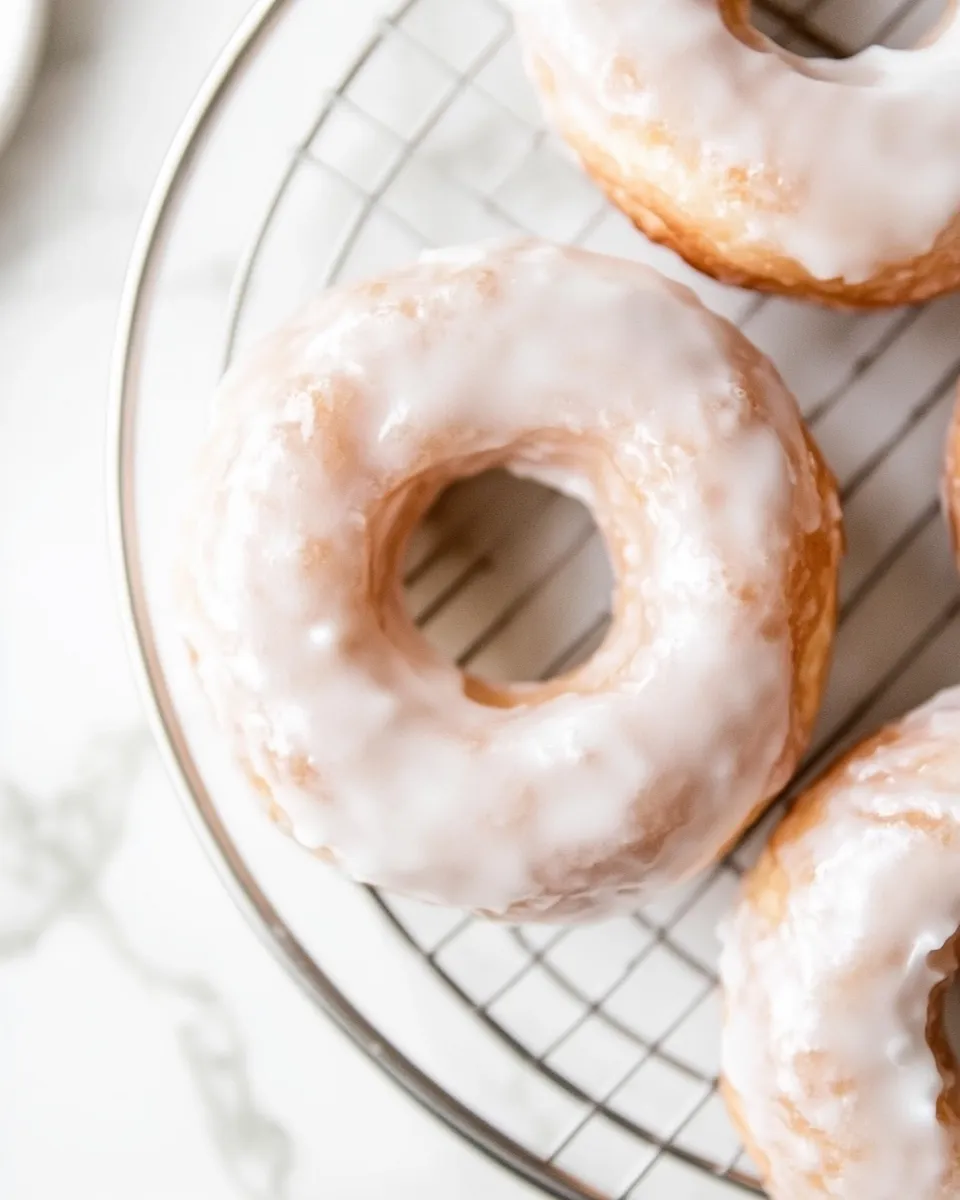
- To make the glaze, whisk together 2 cups powdered sugar, 2 tablespoons whole milk, and 1 teaspoon vanilla extract. If needed, add more milk a little at a time until the glaze is a bit thinner than white school glue.
- Dip the top of each donut into the glaze, place on a cooling rack to allow excess to drip and the glaze to set, and serve warm or at room temperature.
Practical notes on the method
Start by blooming the yeast properly: when the milk-yeast mixture is foamy after 10 minutes, you know you have active yeast. If it doesn’t foam, toss it and try fresh yeast. When kneading, use the dough hook on low—this recipe relies on gentle development rather than high-speed mixing. The dough should feel tacky; resisting the temptation to add too much flour will keep the crumb tender.
When cutting donuts, keep cutters lightly floured and re-roll scraps once or twice only—overworking will make denser rings. The second rise should be noticeable puffing, not a full double, which helps the donuts set while frying without absorbing too much oil.
What Sets This Recipe Apart
This recipe aims for a soft interior with a thin, classic glaze—think light bakery-style rather than cakey or overly sweet. A few choices shape the final result:
- Bread flour: provides enough gluten to hold shape and produce a chewy, elastic crumb without getting heavy.
- Short, controlled knead: develops structure without overworking; the five-minute knead with a hook is intentional.
- Thin glaze: a glaze just shy of school glue thickness sets quickly into a glossy coat rather than a thick, gunky shell.
The technique balances tenderness and structure so the donuts are light but resilient enough to hold glaze and not collapse under their own weight.
Flavor-Forward Alternatives

Swap-ins when you want a twist while keeping the basic method intact:
- Milk: Use buttermilk in place of whole milk for a tangy lift—reduce proofing time slightly since acid affects yeast activity.
- Butter flavor: Brown the butter before cooling for a deeper, nutty note in the dough (cool thoroughly first).
- Glaze variations: Add citrus zest to the glaze for brightness, or fold in a tablespoon of cornstarch to stabilize a thinner glaze if you plan to stack glazed donuts.
Hardware & Gadgets

These tools make the process smoother and safer:
- Stand mixer with dough hook: speeds kneading and keeps hands clean.
- 3 to 3½ inch donut cutter: consistent donuts fry evenly.
- Deep, heavy-bottomed pot: holds a steady temperature and reduces hot spots.
- Candy thermometer: essential to maintain the 360–380°F frying window.
- Cooling rack over a sheet pan: drains oil and lets glaze set without sticking.
Avoid These Traps
Common pitfalls and how to fix them:
- Too-hot milk: kills yeast. Keep the temperature between 107–110°F when mixing with yeast.
- Over-flouring: leads to dense donuts. Add bread flour gradually and stop when the dough is tacky, not dry.
- Skipping the second rise: yields tight, heavy donuts. Allow the cut pieces to puff for about 30 minutes before frying.
- Wrong oil temperature: cold oil makes greasy donuts; oil too hot browns the outside before the inside cooks. Keep the oil near 375°F, adjusting to maintain between 360–380°F while frying.
- Thick glaze: will clump and mask texture. Thin the glaze to slightly thinner than school glue for an even sheen.
Seasonal Twists
Turn the basic glazed donut into a seasonal treat with small, targeted changes.
- Fall: add a pinch of ground cinnamon and nutmeg to the dough or fold pumpkin spice into the glaze.
- Winter: infuse the glaze with orange or lemon zest and a splash of spiced liqueur for holiday brightness.
- Spring: top glazed donuts with a smear of fresh berry jam or toast a few sliced almonds for a floral note.
- Summer: swap vanilla in the glaze for a hint of coconut extract and sprinkle toasted coconut over the glaze while wet.
Flavor Logic
Why these ingredients and steps work together:
The warm milk activates the yeast and helps control final dough temperature. Bread flour creates the gluten network that traps gas and gives the donut its spring. A small amount of butter keeps the crumb tender without making the dough limp. Salt tightens the gluten and balances sweetness. Frying at a steady high temperature cooks donuts quickly, producing a slightly chewy interior and a golden exterior. The thin sugar-milk-vanilla glaze complements the dough without overpowering, sealing in moisture and adding a glossy finish.
Storage & Reheat Guide
Best practices for keeping donuts fresh and reheating them:
- Short-term storage: keep glazed donuts at room temperature in a loosely covered container for up to 24 hours. The glaze will remain shiny but soft.
- Longer storage: for up to 2 days, store in a single layer in an airtight container to avoid sticking; refrigeration dries them out, so avoid unless you must.
- Freezing: freeze unfrosted donuts in a single layer until firm, then stack with parchment between layers in a freezer bag for up to 1 month. Thaw at room temperature and dip in glaze before serving.
- Reheat: warm donuts in a 300°F oven for 4–6 minutes or microwave for 8–10 seconds to revive softness—glaze may soften and lose some sheen, so re-glaze if needed.
FAQ
- Why didn’t my yeast foam? The milk was likely too hot or too cold, or the yeast is old. Test with fresh yeast and make sure the milk temperature is 107–110°F.
- My donuts absorbed too much oil—what happened? The oil temperature was too low. Heat oil to 375°F and fry in small batches so temperature rebounds quickly.
- Can I bake these instead of frying? You can, but texture will change. Baked donuts are cake-like; this dough is formulated for frying for that classic exterior and interior contrast.
- How do I get the glaze smooth? Sift powdered sugar before mixing and add milk slowly, whisking to remove lumps. Use glaze while slightly warm for the best sheen.
- Can I make the dough by hand? Yes. Knead on a floured surface until tacky and elastic—five to eight minutes by hand should match the stand mixer’s performance.
Next Steps
Now that you have the basics, pick a small experiment: try a citrus-glazed variation or brown the butter in the dough for a subtle nutty lift. Keep notes on time and temperature so you can repeat what works. Donut making rewards small adjustments—once you find your preferred glaze thickness and frying pace, the results will be consistently excellent.
Tag a trusted friend and make a double batch; donuts are best shared warm. If something goes sideways, retrace the steps with the troubleshooting list above. I want these to be approachable for you—the method is forgiving and rewarding when you follow the details. Happy frying.

Glazed Donut Recipe
Ingredients
Ingredients
- 1 cupwarm milk 107-110° F
- 2 1/4 teaspoonsactive dry yeast
- 2 tablespoonsgranulated sugardivided
- 1/4 cupmelted buttercooled
- 2-3 cupsbread flour
- 1/2 teaspoonsalt
- vegetable oilfor frying
- 2 cupspowdered sugar
- 2 tablespoonswhole milkor more if needed
- 1 teaspoonvanilla extract
Instructions
Instructions
- In a mixing bowl, stir together 1 cup warm milk (107–110°F), 2 ¼ teaspoons active dry yeast, and 1 teaspoon of the 2 tablespoons granulated sugar. Set aside 10 minutes until foamy.
- Add the remaining granulated sugar (the rest of the 2 tablespoons), ¼ cup melted butter (cooled), about half of the bread flour (from the 2–3 cups), and ½ teaspoon salt to the bowl. Mix on low to combine.
- Knead on low with a dough hook, adding the remaining bread flour 2 tablespoons at a time as needed until the dough pulls away from the sides of the bowl and gathers on the hook. Use a total of 2–3 cups bread flour as required—the dough should feel tacky but not sticky and leave a slight residue on your hands. Continue kneading for 5 minutes.
- Lightly grease a clean bowl with a small amount of vegetable oil, place the dough inside, turn to coat, cover with plastic wrap or a clean kitchen towel, and let rise in a warm spot until doubled in size, about 1–3 hours.
- After the first rise, turn the dough out onto a floured work surface and roll to 1/2 inch thickness. Use a 3 to 3 1/2 inch donut cutter to cut donuts and donut holes. Place pieces on a parchment-lined baking sheet lightly dusted with flour, spacing them apart.
- Cover the cut donuts gently with a clean towel or plastic wrap and let rise until puffed (about 30 minutes), but not quite doubled.
- Meanwhile, pour at least 3 inches of vegetable oil into a deep, heavy-bottomed pot and fit with a candy thermometer. Heat over medium until the oil reaches 375°F (a range of 360–380°F is acceptable; the temperature will fall when you add donuts).
- Fry 3–4 donuts at a time, turning once, about 30–45 seconds per side or until golden brown. Monitor and adjust heat to maintain the oil between 360–380°F. Remove donuts with a slotted spoon and drain briefly on paper towels or a cooling rack.
- To make the glaze, whisk together 2 cups powdered sugar, 2 tablespoons whole milk, and 1 teaspoon vanilla extract. If needed, add more milk a little at a time until the glaze is a bit thinner than white school glue.
- Dip the top of each donut into the glaze, place on a cooling rack to allow excess to drip and the glaze to set, and serve warm or at room temperature.
Equipment
- Dutch Oven
- Candy thermometer
- Donut Cutter
Notes
Nutrition facts do not include the oil.