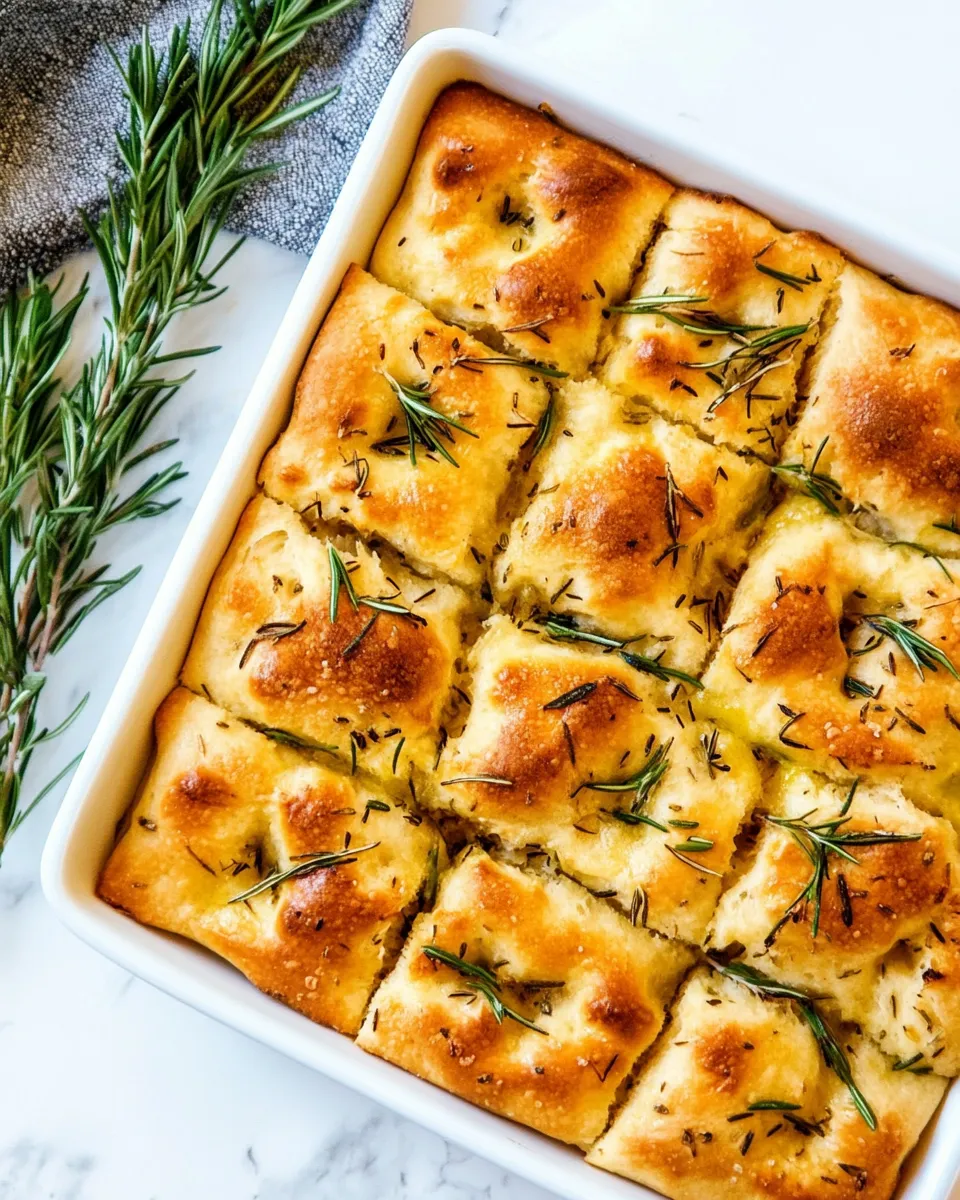
Focaccia
I bake focaccia almost every other week. It’s reliably simple, forgiving, and rewards patience with golden, olive‑oil‑kissed crumbs and a crunchy top. If you like bread that feels like a warm handshake — rustic, comforting, and perfect with a bowl of soup or just a drizzle of oil — this is the recipe to know.
This version uses an overnight cold fermentation. That stretch‑and‑fold method and the slow chill develop flavor and structure without kneading for ages. You’ll end up with a tender interior and those classic honeycomb holes that soak up oil and toppings beautifully.
The walkthrough below is practical and focused: exact ingredient list, step‑by‑step instructions, gear, common mistakes, and options for special diets. Read once, then set a timer. You’ll be rewarded with a pan of irresistible focaccia that’s great for sandwiches, sides, or noshing straight from the tray.
Ingredients at a Glance

- 4 3/4 cups bread flour (576 g) — provides structure and chew; use a high‑protein bread flour for best crumb.
- 2 1/2 teaspoons kosher salt (14 g) — seasons the dough; don’t skip it, but keep it measured.
- 1 1/2 teaspoons granulated sugar or honey (8 g) — a little food for the yeast and a touch of flavor.
- 2 teaspoons instant yeast (5 g) — rapid, reliable rise; instant yeast can be mixed straight into the flour.
- 2 cups warm water (454 g), (90°F to 110°F) — hydrates the dough; check temperature so you don’t kill the yeast.
- 2 1/2 Tablespoons extra‑virgin olive oil (30 g), plus more for pan and topping — builds flavor and keeps the crumb tender. Reserve extra for the pan and finishing drizzle.
- extra virgin olive oil — for coating the pan and finishing the baked focaccia.
- flaky sea salt* — finishing salt; adds texture and a bright pop on top.
- fresh rosemary sprigs, coarsely chopped (optional) — aromatic finishing touch; press into the dough before baking if you like herb flavor.
Focaccia in Steps
- In a large mixing bowl, weigh or measure 4 3/4 cups (576 g) bread flour. Add 2 1/2 teaspoons (14 g) kosher salt, 1 1/2 teaspoons (8 g) granulated sugar or honey, and 2 teaspoons (5 g) instant yeast. Stir to combine.
- Add 2 1/2 tablespoons (30 g) extra‑virgin olive oil and 2 cups (454 g) warm water (90°F to 110°F) a little at a time while stirring with a dough hook or a silicone spoon until the mixture is well combined and a shaggy dough forms.
- Cover the bowl and let the dough rest, undisturbed, for 15 minutes.
- Prepare to do the first stretch-and-fold: place a small bowl of water next to the mixing bowl and wet your fingertips so the dough won’t stick to them. With wet fingers, lift an outer section of the dough, stretch it up and fold it toward the center, pressing it into the center. Work around the dough and repeat until you have pulled each side up and folded it into the center (this is one stretch-and-fold).
- Cover the bowl with a dry kitchen towel and let the dough rest 15 minutes.
- Repeat the stretch-and-fold procedure three more times, with a 15‑minute rest after each fold (four stretch-and-folds total). After the fourth fold, cover the bowl tightly with greased plastic wrap or a lid.
- Refrigerate the covered dough overnight, or at least 8 hours, for cold fermentation.
- When ready to bake, coat the bottom of a 9×13-inch metal pan with 1 1/2 tablespoons extra‑virgin olive oil. Remove the dough from the refrigerator and gently transfer it to the oiled pan. Using gentle hands, stretch the dough toward the edges to roughly fit the pan (it does not need to reach the corners perfectly). Avoid overworking the dough.
- Cover the pan with a dry kitchen towel and let the dough rise at room temperature for 2 1/2 to 4 hours, until it looks puffy and has expanded to fill most of the pan.
- Preheat the oven to 475°F (245°C). Coat your fingers lightly with extra‑virgin olive oil. Starting at the short end of the pan nearest you, place your hand with the pointer, middle and ring fingers side by side and press each set of three fingertips down into the dough until they reach the bottom of the pan, creating dimples across the surface. Dimple the entire surface, including along the sides.
- Drizzle 1 1/2 tablespoons extra‑virgin olive oil evenly over the dough. Sprinkle flaky sea salt over the top and add coarsely chopped fresh rosemary sprigs if desired.
- Bake the focaccia in the preheated oven for about 20 minutes, until the top is golden. Remove the pan from the oven and transfer the focaccia to a wire cooling rack to cool.
Top Reasons to Make Focaccia
- It’s hands‑on but not fussy: the stretch‑and‑fold approach replaces aggressive kneading and still gives great structure.
- Flavor improves overnight: cold fermentation deepens the dough’s profile with minimal effort.
- Versatile for meals: serve as a side, sandwich bread, or pull‑apart snack. It’s a crowd‑pleaser.
- Fast final rise and bake: after the chill, the active time is short—most of the work is resting.
- Customizable finish: everything from simple flaky salt to tomatoes, olives, or herbs works beautifully.
Dairy-Free/Gluten-Free Swaps
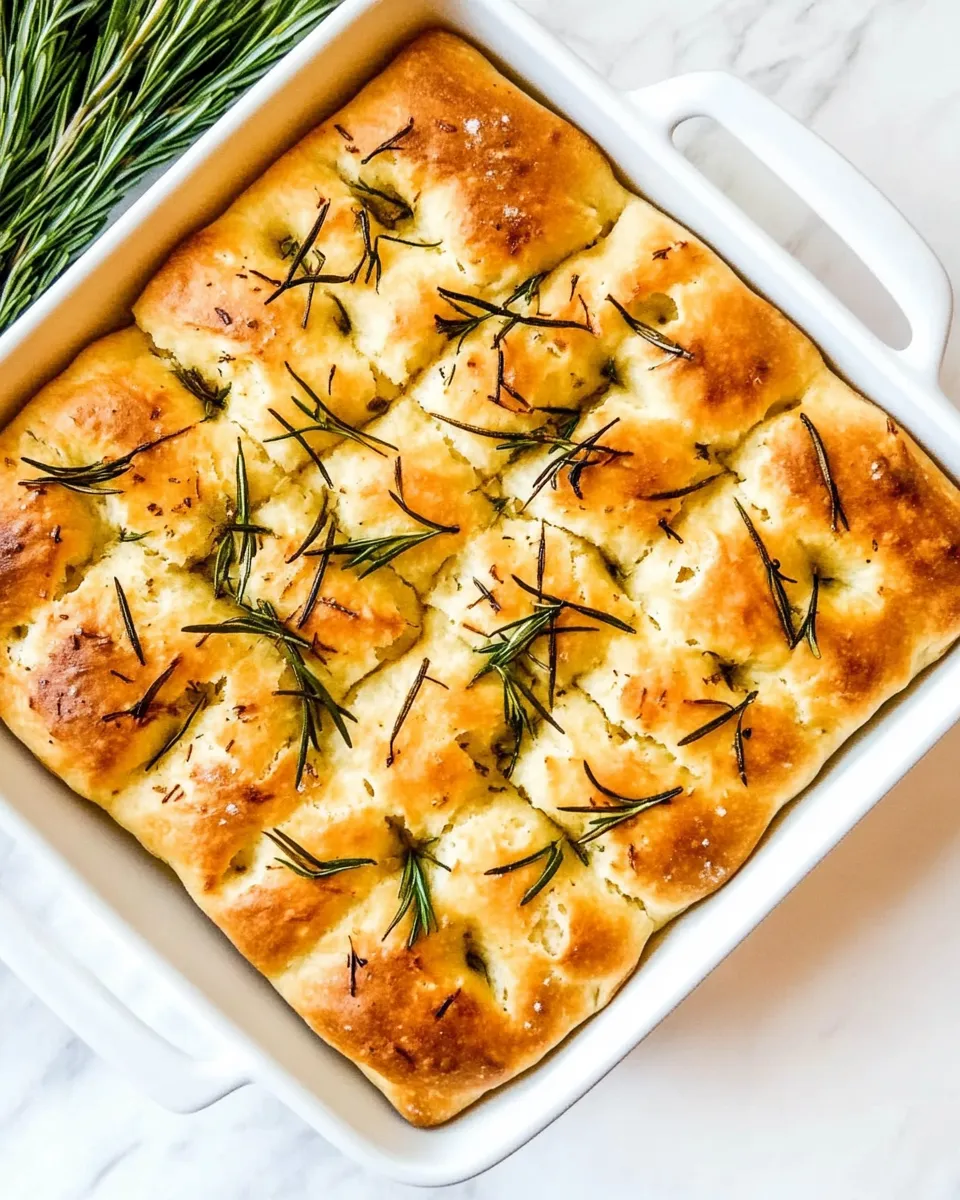
- Dairy-free: this recipe is already dairy‑free—olive oil provides richness without butter or milk.
- Gluten-free: authentic texture depends on gluten. For a gluten‑free version, use a commercial all‑purpose gluten‑free blend formulated for yeast breads, and expect a different crumb and handling. You’ll likely need added binders (xanthan gum) and to adjust hydration—start with the blend’s recommended bread formula.
- Yeast alternatives: if you must avoid commercial yeast, plan a sourdough approach (requires an active starter and longer bulk fermentation) rather than a simple swap; timing and hydration change dramatically.
What’s in the Gear List
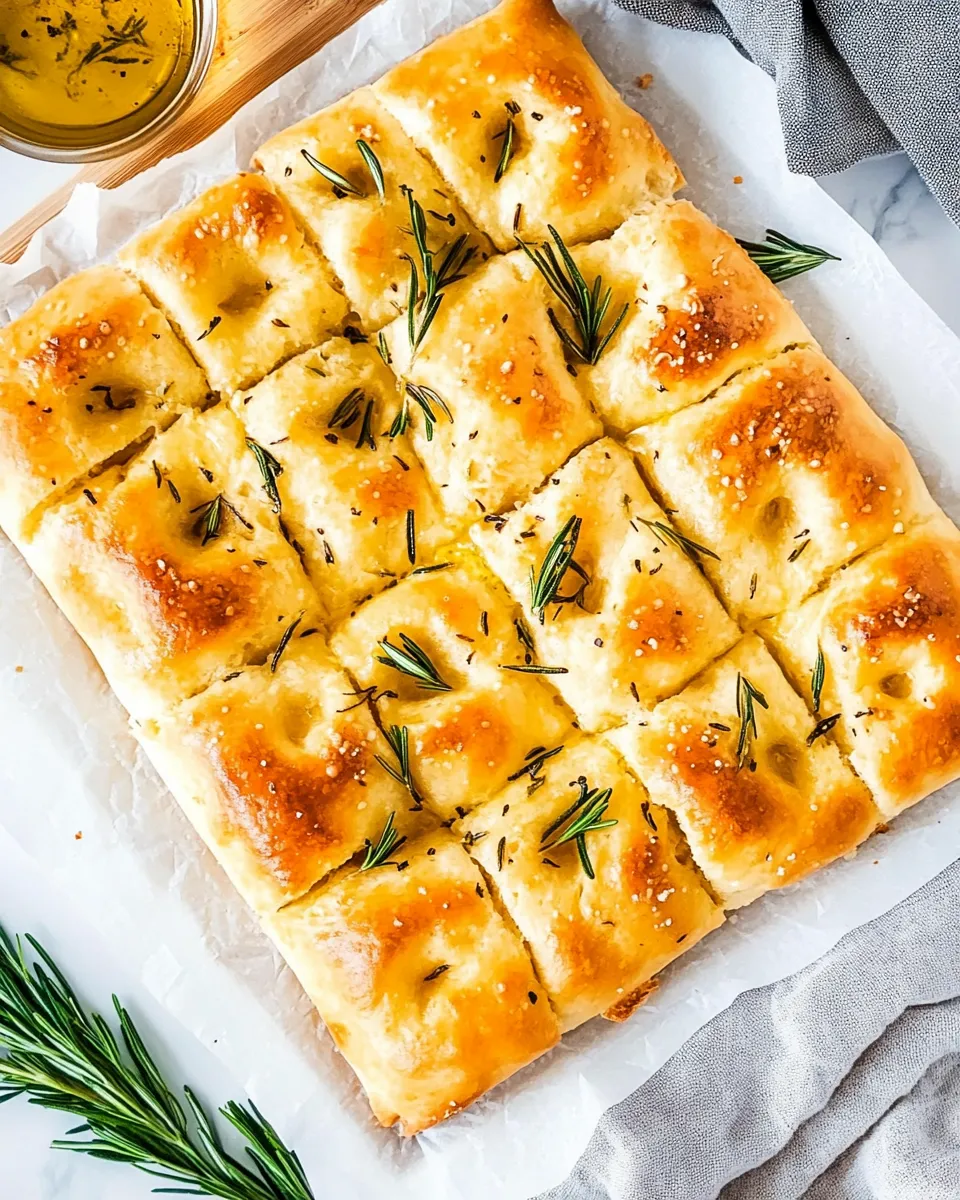
- Large mixing bowl — room to mix and do stretch‑and‑folds comfortably.
- Dough hook or silicone spoon — for mixing the shaggy dough without stressing gluten.
- Small bowl of water — keeps your fingers from sticking during stretch‑and‑fold.
- 9×13‑inch metal pan — the recipe assumes this size for final shaping and baking.
- Plastic wrap or lid — for airtight refrigeration during cold fermentation.
- Kitchen towel — to cover the dough while it proofs at room temperature.
- Wire cooling rack — cools the focaccia evenly after baking.
Mistakes That Ruin Focaccia
- Using water that’s too hot or cold — kills the yeast or causes a sluggish rise. Stick to 90°F–110°F.
- Skipping the stretch‑and‑folds — you’ll miss the structure that creates good lift and holes.
- Overworking the dough when transferring to the pan — deflates the bubbles and produces a dense crumb.
- Under‑oiling the pan — batter will stick and you’ll lose the glistening, crisp bottom.
- Not resting long enough after refrigeration — the dough needs time at room temperature to puff up; otherwise you’ll have a flat focaccia.
- Baking at too low a temperature — no golden top or crisp edge; follow 475°F (245°C).
Fit It to Your Goals
- Want big airy holes? Don’t press too hard when stretching into the pan and be gentle with fingers when dimpling. Let the dough rest fully between folds.
- Looking for a thinner crust? Use a slightly larger pan or spread the dough a touch thinner during the final stretch, but watch bake time carefully.
- Need a sandwich base? Cool completely, slice horizontally, and toast the cut sides for stability.
- Want herb-forward flavor? Fold minced rosemary into the dough during the final stretch or press extra sprigs into the surface before baking.
What Could Go Wrong
- The dough won’t rise enough: check yeast freshness, water temperature, and that the bowl was covered during the bulk rise. Cold dough needs time to warm after refrigeration.
- Too greasy on top but dough is dry inside: oiling the surface is essential, but make sure you used the specified 1 1/2 tablespoons on top and enough in the pan; interior hydration comes from the dough water measurement.
- Bottom burns before top is golden: your oven runs hot or the pan is too thin. Try lowering the rack one position or tenting the top briefly if needed.
- The focaccia is gummy: underbaked—extend bake time by a few minutes and check for a golden top and a hollow sound when tapped.
Make Ahead Like a Pro
Overnight options
- Cold fermentation (recommended): After the four stretch‑and‑folds, cover tightly and refrigerate for 8–24 hours. This builds flavor and gives flexible timing for baking the next day.
- Longer hold: You can push refrigeration to 48 hours for more tang, but use the dough earlier if it smells strongly alcoholic or overly sour.
Day‑of timing
- If you need it the same day, you can shorten the cold phase to 8 hours then proceed, but expect slightly less depth of flavor and a tighter crumb.
- To bake later in the evening, remove the pan from the fridge in the morning and let it proof at room temperature for the 2 1/2–4 hour final rise just before baking.
Handy Q&A
- Q: Can I use all‑purpose flour? A: You can, but the crumb will be less chewy and slightly denser. Bread flour gives the best structure.
- Q: Do I have to use instant yeast? A: Instant yeast is convenient since it mixes directly in. Active dry yeast can work if rehydrated first, but reduce the amount slightly or follow package guidance.
- Q: Why dimples? A: Dimpling creates the signature wells that hold oil and toppings and prevents the dough from forming large bubble domes during baking.
- Q: Can I add toppings before baking? A: Yes. Press ingredients like olives, cherry tomatoes, or sliced onions into the dough after dimpling and before the oil and salt. Avoid overloading so the dough still bakes through.
- Q: How to store leftovers? A: Wrap cooled focaccia tightly at room temperature for 1–2 days, or freeze slices for longer storage. Reheat in a hot oven to refresh the crust.
Make It Tonight
If you want focaccia tonight and haven’t started the overnight part, you still have options. Use the same mixing and stretch‑and‑fold sequence, then keep the dough at a warmer room temperature for a shorter bulk ferment (expect faster activity). Skip the overnight chill, but understand the flavor will be less developed. Proceed to shape and give it the 2 1/2–4 hour final rise, dimple, top, and bake at 475°F (245°C) for about 20 minutes.
Final thought: this focaccia is forgiving. Follow the ingredient and timing framework, be gentle with the dough, and trust the process. When that first warm slice comes out and you drizzle a little extra virgin olive oil on top, you’ll know it was worth the wait.

Focaccia
Ingredients
Ingredients
- 4 3/4 cupsbread flour 576 g
- 2 1/2 teaspoonskosher salt 14 g
- 1 1/2 teaspoonsgranulated sugar or honey 8 g
- 2 teaspoonsinstant yeast 5 g
- 2 cupswarm water 454 g, (90°F to 110°F)
- 2 1/2 Tablespoonsextra-virgin olive oil 30 g, plus more for pan and topping
- extra virgin olive oil
- flaky sea salt*
- fresh rosemary sprigs coarsely chopped (optional)
Instructions
Instructions
- In a large mixing bowl, weigh or measure 4 3/4 cups (576 g) bread flour. Add 2 1/2 teaspoons (14 g) kosher salt, 1 1/2 teaspoons (8 g) granulated sugar or honey, and 2 teaspoons (5 g) instant yeast. Stir to combine.
- Add 2 1/2 tablespoons (30 g) extra‑virgin olive oil and 2 cups (454 g) warm water (90°F to 110°F) a little at a time while stirring with a dough hook or a silicone spoon until the mixture is well combined and a shaggy dough forms.
- Cover the bowl and let the dough rest, undisturbed, for 15 minutes.
- Prepare to do the first stretch-and-fold: place a small bowl of water next to the mixing bowl and wet your fingertips so the dough won’t stick to them. With wet fingers, lift an outer section of the dough, stretch it up and fold it toward the center, pressing it into the center. Work around the dough and repeat until you have pulled each side up and folded it into the center (this is one stretch-and-fold).
- Cover the bowl with a dry kitchen towel and let the dough rest 15 minutes.
- Repeat the stretch-and-fold procedure three more times, with a 15‑minute rest after each fold (four stretch-and-folds total). After the fourth fold, cover the bowl tightly with greased plastic wrap or a lid.
- Refrigerate the covered dough overnight, or at least 8 hours, for cold fermentation.
- When ready to bake, coat the bottom of a 9×13-inch metal pan with 1 1/2 tablespoons extra‑virgin olive oil. Remove the dough from the refrigerator and gently transfer it to the oiled pan. Using gentle hands, stretch the dough toward the edges to roughly fit the pan (it does not need to reach the corners perfectly). Avoid overworking the dough.
- Cover the pan with a dry kitchen towel and let the dough rise at room temperature for 2 1/2 to 4 hours, until it looks puffy and has expanded to fill most of the pan.
- Preheat the oven to 475°F (245°C). Coat your fingers lightly with extra‑virgin olive oil. Starting at the short end of the pan nearest you, place your hand with the pointer, middle and ring fingers side by side and press each set of three fingertips down into the dough until they reach the bottom of the pan, creating dimples across the surface. Dimple the entire surface, including along the sides.
- Drizzle 1 1/2 tablespoons extra‑virgin olive oil evenly over the dough. Sprinkle flaky sea salt over the top and add coarsely chopped fresh rosemary sprigs if desired.
- Bake the focaccia in the preheated oven for about 20 minutes, until the top is golden. Remove the pan from the oven and transfer the focaccia to a wire cooling rack to cool.
Equipment
- Metal 9×13 Pan
- dough hook
- Food Scale
- Mixing Bowl
Notes
Caramelized Onions and Thyme (add before baking)
Garlic, Parmesan, and Chives (add before baking)
Blue Cheese, Pear Slices, and Chopped Walnuts (all added after baking)
Figs, Honey, and Goat Cheese (all added after baking)