
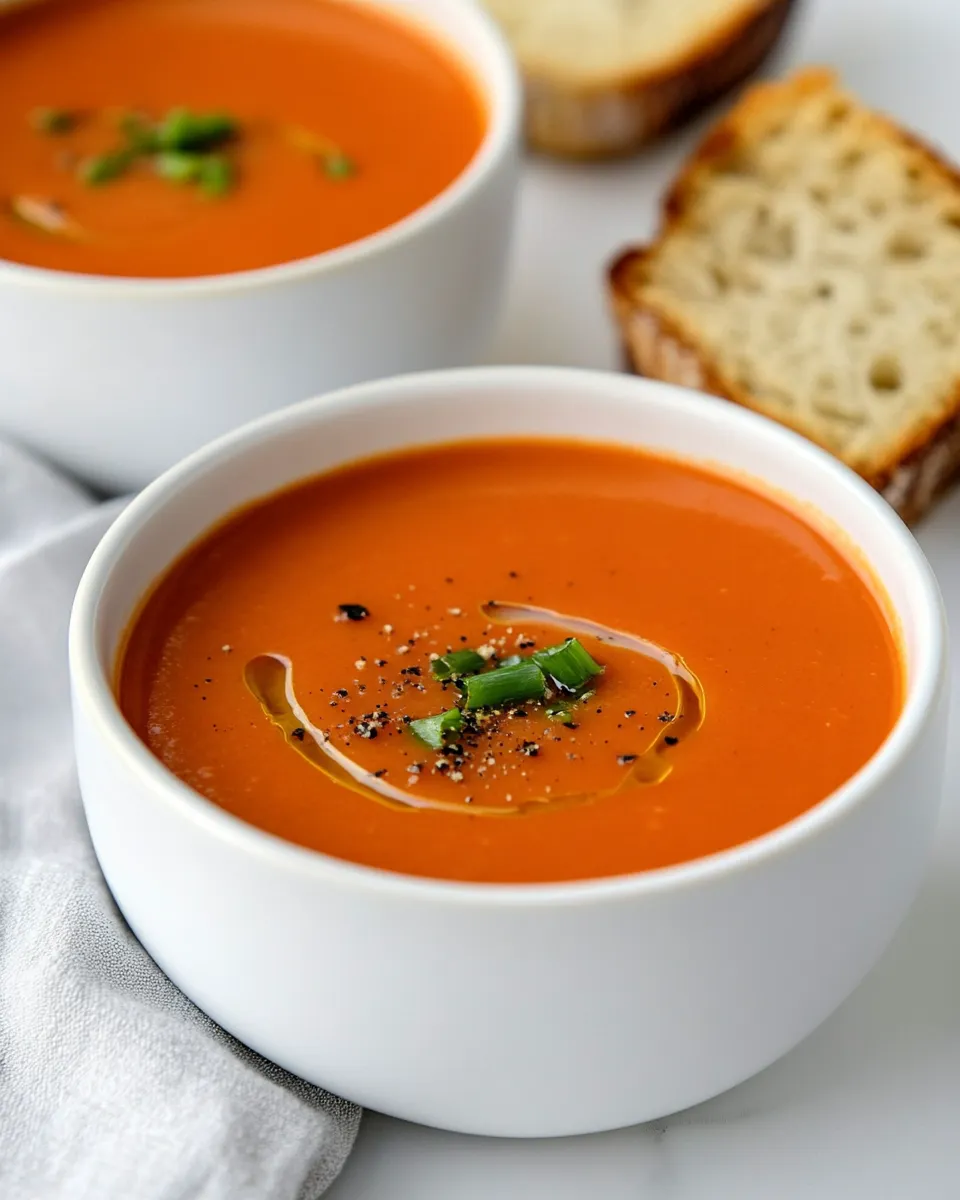
Easy Tomato Soup
This tomato soup is the one I reach for when I want comfort without fuss. It’s straightforward: onions, garlic, tomatoes, a splash of stock, and a little patience. The result is warm, bright, and exactly what a simple supper should be—satisfying and clean-flavored.
I like recipes that respect good technique more than long ingredient lists. This soup relies on proper sautéing, a short simmer, and blending to pull everything together. You’ll spend most of the time watching aroma build in the pot, then blending for a silky finish.
It’s forgiving too. Follow the core steps below, and you’ll have a bowl ready in about 30 minutes. Pair it with warm bread or a sandwich and you’ve got a weeknight meal that feels like a treat.
What Goes Into Tomato Soup

Ingredients
- 3 tablespoons olive oil — for sautéing the base; choose extra-virgin for flavor, regular for a milder taste.
- 1 medium yellow onion, diced — builds sweet, savory foundation when softened.
- 3 cloves garlic, minced — adds aromatic lift; add toward the end of softening the onion to avoid burning.
- 1 tablespoon all-purpose flour — optional, for thicker soup; toss in only if you want more body.
- 6 medium tomatoes, fresh and diced — the soup’s heart; use ripe tomatoes for the best flavor.
- 2 cups vegetable stock — provides seasoning and depth; low-sodium stock lets you control salt.
- salt and pepper — to taste; add gradually and adjust at the end.
Tomato Soup: From Prep to Plate
- Heat 3 tablespoons olive oil in a medium pot over medium heat until shimmering.
- Add 1 medium yellow onion, diced, and sauté, stirring occasionally, until soft and translucent, about 5–7 minutes.
- Add 3 cloves garlic, minced, and cook, stirring, until fragrant, about 30–60 seconds; avoid browning the garlic.
- If using the optional thickener, sprinkle 1 tablespoon all-purpose flour over the onion–garlic mixture and cook, stirring constantly, for 1 minute.
- Add 6 medium tomatoes, diced, and 2 cups vegetable stock. Stir to combine and scrape up any browned bits from the bottom of the pot.
- Bring to a gentle simmer over medium heat, then reduce to medium-low and simmer uncovered for 10–15 minutes, until the tomatoes are softened and flavors meld (the flour will slightly thicken the soup if used).
- Use an immersion blender to blend the soup until smooth (or leave a bit of texture if you prefer).
- Season with salt and pepper to taste, stir, and serve warm.
Reasons to Love Tomato Soup
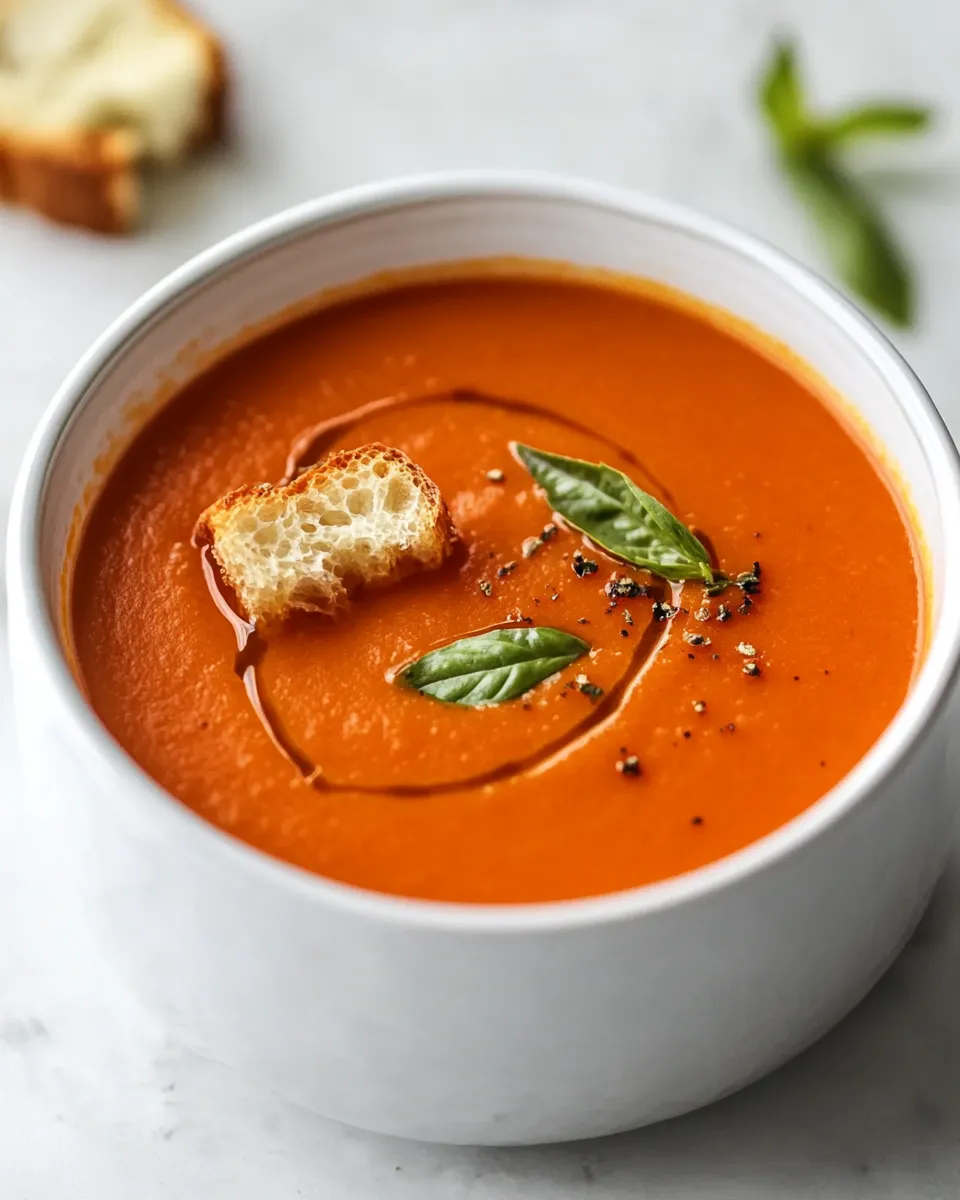
This soup is fast, dependable, and comforting. It highlights fresh tomatoes instead of masking them with heavy creams or additional sauces, so the tomato flavor stays bright. The ingredient list is short, which makes it perfect for last-minute meals or when your pantry is light.
Because it’s so simple, it’s also a great canvas. You can finish a bowl as-is or add small changes to suit what you have on hand—roasted tomatoes for depth, a squeeze of lemon for brightness, or a spoonful of olive oil for silkiness. It’s both weeknight-friendly and restaurant-worthy with minimal effort.
Dairy-Free/Gluten-Free Swaps
This recipe is naturally dairy-free if you skip the optional flour or use a gluten-free thickener. Here are sensible swaps you can use without changing the recipe’s character.
- To thicken without gluten: dissolve 1 teaspoon cornstarch in a little cold water and whisk it into the simmering soup; cook 2–3 minutes until it thickens. Start with less—you can always add more.
- To add creaminess without dairy: can add a splash (1–2 tablespoons) of canned coconut milk or a neutral plant milk at the end. Stir gently and heat through—don’t boil after adding coconut milk to avoid separation.
- For a richer mouthfeel without dairy: finish with 1 tablespoon good olive oil per serving instead of cream.
Equipment Breakdown
You don’t need a fancy setup. The right tools, used well, make the job easy.
- Medium pot — big enough to hold ingredients comfortably and allow simmering without boiling over.
- Wooden spoon or heatproof spatula — for stirring and scraping browned bits.
- Chef’s knife and cutting board — for dicing onion and tomatoes cleanly.
- Immersion blender — fastest way to puree the soup right in the pot. If you don’t have one, use a countertop blender and puree in batches, taking care with hot liquid.
- Ladle and bowls — for serving. A fine-mesh strainer is optional if you want an ultra-smooth finish.
Slip-Ups to Skip
Small mistakes can dull an otherwise straightforward soup. Watch for these so your batch turns out well every time.
- Burning the garlic: add garlic after the onion has softened and remove from high heat if the pot is too hot. Burned garlic tastes bitter.
- Undercooking the tomatoes: simmering for the full 10–15 minutes lets acidity mellow and flavors meld. Rushed tomatoes can taste raw.
- Adding salt too early: always taste and adjust at the end. Stock and tomatoes have variable salt; season gradually.
- Blending hot soup unsafely: if using a countertop blender, vent the lid and work in small batches to avoid steam explosions.
- Over-thickening: if you add flour or a starch, do so conservatively. You can always thicken more, but it’s hard to thin a soup back down without adding extra stock.
Season-by-Season Upgrades
Tomato Soup adapts to what’s fresh. Use these ideas to make the soup feel aligned with the season.
- Summer: use the ripest tomatoes you can find. Finish with a handful of chopped basil for fresh green notes right before serving.
- Fall: roast the tomatoes and onion first to add caramelized depth. Add a pinch of smoked paprika for warmth.
- Winter: use canned whole tomatoes if fresh aren’t at their peak, and finish with a drizzle of olive oil; consider stirring in a spoonful of tomato paste while sautéing the onion for concentrated flavor.
- Spring: add a few fresh or thawed peas at the end and pulse briefly for a sweet lift, or finish with lemon zest for brightness.
If You’re Curious
If you’ve never pureed a hot soup before, immersion blenders are forgiving and safe. They give you control over the texture—fully smooth or slightly rustic. If you like a chunkier soup, blend just half or pulse briefly.
The optional flour step is a classic thickening trick. When you stir the flour into the hot fat then cook it briefly, you’re creating a roux-like base that binds liquid and gives body. If you prefer to avoid flour, the cornstarch slurry noted above works, or simply simmer longer to concentrate flavors and reduce liquid slightly.
Storing Tips & Timelines

- Refrigerator: cool the soup to room temperature, transfer to an airtight container, and store up to 4 days. Reheat gently on the stove over low heat.
- Freezer: freeze in portions for up to 3 months. Thaw overnight in the fridge before reheating. If you used flour, texture may change slightly after freezing—stir well while reheating.
- Reheating: warm slowly on the stovetop to preserve texture and prevent scorching. Add a splash of stock or water if it’s thicker than you like after chilling.
Helpful Q&A
Q: Can I use canned tomatoes? A: Yes. If fresh tomatoes aren’t in season, use one 28-ounce can of whole peeled tomatoes, crushed by hand or blended briefly.
Q: How do I make the soup smoother? A: Blend longer with an immersion blender, or pass the blended soup through a fine-mesh sieve. A blender will also create a silky texture if you strain after blending.
Q: My soup is too acidic. What do I do? A: Add a small pinch of sugar or a splash of sweetened plant milk to balance. Start tiny—you can always add more.
Q: Can I add protein? A: Serve alongside a grilled cheese or stir in cooked beans for a heartier bowl. Keep in mind these are additions, not part of the base recipe.
Ready, Set, Cook
Keep the ingredients simple and follow the steps. Heat the oil, sweat the onion, add garlic, stir in the optional flour if you want body, add tomatoes and stock, simmer, blend, and season. That’s the whole process—efficient and dependable.
Make a pot tonight. It’s quick, nourishing, and forgiving. If you try a tweak—roasted tomatoes, basil, or a splash of cream—tell me how it turned out. I’ll be in the kitchen, testing the next small improvement.

Easy Tomato Soup
Ingredients
Ingredients
- ?3 tablespoonsolive oil
- ?1 mediumyellow oniondiced
- ?3 clovesgarlicminced
- ?1 tablespoonall-purpose flouroptional for thicker soup
- ?6 mediumtomatoesfresh and diced
- ?2 cupsvegetable stock
- ?salt and pepperto taste
Instructions
Instructions
- Heat 3 tablespoons olive oil in a medium pot over medium heat until shimmering.
- Add 1 medium yellow onion, diced, and sauté, stirring occasionally, until soft and translucent, about 5–7 minutes.
- Add 3 cloves garlic, minced, and cook, stirring, until fragrant, about 30–60 seconds; avoid browning the garlic.
- If using the optional thickener, sprinkle 1 tablespoon all-purpose flour over the onion–garlic mixture and cook, stirring constantly, for 1 minute.
- Add 6 medium tomatoes, diced, and 2 cups vegetable stock. Stir to combine and scrape up any browned bits from the bottom of the pot.
- Bring to a gentle simmer over medium heat, then reduce to medium-low and simmer uncovered for 10–15 minutes, until the tomatoes are softened and flavors meld (the flour will slightly thicken the soup if used).
- Use an immersion blender to blend the soup until smooth (or leave a bit of texture if you prefer).
- Season with salt and pepper to taste, stir, and serve warm.
Equipment
- Immersion Blender
Notes
To make this soup extra creamy:Either use soy heavy cream and stir it in. Or make homemade cashew cream. To make vegan cashew cream, just soak 1/2 cup of cashews for a couple of hours then blend them with 1/2 cup of water until smooth.
To blend the soup:Either use an immersion blender or a powerful blender. I find it easier and quicker to use an immersion blender, but if you’re worried that the tomato soup might splatter during the process then use a blender instead.
You can add some dried/fresh herbssuch as basil or oregano if you like. Just make sure that you add them before simmering the soup for the flavors to settle.