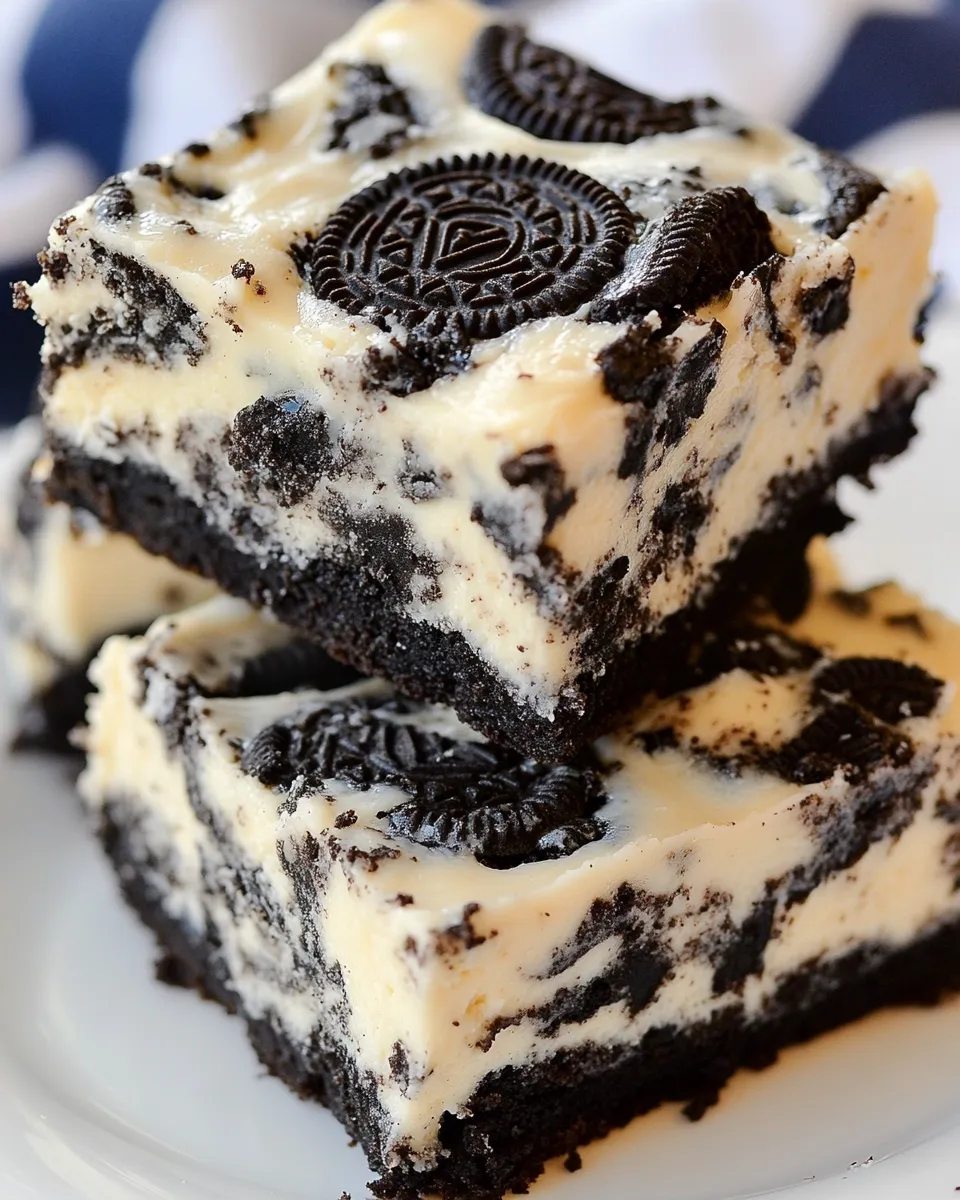
Easy Oreo Cheesecake Bars
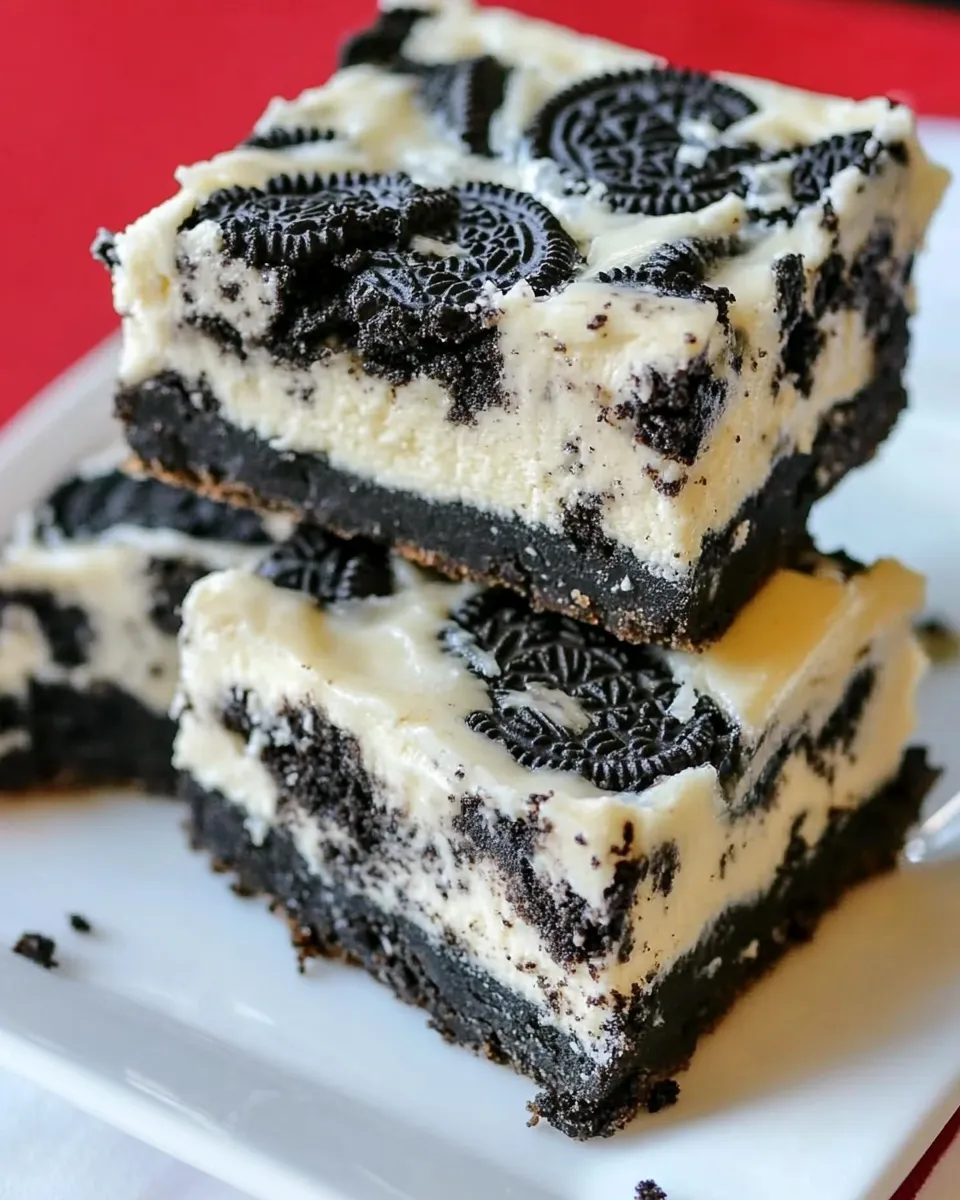
These Oreo cheesecake bars are a no-nonsense crowd-pleaser: crisp Oreo crust, rich cream-cheese filling studded with cookie bits, and a texture that’s creamy without being cloying. They come together with common pantry items and a short bake time, so you can pull them together for a potluck, a last-minute dessert, or a sweet weeknight treat.
I test recipes the practical way — in a busy kitchen with limited time and zero patience for extra steps that don’t matter. This version leans on the structure of a classic cheesecake but keeps it approachable: an 8×8 pan, room-temperature cream cheese, and two batches of Oreos (one ground for the crust, one chopped into the filling) for real Oreo impact.
Below you’ll find the ingredients, step-by-step instructions exactly as written, and concise tips for swapping, storing, and troubleshooting. No frills, just dependable steps so your bars come out consistent every time.
What Goes Into Oreo Cheesecake Bars

Ingredients
- 24 standard-size Oreo cookies — ground into crumbs for the crust; the chocolate and filling bind with butter to form a sturdy base.
- 3 tablespoons melted butter — wets the crumbs so they press into a cohesive crust that holds when sliced.
- 12 oz cream cheese, softened — the base of the cheesecake filling; softened makes for a lump-free batter.
- 1 cup sugar — sweetens and helps the filling set with a smooth mouthfeel.
- 3 eggs at room temperature — provide structure and a silky texture; room temperature eggs incorporate more evenly.
- 6 tablespoons sour cream — adds tang and keeps the filling tender; prevents the finished top from being overly dense.
- 1 tsp vanilla extract — rounds and deepens the flavor.
- 16 Oreos — coarsely chopped and folded into the batter for cookie pieces and visual interest.
Oreo Cheesecake Bars: From Prep to Plate
- Preheat the oven to 325°F. Line an 8×8-inch pan with foil, leaving an overhang on two opposite sides so you can lift the finished bars out easily. Place the pan on the center oven rack when ready to bake.
- Put 24 standard-size Oreo cookies into a food processor and pulse until they become fine crumbs.
- Add 3 tablespoons melted butter to the Oreo crumbs and pulse until the butter is fully incorporated and the mixture holds together when pressed.
- Press the crumb mixture evenly into the bottom of the prepared 8×8 pan to form the crust. Bake the crust for 10 minutes, then remove from the oven and keep the oven set to 325°F.
- In a large bowl with a mixer, beat 12 oz softened cream cheese on medium speed until smooth and creamy. Scrape down the bowl as needed.
- Add 1 cup sugar and beat until the mixture is smooth and the sugar is incorporated. Add the 3 eggs one at a time, mixing on low-to-medium speed and scraping the bowl between additions.
- Add 1 teaspoon vanilla extract and 6 tablespoons sour cream. Mix on low speed just until combined; do not overmix.
- Coarsely chop the remaining 16 Oreos. If you want to remove extra fine crumbs, place the chopped pieces in a fine-mesh strainer over a bowl and shake gently to let fine crumbs fall through. Fold the chopped Oreo pieces into the cheesecake batter until evenly distributed.
- Pour the cheesecake batter over the baked crust and smooth the top. Bake at 325°F for 40–50 minutes, until the edges are set and lightly browned and the center is mostly set but still slightly jiggly.
- Remove the pan from the oven and cool on a wire rack for 2–3 hours. Cover and refrigerate before serving. Serve cold.
Why This Recipe Works
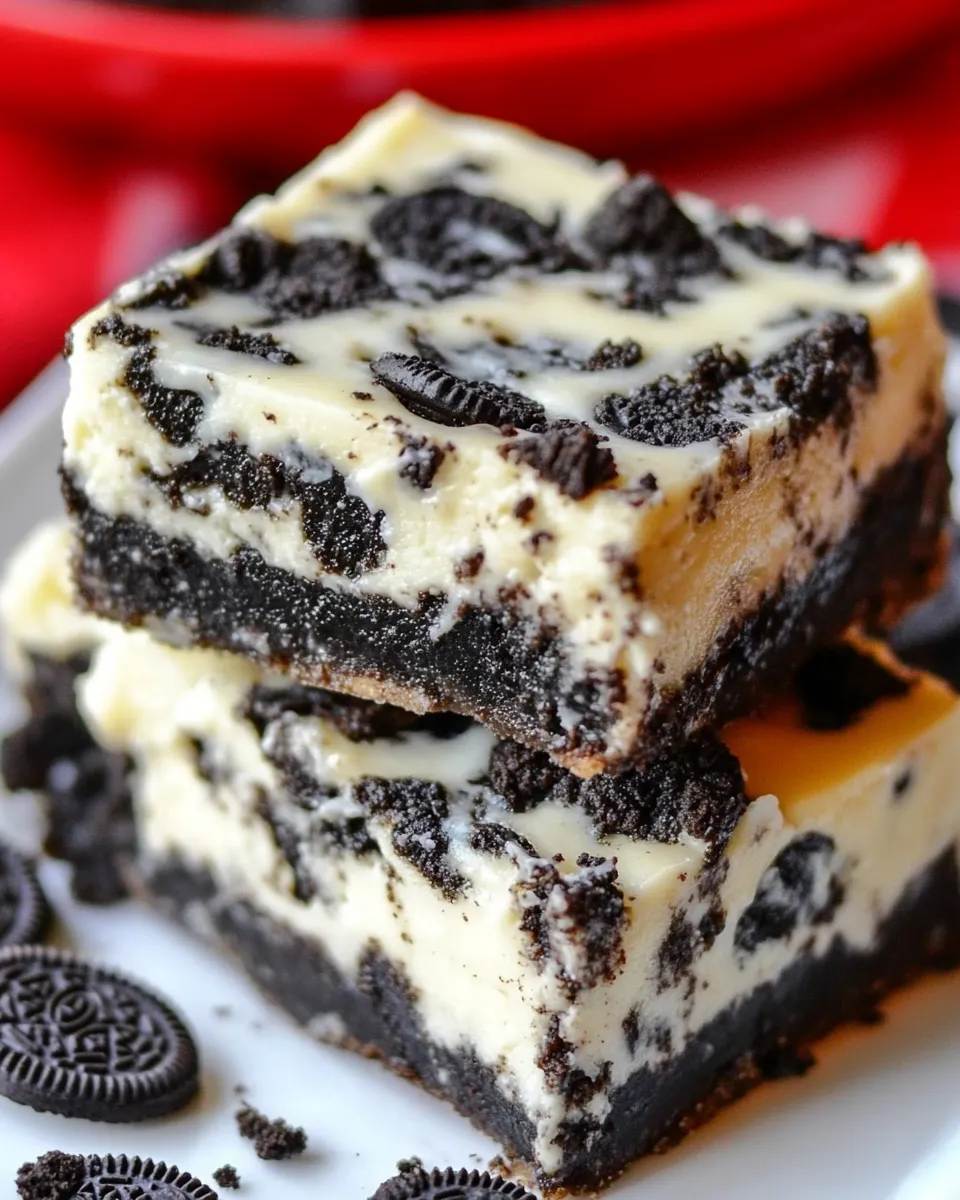
The structure is intentional. A grounded Oreo crust mixed with melted butter creates a compact base that won’t turn soggy under the creamy filling. Baking the crust for 10 minutes firms it up so it supports the batter without crumbling when you slice.
Low-and-slow baking at 325°F prevents the top from cracking and keeps the texture of the cheesecake dense but not rubbery. The eggs provide structure; adding them one at a time and mixing on low keeps the batter stable and reduces the chance of incorporating excess air, which can cause cracks.
Sour cream is a small ingredient with a big effect: it balances sweetness and keeps the center tender. Folding chopped Oreos into the batter gives crunchy pockets and visual contrast without overwhelming the cream-cheese flavor.
Ingredient Swaps & Substitutions
- Cookies: Use chocolate sandwich cookies other than Oreo if you prefer; the ratio stays the same. For a less sweet crust, choose a thinner filling cookie.
- Butter: Salted or unsalted butter both work; if using salted, taste the filling before adding anything salty elsewhere (this recipe doesn’t call for added salt).
- Sour cream: Full-fat Greek yogurt can substitute cup-for-cup for a similar tang and texture.
- Cream cheese: Use full-fat for best texture. Low-fat versions can be runnier and may affect set and mouthfeel.
- Make it gluten-free: Swap in a gluten-free chocolate sandwich cookie and check the ingredients; the proportions remain unchanged.
Cook’s Kit
- 8×8-inch baking pan
- Aluminum foil (to line the pan with an overhang)
- Food processor (for fine cookie crumbs)
- Stand mixer or hand mixer (for a smooth filling)
- Large mixing bowl and spatula
- Fine-mesh strainer (optional, for removing extra fine cookie crumbs)
- Wire cooling rack
Steer Clear of These
- Using cold cream cheese: It makes lumps. Let it sit out until soft, or cut into small pieces to speed warming.
- Overmixing after the eggs go in: That whips air into the batter and increases the chance of cracks and a cakey texture.
- Skipping the crust bake step: Unbaked crumbs can spread or separate when the batter cooks; a quick 10-minute bake sets the base.
- Baking at too high a temperature: Don’t shortcut to higher heat to reduce time — the texture will suffer and the top may crack.
- Cutting too soon: Warm cheesecake is fragile. Chill fully before slicing for clean bars.
Customize for Your Needs
These bars are forgiving. If you like more cookie texture, fold in an extra 4–8 chopped Oreos (watch the bake time — more pieces can darken the top). For a chocolate-forward bar, dip the cooled bars in melted chocolate or drizzle ganache on top.
For smaller or larger portions: the recipe is written for an 8×8 pan. To change size, keep an eye on baking time. A 9×13 will bake a little faster per depth change; smaller pans will need more time. When in doubt, check for the classic visual cues: set edges, slightly jiggly center.
Chef’s Rationale
I build desserts for repeatability. The two-cookie approach (crumbs for crust and chunks in filling) delivers a layered Oreo experience — you taste chocolate in every bite, but the filling still reads as creamy cheesecake rather than a cookie bar. Baking the crust first locks its shape, and the low oven temperature protects the filling’s silkiness.
The gentle additions — room-temp eggs, scraping the bowl, folding in cookie pieces — are small steps that cumulatively prevent texture problems. They’re the kind of things you notice when a recipe fails, so I make them explicit here.
Best Ways to Store
In the Refrigerator
Cover the cooled pan tightly with foil or plastic wrap and refrigerate. Properly stored, the bars keep well for 3–4 days. Chilling also makes slicing neater.
In the Freezer
For longer storage, lift the bars from the pan using the foil overhang, wrap tightly in plastic wrap, then foil, and freeze up to 2 months. Thaw overnight in the refrigerator before serving. Slice while still slightly cold for the cleanest cuts.
Handy Q&A
- Can I use a different pan size? Yes, but the recipe is tuned for an 8×8. If you use a 9×9 or 9×13, watch the bake time and test for doneness by the set edges and slightly jiggly center.
- Why are there two Oreo counts? The first 24 are pulsed to make the crust; the remaining 16 are chopped and folded into the filling for texture.
- Can I make this ahead? Absolutely. Make a day ahead and keep refrigerated; flavors actually meld and improve after a few hours chilling.
- Why is the center slightly jiggly? That’s normal. The center continues to set as it cools and chills. Overbaking will make the bars dry.
- Can I skip the food processor? You can crush cookies in a zip-top bag with a rolling pin for the crust, but the food processor makes the texture finer and the job faster.
See You at the Table
This recipe is intentionally straightforward so you can make great Oreo cheesecake bars without fuss. Follow the steps, respect the temperature and timing, and you’ll have a reliable dessert that travels well and stores happily. If you cut neat squares and get compliments, save a piece for yourself — you earned it.
Easy Oreo Cheesecake Bars
Ingredients
Ingredients
- 24 Standard size Oreo cookies
- 3 tablespoonsmelted butter
- 12 ozcream cheese softened
- 1 cupsugar
- 3 eggs at room temperature
- 6 tablespoonssour cream
- 1 tspvanilla extract
- 16 Oreos
Instructions
Instructions
- Preheat the oven to 325°F. Line an 8x8-inch pan with foil, leaving an overhang on two opposite sides so you can lift the finished bars out easily. Place the pan on the center oven rack when ready to bake.
- Put 24 standard-size Oreo cookies into a food processor and pulse until they become fine crumbs.
- Add 3 tablespoons melted butter to the Oreo crumbs and pulse until the butter is fully incorporated and the mixture holds together when pressed.
- Press the crumb mixture evenly into the bottom of the prepared 8x8 pan to form the crust. Bake the crust for 10 minutes, then remove from the oven and keep the oven set to 325°F.
- In a large bowl with a mixer, beat 12 oz softened cream cheese on medium speed until smooth and creamy. Scrape down the bowl as needed.
- Add 1 cup sugar and beat until the mixture is smooth and the sugar is incorporated. Add the 3 eggs one at a time, mixing on low-to-medium speed and scraping the bowl between additions.
- Add 1 teaspoon vanilla extract and 6 tablespoons sour cream. Mix on low speed just until combined; do not overmix.
- Coarsely chop the remaining 16 Oreos. If you want to remove extra fine crumbs, place the chopped pieces in a fine-mesh strainer over a bowl and shake gently to let fine crumbs fall through. Fold the chopped Oreo pieces into the cheesecake batter until evenly distributed.
- Pour the cheesecake batter over the baked crust and smooth the top. Bake at 325°F for 40–50 minutes, until the edges are set and lightly browned and the center is mostly set but still slightly jiggly.
- Remove the pan from the oven and cool on a wire rack for 2–3 hours. Cover and refrigerate before serving. Serve cold.
Equipment
- 8x8-inch Pan
- Foil
- Food Processor
- Mixer
- Wire Rack
- Fine Mesh Strainer