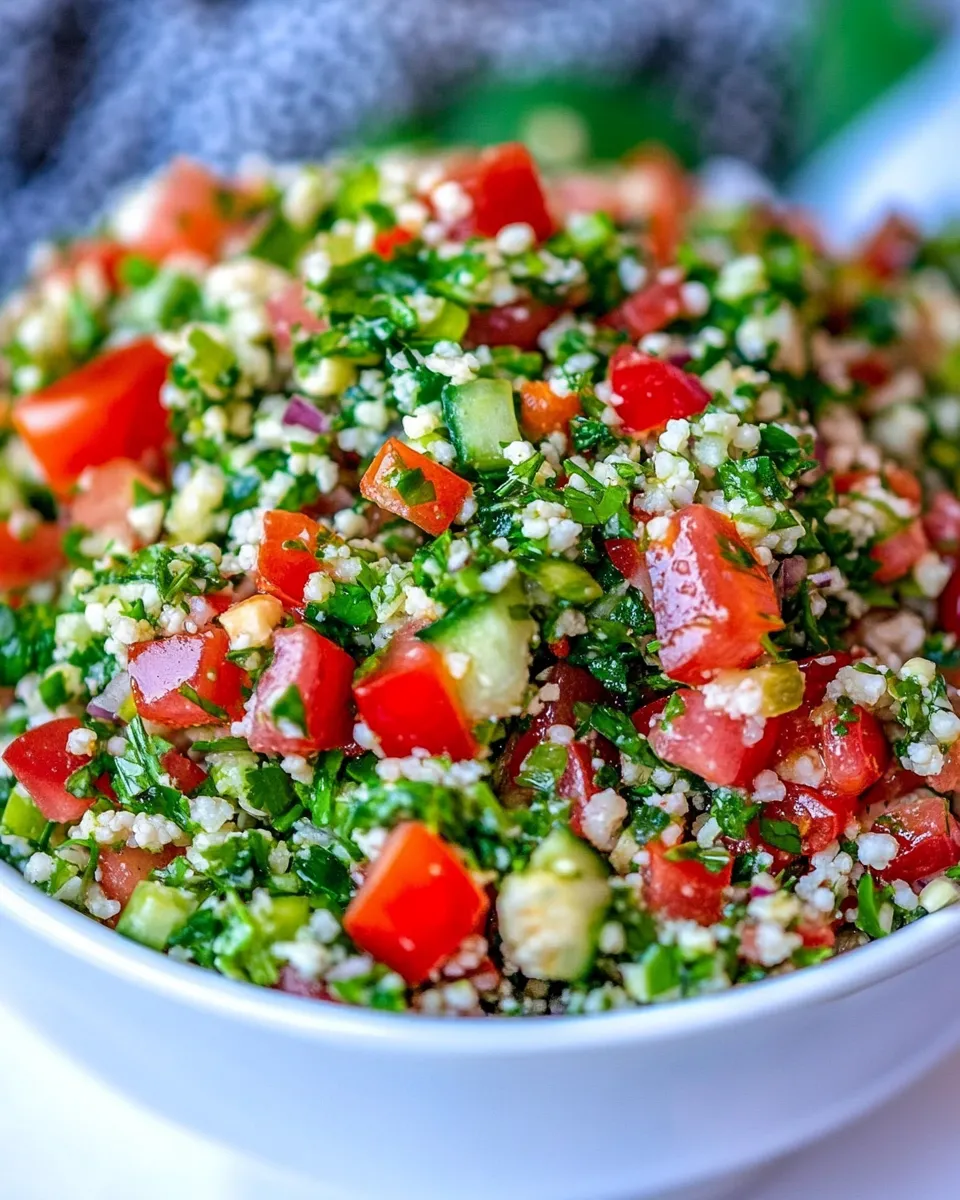
Easy Lebanese Tabbouleh Recipe
I grew up watching family members toss bright green parsley, tiny pearls of bulgur and juicy tomatoes together with a steady hand, tasting for just enough lemon. This version is exactly that: practical, forgiving, and built around fresh herbs and simple technique. It doesn’t demand exotic pantry items or tricky timing — just attention to chopping and a little patience while the bulgur soaks.
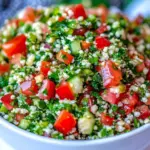
Tabbouleh is a salad that rewards precision in texture more than fanfare. The parsley should be very finely chopped, the bulgur tender but not mushy, and the dressing bright and balanced. Follow the steps here closely and you’ll get that classic Lebanese lift — bright, herby, and refreshing — every time.
I’ll walk you through the exact ingredients, the method step by step (no mysteries), sensible swaps you can rely on, troubleshooting for common missteps, and storage notes so it stays fresh. There’s also a short cook’s commentary at the end — the little habits I use to keep this salad bright and lively.
What’s in the Bowl

Ingredients
- 1 cup extra-fine bulgur wheat — the toothsome grain base; soaks and holds the dressing.
- 2 cups very hot boiling water — used to hydrate the bulgur quickly and evenly.
- 2 tablespoons olive oil — added to the bulgur while it soaks for silkiness.
- 6 Roma tomatoes, very finely chopped — provide concentrated tomato flavor without excess juice.
- 1 English cucumber, seedless and very finely chopped — cool crunch; seedless keeps the salad from becoming watery.
- 2 bunches parsley — the dominant herb; finely chopped to create the signature texture.
- 1/4 cup fresh mint leaves — bright counterpoint to parsley; finely chopped.
- 1/4 cup green onions, finely chopped — mild oniony note, sliced thin for even distribution.
- 4 tablespoons lemon juice — the acid that lifts and brightens the whole salad.
- 4 tablespoons extra virgin olive oil — the main dressing fat; adds richness and carries flavors.
- Salt to taste — adjusts and enhances all the other ingredients.
The Method for Lebanese Tabbouleh
- Rinse the parsley and mint leaves under cold water, drain well (use a salad spinner or pat dry with paper towels), remove coarse stems, and very finely chop the leaves from the 2 bunches parsley and the 1/4 cup fresh mint leaves.
- Very finely chop the 6 Roma tomatoes, the seedless English cucumber, and the 1/4 cup green onions; place them together in a bowl.
- Put 1 cup extra-fine bulgur wheat and 2 tablespoons olive oil in a heatproof bowl. Pour 2 cups very hot boiling water over the bulgur, cover tightly (plastic wrap or a lid), and let stand 15–20 minutes until the bulgur is tender.
- Drain the soaked bulgur in a fine-mesh sieve, pressing with the back of a spoon to remove any excess liquid. Transfer the drained bulgur to a large mixing bowl.
- Add the chopped parsley, mint, tomatoes, cucumber, and green onions to the bulgur.
- Pour in 4 tablespoons lemon juice and 4 tablespoons extra virgin olive oil, add salt to taste, and toss gently but thoroughly to combine all ingredients.
- Cover and refrigerate for 30 minutes for best flavor. Re-toss briefly before serving.
- Serve chilled or at room temperature, with pita bread on the side.
Reasons to Love Lebanese Tabbouleh
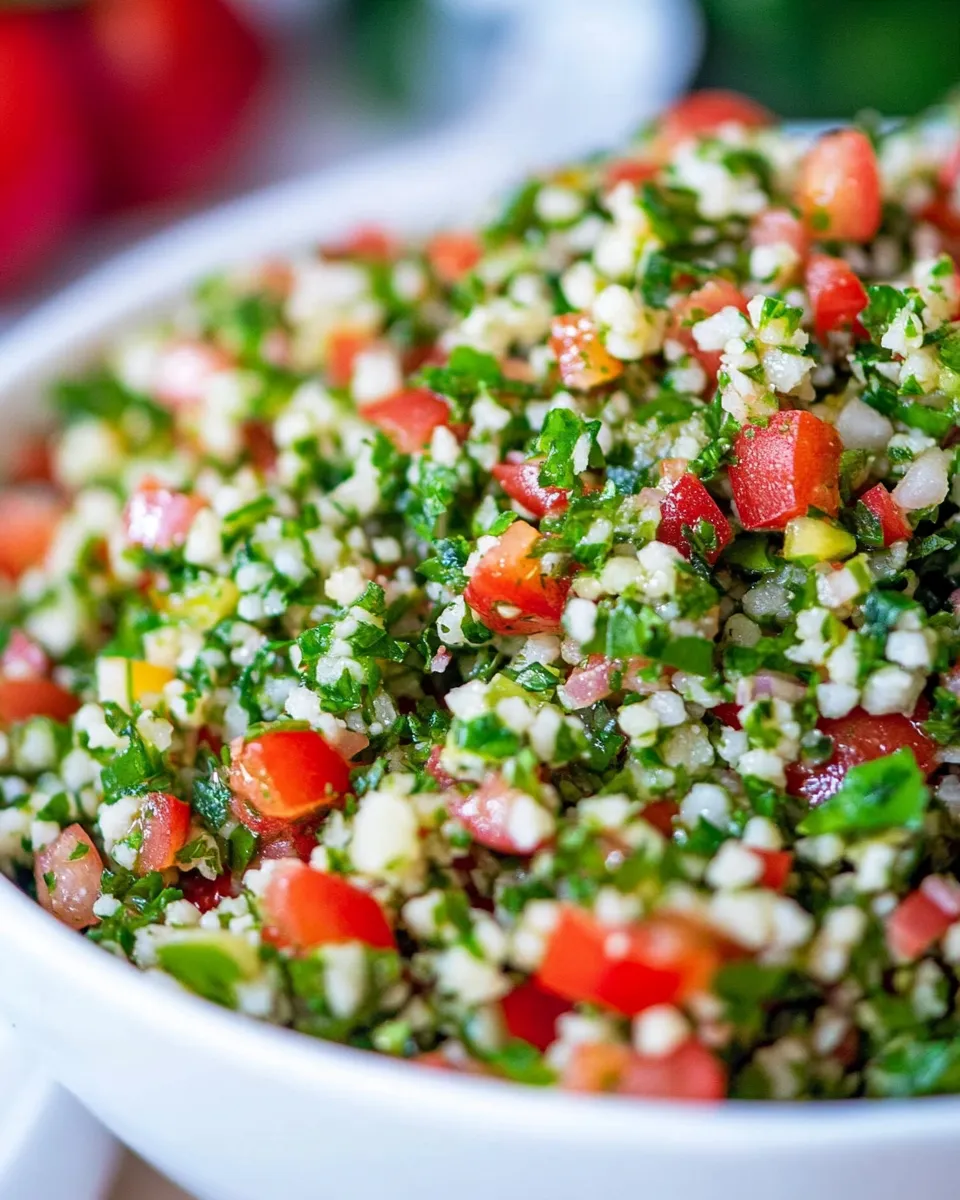
- It’s bright and refreshing without being sweet — lemon and herbs do the heavy lifting.
- Simple, whole-food ingredients — no heavy sauces or complex dressings required.
- Customizable texture: extra-fine bulgur makes it almost creamy; coarser bulgur adds chew.
- Great as a light main or as a generous salad alongside proteins and warm bread.
- Make-ahead friendly: flavors meld and improve after a short rest in the refrigerator.
What to Use Instead
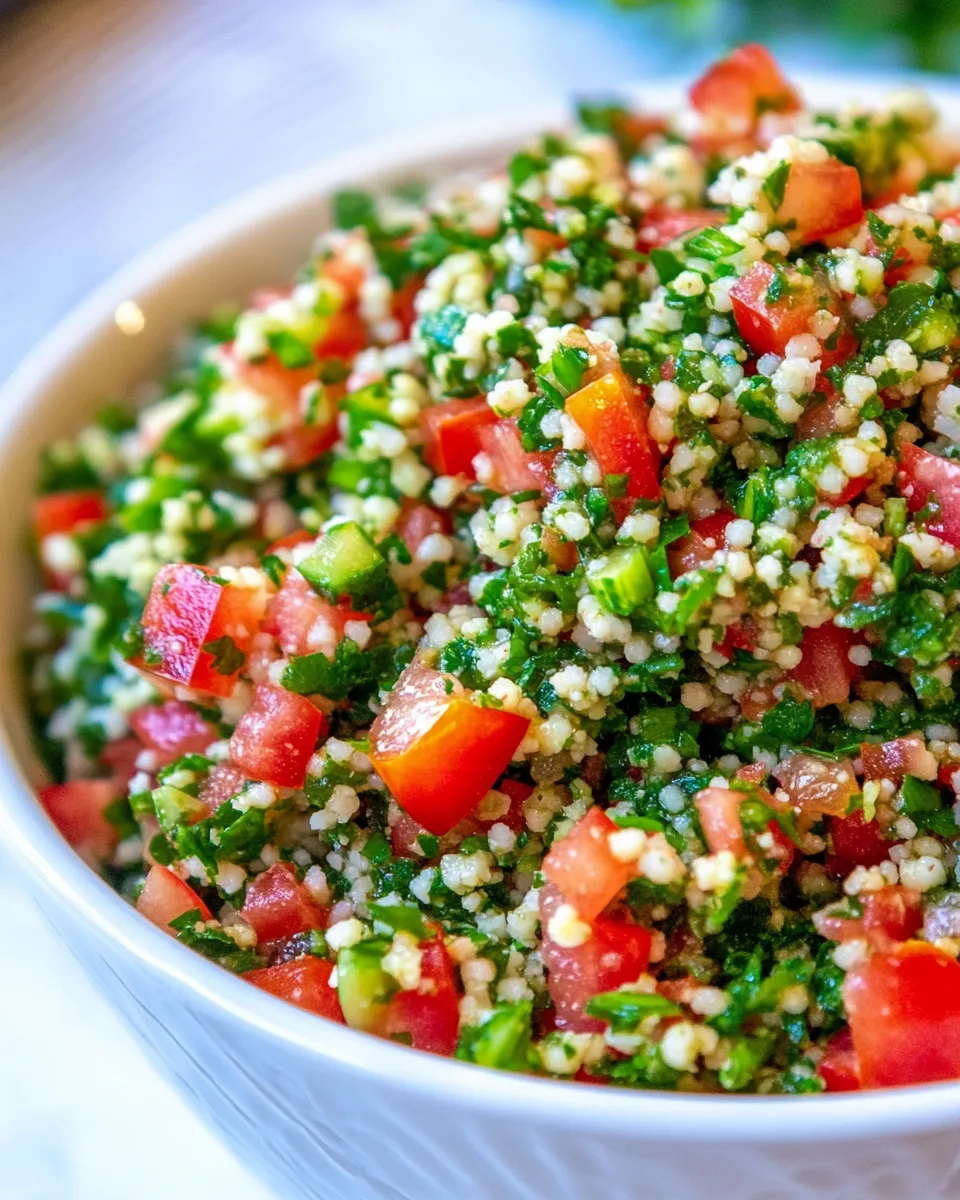
- If you don’t have extra-fine bulgur, use fine bulgur but allow it to soak a few minutes longer and check for tenderness; you can also break down slightly larger grains with a quick pulse in a food processor before soaking.
- If your English (seedless) cucumber isn’t available, remove the seeds from a standard cucumber and then very finely chop the flesh so it blends without adding excess water.
- If fresh mint is scarce, increase the parsley slightly and use the remaining mint sparingly — the salad will still be bright and herby.
- If your Roma tomatoes are overly juicy, drain them briefly in a sieve after chopping to prevent the salad from becoming soggy.
- If you’re short on extra virgin olive oil, combine the 2 tablespoons used for the bulgur with whatever high-quality olive oil you have for the dressing so all oil in the recipe remains olive-based.
Gear Checklist
- Sharp chef’s knife — for very fine chopping of herbs and vegetables.
- Cutting board — a stable surface for efficient, even chopping.
- Heatproof bowl — to soak the bulgur in boiling water.
- Fine-mesh sieve — to drain soaked bulgur and press out excess liquid.
- Large mixing bowl — to combine bulgur, herbs, and vegetables comfortably.
- Salad spinner or clean kitchen towels/paper towels — to dry herbs thoroughly.
- Measuring cups and spoons — for accurate amounts of bulgur, water, oils, and lemon juice.
- Plastic wrap or a tight-fitting lid — to cover the bulgur while it soaks.
Troubleshooting Tips
- Soggy or mushy bulgur: the bulgur likely absorbed too much water or soaked too long for that grind. Drain well in a fine-mesh sieve and press gently to remove excess. Next time reduce standing time or ensure you’re using extra-fine bulgur as specified.
- Too dry or clumpy: the bulgur may need a touch more liquid. Lightly sprinkle a tablespoon of water, lemon juice, or an extra tablespoon of olive oil and toss to integrate, then rest briefly.
- Bland flavor: taste for salt and lemon. Tabouli depends on a clear acid-salt balance. Gradually add more lemon juice (a teaspoon at a time) and salt until the flavors brighten.
- Herbs release too much juice or look bruised: chop herbs very finely but gently, and use a sharp knife. Over-chopping with a blunt knife bruises leaves and speeds oxidation.
- Watery salad from the tomatoes/cucumber: before adding, finely chop and give them a quick drain in a sieve, or pat with paper towels to remove excess juices.
Fresh Takes Through the Year
- Spring: emphasize the herbs. Increase the ratio of parsley and mint slightly for a greener, more herb-forward salad when both are at peak freshness.
- Summer: use the ripest, firm tomatoes you can find. Chop them very small and drain briefly to avoid watering down the salad.
- Autumn/Winter: reduce the cooling elements slightly if you prefer a less crisp salad in cool weather — let it come to room temperature before serving.
- Year-round: adjust the herb-to-grain ratio. If you want a heartier salad for a main-dish bowl, add a touch more bulgur; for a lighter side, tip the balance toward more parsley and mint.
Cook’s Commentary
I make tabbouleh a lot because it’s quick to pull together once the prep is done. The real time goes into chopping. My habit is to strip and wash the parsley and mint first, spin them dry, then stack and roll the leaves loosely before slicing very finely. It saves time and gives the salad that uniform, velvet texture I love.
When soaking the bulgur, I always add the 2 tablespoons of olive oil at the start — it keeps the grains from clumping and gives a silkiness that helps the herbs cling. Don’t skip the 30-minute chill at the end if you can help it; it lets the lemon and olive oil marry with the bulgur and the herbs settle into a cohesive flavor.
One practical tip: chop the tomatoes and cucumber a touch smaller than you think you need. Small pieces distribute flavor evenly so every bite tastes balanced. And always retaste after the final toss — small adjustments of lemon or salt make all the difference.
Best Ways to Store
- Refrigerate in an airtight container for up to 3 days. The salad keeps well, but the herbs will gradually soften and the bulgur will continue to absorb dressing.
- If stored, re-toss before serving to redistribute any liquid and refresh the texture. A quick squeeze of lemon or a tiny drizzle of olive oil can revive the brightness.
- Do not freeze. The texture of the herbs and vegetables will not survive freezing.
Handy Q&A
- Can I make this ahead? Yes. Make it up to a day ahead and refrigerate. Resting improves flavor, but retoss before serving.
- Is bulgur the same as couscous? No. Bulgur is cracked, parboiled wheat; its texture and flavor are different from couscous. If using a substitute, adjust soaking and texture expectations.
- Can I omit mint? You can. Mint is traditional for balance; omitting it shifts the profile more toward parsley-and-lemon. If omitted, taste and adjust citrus accordingly.
- Does tabbouleh contain gluten? Yes. Bulgur is made from wheat and contains gluten. It’s not suitable for a gluten-free diet.
- How do I keep the herbs bright? Dry them well after rinsing and chop with a sharp knife. Excess water and blunt chopping both accelerate dulling.
The Takeaway
Lebanese Tabbouleh is a straightforward, herb-forward salad that shines when ingredients are fresh and textures are respected. Follow the soaking and draining steps for the bulgur, chop the herbs and vegetables very finely, and balance lemon and salt to taste. Make it ahead for convenience — it gets better with a short rest — and keep it chilled until serving. With a little practice in the prep, you’ll have a reliable, bright, and elegant salad that pairs with many meals or stands on its own as a light main.
Easy Lebanese Tabbouleh Recipe
Ingredients
Ingredients
- 1 cupextra fine bulgur wheat
- 2 cupsboiling watervery hot
- 2 tablespoonsolive oil
- 6 Roma tomatoesvery finely chopped
- 1 English cucumberseedless and very finely chopped
- 2 bunches parsley
- 1/4 cupfresh mint leaves
- 1/4 cupgreen onionsfinely chopped
- 4 tablespoonslemon juice
- 4 extra virgin olive oil
- Salt to taste
Instructions
Instructions
- Rinse the parsley and mint leaves under cold water, drain well (use a salad spinner or pat dry with paper towels), remove coarse stems, and very finely chop the leaves from the 2 bunches parsley and the 1/4 cup fresh mint leaves.
- Very finely chop the 6 Roma tomatoes, the seedless English cucumber, and the 1/4 cup green onions; place them together in a bowl.
- Put 1 cup extra-fine bulgur wheat and 2 tablespoons olive oil in a heatproof bowl. Pour 2 cups very hot boiling water over the bulgur, cover tightly (plastic wrap or a lid), and let stand 15–20 minutes until the bulgur is tender.
- Drain the soaked bulgur in a fine-mesh sieve, pressing with the back of a spoon to remove any excess liquid. Transfer the drained bulgur to a large mixing bowl.
- Add the chopped parsley, mint, tomatoes, cucumber, and green onions to the bulgur.
- Pour in 4 tablespoons lemon juice and 4 tablespoons extra virgin olive oil, add salt to taste, and toss gently but thoroughly to combine all ingredients.
- Cover and refrigerate for 30 minutes for best flavor. Re-toss briefly before serving.
- Serve chilled or at room temperature, with pita bread on the side.
Equipment
- Heatproof Bowl
- Fine Mesh Sieve
- Large Mixing Bowl
- salad spinner or paper towels
- Spoon
- plastic wrap or lid