Crepes Recipe
I’ve been making crepes almost every weekend for years. They are forgiving, fast, and feel a little indulgent without a lot of fuss. This version keeps the batter simple and classic: eggs, a touch of sugar, flour, milk, vanilla, and butter for the pan. No weird tricks, just steady technique.
What I love about crepes is how adaptable they are. You can keep them sweet with berries and whipped cream, or use them as a neutral vessel for savory fillings. The recipe below makes thin, tender crepes that hold together well but remain delicate — exactly what I aim for when I want a breakfast that feels special but not complicated.
What Goes In

- 4 eggs — the primary structure and richness for the batter; whisk thoroughly so the batter is smooth.
- 1 cup powdered sugar — sweetens gently and dissolves easily into the batter for a silky texture.
- 1 cup + 2 tablespoons all-purpose flour (see note 1) — provides body; measure by spooning into the cup and leveling for accuracy.
- 2 cups milk — thins the batter to the right consistency; room temperature milk blends more evenly.
- 1/2 teaspoon vanilla extract — adds aroma and rounds the flavor; add after the milk so it mixes evenly.
- 4 teaspoon butter — for cooking and flavor; keep these measured so you don’t over-butter the pan.
- fresh berries for serving — a bright, fresh finish that contrasts the rich crepes.
- whipped cream for serving — light and creamy topping; store-bought or freshly whipped both work.
Cook Crepes Like This
- In a medium bowl, whisk 4 eggs until well beaten.
- Add 1 cup powdered sugar and whisk until smooth and fully combined.
- Add 1 cup + 2 tablespoons all-purpose flour and whisk until the flour is fully incorporated and the mixture is smooth.
- Gradually whisk in 2 cups milk until the batter is completely smooth. Whisk in 1/2 teaspoon vanilla extract until combined.
- Heat a 10 1/2-inch skillet over medium heat. Add 1/2 teaspoon butter and swirl the pan to melt and coat the surface.
- Pour 1/2 cup batter into the center of the skillet, then immediately tilt and gently swirl the pan so the batter spreads into a thin, even round.
- Cook the crepe until the edges set and the bottom is lightly browned, about 1 minute 15 seconds. Flip with a spatula and cook the second side until lightly browned and cooked through, about 45 seconds.
- Transfer the cooked crepe to a plate. For each additional crepe, add another 1/2 teaspoon butter to the skillet as needed (use the total 4 teaspoons butter), reheat briefly, and repeat steps 6–7 with the remaining batter.
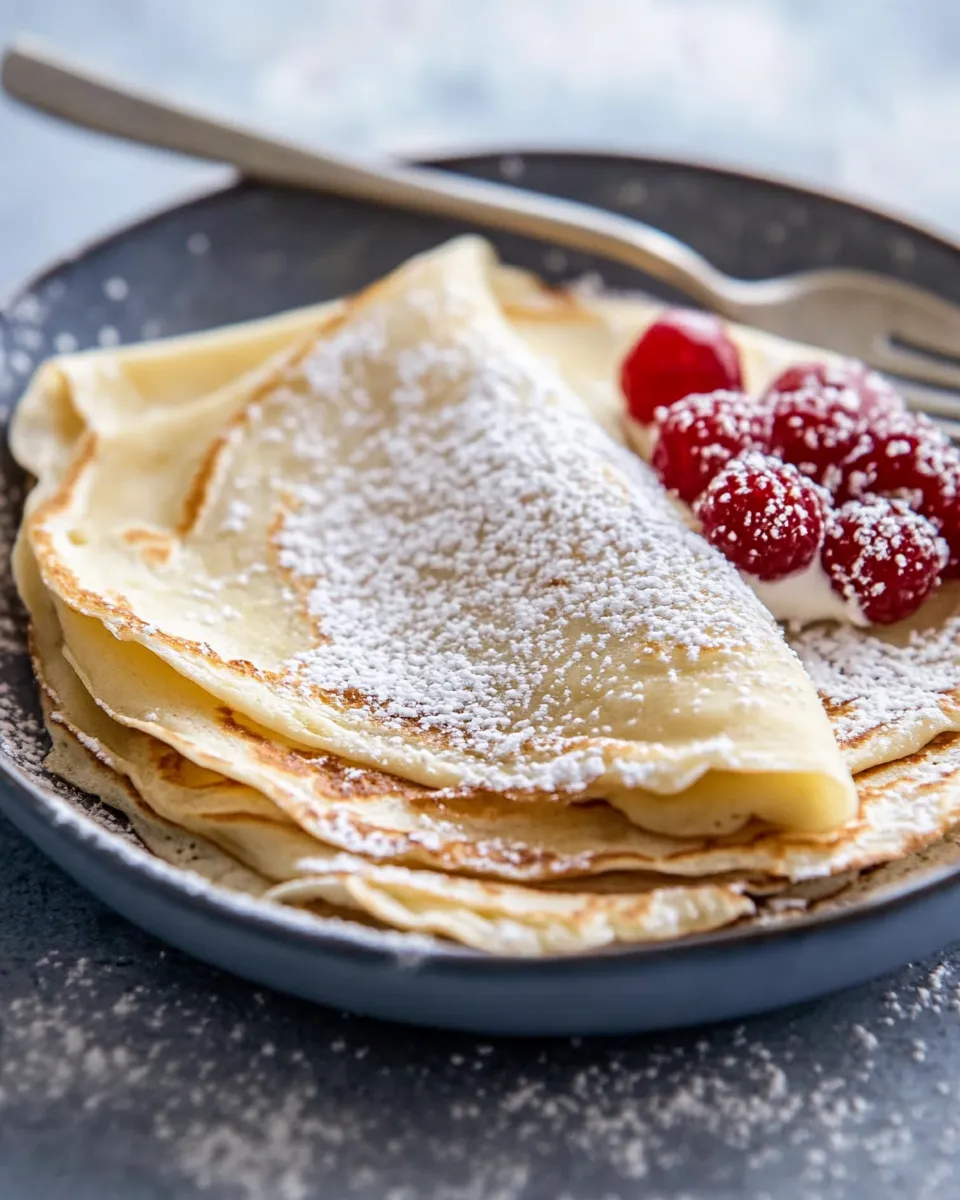
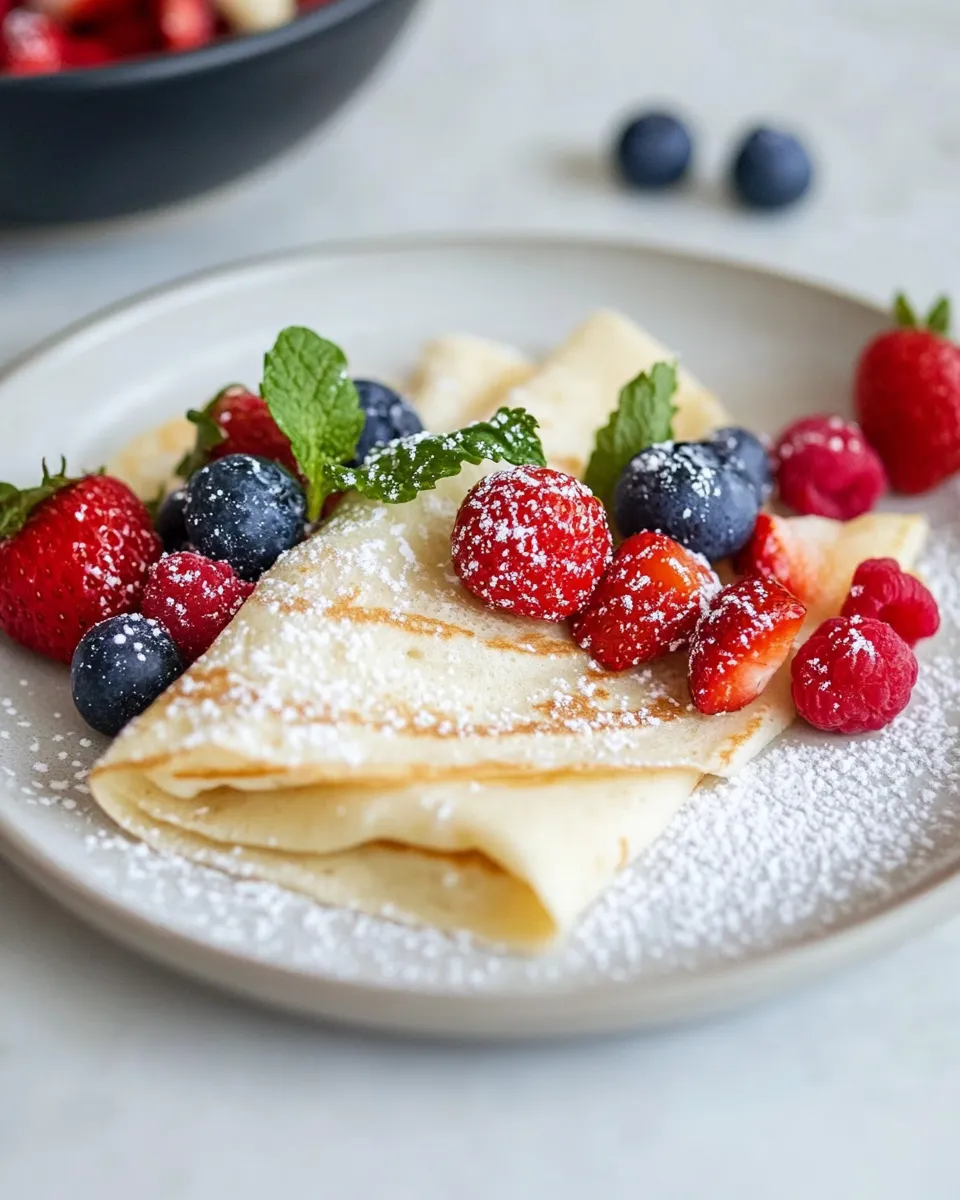
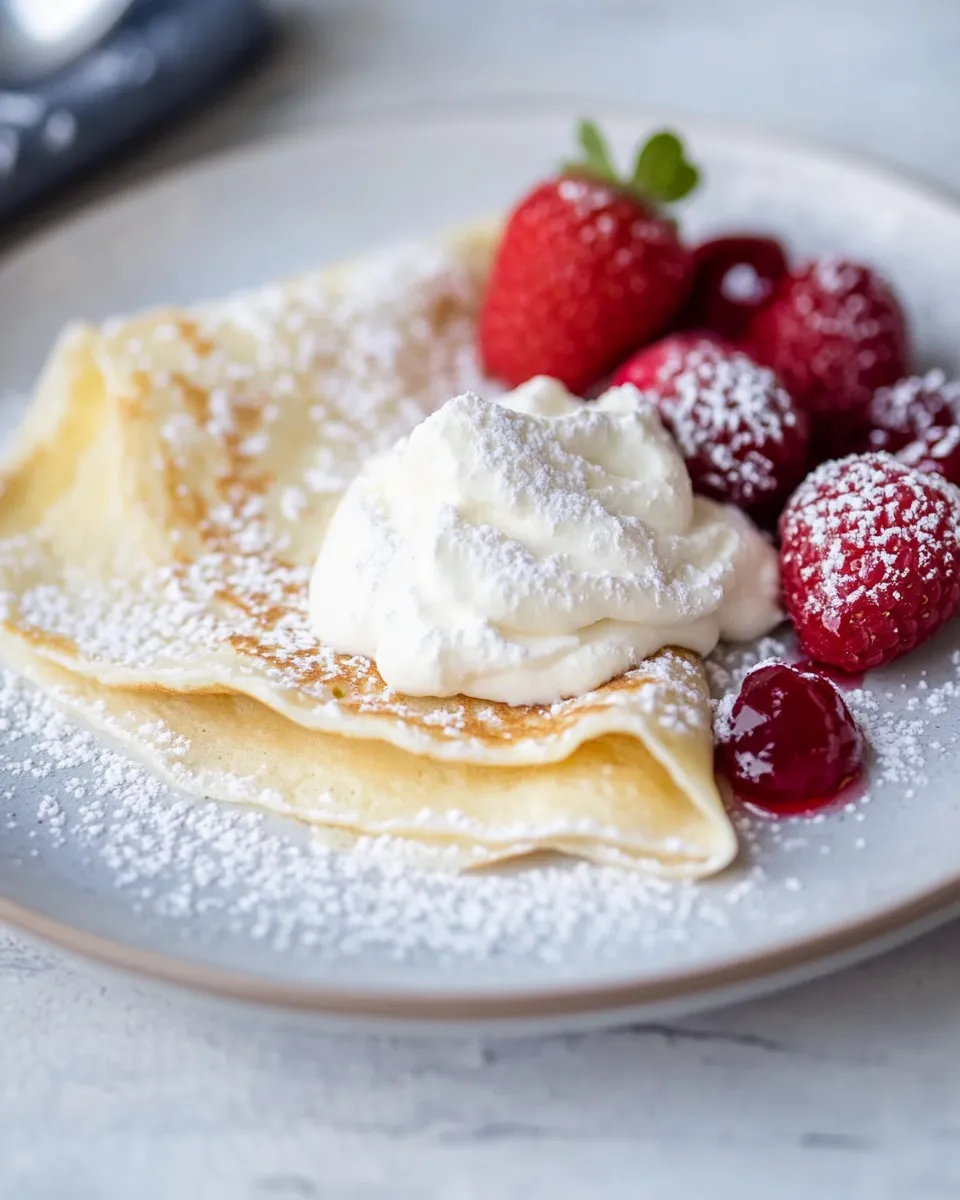
- Fold or roll the finished crepes and serve with fresh berries and whipped cream.
Why This Recipe Is Reliable
This recipe relies on straightforward ratios and technique rather than tricks. The eggs and flour give structure; the milk thins the batter so you get a wide, thin crepe instead of a thick pancake. Powdered sugar dissolves quickly and keeps the batter smooth without graininess.
The skillet size and specified butter quantity are practical choices. A 10 1/2-inch skillet creates the right surface area so a 1/2 cup pour spreads into a thin round without overflowing. Measuring butter in teaspoons prevents excess oiliness and helps crepes develop a delicate, lightly browned surface.
Finally, the timing — about 1 minute 15 seconds per first side and 45 seconds for the second — is a guideline that works on medium heat for most home stovetops. If your pan runs hotter, reduce the heat slightly. If it’s cooler, a few extra seconds are fine.
International Equivalents
Crepes have cousins around the world. In France they are of course the classic crêpe — thin and versatile. In Russia you’ll find blini, often slightly thicker and served with savory toppings like smoked fish. Swedish pannkakor are somewhere between crepes and pancakes. The technique is essentially the same: a pourable batter cooked in a hot, lightly buttered pan and turned once.
Use this recipe as your base for many cultural takes: fill with lemon and sugar for a simple European dessert, or roll with savory fillings and a sprinkle of herbs for a dinner-friendly option. The batter’s neutral profile adapts easily.
Equipment & Tools
A small set of reliable tools keeps the process smooth. You don’t need anything fancy, but a few specific items make crepe-making easier and more consistent.
- 10 1/2-inch skillet — the size called for in the recipe; provides even heat and the right surface area for spreading a 1/2 cup pour.
- medium bowl — for mixing the batter; choose one with enough room to whisk vigorously without splashing.
- whisk — a sturdy whisk helps eliminate lumps; a fork will work in a pinch but makes it harder to get smooth batter.
- spatula — a thin, flexible spatula makes flipping easy and reduces tearing.
- measuring cups and spoons — accuracy matters for the flour and butter amounts called out.
Avoid These Traps
Trap: Overmixing after adding flour. Stir just until combined. Overworking can make crepes tough.
Trap: Using cold milk straight from the fridge. It can cause lumps; let milk warm to room temperature or whisk it gradually into the eggs and flour to reduce shock.
Trap: Over-buttering the pan. Butter is necessary, but too much makes crepes greasy and causes uneven browning. Stick to the 4 teaspoons total and add only what’s needed between batches.
Trap: Cooking at too high heat. The exterior will burn before the middle sets. Moderate, steady heat gives the best color and tender crumb.
Customize for Your Needs
Sweet or savory — crepes are a blank canvas. For sweet crepes, fold them around fresh berries and a spoonful of whipped cream as suggested. For a richer finish, add a light dusting of powdered sugar right before serving.
For savory uses, omit the powdered sugar entirely and consider filling with vegetables, cheeses, or eggs. The batter here contains sugar, which gives a hint of sweetness; if you want fully neutral crepes, take a similar batter and reduce or skip the sugar (note: this changes the recipe balance).
If you need a dairy-free option, use your preferred plant-based milk in place of the 2 cups milk. Keep the rest of the method the same; the texture will be slightly different but still very good. For a heartier crepe, use a little more flour, but do so carefully — you want to maintain a pourable batter.
Notes on Ingredients
Eggs: They provide structure and help the crepes set. Whisk until homogenous; visible streaks of white indicate under-beaten eggs.
Powdered sugar: I use powdered because it dissolves without heating and keeps the batter silky. Granulated sugar can be used, but it may take longer to dissolve and could leave a subtle grit unless whisked thoroughly.
Flour: The specified 1 cup + 2 tablespoons all-purpose flour gives the right body. Spoon flour into the measuring cup and level it for consistency. If you pack the flour, the batter will be too thick.
Milk: Two cups thin the batter to the right pourable consistency. Room-temperature milk mixes more smoothly; if your kitchen is cold, let the milk sit out for 15 minutes before using.
Vanilla extract: It’s a small addition but lifts the flavor. Add it after the milk so it disperses evenly.
Butter: Measured as 4 teaspoons total, that’s enough for flavor and to prevent sticking. Use the amount judiciously and wipe excess butter from the pan edge if it pools.
Fresh berries and whipped cream: These are serving suggestions that contrast the warm crepes with fresh brightness and creaminess.
Keep-It-Fresh Plan
Made-ahead batter: You can make the batter up to 24 hours in advance and refrigerate it. Give it a gentle whisk before using; it may thicken slightly as the flour hydrates. If it’s too thick, thin with a splash of milk until it reaches the original pourable consistency.
Cooked crepes: Store cooked crepes in an airtight container layered with parchment between them in the refrigerator for up to 3 days. Reheat gently in a warm skillet for about 30–60 seconds per side or in a low oven wrapped in foil.
Freezing: Crepes freeze well. Stack them with parchment between each, wrap tightly in plastic, and freeze in a sealed bag for up to 2 months. Thaw in the refrigerator overnight and reheat as above.
Crepes FAQs
How thin should the batter be? It should be pourable and spread easily when you tilt the pan. If the batter holds shape and doesn’t move when you tilt the skillet, it’s too thick.
Do I need to rest the batter? This recipe doesn’t require a long rest, but a 20–30 minute rest in the fridge can relax the gluten and yield slightly more tender crepes. If you’re short on time, you can cook right away — the results will still be good.
Why powdered sugar instead of granulated? Powdered sugar dissolves immediately, ensuring a smooth batter. Granulated sugar can be used, but whisk longer to avoid a grainy texture.
My crepes tear when I flip them. How can I fix this? Make sure the first side is cooked until the edges look set before flipping. Use a thin spatula and slide it fully under the crepe before turning. Also check your pan temperature: too hot can make the crepe stick and tear.
Can I make savory crepes with this batter? Yes. The recipe includes a small amount of sugar, which gives a hint of sweetness. If you want a completely neutral batter, reduce or omit the powdered sugar and proceed the same way.
That’s a Wrap
Crepes are one of those recipes that reward practice. The first few may be a little rustic, but by the third or fourth you’ll have a rhythm: pour, tilt, cook, flip, and fold. Keep the pan temperature steady, use the measured butter sparingly, and remember that thinness is the goal.
Serve them simply with fresh berries and whipped cream, or let them inspire a savory meal. Either way, they come together quickly and look like something special. Make a batch, invite someone over, and enjoy the small ritual of filling and folding warm crepes.

Crepes Recipe
Ingredients
Ingredients
- 4 eggs
- 1 cuppowdered sugar
- 1 cup + 2 tablespoonsall-purpose flour see note 1
- 2 cupsmilk
- 1/2 teaspoonvanilla extract
- 4 teaspoonbutter
- fresh berriesfor serving
- whipped creamfor serving
Instructions
Instructions
- In a medium bowl, whisk 4 eggs until well beaten.
- Add 1 cup powdered sugar and whisk until smooth and fully combined.
- Add 1 cup + 2 tablespoons all-purpose flour and whisk until the flour is fully incorporated and the mixture is smooth.
- Gradually whisk in 2 cups milk until the batter is completely smooth. Whisk in 1/2 teaspoon vanilla extract until combined.
- Heat a 10 1/2-inch skillet over medium heat. Add 1/2 teaspoon butter and swirl the pan to melt and coat the surface.
- Pour 1/2 cup batter into the center of the skillet, then immediately tilt and gently swirl the pan so the batter spreads into a thin, even round.
- Cook the crepe until the edges set and the bottom is lightly browned, about 1 minute 15 seconds. Flip with a spatula and cook the second side until lightly browned and cooked through, about 45 seconds.
- Transfer the cooked crepe to a plate. For each additional crepe, add another 1/2 teaspoon butter to the skillet as needed (use the total 4 teaspoons butter), reheat briefly, and repeat steps 6–7 with the remaining batter.
- Fold or roll the finished crepes and serve with fresh berries and whipped cream.
Equipment
- Medium Bowl
- Whisk
- 10 1/2-inch skillet
- Spatula
- Plate
Notes
Yield:This easy Crepes recipe makes 8 (10-inch) crepes.
Storage:Store leftovers covered in the refrigerator for up to 4 days.