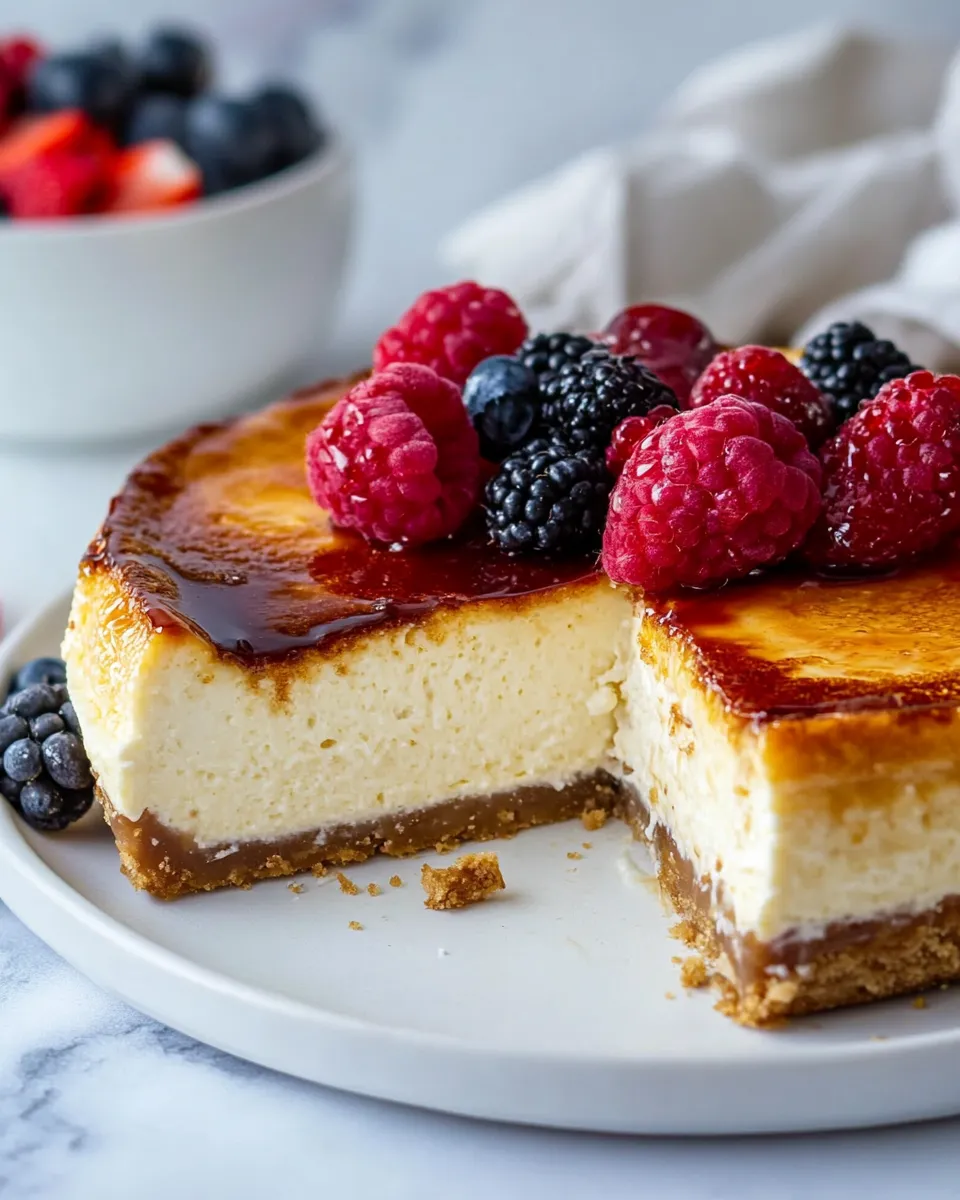
Creme Brulee Cheesecake
This is the kind of dessert that quietly steals the show. A dense, creamy cheesecake tucked into a crisp graham crust, finished with that irresistible caramelized sugar top—creme brulee and cheesecake, married into one confident slice. It looks elegant, but the method is straightforward and forgiving if you follow a few practical rules.
I test desserts the way busy home cooks actually make them: room-temperature ingredients, measured steps, and a few techniques to avoid common pitfalls. This recipe is built around a water bath and a slow cool-down—those two things matter more than fancy tricks. I’ll walk you through exact steps, explain why they work, and offer safe swaps so you can adapt without sacrificing texture.
What Goes Into Creme Brulee Cheesecake

Ingredients
- 1 ½ cups graham cracker crumbs (about 12 whole graham crackers) — the structural base for the crust; finer crumbs pack more tightly.
- ¼ cup granulated sugar — sweetens the crust and helps it brown.
- ¼ cup melted butter — binds the crumbs and adds richness; make sure it’s warm so it distributes evenly.
- pinch of salt — balances sweetness and rounds flavor.
- 4 (8-ounce) packages cream cheese, room temperature — the main body of the cheesecake; full-fat yields the best texture.
- 1 ½ cups granulated sugar — sweetens the filling; dissolves as you beat to build structure.
- 8 ounces sour cream — adds tang and smooths the batter; keeps the filling tender.
- 1 tablespoon vanilla bean paste, or 3–4 large vanilla beans — deep vanilla flavor; paste is convenient, beans give visual flecks and aroma.
- 5 large eggs — provide structure and silkiness; add them one at a time for an even batter.
- 2 tablespoons granulated sugar (up to 3 tablespoons if needed) — the torch sugar that becomes the caramelized creme brulee crust.
Creme Brulee Cheesecake: From Prep to Plate
- Preheat the oven to 325°F (163°C). Spray a 9- or 10-inch springform pan with nonstick cooking spray and set it aside.
- In a medium bowl, combine 1 ½ cups graham cracker crumbs, ¼ cup granulated sugar, ¼ cup melted butter, and a pinch of salt. Stir until the mixture resembles damp sand.
- Press the crumb mixture evenly into the bottom of the prepared springform pan using the bottom of a flat glass or measuring cup. Bake the crust for 10 minutes. Remove from the oven and let the crust cool to room temperature.
- Reduce mixer speed to medium-high and place 4 (8-ounce) packages cream cheese (room temperature) in a large bowl. Beat for about 1 minute until smooth. Scrape down the sides and bottom of the bowl and beat for an additional 10–15 seconds.
- Add 1 ½ cups granulated sugar to the cream cheese and mix on medium speed until just combined. Scrape the bowl again.
- Add 8 ounces sour cream and 1 tablespoon vanilla bean paste (or scrape the seeds from 3–4 large vanilla beans and add the seeds). Beat on low to medium speed until just combined and smooth.
- With the mixer on medium-low, add 5 large eggs one at a time, mixing each egg about 30 seconds until incorporated. Scrape the bowl well after adding all eggs. The batter should be smooth and pourable.
- Place the cooled crust on a sheet or work surface you can transfer. Prepare a water bath: wrap the outside of the springform pan with 3–4 sheets of 18-inch heavy-duty aluminum foil, crumpling the foil up around the outside of the top rim to seal. (If you only have regular foil, use additional sheets to create a secure water barrier.)
- Put the foil-wrapped springform pan inside a deep roasting pan (or a baking sheet with sides about 2 inches deep). Pour the cheesecake batter into the springform pan and smooth the top.
- Carefully pour hot (not boiling) water into the roasting pan until the water reaches about halfway up the side of the springform pan.
- Place the roasting pan on a rack in the lower third of the preheated oven. Bake at 325°F for 1 to 1 ½ hours. Begin checking at 1 hour: the cheesecake is done when the edges are set and the center has a slight wobble (it should not be liquid). If it is still very liquid, continue baking and check every 10–15 minutes.
- When the cheesecake shows set edges with a slightly wobbly center, turn the oven off and leave the cheesecake inside with the oven door closed for 1 hour to cool slowly and help prevent cracks.
- After the hour, remove the roasting pan from the oven. Carefully lift the springform pan out of the water bath, unwrap and remove the foil, and discard the foil.
- Refrigerate the cheesecake (still in the springform pan) for at least 6 hours, or until fully chilled and set.
- Before serving, run a thin knife around the inside edge of the springform pan to loosen the cake and remove the springform ring.
- Sprinkle 2 tablespoons granulated sugar evenly over the top of the chilled cheesecake (use up to 3 tablespoons if you prefer a thicker sugar layer).
- Use a small kitchen torch to caramelize the sugar until it forms a deep golden-brown, even crust across the top. If you do not have a torch, proceed with care using broiler method only if desired and confident—this recipe assumes a torch for best control.
- Return the cheesecake to the refrigerator for 10–15 minutes to let the caramelized sugar harden. Slice with a sharp knife and serve.
Why It Works Every Time
This recipe combines two texture principles: a dense, stable cheesecake filling and a delicate caramelized top. The water bath moderates oven heat so the edges set slowly while the center firms without overcooking. That slow, even bake is the main guard against cracks.
Room-temperature cream cheese and adding eggs one at a time keep the batter smooth and reduce trapped air. Less air equals fewer cracks. The post-bake oven hold (turning the oven off and leaving the cheesecake inside) finishes gentle cooking and prevents the center from contracting suddenly.
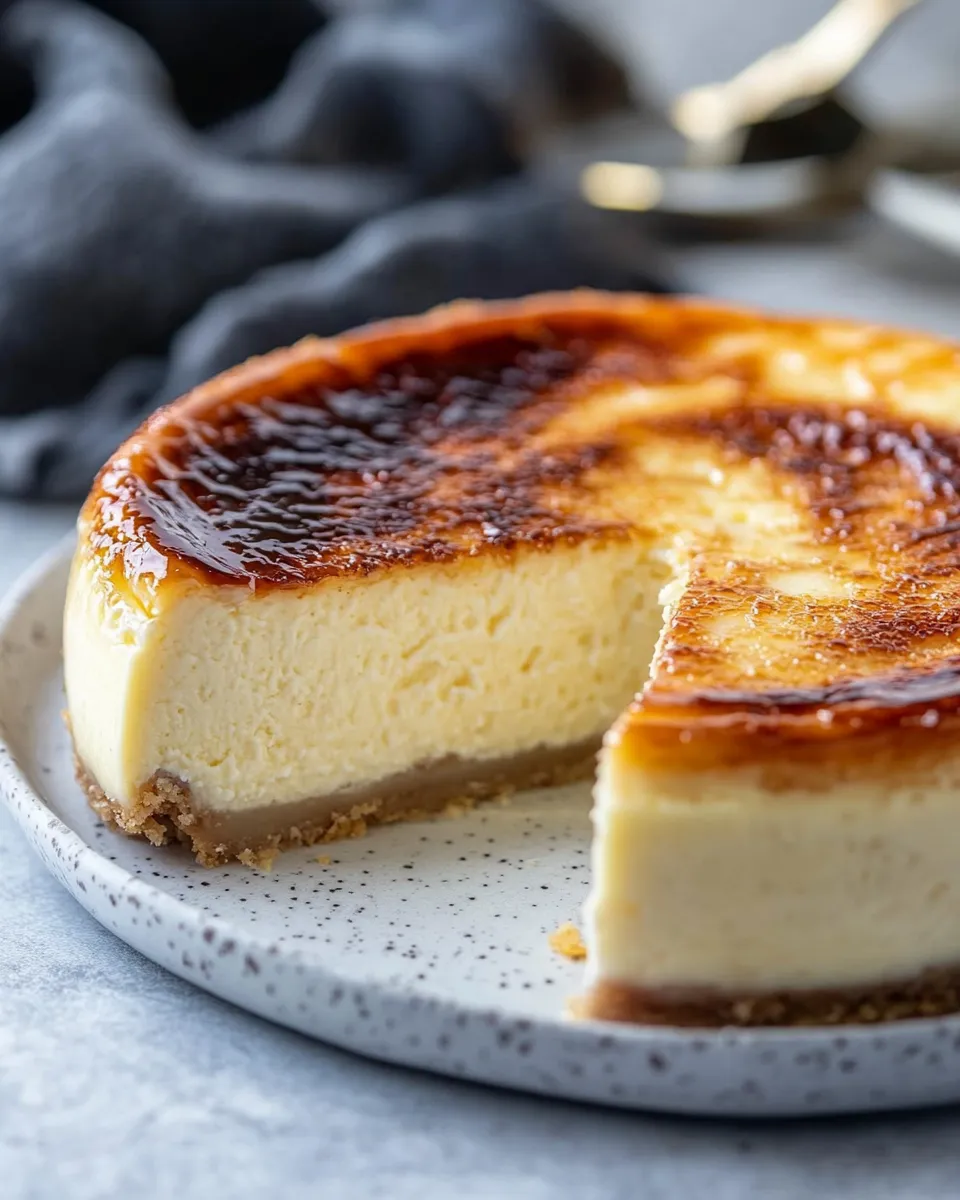
The brief chill before torching ensures the sugar sits on a cold surface and snaps into a crisp shell instead of sinking into the filling. Finally, a small kitchen torch gives you precise control to get an even, glossy crust without warming the cheesecake underneath.
Texture-Safe Substitutions
- Sour cream — if you must substitute, use full-fat Greek yogurt strained slightly; expect a touch more tang and a slightly firmer texture.
- Cream cheese — use only full-fat blocks for the right structure; low-fat varieties make the filling loose and prone to weeping.
- Graham cracker crust — you can swap for digestive biscuits or vanilla wafers in equal volume; press firmly and bake the same 10 minutes.
- Vanilla — paste or scraped beans are best; if using extract, use vanilla extract but flavor will be less pronounced and the surface less speckled.
- Sugar for torching — use granulated sugar only; other sugars melt differently and won’t create the classic glassy shell.
What’s in the Gear List
- 9- or 10-inch springform pan — essential for unmolding without flipping the cake.
- Stand mixer or hand mixer — for smooth, lump-free batter; scrape the bowl often.
- Roasting pan (deep) or rimmed baking sheet — to hold the water bath safely.
- Kitchen torch — the best tool for an even caramelized top; small culinary torches work fine.
- Heavy-duty aluminum foil — wrap the pan well to prevent leaks into the water bath.
- Measuring cups and spoons — accurate sugar and salt measurements keep balance.
- Flat glass or measuring cup — for pressing the crust evenly.
- Sharp, thin knife — for clean slices through the sugar shell and filling.
Common Errors (and Fixes)
- Cracked top — usually from overbeating or a rapid temperature change. Fix: beat less, bake in a water bath, and cool slowly inside the oven with the door closed.
- Runny center — underbaked. Fix: bake longer, checking every 10–15 minutes after the first hour. Center should wobble slightly, not be liquid.
- Soggy crust — caused by a thin or underbaked crust or too-wet filling. Fix: press crumbs firmly and pre-bake the crust as directed.
- Uneven caramelization — torch moved too slowly or from too close. Fix: keep torch moving in even passes and hold a few inches back; do small bursts.
- Sugar shell too soft — sugar sank into warm filling or not enough sugar used. Fix: chill well before torching and use at least 2 tablespoons; increase to 3 if you like a thicker shell.
Seasonal Serving Ideas
- Spring — top slices with macerated strawberries or a few sliced rhubarb ribbons for bright acidity.
- Summer — serve with fresh berries and a sprig of mint; a citrus relish (orange or lemon segments) cuts richness nicely.
- Autumn — offer poached pears or a small spoon of spiced apple compote alongside—warm spices complement the caramel top.
- Winter — a drizzle of salted caramel and roasted hazelnuts or a side of spiced berry compote adds warmth and texture.
Recipe Notes & Chef’s Commentary
Vanilla: vanilla bean paste gives the best balance of flavor and flecks. If you use whole beans, scrape the seeds and add the pods to warm cream for an infusion beforehand if you want extra aroma, then remove pods before mixing.
Torch vs Broiler: this recipe assumes you have a torch. A broiler can burn the edges or heat the cake through; only use it if you’re comfortable controlling distance and time, and watch constantly.
Sugar amount on top: I list 2 tablespoons but allow up to 3. Use more if you want a thick, shattering crust; use less for a thinner, delicate top. Distribute sugar evenly before torching so the crust forms uniformly.
Cutting: run a sharp knife under hot water, dry it, and slice in one smooth motion. Wipe the knife between cuts for clean presentation.
Keep-It-Fresh Plan
Refrigerate the cheesecake, covered, for up to 4 days. The torch shell will keep crisp the first day or two; after that it will slowly soften from humidity in the fridge. For longer storage, freeze unlidded (or well-wrapped) for up to 2 months. Thaw in the fridge overnight, then add fresh sugar and torch just before serving—this restores the snap.
Questions People Ask
- Can I make this ahead? Yes. The cheesecake needs at least 6 hours to set; I recommend making it a day ahead, torching just before serving for the best top.
- Why use a water bath? It tempers oven heat and adds gentle, even cooking so the filling doesn’t overcook at the edges while the center remains raw.
- Can I skip the torch? You can, but the caramelized top is central to the creme brulee effect. If you skip torching, consider brushing with a thin caramel—but it won’t have the same crack.
- My crust crumbled—what went wrong? Press crumbs more firmly and make sure there’s enough melted butter to bind them. Bake the crust 10 minutes as directed to set it.
Bring It to the Table
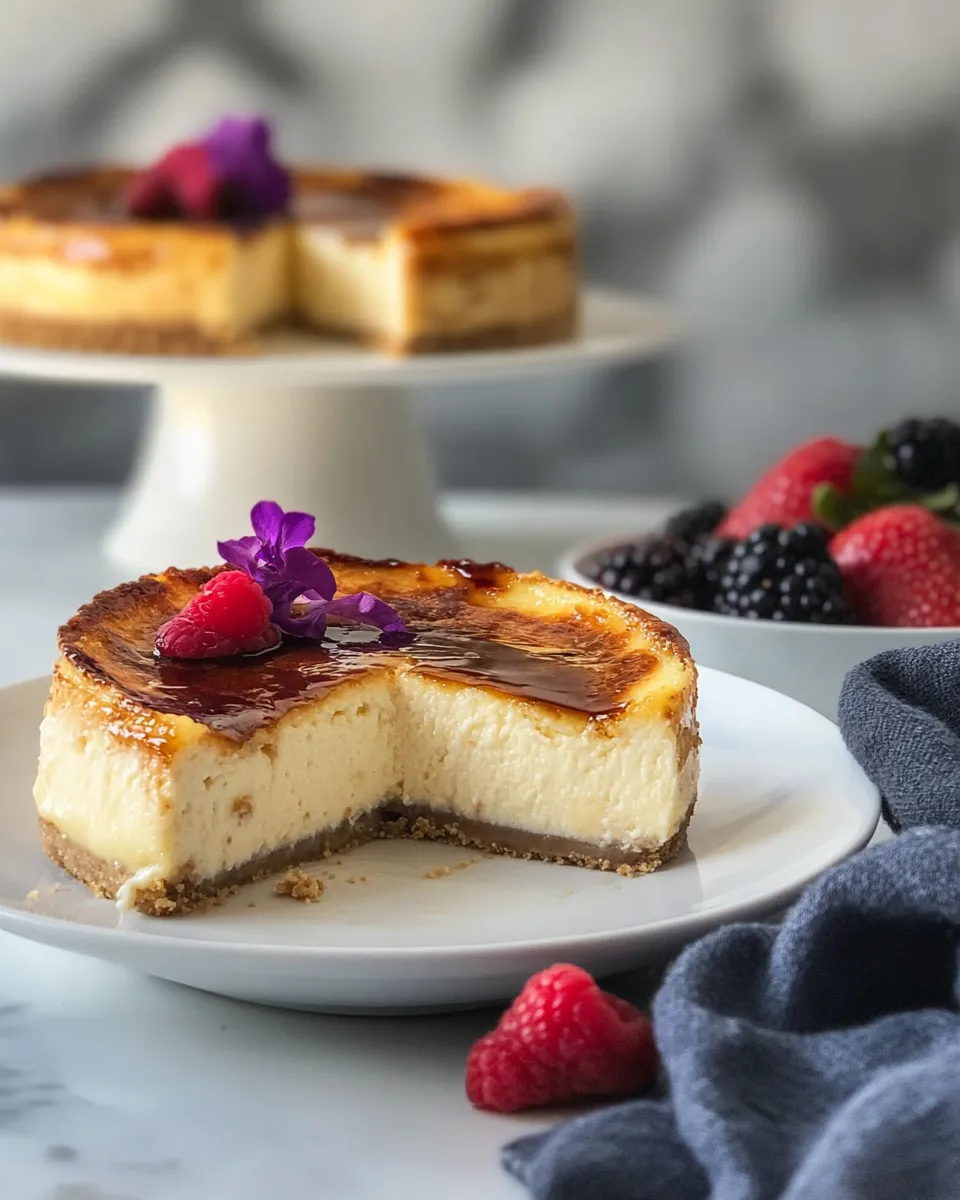
Chill the cake until firmly set and torch the sugar while the cake is cold. Let the sugar harden in the fridge for 10–15 minutes. Slice with a hot, dry knife for glossy, neat slices. For a simple, elegant plate: one slice, a small nest of berries, and a mint sprig or a few roasted nuts for texture contrast.
Serve slightly chilled. The filling should be cool and creamy with that warm, brittle caramel top. It’s a dessert that looks fancy but comes together reliably—if you pay attention to temperature and the water bath, your Creme Brulee Cheesecake will be exactly the showstopper you want it to be.
Creme Brulee Cheesecake
Ingredients
Ingredients
- 1 1/2 cupsgraham cracker crumbs about 12 whole graham crackers
- 1/4 cupgranulated sugar
- 1/4 cupmelted butter
- pinchof salt
- 4 8-ouncepackages cream cheese, room temperature
- 1 1/2 cupsgranulated sugar
- 8 ouncessour cream
- 1 tablespoonvanilla bean paste or 3-4 large vanilla beans
- 5 large eggs
- 2 tablespoonsgranulated sugar up to 3 tablespoons if needed
Instructions
Instructions
- Preheat the oven to 325°F (163°C). Spray a 9- or 10-inch springform pan with nonstick cooking spray and set it aside.
- In a medium bowl, combine 1 ½ cups graham cracker crumbs, ¼ cup granulated sugar, ¼ cup melted butter, and a pinch of salt. Stir until the mixture resembles damp sand.
- Press the crumb mixture evenly into the bottom of the prepared springform pan using the bottom of a flat glass or measuring cup. Bake the crust for 10 minutes. Remove from the oven and let the crust cool to room temperature.
- Reduce mixer speed to medium-high and place 4 (8-ounce) packages cream cheese (room temperature) in a large bowl. Beat for about 1 minute until smooth. Scrape down the sides and bottom of the bowl and beat for an additional 10–15 seconds.
- Add 1 ½ cups granulated sugar to the cream cheese and mix on medium speed until just combined. Scrape the bowl again.
- Add 8 ounces sour cream and 1 tablespoon vanilla bean paste (or scrape the seeds from 3–4 large vanilla beans and add the seeds). Beat on low to medium speed until just combined and smooth.
- With the mixer on medium-low, add 5 large eggs one at a time, mixing each egg about 30 seconds until incorporated. Scrape the bowl well after adding all eggs. The batter should be smooth and pourable.
- Place the cooled crust on a sheet or work surface you can transfer. Prepare a water bath: wrap the outside of the springform pan with 3–4 sheets of 18-inch heavy-duty aluminum foil, crumpling the foil up around the outside of the top rim to seal. (If you only have regular foil, use additional sheets to create a secure water barrier.)
- Put the foil-wrapped springform pan inside a deep roasting pan (or a baking sheet with sides about 2 inches deep). Pour the cheesecake batter into the springform pan and smooth the top.
- Carefully pour hot (not boiling) water into the roasting pan until the water reaches about halfway up the side of the springform pan.
- Place the roasting pan on a rack in the lower third of the preheated oven. Bake at 325°F for 1 to 1 ½ hours. Begin checking at 1 hour: the cheesecake is done when the edges are set and the center has a slight wobble (it should not be liquid). If it is still very liquid, continue baking and check every 10–15 minutes.
- When the cheesecake shows set edges with a slightly wobbly center, turn the oven off and leave the cheesecake inside with the oven door closed for 1 hour to cool slowly and help prevent cracks.
- After the hour, remove the roasting pan from the oven. Carefully lift the springform pan out of the water bath, unwrap and remove the foil, and discard the foil.
- Refrigerate the cheesecake (still in the springform pan) for at least 6 hours, or until fully chilled and set.
- Before serving, run a thin knife around the inside edge of the springform pan to loosen the cake and remove the springform ring.
- Sprinkle 2 tablespoons granulated sugar evenly over the top of the chilled cheesecake (use up to 3 tablespoons if you prefer a thicker sugar layer).
- Use a small kitchen torch to caramelize the sugar until it forms a deep golden-brown, even crust across the top. If you do not have a torch, proceed with care using broiler method only if desired and confident—this recipe assumes a torch for best control.
- Return the cheesecake to the refrigerator for 10–15 minutes to let the caramelized sugar harden. Slice with a sharp knife and serve.
Equipment
- Kitchen torch
- 9- or 10-inch springform pan
- deep roasting pan or baking sheet
- 18-inch heavy-duty aluminum foil
Notes
Recipe assumes a kitchen torch for caramelizing the sugar; use the broiler method only if experienced and careful.