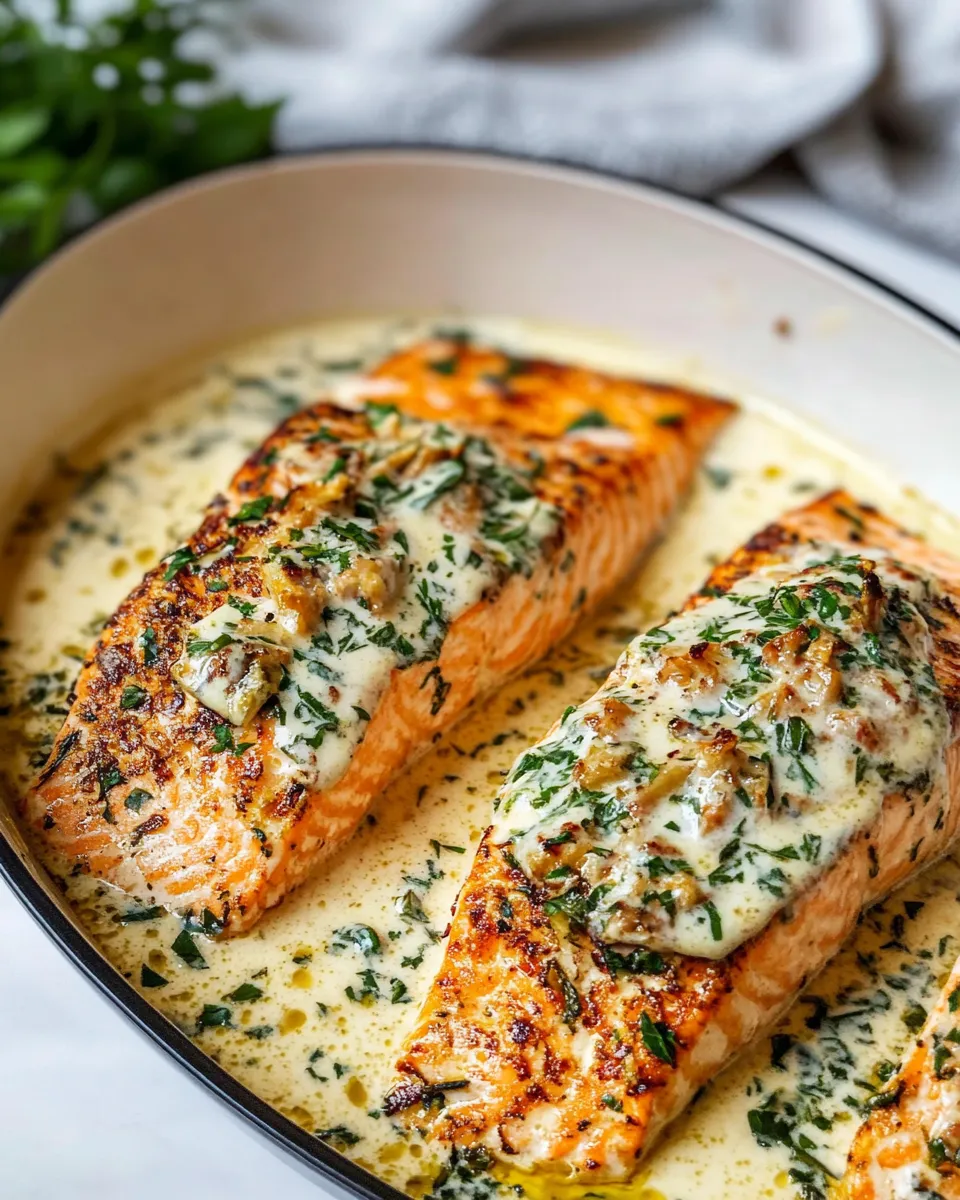
Creamy Garlic Butter Baked Salmon.
I love a recipe that feels fancy and takes under 30 minutes to plate. This Creamy Garlic Butter Baked Salmon is one of those dinners: quick broil for color, a buttery garlic-thyme foundation, then a silky cream-Parmesan sauce studded with sun-dried tomatoes and spinach. It’s comforting, brightened with lemon and herbs, and forgiving if your timing slips by a minute or two.
I test and retest variations until the method is bulletproof. The technique here protects the salmon from drying while building flavor in stages — broil for browning, make the sauce in the same skillet for depth, and finish the fish gently in the sauce. You’ll get restaurant-style results at home without juggling a dozen pans.
This post gives you the exact ingredient list and method, troubleshooting tips, healthier swaps, equipment notes, and a few seasonal upgrades. Follow the steps as written the first time; then tweak the finishing herb mix and heat level to match your taste. Now let’s get into the practical details.
Ingredient Rundown

- 4 salmon filets, skin on or off (your preference) — The central protein; skin helps protect the flesh during broiling and lifts off easily after cooking if you prefer skinless on the plate.
- salt and black pepper — Simple seasoning to enhance the salmon’s natural flavor; season both sides evenly.
- 4 tablespoons salted butter — Used in stages: a small amount for finishing while broiling, the remainder to build the sauce; salted butter adds immediate savory balance.
- 2 tablespoons fresh thyme leaves — Aromatic herb that gives a woodsy, bright note when broiled with the fish.
- 4 cloves garlic, lightly smashed — Broiled and then mashed into a paste to deepen the sauce’s garlicky profile without sharp raw bite.
- 1 shallot, thinly sliced — Adds sweet, delicate onion flavor when softened in butter.
- chili flakes — For heat. Add to taste — a pinch gives background warmth, more for a spicy kick.
- 1 cup heavy cream — Forms the rich base of the sauce; simmered just long enough to thicken slightly.
- 1/3 cup salsa verde — Brings tangy, herbaceous lift and a touch of acidity to cut the creaminess.
- 1 cup grated Parmesan cheese — Melts into the cream to thicken and add umami and nuttiness.
- 1/2 cup chopped sun-dried tomatoes — Chewy, concentrated tomato flavor that contrasts the creamy sauce.
- 3 cups fresh baby spinach — Folds into the sauce to add color, nutrients, and a gentle vegetal note.
- 1 tablespoon lemon juice, plus 1 tablespoon zest — Juice brightens the finished dish; zest mixed with herbs for a pop on top.
- 2 tablespoons chopped fresh dill — Offers a clean, grassy finish when mixed with lemon zest.
- 1/4 cup chopped green onions — Fresh, mild allium for texture and a fresh finish.
Mastering Creamy Garlic Butter Baked Salmon: How-To
- Preheat the oven to broil. Use an oven-safe skillet for cooking.
- Pat the 4 salmon filets dry and season both sides with salt and black pepper. Place the salmon in the skillet. Dot the salmon with 1 tablespoon salted butter, scatter the 2 tablespoons fresh thyme leaves around the fish, and add the 4 lightly smashed garlic cloves to the skillet. Broil 5–8 minutes, watching closely, until the tops begin to brown and crisp.
- Remove the skillet from the oven. Transfer the salmon to a plate and set aside, leaving the thyme and garlic in the skillet.
- Place the skillet on the stovetop over medium heat. Add the remaining 3 tablespoons salted butter, the thinly sliced shallot, and chili flakes (to taste). Cook until the shallot is softened and fragrant, about 1–2 minutes. Use a fork to press the broiled garlic cloves in the skillet into a paste and stir to combine with the shallots.
- Pour in 1 cup heavy cream and 1/3 cup salsa verde. Bring the mixture to a gentle simmer over medium heat, stirring constantly until smooth and slightly thickened.
- Stir in 1 cup grated Parmesan cheese until melted and the sauce is creamy. Add 1/2 cup chopped sun-dried tomatoes and 3 cups fresh baby spinach; cook, stirring, until the spinach is wilted, about 3–5 minutes.
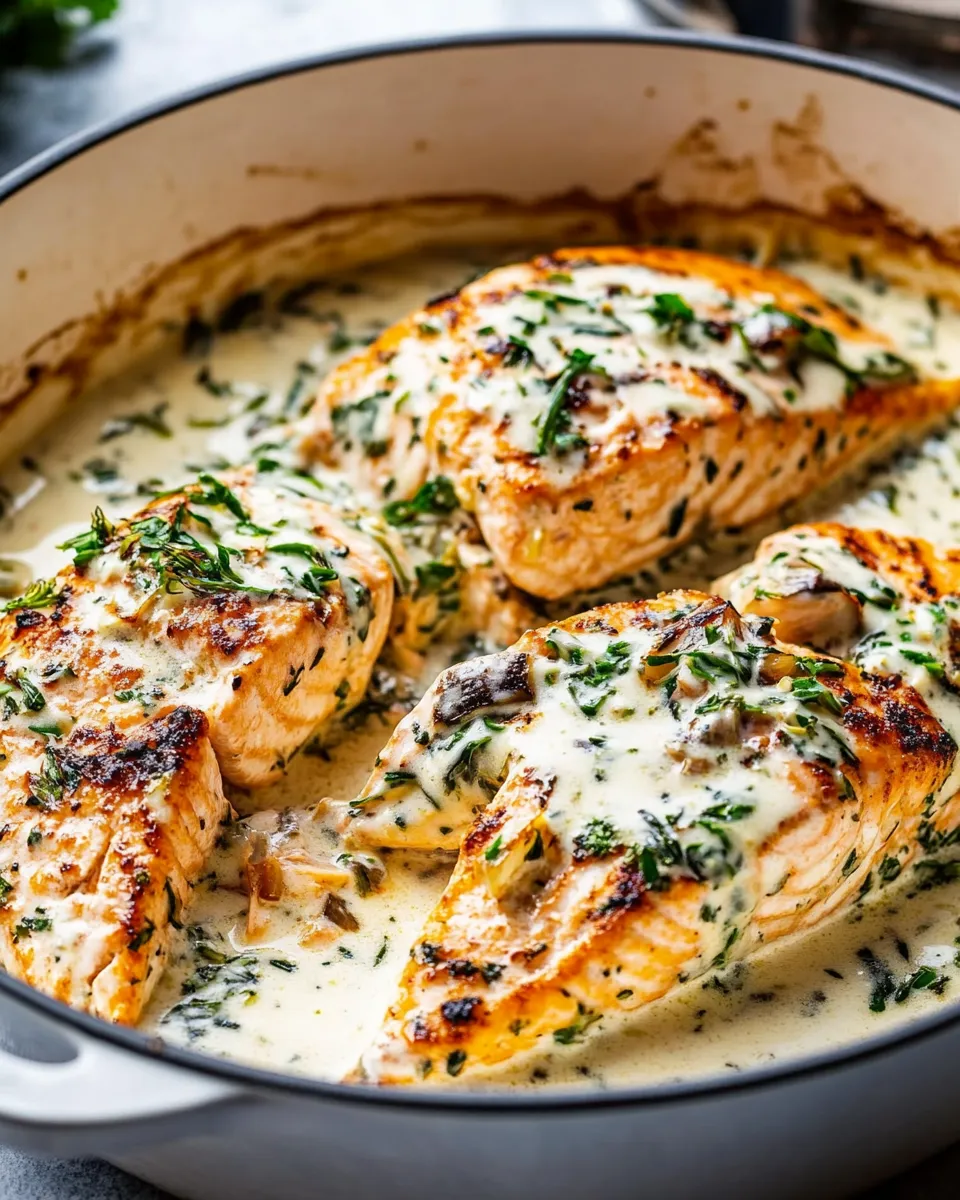
- Slide the reserved salmon back into the skillet, nestling each filet into the sauce. Spoon sauce over the salmon and drizzle with 1 tablespoon lemon juice. Warm everything together 1–2 minutes so the salmon finishes cooking through and is heated.
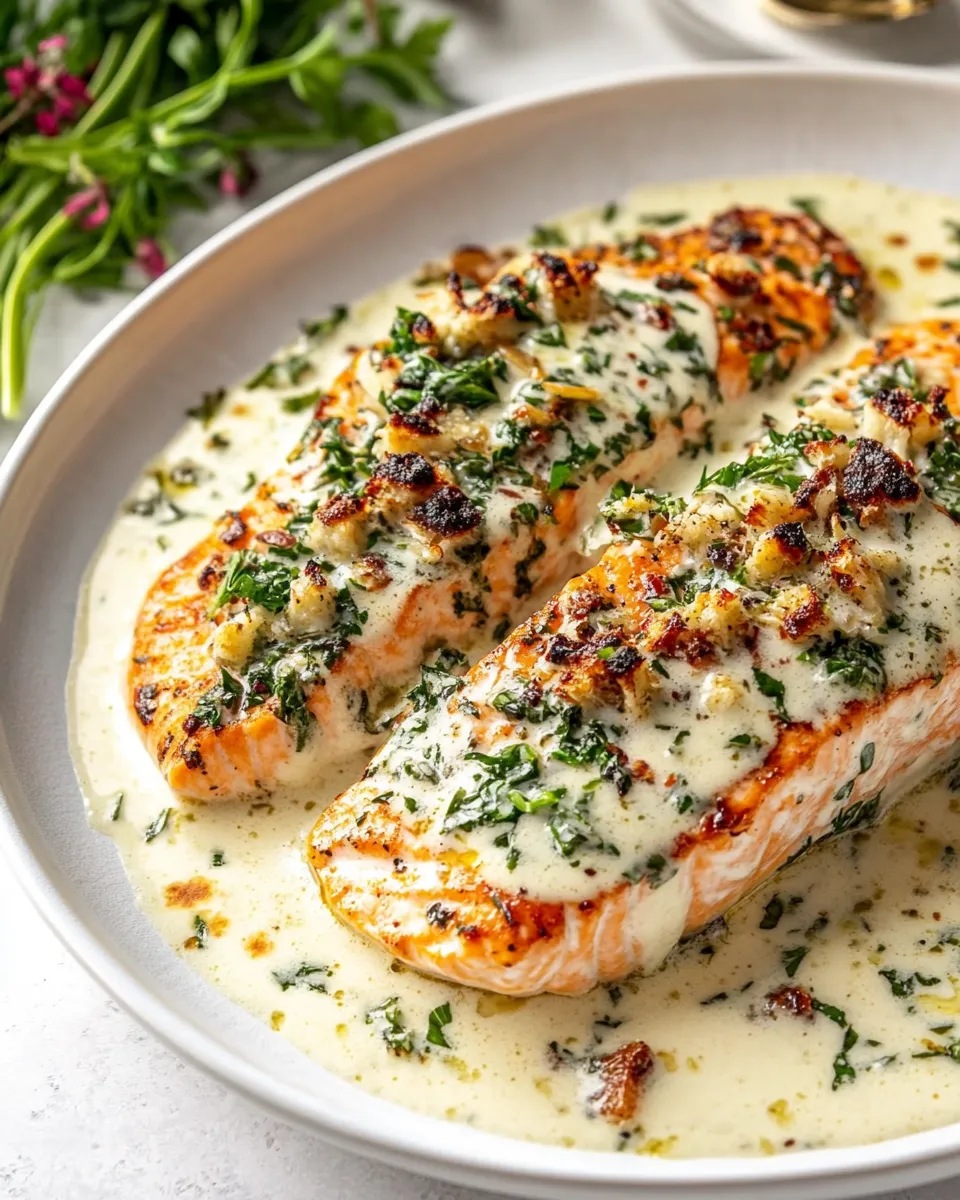
- In a small bowl, mix 1 tablespoon lemon zest with 2 tablespoons chopped fresh dill and 1/4 cup chopped green onions. Sprinkle this mixture over the salmon. Serve the salmon plated with the creamy sauce.
Why Cooks Rave About It
This recipe hits key texture and flavor wins: a crisped exterior from broiling, a tender interior from resting and gentle finishing, and a sauce that balances fat, acid, and umami. Cooking the garlic and thyme with the salmon creates a direct aromatics transfer; then building the cream sauce in the same skillet captures those fond bits so nothing goes to waste. The Parmesan melts into a lush emulsion while the salsa verde keeps the cream from feeling one-note. Sun-dried tomatoes and spinach add chew and color, so every bite has contrast.
It’s also flexible. The timing is forgiving — a minute under or over the broil won’t ruin it — and the method scales to two or six filets with minor adjustments. Cooks appreciate that the dish reads upscale but uses familiar techniques and pantry-friendly ingredients.
Healthier Substitutions
If you want to lighten the dish without losing flavor:
- Swap heavy cream: Use half-and-half or a 1:1 mix of milk and Greek yogurt (temper the yogurt into warm liquid to avoid curdling). Expect a thinner sauce; reduce it a bit longer to concentrate flavor.
- Reduce butter: Use 2 tablespoons butter and 1 tablespoon olive oil. The sauce will still be rich from the Parmesan and cream substitute.
- Lower-sodium cheese: Try a reduced-sodium Parmesan or use a slightly smaller amount and add a splash of white wine for depth.
- Add more greens: Double the spinach for bulk and nutrients; it will wilt down and stretch the sauce.
- Lean on citrus: Increase lemon juice to brighten the dish and reduce perceived richness.
Equipment & Tools
Use straightforward tools you likely have at home:
- Oven-safe skillet (cast iron or stainless steel): Essential so you can broil and finish on the stovetop without transferring pans.
- Tongs or spatula: For moving the salmon without tearing.
- Small bowl and fork: For mixing the lemon zest, dill, and green onions.
- Microplane or fine grater: For zesting the lemon and grating Parmesan if you buy a wedge (freshly grated melts better).
- Measuring cups/spoons: To follow the ingredient proportions accurately the first time.
Slip-Ups to Skip
Avoid these common mistakes:
- Skipping the pat dry: Moist salmon won’t brown well. Pat it dry before seasoning and broiling.
- Over-broiling: Broil just until the tops brown and crisp. Fish continues to cook when resting and again when finishing in the sauce; over-broiling dries it out.
- High heat when adding cream: Add cream to medium heat and simmer gently. Too high heat can separate the sauce.
- Adding Parmesan to a rolling boil: Add cheese to a gentle simmer and stir constantly to integrate without clumping.
- Throwing away broiled garlic: Pressing that softened garlic into the sauce gives depth without sullying the cream with raw sharpness.
Season-by-Season Upgrades
Small seasonal touches keep the recipe feeling fresh across the year.
- Spring: Add blanched peas and a handful of chopped asparagus tips at the end for a crisp, green lift.
- Summer: Replace sun-dried tomatoes with charred cherry tomatoes or grilled fresh tomato halves for juicier brightness.
- Fall: Swap dill for chopped flat-leaf parsley and add a tablespoon of white wine with the cream for a more savory base.
- Winter: Stir in a teaspoon of Dijon mustard with the cream to add warmth and counterbalance hearty winter greens like kale (massaged first).
Chef’s Rationale
Every step has intent. Broiling develops Maillard flavor quickly; using an oven-safe skillet simplifies the transfer and preserves fond. The initial butter dot melts over the salmon and aids browning without greasing the whole pan. Leaving thyme and garlic in the skillet captures infused flavors when you build the sauce. Melting Parmesan into warm cream creates a stable, velvety texture; combining salsa verde adds acidity and herbaceousness so the dish doesn’t become cloying. Finally, finishing the salmon in the sauce warms it through and integrates flavors without overcooking the filet.
Freezer-Friendly Notes
Salmon in a cream sauce doesn’t freeze perfectly because dairy can separate. If you want make-ahead elements:
- Freeze cooked salmon separately: Flash-freeze broiled filets on a tray, then vacuum or wrap tightly. Reheat gently in a low oven (300°F/150°C) wrapped in foil to avoid drying.
- Freeze sauce components: The salsa-verde-Parmesan base freezes better without the cream. Freeze leftovers of the sauce base (before adding cream) and then reheat with fresh cream and spinach.
- Reheat carefully: Thaw in the fridge and reheat on low heat, adding a splash of milk or cream and stirring to recombine. Do not boil.
Frequently Asked Questions
Can I use a different fish?
Yes. Thick cuts like cod or halibut work, but watch cooking times — they may require longer to finish in the sauce. Adjust broiling and finish times to prevent undercooking.
What if I don’t have salsa verde?
You can use a tablespoon or two of pesto plus a teaspoon of lemon juice as a quick stand-in, or replace with a mixture of chopped fresh herbs (parsley, basil) and a splash of vinegar. The aim is herbaceous acidity.
How can I check doneness without overcooking?
Use a fork to gently separate the thickest part of the filet — it should flake easily but still look moist. For precision, remove at 120–125°F (49–52°C) for medium-rare to medium and allow carryover heat to finish.
Can I make this dairy-free?
Yes. Use a full-fat coconut milk or a cashew cream in place of heavy cream, swap butter for olive oil or a dairy-free spread, and replace Parmesan with a dairy-free grated alternative. Flavor will shift slightly but remain rich.
Is the lemon-dill topping necessary?
It’s the bright finish that lifts the whole dish. If you’re out of dill, parsley or chives with lemon zest also work well.
Wrap-Up
This Creamy Garlic Butter Baked Salmon brings simple technique and bold flavors together with minimal fuss. Broil for color, build a sauce in the same skillet to capture every bit of flavor, and finish gently so the salmon stays tender. The recipe’s core logic — brown, build, finish — is portable to many proteins and sauces. Make it as written the first time, then play with herbs, heat, and seasonal add-ins to make it your own. Enjoy a weeknight dinner that feels like a treat and comes together faster than you might think.
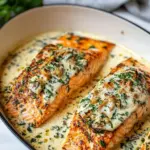
Creamy Garlic Butter Baked Salmon.
Ingredients
Ingredients
- 4 salmon filets skin on or off(your preference)
- salt and black pepper
- 4 tablespoonssalted butter
- 2 tablespoonsfresh thyme leaves
- 4 clovesgarlic lightly smashed
- 1 shallot thinly. sliced
- chili flakes
- 1 cupheavy cream
- 1/3 cupsalsa verde
- 1 cupgrated parmesan cheese
- 1/2 cupchopped sun-dried tomatoes
- 3 cupsfresh baby spinach
- 1 tablespoonlemon juice plus 1 tablespoon zest
- 2 tablespoonschopped fresh dill
- 1/4 cupchopped green onions
Instructions
Instructions
- Preheat the oven to broil. Use an oven-safe skillet for cooking.
- Pat the 4 salmon filets dry and season both sides with salt and black pepper. Place the salmon in the skillet. Dot the salmon with 1 tablespoon salted butter, scatter the 2 tablespoons fresh thyme leaves around the fish, and add the 4 lightly smashed garlic cloves to the skillet. Broil 5–8 minutes, watching closely, until the tops begin to brown and crisp.
- Remove the skillet from the oven. Transfer the salmon to a plate and set aside, leaving the thyme and garlic in the skillet.
- Place the skillet on the stovetop over medium heat. Add the remaining 3 tablespoons salted butter, the thinly sliced shallot, and chili flakes (to taste). Cook until the shallot is softened and fragrant, about 1–2 minutes. Use a fork to press the broiled garlic cloves in the skillet into a paste and stir to combine with the shallots.
- Pour in 1 cup heavy cream and 1/3 cup salsa verde. Bring the mixture to a gentle simmer over medium heat, stirring constantly until smooth and slightly thickened.
- Stir in 1 cup grated Parmesan cheese until melted and the sauce is creamy. Add 1/2 cup chopped sun-dried tomatoes and 3 cups fresh baby spinach; cook, stirring, until the spinach is wilted, about 3–5 minutes.
- Slide the reserved salmon back into the skillet, nestling each filet into the sauce. Spoon sauce over the salmon and drizzle with 1 tablespoon lemon juice. Warm everything together 1–2 minutes so the salmon finishes cooking through and is heated.
- In a small bowl, mix 1 tablespoon lemon zest with 2 tablespoons chopped fresh dill and 1/4 cup chopped green onions. Sprinkle this mixture over the salmon. Serve the salmon plated with the creamy sauce.
Equipment
- Oven-safe Skillet
- Oven
- stovetop
- Fork
- Small Bowl