
Chow Mein
I make Chow Mein on weeknights when I want something fast, comforting, and a little bit special. It’s one of those dishes that rewards attention for just a few minutes: high heat, quick tosses, and the right sauce pulled together ahead of time. You get crunchy veg, tender chicken, and noodles that soak up a glossy, savory sauce.
This version is practical: refrigerated yakisoba or chow mein noodles, a pound of chicken, and pantry-friendly sauces. The technique is simple and repeatable. If you can prep a few ingredients and keep your pan hot, you’ll have dinner on the table fast.
I’ll walk you through the ingredients, the exact steps, troubleshooting, and sensible substitutions so you can make this again and again — and tweak it to your taste without guessing how much to change.
Ingredient Rundown

Ingredients
- 14 oz yakisoba refrigerated noodles, or 16 oz chow mein noodles — the base; yakisoba heats quickly and separates easily when refrigerated.
- 1 lb boneless skinless chicken breasts — lean protein; slices cook fast and stay tender when not overcooked.
- salt and pepper — basic seasoning for the chicken; enhance but don’t oversalt since the sauce has soy and oyster.
- 3 Tablespoon vegetable oil, or canola oil, divided — neutral oil with a high smoke point; divided so you can control browning stages.
- 2 cups finely shredded cabbage — adds crunchy bulk and soaks up sauce without collapsing.
- 1 large carrot, shredded — sweetness, color, and bite; shred finely for even cooking.
- 2 ribs celery, chopped — fragrant crunch and moisture; chop to match the vegetable sizes.
- 4 green onions, chopped, white and green separated — whites go in with the veg for flavor; greens finish the dish as garnish.
- 3 cloves garlic, minced — aromatic foundation; add near the vegetables so it doesn’t burn.
- 2 teaspoons freshly grated ginger — bright, warm note; fresh is worth the extra minute.
- 1 cup fresh bean sprouts (optional) — startling crunch and freshness; add at the end so they stay crisp.
- 1/4 cup oyster sauce — rich, savory backbone of the sauce.
- 1/3 cup low-sodium soy sauce — salty umami; low-sodium lets you control final salt.
- 2 Tablespoons sesame oil — fragrant oil for nutty depth; used in the sauce.
- 1 Tablespoon rice vinegar — brightens the sauce and balances sweetness.
- 1 teaspoon cornstarch — thickener to give the sauce body and help it cling to noodles.
- 1 Tablespoon light brown sugar — a touch of sweetness to round the sauce.
- 1-2 teaspoons Asian Garlic Chili Sauce, for spice, optional — adds heat and garlicky depth; optional so you can control spice level.
From Start to Finish: Chow Mein
- Whisk the sauce: in a small bowl combine 1/4 cup oyster sauce, 1/3 cup low-sodium soy sauce, 2 tablespoons sesame oil, 1 tablespoon rice vinegar, 1 teaspoon cornstarch, 1 tablespoon light brown sugar, and 1–2 teaspoons Asian Garlic Chili Sauce (optional). Set the sauce aside.
- Prep the chicken: pat 1 lb boneless skinless chicken breasts dry, season with salt and pepper, and cut into thin strips or bite-size pieces.
- Heat a large pan or wok over high heat. Add 1 tablespoon vegetable oil. When the oil is hot and shimmering, add the chicken in a single layer and sauté, stirring occasionally, until cooked through and no longer pink (about 4–6 minutes). Remove the chicken to a plate.
- Add 1 more tablespoon vegetable oil to the pan. Add 2 cups finely shredded cabbage, 1 large shredded carrot, 2 ribs chopped celery, and the white parts of 4 chopped green onions. Stir-fry over high heat for 1–2 minutes, until vegetables begin to soften but remain crisp.
- Add 3 cloves minced garlic and 2 teaspoons freshly grated ginger to the vegetables and stir-fry 30 seconds until fragrant. Remove the vegetables to a plate.
- Add the final 1 tablespoon vegetable oil to the pan. Add 14 oz yakisoba refrigerated noodles (or 16 oz chow mein noodles); if using refrigerated yakisoba, separate the noodles before adding. Stir-fry the noodles about 1 minute to heat through.
- Re-whisk the sauce if needed, then pour it over the noodles. Cook, tossing or stirring, until the sauce thickens slightly and coats the noodles, about 1–2 minutes.
- Return the cooked chicken and the cooked vegetables to the pan along with 1 cup fresh bean sprouts (optional). Toss everything together and stir-fry 1 minute more, until heated through and evenly coated with sauce.
- Transfer to plates, garnish with the green parts of the chopped green onions, and serve immediately.
What Sets This Recipe Apart
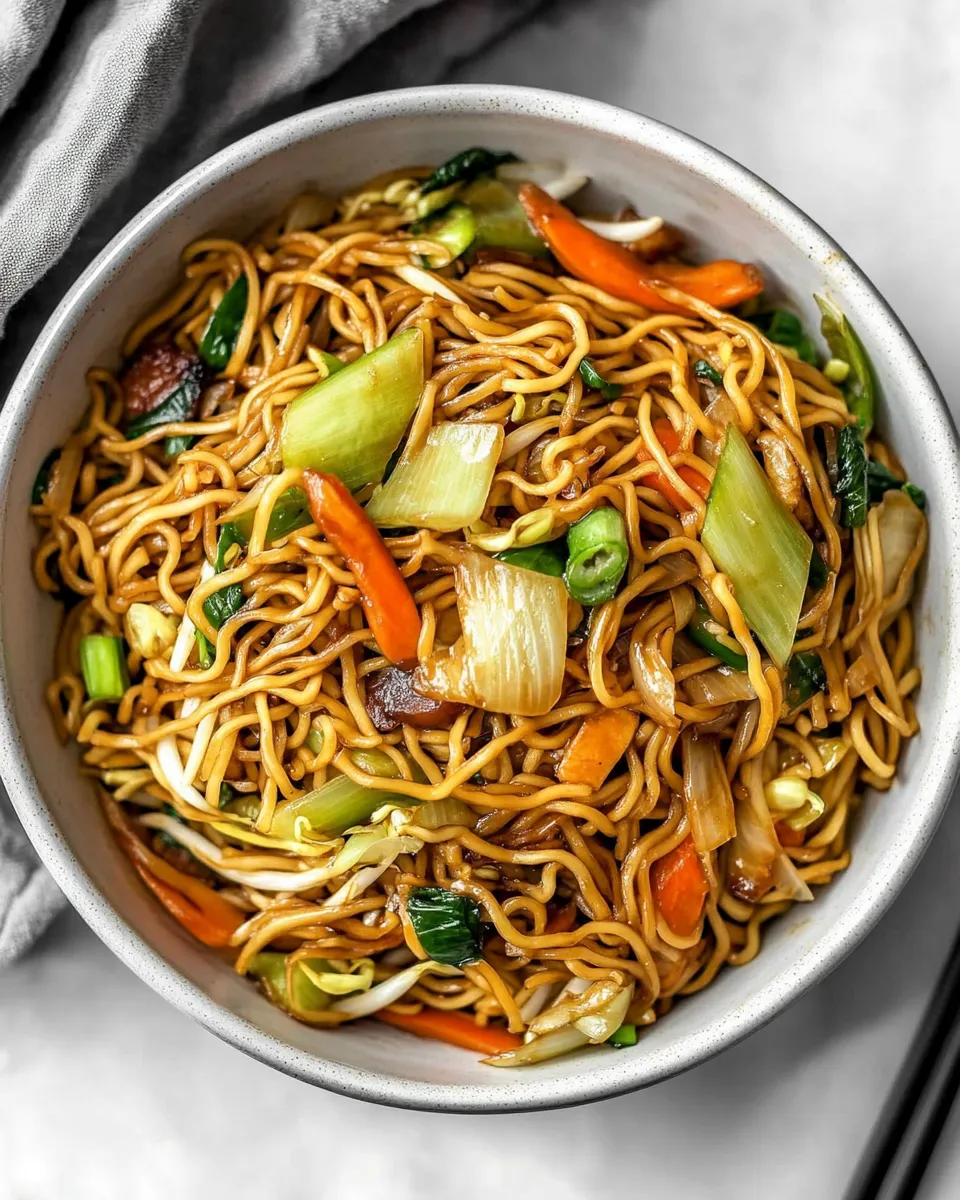
This Chow Mein is about rhythm and heat. The separate cooking of chicken, vegetables, and noodles keeps textures distinct: the chicken has a clean sear, the vegetables stay crisp, and the noodles pick up sauce without going soggy. Using refrigerated yakisoba or pre-steamed chow mein noodles skips the long pasta-cooking step and makes the whole process fast.
The sauce combines oyster sauce and sesame oil for richness with rice vinegar and brown sugar for balance. Cornstarch gives just enough body to cling to the noodles instead of pooling on the plate. Little details — white parts of the green onion in the stir-fry, green parts at the end — provide layered flavor.
Texture-Safe Substitutions

If you need swaps, choose options that preserve the dish’s texture balance:
- Protein: swap the chicken breasts for thighs (same weight). Thighs stay juicier but may need an extra minute to cook.
- Noodles: if you don’t have yakisoba or chow mein noodles, use fresh egg noodles or even pre-cooked lo mein noodles. Avoid dried noodles that require long boiling unless you rehydrate and drain them thoroughly.
- Vegetables: bean sprouts can be omitted or replaced with thinly sliced bell pepper for crunch. Keep vegetables cut small so they cook in the 1–2 minute window.
- Sauce changes: if you can’t use oyster sauce, a mix of hoisin and a splash of fish sauce can approximate the depth, but reduce added sugar slightly since hoisin is sweet.
Hardware & Gadgets
A heavy-duty wok or a large, flat-bottomed skillet is essential. You need a pan that holds heat so the ingredients sear instead of steaming. Use a long-handled spatula or a sturdy turner to toss noodles and scrape browned bits off the pan. A microplane for the ginger and a good chef’s knife for quick prep save time.
Troubleshooting Tips
Heat too low? Your noodles will steam and go limp. Make sure the pan is hot before each step and work quickly.
Chicken dry or tough? It was overcooked. Slice fairly thin so it cooks in 4–6 minutes and remove it as soon as it’s opaque. It will finish heating when tossed back in near the end.
Sauce too thin? The cornstarch should thicken it in 1–2 minutes. If it’s not holding, give the sauce a quick re-whisk and simmer a little longer over medium-high while stirring constantly. Too thick? Add a teaspoon or two of water and stir to loosen.
Vegetables soggy? They spent too long in the pan. Stir-fry the cabbage, carrot, celery, and white onion parts only 1–2 minutes so they keep crunch. If your pan is crowded, cook in batches.
Holiday-Friendly Variations
For a festive table, consider these simple riffs that keep the method but change the mood:
- Double the vegetables (sliced shiitake, snap peas, and baby bok choy) for a colorful, veg-forward platter that complements richer mains.
- Add roasted cashews or chopped peanuts sprinkled over the finished dish for crunch and a holiday-friendly touch.
- For a celebratory spice, use the higher end of the Asian Garlic Chili Sauce amount and finish with a squeeze of lime to brighten the whole plate.
Cook’s Notes
Keep mise en place ready: the dish moves fast. Mince garlic, grate ginger, shred carrot, and separate the green onions before you heat the pan. Re-whisk the sauce before you add it — cornstarch can settle while it rests.
If you’re feeding picky eaters, set the bean sprouts and chili sauce on the side. The core flavors are balanced without the optional items, and guests can customize their bowls.
Prep Ahead & Store
Prep: You can shred the cabbage and carrot and slice the chicken up to a day ahead. Store them separately in airtight containers in the fridge. Mix the sauce and keep it covered; whisk it again before using.
Leftovers: Cool quickly, then store in an airtight container in the fridge for up to 2 days. The texture of the noodles softens in the fridge; to revive them, reheat in a skillet over medium-high heat with a teaspoon of oil, stirring until warmed through. Avoid the microwave if you want to keep some bite.
Your Top Questions
Q: Can I make this vegetarian? A: Yes—replace chicken with firm tofu or extra mushrooms and use a vegetarian oyster sauce (mushroom-based) or a mix of hoisin and soy.
Q: Why use low-sodium soy sauce? A: It gives you more control over final salt. Between oyster sauce and soy, the dish can become too salty if you use regular soy and then add salt to the chicken.
Q: My noodles clumped when refrigerated. How do I separate them? A: For yakisoba, gently pull them apart with your fingers before adding to the hot pan. If they’re tightly clumped, tossing them briefly with a tablespoon of oil in the heated pan helps separate them.
Time to Try It
Set aside 30 minutes end-to-end the first time. Once you get used to the timing and prep rhythm, this Chow Mein becomes a 20-minute weeknight champion. Keep the sauce ready, pan hot, and ingredients prepped — then enjoy the satisfying crunch, sauce-coated noodles, and simple, balanced flavors you made at home.

Chow Mein
Ingredients
Ingredients
- 14 ozyakisoba refrigerated noodles or 16 oz chow mein noodles*
- 1 lbboneless skinless chicken breasts
- salt and pepper
- 3 Tablespoonvegetable oil or canola oil, divided
- 2 cupsfinely shredded cabbage**
- 1 largecarrot shredded
- 2 ribscelery chopped
- 4 green onions chopped, white and green separated
- 3 clovesgarlic minced
- 2 teaspoonsfreshly grated ginger
- 1 cupfresh bean sprouts optional
- 1/4 cupoyster sauce
- 1/3 cuplow-sodium soy sauce
- 2 Tablespoonssesame oil
- 1 Tablespoonrice vinegar
- 1 teaspooncornstarch
- 1 Tablespoonlight brown sugar
- 1-2 teaspoonsAsian Garlic Chili Sauce for spice, optional
Instructions
Instructions
- Whisk the sauce: in a small bowl combine 1/4 cup oyster sauce, 1/3 cup low-sodium soy sauce, 2 tablespoons sesame oil, 1 tablespoon rice vinegar, 1 teaspoon cornstarch, 1 tablespoon light brown sugar, and 1–2 teaspoons Asian Garlic Chili Sauce (optional). Set the sauce aside.
- Prep the chicken: pat 1 lb boneless skinless chicken breasts dry, season with salt and pepper, and cut into thin strips or bite-size pieces.
- Heat a large pan or wok over high heat. Add 1 tablespoon vegetable oil. When the oil is hot and shimmering, add the chicken in a single layer and sauté, stirring occasionally, until cooked through and no longer pink (about 4–6 minutes). Remove the chicken to a plate.
- Add 1 more tablespoon vegetable oil to the pan. Add 2 cups finely shredded cabbage, 1 large shredded carrot, 2 ribs chopped celery, and the white parts of 4 chopped green onions. Stir-fry over high heat for 1–2 minutes, until vegetables begin to soften but remain crisp.
- Add 3 cloves minced garlic and 2 teaspoons freshly grated ginger to the vegetables and stir-fry 30 seconds until fragrant. Remove the vegetables to a plate.
- Add the final 1 tablespoon vegetable oil to the pan. Add 14 oz yakisoba refrigerated noodles (or 16 oz chow mein noodles); if using refrigerated yakisoba, separate the noodles before adding. Stir-fry the noodles about 1 minute to heat through.
- Re-whisk the sauce if needed, then pour it over the noodles. Cook, tossing or stirring, until the sauce thickens slightly and coats the noodles, about 1–2 minutes.
- Return the cooked chicken and the cooked vegetables to the pan along with 1 cup fresh bean sprouts (optional). Toss everything together and stir-fry 1 minute more, until heated through and evenly coated with sauce.
- Transfer to plates, garnish with the green parts of the chopped green onions, and serve immediately.
Equipment
- large pan or wok
- Small Bowl
- Plate
- Whisk or fork
Notes
Cabbage and Carrots:
If you’re in a hurry, you could use bagged coleslaw mix that has shredded cabbage and carrots.
Chow Mein Noodles:
I often use Yakisoba noodles because I can get them at my local grocery stores (discard the seasoning packet), but for the most authentic noodles, use fresh chow mein noodles from a local Asian foods market, or Dry chow mein noodles that are labeled as “hong kong” or “pan fried” chow mein noodles, which have already been par-boiled and can be added right to the pan. You could also use dry wonton noodles or lo mein noodles, cook according to package instructions, drain well, and remove excess moisture from them before adding to stir-fry.
Add More Vegetables
like Bok choy, bell peppers, mushrooms, snap peas, broccoli, and water chestnuts would all work well.
Protein:
Substitute beef, tofu, or shrimp.
Vegetarian:
Leave out the chicken, or swap with tofu or your favorite vegetarian protein source.
Vegan:
Leave out the chicken, or swap with your favorite vegan protein source. Substitute hoisin sauce instead of the oyster sauce.