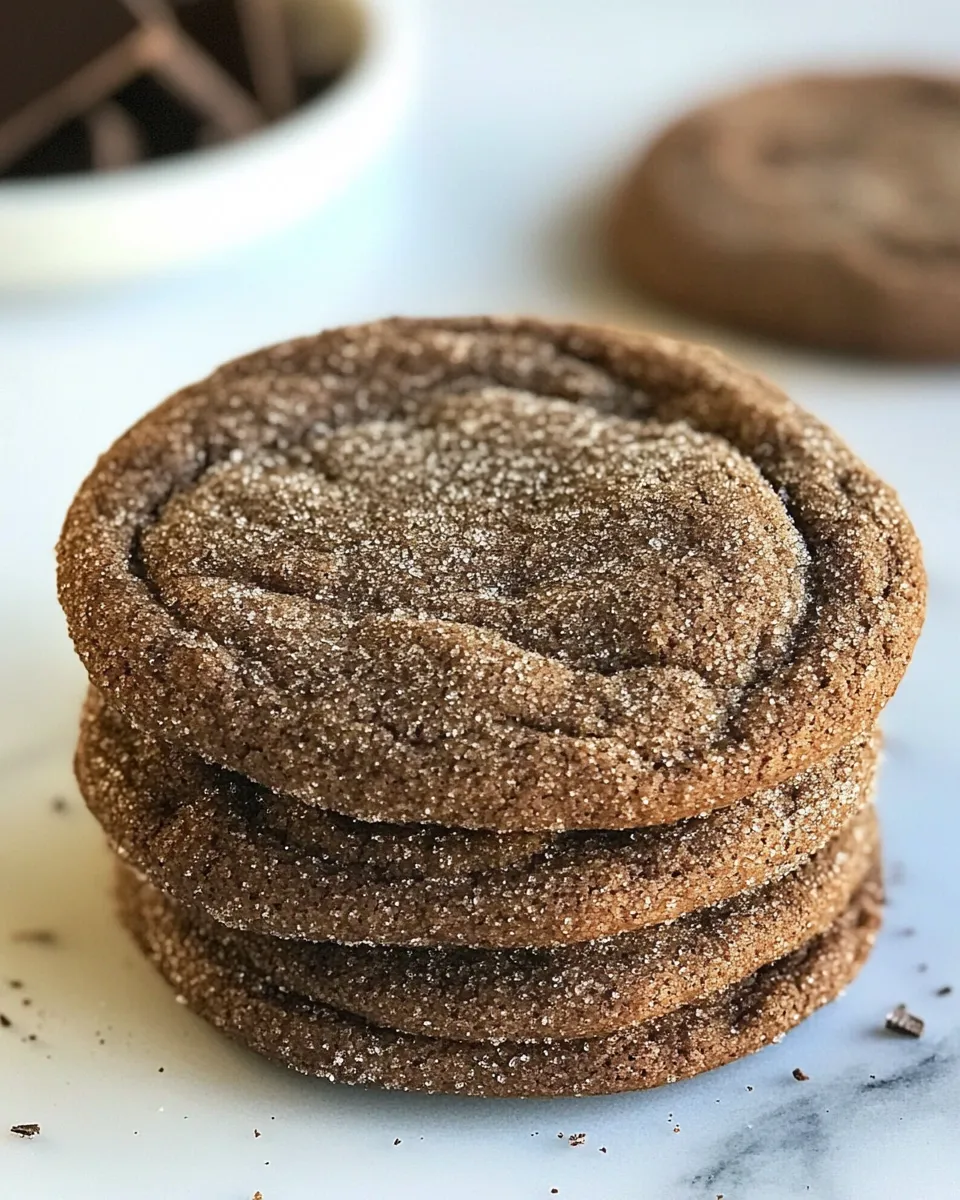
Chocolate Snickerdoodles
These Chocolate Snickerdoodles are the kind of cookie I turn to when I want something a little different but utterly comforting. They keep the classic snickerdoodle chew and cinnamon kiss, but a generous dose of cocoa makes them rich and slightly fudgy. I make a batch when friends stop by, and they always disappear faster than I expect.
No fuss, straightforward techniques, and dependable timing. The dough comes together in one bowl and a few simple pantry ingredients. If you’re comfortable creaming butter and sugar, you’re already halfway there.
Below you’ll find the essentials, ingredient notes, kitchen tools that actually matter, and a step-by-step baking section that follows the original recipe exactly. Read the tips if you want crisp edges and soft centers.
The Essentials

What you need to know before you start: make sure your butter is at room temperature but not oily, measure your flour properly, and don’t overmix once the dry ingredients go in. These three details determine whether your cookies spread and set correctly.
Plan for about 25–30 minutes of active prep and roughly 8–10 minutes per baking sheet in the oven. Chill isn’t required, so you can bake right away. Use a Silpat or parchment to prevent sticking and to promote even browning.
Ingredients
- 2 1/4 cups all-purpose flour — structure for the cookies; spoon and level for accuracy.
- 1/2 cup unsweetened cocoa powder — adds chocolate flavor and color; sift if lumpy.
- 1 teaspoon baking soda — leavening for lightness.
- 1 teaspoon cream of tartar — gives the snickerdoodle tang and chew.
- 1 teaspoon ground cinnamon — cinnamon in the dough boosts the classic snickerdoodle profile.
- 1/2 teaspoon sea salt — balances sweetness; fine or flaky is fine here.
- 1 cup unsalted butter at room temperature — richness and tenderness; should be soft but still hold shape.
- 1 cup packed brown sugar — moisture and caramel notes; packs tightly in the cup.
- 1/2 cup granulated sugar — helps with spread and crisp edge.
- 2 large eggs — binding and lift; use room-temperature eggs if possible.
- 1 teaspoon vanilla extract — flavor enhancer; pure vanilla is worth it.
- 1/4 cup granulated sugar — for rolling; creates the classic crackled, sugared exterior.
- 1 1/2 teaspoons ground cinnamon — mixed with the rolling sugar for the classic coating.
Chocolate Snickerdoodles, Made Easy
I like to think of this recipe in three stages: dry mix, wet mix, and finish. The dry mix is whisked together and set aside. The wet mix is quick — cream, add sugars, then eggs and vanilla. Combine gently and you’re ready to portion and roll.
Use a two-tablespoon scoop or a cookie scoop for even cookies. Rolling in the cinnamon-sugar mixture is forgiving — do a complete coating so each cookie gets that crackly finish when baked.
Why This Chocolate Snickerdoodles Stands Out
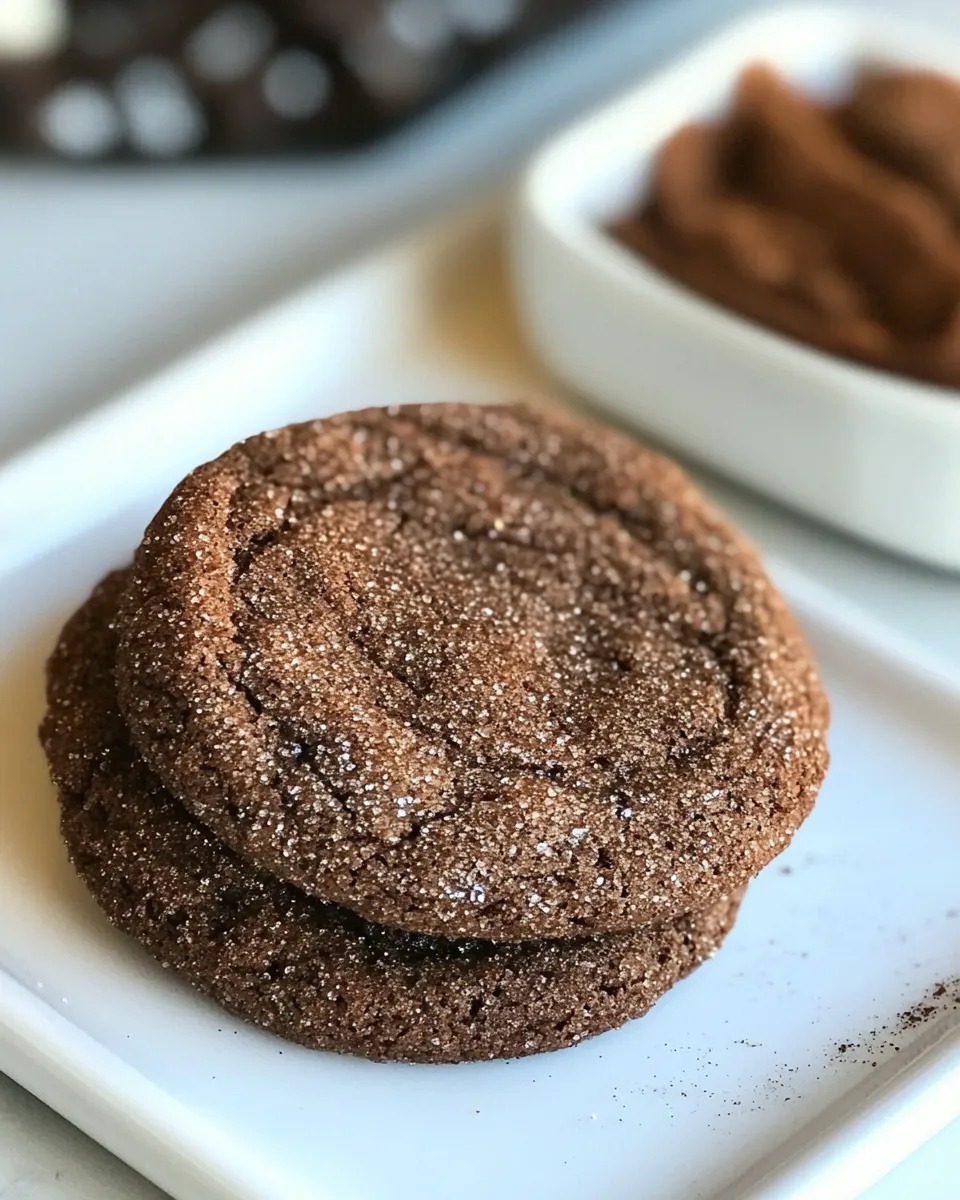
Compared with plain snickerdoodles, the added cocoa gives depth and muted sweetness so the cinnamon shines differently. The combination of cream of tartar and baking soda keeps these chewy but light around the edges. Brown sugar retains moisture so the centers stay soft even after cooling.
This version balances chocolate and spice without being overly sweet. It’s a good option when you want a cookie that’s familiar but with a subtle twist.
Ingredient Swaps & Substitutions
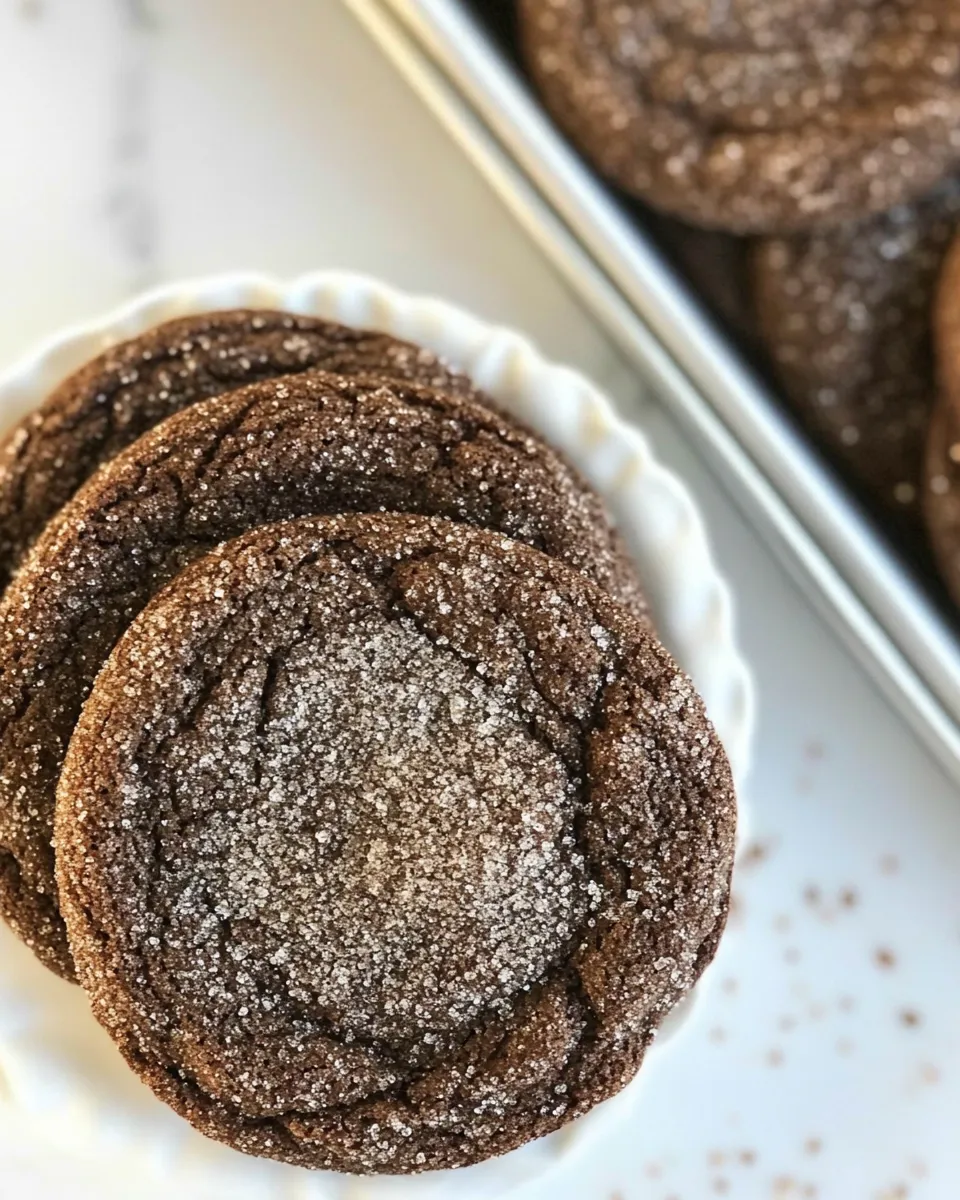
Here are reasonable swaps if you’re short on one item. I keep them conservative to preserve texture and flavor.
- Unsweetened cocoa powder — Dutch-processed will work but expect a slightly darker color and mellower acidity.
- All-purpose flour — you can try a 1:1 gluten-free baking blend, but texture will change; expect crumblier cookies.
- Unsalted butter — salted butter is fine; reduce additional salt slightly (or omit adding any extra salt elsewhere).
- Packed brown sugar — dark brown intensifies molasses notes; light brown keeps the cookie milder.
- Granulated sugar for rolling — superfine sugar will give a finer crackle; coarse sugar gives more sparkle.
Toolbox for This Recipe
Tools that matter and why:
- Stand mixer with paddle attachment (or hand mixer) — speeds creaming and gives consistent results.
- Silpat or parchment paper — promotes even baking and easy release.
- Two-tablespoon scoop or cookie scoop — ensures uniform cookies so all bake evenly.
- Mixing bowls — one for dry, one for wet, and a small bowl for the cinnamon-sugar.
- Cooling rack — lets cookies finish setting without steaming on the pan.
Pitfalls & How to Prevent Them
Common problems and quick fixes
- Overbaked cookies — remove when edges are set but centers still look soft; they continue to firm up on the sheet.
- Flat, greasy cookies — butter was too warm; cool it slightly before creaming next time.
- Dry, crumbly texture — too much flour or overbaking; measure flour properly and watch the oven time closely.
- Uneven sizes — use a scoop or scale to portion dough consistently.
Also, don’t skip scraping down the bowl during creaming; it ensures even distribution of sugar and butter which affects texture.
Customize for Your Needs
Want them chewier, crispier, or more chocolate-forward? Small tweaks change the final result:
- Chewier — add an extra tablespoon of brown sugar or swap a tablespoon of flour for corn syrup (use sparingly).
- Crispier — flatten slightly before baking and extend bake time by 1–2 minutes, watching edges carefully.
- More chocolate — increase cocoa by 1–2 tablespoons, but reduce flour by the same amount to keep dough balance.
- Less cinnamon — cut the cinnamon in the dough to 1/2 teaspoon and keep the coating as written for a milder spice.
Pro Tips & Notes
- Room-temperature butter should dent easily with a finger but not be oily; that gives the best cream.
- When adding dry to wet, mix on low and stop as soon as there are no streaks of flour — overmixing develops gluten and toughens cookies.
- Use a baking sheet with low sides; it allows air to circulate and encourages even edges.
- Rotate the baking sheet halfway through baking if your oven runs hot or uneven.
- If you want perfectly round cookies, chill rolled balls briefly for 10–15 minutes before baking to reduce excess spread.
Storing, Freezing & Reheating
Storage is simple. Keep cooled cookies in an airtight container at room temperature for up to 4 days. Layer with parchment to prevent sticking.
To freeze: place baked and cooled cookies in a single layer on a tray until firm, then transfer to a freezer-safe container or bag. They freeze well for up to 3 months. Thaw at room temperature for 30–45 minutes.
To reheat: warm cookies in a 300°F (150°C) oven for 5–7 minutes or microwave one cookie for 10–12 seconds for a fresh-from-the-oven feel. Don’t overdo it — you want warm, not dry.
Your Questions, Answered
Why cream of tartar?
Cream of tartar gives snickerdoodles their characteristic tang and soft, slightly chewy texture. It reacts with baking soda to produce lift and a tender crumb.
Can I make dough ahead?
Yes. Wrap the dough tightly and refrigerate for up to 48 hours. Let it sit at room temperature for 10–15 minutes to soften slightly before scooping and rolling.
Can I skip the cinnamon-sugar coating?
You can, but it’s a defining feature of snickerdoodles. If you skip it, consider a light dusting of powdered sugar or a quick sprinkling of extra granulated sugar for texture.
Ready, Set, Cook
- Preheat the oven to 350°F (175°C). Line a large baking sheet with a Silpat or parchment paper and set aside.
- In a large bowl, whisk together 2 1/4 cups all-purpose flour, 1/2 cup unsweetened cocoa powder, 1 teaspoon baking soda, 1 teaspoon cream of tartar, 1 teaspoon ground cinnamon, and 1/2 teaspoon sea salt. Set the dry mix aside.
- In the bowl of a stand mixer fitted with the paddle attachment (or using a hand mixer), beat 1 cup unsalted butter at room temperature until smooth, about 30 seconds.
- Add 1 cup packed brown sugar and 1/2 cup granulated sugar to the butter and beat on medium speed until light and fluffy, about 2 minutes. Scrape down the bowl and paddle.
- Add 2 large eggs and 1 teaspoon vanilla extract to the butter-sugar mixture and mix just until combined.
- With the mixer on low, add the dry ingredients to the wet ingredients in two additions, mixing only until just combined and no streaks of flour remain. Do not overmix.
- In a small bowl, combine 1/4 cup granulated sugar and 1 1/2 teaspoons ground cinnamon; stir until well blended.
- Using about 2 tablespoons of dough per cookie, form dough into balls (a cookie scoop or two-tablespoon measure works well).
- Roll each dough ball in the cinnamon-sugar mixture so each is evenly coated.
- Place the coated dough balls on the prepared baking sheet about 2 inches apart to allow for spreading.
- Bake for 8–10 minutes, until cookies are set around the edges but still soft in the center. Do not overbake.
- Let the cookies cool on the baking sheet for about 5 minutes, then transfer them to a cooling rack to cool completely.
There you go — a reliable Chocolate Snickerdoodles recipe that’s easy to follow and forgiving. Bake a tray, share some, and save a few for yourself. These are excellent with a cup of tea or a glass of milk.
Chocolate Snickerdoodles
Ingredients
Ingredients
- 2 1/4 cupsall-purpose flour
- 1/2 cupunsweetened cocoa powder
- 1 teaspoonbaking soda
- 1 teaspooncream of tartar
- 1 teaspoonground cinnamon
- 1/2 teaspoonsea salt
- 1 cupunsalted butterat room temperature
- 1 cuppacked brown sugar
- 1/2 cupgranulated sugar
- 2 large eggs
- 1 teaspoonvanilla extract
- 1/4 cupgranulated sugar
- 1 1/2 teaspoonsground cinnamon
Instructions
Instructions
- Preheat the oven to 350°F (175°C). Line a large baking sheet with a Silpat or parchment paper and set aside.
- In a large bowl, whisk together 2 1/4 cups all-purpose flour, 1/2 cup unsweetened cocoa powder, 1 teaspoon baking soda, 1 teaspoon cream of tartar, 1 teaspoon ground cinnamon, and 1/2 teaspoon sea salt. Set the dry mix aside.
- In the bowl of a stand mixer fitted with the paddle attachment (or using a hand mixer), beat 1 cup unsalted butter at room temperature until smooth, about 30 seconds.
- Add 1 cup packed brown sugar and 1/2 cup granulated sugar to the butter and beat on medium speed until light and fluffy, about 2 minutes. Scrape down the bowl and paddle.
- Add 2 large eggs and 1 teaspoon vanilla extract to the butter-sugar mixture and mix just until combined.
- With the mixer on low, add the dry ingredients to the wet ingredients in two additions, mixing only until just combined and no streaks of flour remain. Do not overmix.
- In a small bowl, combine 1/4 cup granulated sugar and 1 1/2 teaspoons ground cinnamon; stir until well blended.
- Using about 2 tablespoons of dough per cookie, form dough into balls (a cookie scoop or two-tablespoon measure works well).
- Roll each dough ball in the cinnamon-sugar mixture so each is evenly coated.
- Place the coated dough balls on the prepared baking sheet about 2 inches apart to allow for spreading.
- Bake for 8–10 minutes, until cookies are set around the edges but still soft in the center. Do not overbake.
- Let the cookies cool on the baking sheet for about 5 minutes, then transfer them to a cooling rack to cool completely.
Equipment
- Large baking sheet
- Silpat or parchment paper
- Stand mixer with paddle attachment or hand mixer
- Mixing Bowl
- Small Bowl
- cookie scoop or 2-tablespoon measure
- Cooling Rack