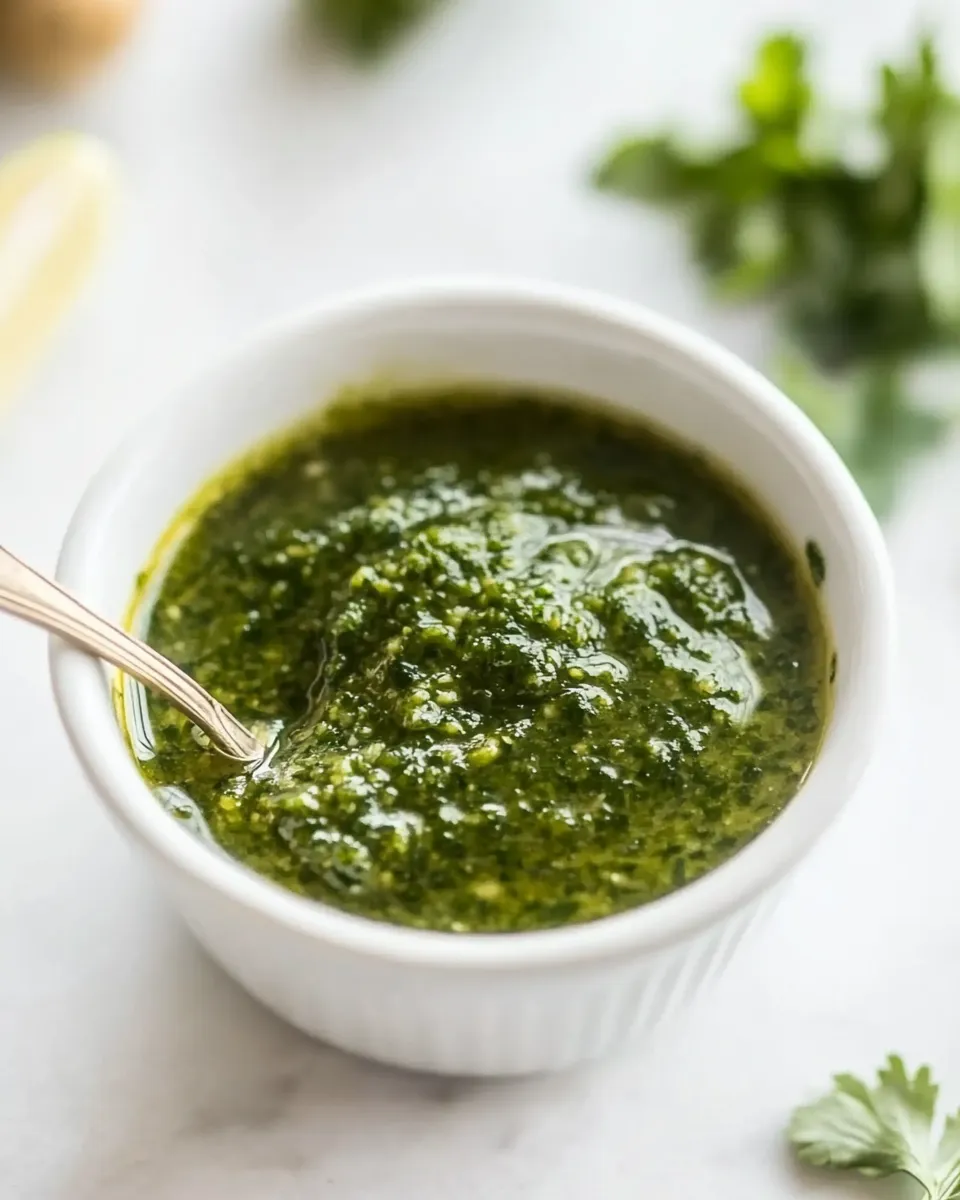
Chimichurri Sauce Recipe
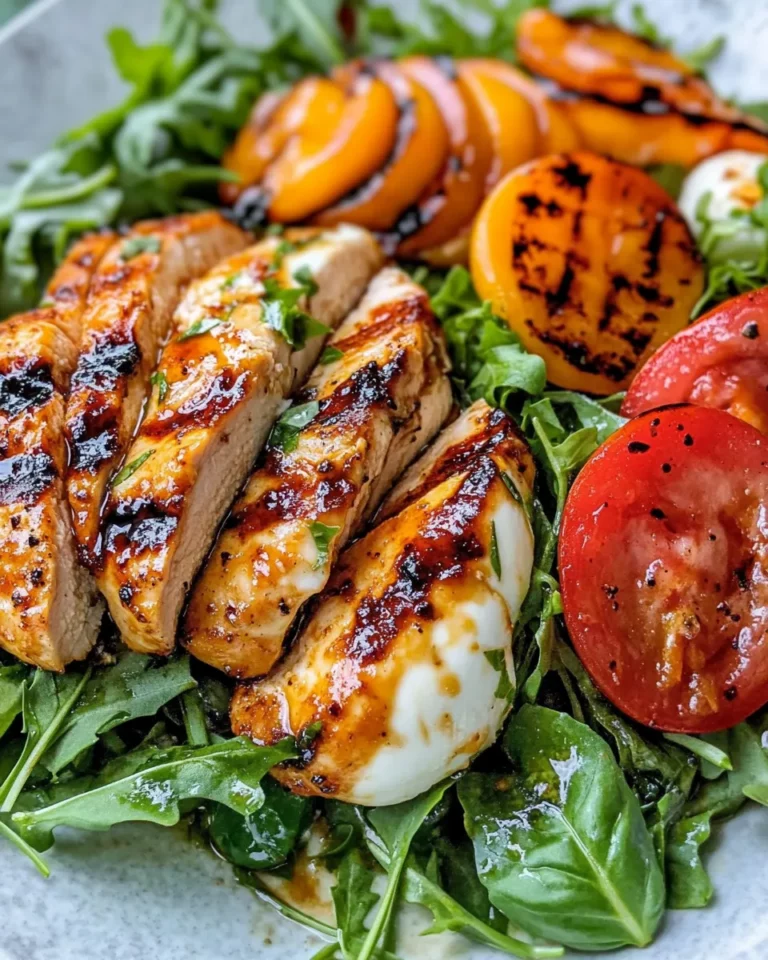
I make chimichurri so often it lives in my fridge. Fresh, bright, and effortless, it dresses everything from grilled steak to roasted vegetables. No fuss. Big flavor. That’s the kind of recipe I want on a weeknight and at weekend cookouts.
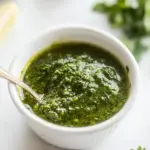
This chimichurri leans herb-forward, with parsley and a touch of kale for body, bright lime, and a hit of garlic. It emulsifies with olive oil into a silky sauce that’s flexible: use it as a condiment, a marinade, or a finishing drizzle. Follow the steps below and you’ll have a reliably vibrant sauce every time.
I’ll give clear, practical notes with every ingredient and step. Shortcuts are fine when they help, but there are a few tiny techniques that make a big difference — like drying the herbs and pouring the oil slowly. Read on and you’ll be set.
Gather These Ingredients

Ingredients
- 2 cups flat-leaf parsley (tightly packed) — the bright, grassy backbone of the sauce; dry thoroughly so the oil doesn’t thin out.
- 1 cup kale leaves (tightly packed) — adds body and a deeper green color; remove any large, tough stems first.
- 1/2 cup fresh oregano leaves (loosely packed) — aromatic, slightly peppery; use fresh for the best depth.
- 5 cloves garlic (roughly chopped) — raw garlic gives chimichurri its signature bite; chop roughly so it blends evenly.
- Zest of 1 lime — fragrant citrus oil that brightens the whole sauce.
- 1 tablespoon fresh lime juice — provides acidity; balances the oil and herbs.
- 1 tablespoon white vinegar — extra tang and helps preserve the color.
- 3/4 teaspoon salt — seasons the herbs and draws out flavors; adjust to taste.
- 1/4 teaspoon black pepper — warm, subtle heat to round the flavor.
- 1/4 teaspoon red pepper flakes (optional) — add for a gentle spicy note; leave out if you want no heat.
- 1 cup olive oil — the body of the sauce and the emulsifying element; use a good-quality extra-virgin for flavor.
From Start to Finish: Chimichurri Sauce
- Rinse and thoroughly dry the flat-leaf parsley, kale leaves, and fresh oregano. Remove and discard any large, tough kale stems and any woody oregano stems.
- Add the parsley (2 cups, tightly packed), kale (1 cup), fresh oregano (1/2 cup loosely packed), roughly chopped garlic (5 cloves), lime zest (zest of 1 lime), fresh lime juice (1 tablespoon), white vinegar (1 tablespoon), salt (3/4 teaspoon), black pepper (1/4 teaspoon), and red pepper flakes (1/4 teaspoon, optional) to a blender or food processor.
- Start the machine on low and pulse or process just until the herbs and garlic are coarsely chopped, stopping once or twice to scrape down the sides with a spatula so everything is evenly combined.
- With the machine running on low, slowly pour in the 1 cup of olive oil in a thin, steady stream until the mixture is fully emulsified and reaches the texture you prefer (a coarse chimichurri or a smoother sauce).
- Taste the chimichurri and, if desired, adjust seasoning by adding a little more salt, pepper, or red pepper flakes.
- Serve the chimichurri immediately, or transfer it to a clean jar, cover, and refrigerate until ready to use.
Why Cooks Rave About It
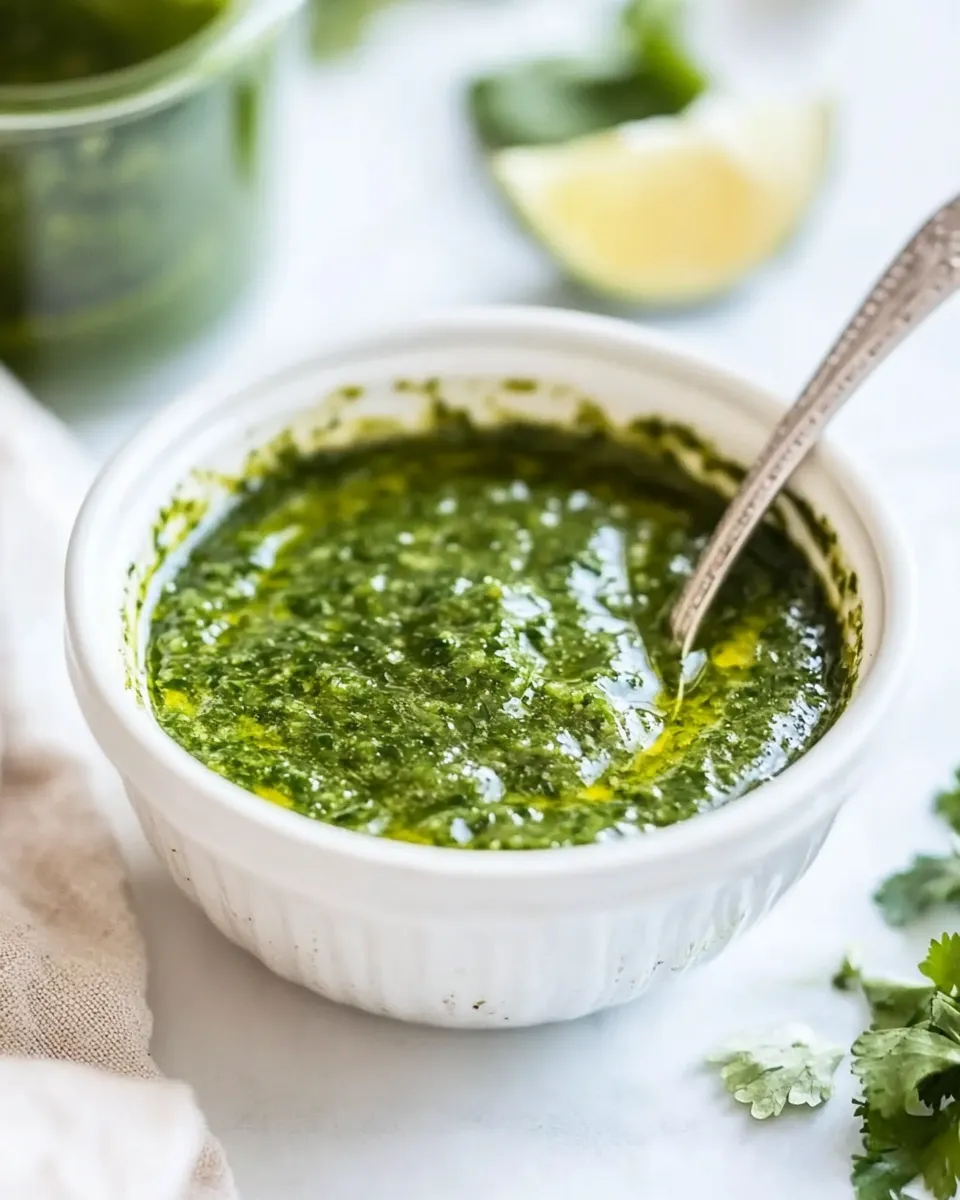
Chimichurri feels simple but delivers big contrast: fresh herbs, bright acid, and rich oil. It wakes up grilled meats without masking them. It dresses plain roasted vegetables and turns them into a meal.
Cooks love it because it’s fast and forgiving. There’s no critical cook time. Pulse, taste, and tweak. It’s also versatile — a spoonful livens up a grain bowl, a smear on bread replaces butter, and a marinade version tenderizes proteins while infusing flavor.
Finally, it stores well and improves mildly with a few hours of rest. That means you can make it ahead for dinner parties or whip it up the day before a big cookout and feel calm and prepared.
Low-Carb/Keto Alternatives

Chimichurri is naturally low-carb, since it’s mainly herbs and oil. To keep it keto-friendly, avoid adding sweeteners or starchy ingredients. Use full-fat olive oil and stick to the given amounts of acid and herbs.
If you prefer a slightly richer fat profile while staying low-carb, you can use a neutral high-quality oil that is still keto-appropriate. Otherwise, follow the recipe as written: the herbs provide most of the texture and flavor, and the oil provides the calories that fit a low-carb plan.
Recommended Tools
- Blender or food processor — the recipe calls for one; a food processor gives you more control over texture.
- Microplane or zester — for the lime zest; bright citrus oils are concentrated in the zest.
- Measuring spoons and cups — for accurate acid, salt, and oil amounts.
- Spatula — to scrape the sides and ensure even chopping.
- Clean jar with lid — for storing in the fridge.
Easy-to-Miss Gotchas
- Wet herbs dilute the sauce. Always dry parsley, oregano, and kale thoroughly after rinsing. A damp bunch will create a runny chimichurri.
- Don’t over-process. Pulse to a coarse chop unless you want a smooth emulsion. Over-blending turns chimichurri into pesto-like paste and loses that fresh herb texture.
- Pour oil slowly. Add the olive oil in a thin stream with the machine running on low. Adding it too quickly prevents proper emulsification.
- Watch the salt. The full 3/4 teaspoon is a good starting point, but taste and adjust for your palate. Too little and the herbs feel flat; too much and the brightness is lost.
- Stems matter. Remove tough kale stems and woody oregano stems. Tender stems from parsley are fine and contain flavor, but large stems make the sauce stringy.
Seasonal Twists
Spring and Summer
- Increase the oregano slightly if it’s abundant in the garden. Swap some parsley for basil for a sweeter, softer note.
- Add a small handful of mint for a cooling lift with grilled lamb or fish.
Fall and Winter
- Use slightly more kale for structure when parsley is less vibrant. Stir in a teaspoon of whole-grain mustard for an extra layer of warmth.
- Roasted root vegetables pair nicely with chimichurri; add a whisper more vinegar to cut through their sweetness.
Author’s Commentary
I learned to keep chimichurri in rotation because it solves so many dinner dilemmas. A plain chicken breast becomes interesting. Leftover roast vegetables feel revived. It’s one of those pantry-to-plate winners.
I also want you to feel confident with the texture. If you like big herb pieces, pulse and stop early. If you prefer salsa-like smoothness, blend longer and finish with a slow steady stream of oil. Either way, taste. Always taste.
When I’m pressed for time, I still follow the same basic steps: dry herbs, pulse gently, add oil slowly, and taste. These tiny habits take two extra minutes and reward you the rest of the week.
Refrigerate, Freeze, Reheat
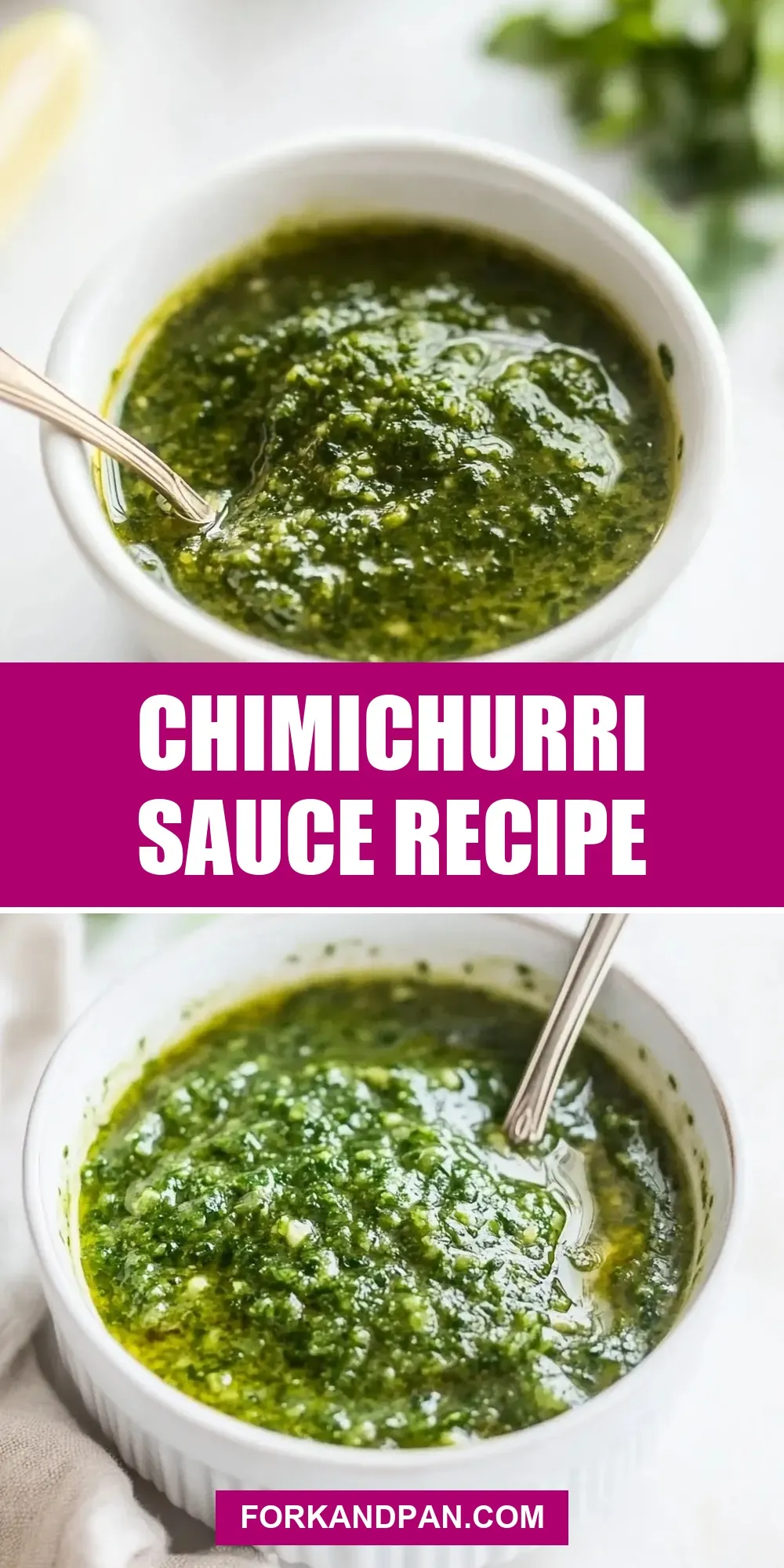
Chimichurri keeps well in the fridge for up to one week in a sealed jar. The oil may firm slightly when chilled; bring it to room temperature and stir before serving.
For longer storage, freeze in small portions. Ice cube trays are perfect — pop out a cube when you need a quick sauce or marinade. Frozen chimichurri keeps for several months; thaw in the fridge or at room temperature. Do not reheat over high heat — chimichurri is best used cold or at room temperature, or as a finishing sauce on hot food.
Chimichurri Sauce FAQs
- Can I use cilantro instead of parsley? Yes. Cilantro will change the flavor profile and make the sauce taste more herbaceous and citrusy. Use a 1:1 swap if you prefer cilantro’s bright punch.
- Is chimichurri supposed to be smooth or chunky? Either. Traditional chimichurri leans toward a coarse texture, but many people prefer a smoother, emulsified version. Control this by pulsing less or blending longer.
- Can I make this without kale? Yes. Kale adds body and color. If you omit it, the sauce will be lighter and more parsley-forward. You can increase parsley slightly to keep volume.
- How long does chimichurri last? Refrigerated in a clean jar, it keeps up to one week. For longer storage, freeze portions for several months.
- Can I double the recipe? Yes. Keep the same ratios and process in batches if your blender or food processor is small.
- Can I use lemon instead of lime? Lemon works fine. Lime has a different tang and aroma; choose based on what you like with the dish you’re serving.
Bring It Home
This chimichurri is one of those sauces that makes simple meals sing. It’s fast to make, keeps well, and adapts to your pantry and schedule. Start with the exact ingredients and method here. Then experiment: tweak the herb balance, adjust the acid, or try it on new dishes.
Make a jar this weekend. Keep it at the ready. You’ll reach for it more than you expect.
Chimichurri Sauce Recipe
Ingredients
Ingredients
- 2 cupsflat-leaf parsleytightly packed
- 1 cupkale leavestightly packed
- 1/2 cupfresh oregano leavesloosely packed
- 5 clovesgarlicroughly chopped
- Zest of 1 lime
- 1 tablespoonfresh lime juice
- 1 tablespoonwhite vinegar
- 3/4 teaspoonsalt
- 1/4 teaspoonblack pepper
- 1/4 teaspoonred pepper flakesoptional
- 1 cupolive oil
Instructions
Instructions
- Rinse and thoroughly dry the flat-leaf parsley, kale leaves, and fresh oregano. Remove and discard any large, tough kale stems and any woody oregano stems.
- Add the parsley (2 cups, tightly packed), kale (1 cup? — NOTE: Do not alter ingredient amounts), fresh oregano (1/2 cup loosely packed), roughly chopped garlic (5 cloves), lime zest (zest of 1 lime), fresh lime juice (1 tablespoon), white vinegar (1 tablespoon), salt (3/4 teaspoon), black pepper (1/4 teaspoon), and red pepper flakes (1/4 teaspoon, optional) to a blender or food processor. — Correction: follow the ingredient list precisely; see ingredient list for exact amounts.
- Start the machine on low and pulse or process just until the herbs and garlic are coarsely chopped, stopping once or twice to scrape down the sides with a spatula so everything is evenly combined.
- With the machine running on low, slowly pour in the 1 cup of olive oil in a thin, steady stream until the mixture is fully emulsified and reaches the texture you prefer (a coarse chimichurri or a smoother sauce).
- Taste the chimichurri and, if desired, adjust seasoning by adding a little more salt, pepper, or red pepper flakes.
- Serve the chimichurri immediately, or transfer it to a clean jar, cover, and refrigerate until ready to use.
Equipment
- Blender or food processor
- Spatula
- jar
Notes
This sauce is perfect for steak, fajitas, salads, burgers etc.