
Challah French Toast
I make Challah French Toast when I want breakfast to feel intentional without becoming complicated. The bread’s richness and the custard’s balance do the heavy lifting, so the rest is just timing and attention. It’s forgiving, which means you can pull it together on a quiet weekend or for guests without stress.
This recipe lives in the “comfort with technique” zone: use day-old bread, a steady soak, and a hot skillet. Small details—salt level in the custard, the butter plus oil combo in the pan, the oven trick to keep slices warm—make a consistent plate of toast, not a race to salvage soggy slices.
Below you’ll find the ingredient breakdown, exact step-by-step directions, sensible swaps, equipment I rely on, and the most common mistakes to avoid. If you follow the order and timing, you’ll get crisp, tender slices every time.
Ingredient Breakdown

Ingredients
- 6 large eggs — provide structure for the custard and help the bread hold together while cooking.
- ¾ cup low-fat milk — lightens the custard while contributing moisture; balances richness.
- ¾ cup heavy cream — adds silkiness and a richer mouthfeel to the custard.
- 2 tablespoons honey — sweetener that blends into the custard for gentle caramel notes.
- 1½ teaspoons vanilla extract — aroma and depth; use pure vanilla if you have it.
- 2 teaspoons cinnamon — warmth and flavor; can be adjusted to taste.
- Heaping ¼ teaspoons salt — essential to balance the sweetness and bring out the flavors.
- 1 loaf day old challah,brioche or other good bread sliced ¾-inch (2-cm) thick — day-old bread soaks through without falling apart; slice thickness affects texture.
- Unsalted butter — for browning and flavor on the skillet; using unsalted lets you control salt in the custard.
- Vegetable oil — added with butter to raise the smoking point and prevent burning.
- Maple syrup,for serving — classic finishing sauce; serve hot alongside.
Step-by-Step: Challah French Toast
- Preheat the oven to 250°F (120°C). Place a wire rack on a baking sheet and set the sheet in the oven to keep cooked toast warm.
- In a large, shallow baking dish or bowl, whisk together 6 large eggs, 3/4 cup low-fat milk, 3/4 cup heavy cream, 2 tablespoons honey, 1 1/2 teaspoons vanilla extract, 2 teaspoons cinnamon, and a heaping 1/4 teaspoon salt until blended.
- Working in batches, lay a single layer of the day-old challah slices (3/4-inch thick) in the custard. Let each slice soak, flipping occasionally, until saturated but still holding together, about 1 to 2 minutes depending on how moist you like your French toast.
- Heat a large skillet over medium heat. Add enough unsalted butter and vegetable oil to coat the bottom of the pan and prevent sticking; add more between batches as needed.
- Cook the first batch of soaked bread until golden brown, about 2 to 3 minutes per side. Transfer cooked slices to the wire rack on the baking sheet and keep them in the oven while you finish the remaining batches.
- Wipe the skillet clean with paper towels if necessary, then continue soaking and frying the remaining bread in the same manner, adding butter and oil as needed, until all slices are cooked.
- Serve the French toast hot with maple syrup.
The Upside of Challah French Toast
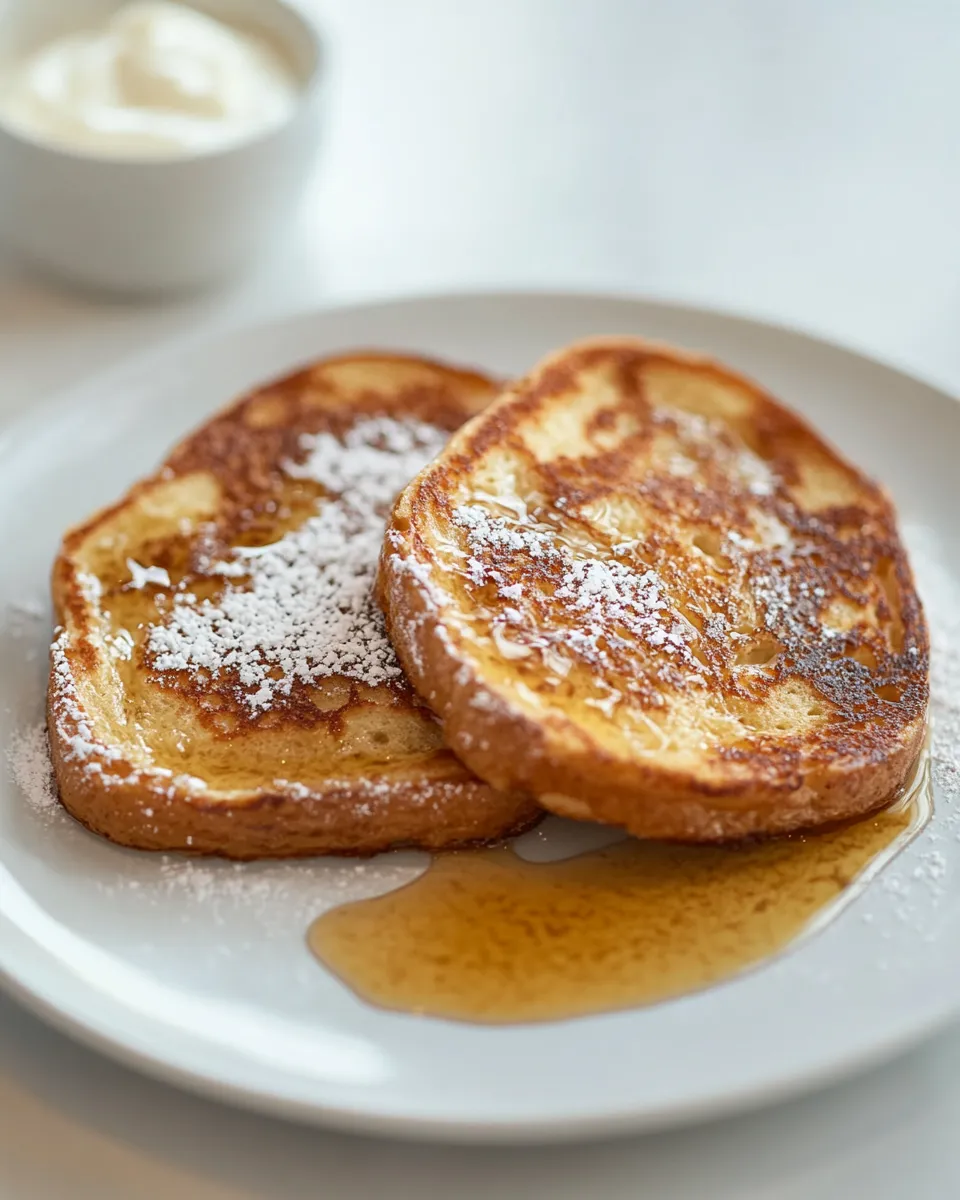
Challah French Toast rewards a little planning. Using day-old bread prevents mush, but it’s also a great way to use what would otherwise go stale. The custard is balanced: egg for structure, cream for richness, and a touch of honey for natural sweetness. Cinnamon and vanilla make the flavor familiar and instantly craveable.
Practical benefits: you can keep finished slices warm in the oven while you finish the last batch, which means everyone eats hot toast at the same time. The butter plus oil combo gives you the flavor of butter without burning, so you get consistent golden crusts.
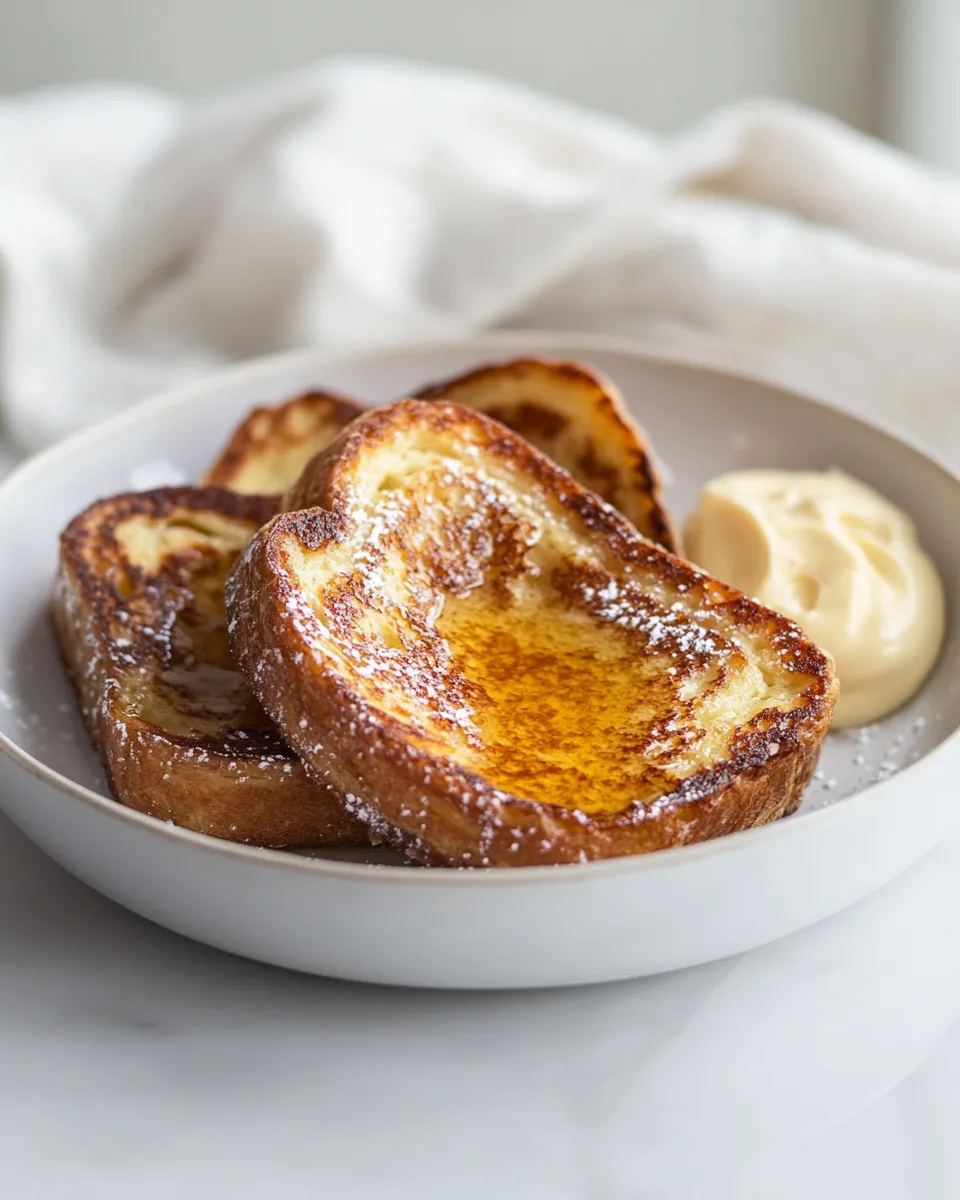
Texturally, challah gives a tender interior with a firm crust when fried the right way. It soaks well without collapsing, so each bite has custard that melts on the tongue and a surface that snaps pleasantly.
Healthier Substitutions
You can make small swaps to trim calories or fat without losing the essential character of the dish.
- Replace the heavy cream with an equal amount of extra low-fat milk for a lighter custard—expect a slightly less silky finish.
- Use a sugar-free syrup or reduce honey in the custard to lower added sugars. Add a pinch more cinnamon or a few drops of vanilla to compensate.
- Choose a whole-grain or seeded loaf if you want more fiber, but be mindful that denser breads may need a slightly longer soak.
Must-Have Equipment
- Large, shallow baking dish or bowl — lets you lay slices flat for even soaking.
- Large skillet (cast iron or heavy-bottomed) — promotes even browning and holds heat well.
- Wire rack and baking sheet — for keeping cooked slices warm and crisp in the oven.
- Spatula — wide enough to flip slices without tearing them.
Mistakes That Ruin Challah French Toast
There are predictable ways this goes wrong. Avoid these and you’ll save time and frustration.
- Soaking too long. If you saturate slices until they’re falling apart, you’ll collapse the custard into a soggy mess in the pan. Follow the 1 to 2 minute guide and adjust for bread density.
- Pan too hot or too cold. If it’s too hot, the outside will burn before the center sets. Too cool and the toast absorbs oil and becomes greasy. Aim for a steady medium heat.
- Using only butter. Butter alone can burn quickly; mix in a neutral oil to raise the smoke point while keeping flavor.
- Stacking cooked slices. That traps steam and softens the crust. Place them on the wire rack in a single layer to keep edges crisp.
Allergy-Friendly Swaps
For common allergies, here are straightforward substitutions with minimal fuss.
- Dairy-free: replace the milk and heavy cream with unsweetened plant milk blends (oat or almond) and increase eggs slightly for structure if needed. Use a plant-based butter alternative plus a neutral oil for frying.
- Egg-free: French toast relies heavily on eggs for custard. For an egg-free version, use a thicker batter based on blended silken tofu or a commercial egg replacer and reduce soak time—expect a different texture.
- Gluten-free: choose a sturdy gluten-free brioche-style loaf or a dense gluten-free bread sliced to 3/4-inch. It may need a slightly longer soak to achieve the same custardy interior.
Recipe Notes & Chef’s Commentary
Measure nothing in the heat of the moment. Set up the custard, slice the bread, and have your butter and oil ready. The process moves quickly once you start frying. I like a small rimmed plate or tray next to the stove for the soaked slices so they don’t drip all over my prep area.
About the honey: it blends nicely into the custard and gives a round sweetness, but you can swap it for granulated sugar if you prefer. If using sugar, dissolve it fully in the custard before soaking the bread.
Don’t skip the salt. A heaping 1/4 teaspoon sounds small, but it brightens the custard. If you use salted butter, you can reduce the custard salt slightly.
If you plan to serve a crowd, consider keeping the oven at 250°F (120°C) and placing finished slices on the wire rack as directed. That way you can finish the entire batch without anyone eating cold toast.
Save It for Later
Leftover French toast can be refrigerated for 2 days. Reheat in a 350°F (175°C) oven on a wire rack for 8–10 minutes to restore crispness. Freezing works well: flash-freeze single slices on a tray, then transfer to a freezer bag for up to 1 month. Reheat from frozen in a 350°F oven until warmed through.
Reader Q&A
Q: Can I use brioche instead of challah?
A: Yes. The recipe even lists brioche as an option. Both are rich, slightly sweet breads that soak well. Adjust soak time if the brioche is denser or thinner sliced.
Q: My French toast was pale—what did I do wrong?
A: The pan was probably not hot enough or lacked enough fat. Make sure the skillet is at medium heat and you’ve added both butter and oil. Give the butter a second to foam before adding slices.
Q: Can I prepare the custard the night before?
A: Yes. Whisk the custard and refrigerate overnight. Bring it close to room temperature before soaking the bread for even results.
Let’s Eat
Plate the toast while it’s hot, drizzle with maple syrup, and serve immediately. Add fresh fruit or a dusting of powdered sugar if you like. This is a recipe that rewards attention to a few details rather than endless ingredients—day-old challah, a well-balanced custard, the right pan temperature, and the oven trick will give you dependable, delicious Challah French Toast every time.

Challah French Toast
Ingredients
Ingredients
- 6 large eggs
- 3/4 cuplow-fat milk
- 3/4 cupheavy cream
- 2 tablespoonshoney
- 1 1/2 teaspoonsvanilla extract
- 2 teaspoonscinnamon
- Heaping 1/4 teaspoonsalt
- 1 loaf day old challah brioche or other good bread sliced 3/4-inch (2-cm) thick
- Unsalted butter
- Vegetable oil
- Maple syrup for serving
Instructions
Instructions
- Preheat the oven to 250°F (120°C). Place a wire rack on a baking sheet and set the sheet in the oven to keep cooked toast warm.
- In a large, shallow baking dish or bowl, whisk together 6 large eggs, 3/4 cup low-fat milk, 3/4 cup heavy cream, 2 tablespoons honey, 1 1/2 teaspoons vanilla extract, 2 teaspoons cinnamon, and a heaping 1/4 teaspoon salt until blended.
- Working in batches, lay a single layer of the day-old challah slices (3/4-inch thick) in the custard. Let each slice soak, flipping occasionally, until saturated but still holding together, about 1 to 2 minutes depending on how moist you like your French toast.
- Heat a large skillet over medium heat. Add enough unsalted butter and vegetable oil to coat the bottom of the pan and prevent sticking; add more between batches as needed.
- Cook the first batch of soaked bread until golden brown, about 2 to 3 minutes per side. Transfer cooked slices to the wire rack on the baking sheet and keep them in the oven while you finish the remaining batches.
- Wipe the skillet clean with paper towels if necessary, then continue soaking and frying the remaining bread in the same manner, adding butter and oil as needed, until all slices are cooked.
- Serve the French toast hot with maple syrup.
Equipment
- Wire Rack
- Baking Sheet
- large shallow baking dish or bowl
- Large Skillet
- Whisk
- Paper Towels