Bok Choy Stir Fry
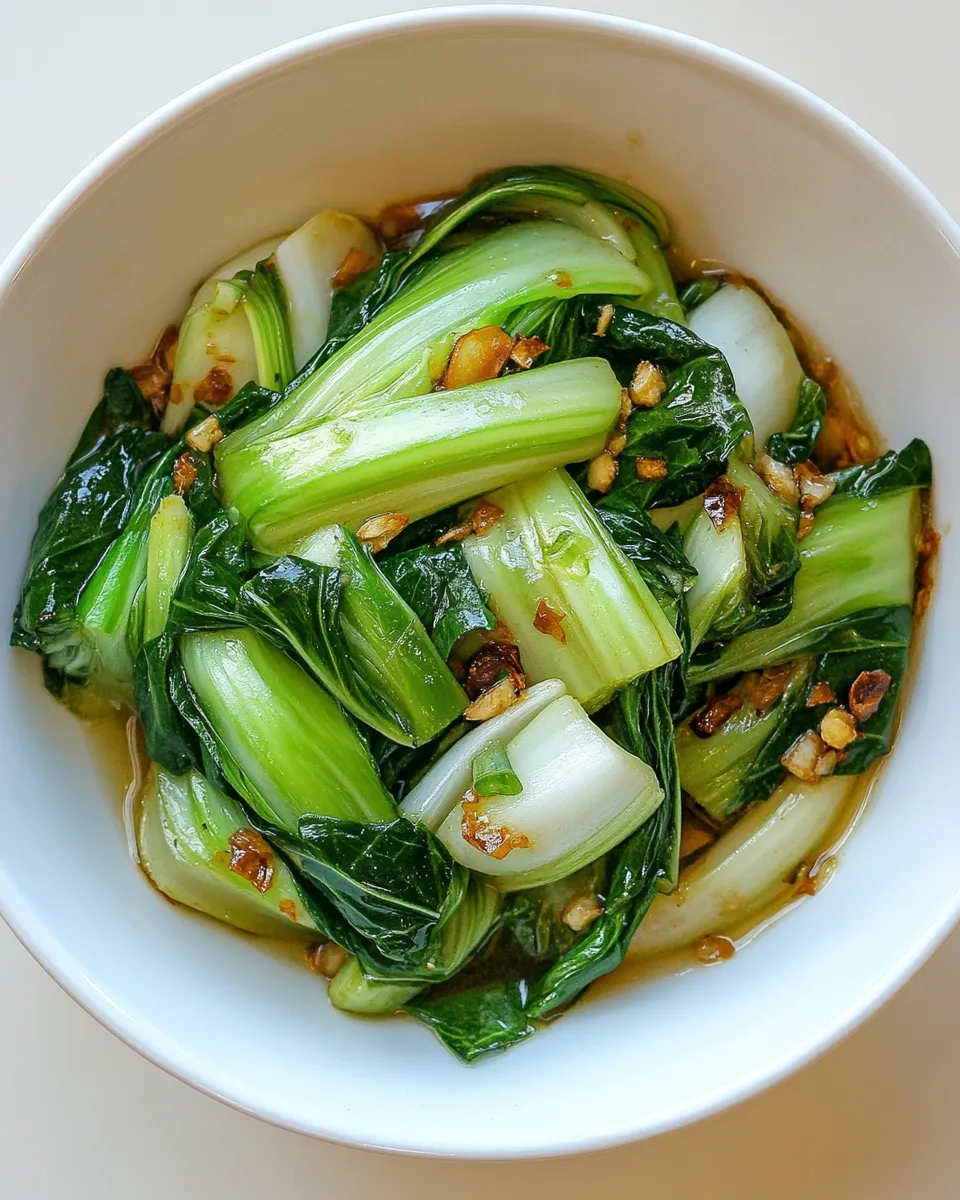
I make this bok choy stir fry on weeknights when I want green, fast, and reliable. It’s one of those dishes that looks and tastes more deliberate than the ten minutes it actually needs. The garlic and ginger are front and center; the quick steam from the stock does the rest, keeping stems tender and leaves bright.
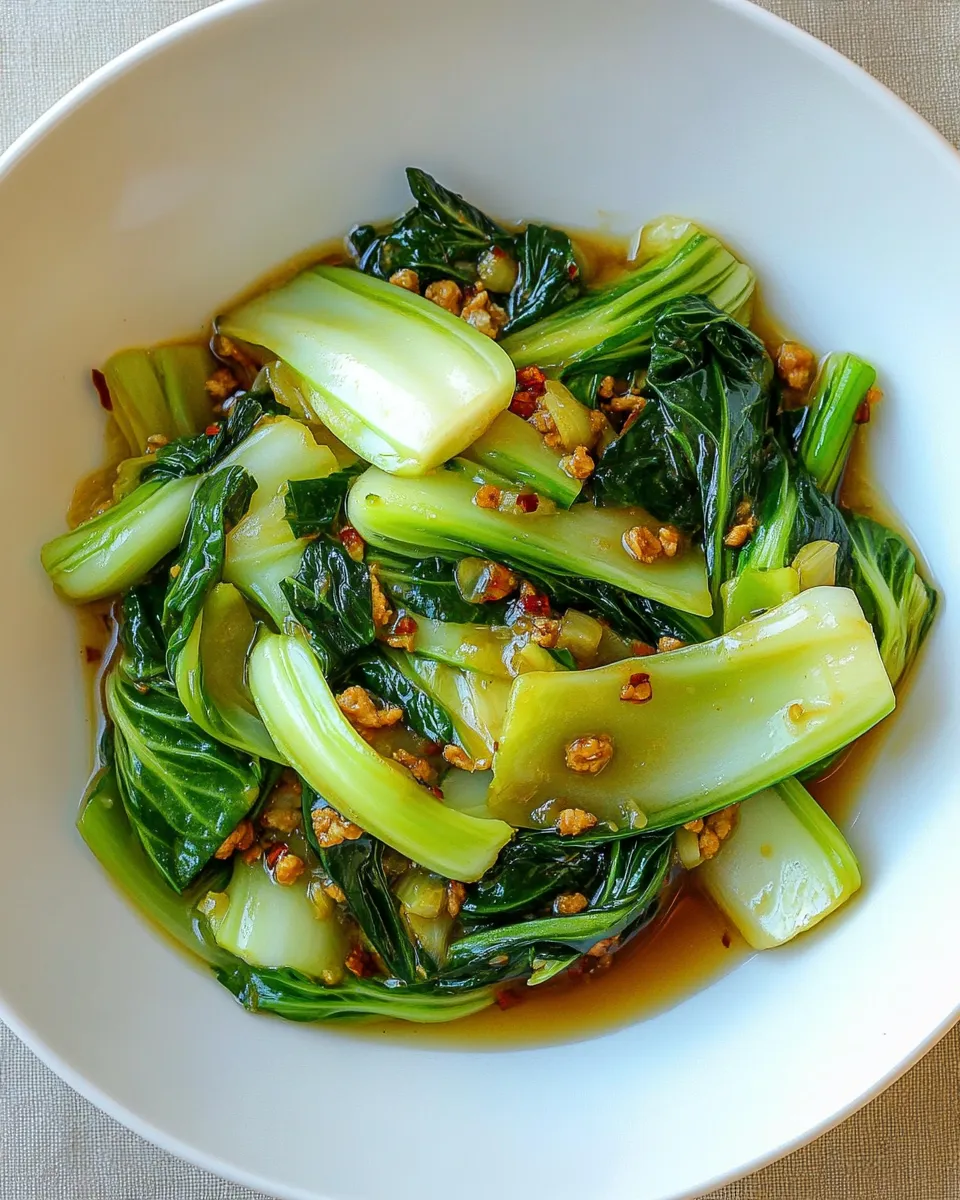
This recipe leans on a short ingredient list and a high-heat wok finish. You’ll get crunchy stems, silky leaves, and a glossy sauce that clings without drowning the vegetables. It’s forgiving, too — small timing changes won’t ruin it, but there are a few simple tricks that keep it consistently great.
If you’re feeding one or adding the stir fry to a larger meal, it pairs beautifully with rice, noodles, or a simply grilled protein. Read through the steps once, gather the ingredients, and have everything prepped before you heat the wok. The cooking moves fast and rewards a little prep.
Ingredient Checklist

- 14 ounces baby bok choy — main vegetable; trim roots, wash thoroughly, leaves cook quickly while stems stay crisp.
- 2 tablespoons vegetable oil — high-heat cooking oil for stir-frying; heats quickly and tolerates the wok’s temperature.
- 2 garlic cloves, peeled and smashed with the back of a knife — aromatics; smashed to release flavor quickly without small bits that burn.
- 3 thin slices of fresh ginger, peeled and smashed or chopped — aromatic heat and brightness; thin slices stand up to high heat and infuse oil.
- 4 tablespoons chicken stock — builds the light pan sauce and steams the stems tender; keeps the dish savory.
- 1½ teaspoons sugar — balances the soy and rounds the flavors; small amount enhances browning and gloss.
- 1 tablespoon soy sauce — primary seasoning and umami; adds color and salt.
- 1 teaspoon roasted sesame oil — finishing oil for aroma; use sparingly at the end to preserve its flavor.
Bok Choy Stir Fry Made Stepwise
- Trim any root ends or parts holding bok choy clusters together. If any heads are longer than 3 inches, cut them in half lengthwise. Wash all the bok choy thoroughly to remove dirt and dry thoroughly (pat with paper towels or use a salad spinner).
- Peel and smash the 2 garlic cloves with the back of a knife. Peel the 3 thin slices of fresh ginger and smash or chop them as preferred.
- Heat a wok over high heat until very hot. Add 2 tablespoons vegetable oil and heat until the oil is shimmering.
- Add the smashed garlic and prepared ginger to the wok and stir-fry, stirring constantly, for about 30 seconds—do not let the garlic burn.
- Add the 14 ounces baby bok choy to the wok and stir-fry until the leaves begin to wilt and the stems start to soften (about 1–2 minutes).
- Pour in 4 tablespoons chicken stock, add 1½ teaspoons sugar, and add 1 tablespoon soy sauce. Stir once to combine.
- Cover the wok and let simmer for 2 minutes, or until the stems are tender but the leaves remain bright green.
- Remove the lid, drizzle in 1 teaspoon roasted sesame oil, toss briefly to coat, and serve hot.
Why It’s Crowd-Pleasing
People respond to this dish because it’s immediate and honest. The flavors are simple — garlic, ginger, soy, and a touch of sugar — but they play off bok choy’s mild bitterness and crunchy texture. That contrast, plus the glossy finish from the stock and sesame oil, makes every bite satisfying.
It also adapts easily. Serve it as a side with grilled chicken, tofu, or pan-seared fish, or fold it into a bowl with rice and a fried egg for a quick dinner. The clean flavor profile appeals to picky eaters and to folks who prefer vegetable-forward plates alike.
If You’re Out Of…
- Baby bok choy: Use regular bok choy cut into smaller pieces, napa cabbage, or even bok choy hearts from larger heads. Adjust cook time for thicker stems.
- Vegetable oil: Use another neutral, high-heat oil you have (canola, peanut). Avoid extra-virgin olive oil in the hot wok — it smokes easily.
- Chicken stock: Substitute vegetable stock or a light mushroom broth for a vegetarian option. If you only have water, add a pinch more soy or a small splash of fish sauce (if you use it) to boost savory depth.
- Sugar: A teaspoon of honey or maple syrup can work in a pinch; the goal is a little sweetness to balance the soy.
- Soy sauce: Use tamari for gluten-free needs or coconut aminos for a soy-free alternative.
- Roasted sesame oil: If you don’t have it, you can finish with a tiny pat of butter or a drizzle of neutral oil, but roasted sesame oil gives a distinct toasted aroma that’s worth keeping if possible.
Setup & Equipment

Use a wok or a large, wide skillet. A wok concentrates heat and lets you push ingredients up the sides while moving them through the hot center. If your wok isn’t nonstick, a well-heated stainless or carbon steel pan works fine.
- Wok or large skillet — gets very hot and gives good toss space.
- Spatula or tongs — for quick, confident stirring and tossing.
- Cutting board and sharp knife — for trimming and slicing bok choy, garlic, and ginger.
- Paper towels or salad spinner — to dry bok choy after washing (important; excess water makes the oil splatter).
- Lid for the wok — traps steam to tenderize stems in the two-minute simmer.
Prep timing
Prep everything before you heat the wok. Once the oil is hot, steps happen in quick succession. Measure the stock, soy, and sugar into a small cup so you can pour them in without pausing.
Watch Outs & How to Fix
- Burned garlic: If the garlic turns brown and bitter, remove it immediately and start again with fresh oil and new garlic. Lower the heat slightly and add the bok choy sooner next time.
- Soggy bok choy: This usually means too much liquid or over-steaming. Reduce the stock slightly, shorten the covered time, and remove the lid as soon as stems are tender.
- Pale, limp leaves: Make sure your wok is hot before adding bok choy. High heat sears the stems and wilts leaves quickly while preserving color.
- Oily or greasy finish: You likely used too much oil. Use the 2 tablespoons called for and let excess stay in the pan rather than adding more at the end.
- Too salty: Skip soy sauce next time or dilute with a little more stock. For this batch, add a splash of water and a squeeze of lemon to balance, or serve with plain rice to buffer saltiness.
Allergy-Friendly Swaps
- Soy allergy or gluten-free: Use coconut aminos or a certified gluten-free tamari in place of soy sauce.
- Sesame allergy: Omit the roasted sesame oil finish; finish instead with a touch of neutral oil or a pat of butter if not dairy-free.
- Chicken stock (vegetarian/vegan): Replace with vegetable stock or a mild mushroom broth to keep savory depth without animal products.
- Nut allergies and high-heat oils: Choose a seed or vegetable oil with a high smoke point like sunflower or canola instead of peanut oil.
Chef’s Notes
Trim and wash thoroughly. Bok choy hides grit at the base; rinse well between the leaves and spin dry. Moisture is the enemy of a hot stir-fry — dry it well but leave just enough moisture so the stems don’t lose all their crunch.
Keep aromatics coarse for texture. The recipe uses smashed garlic and sliced ginger rather than minced. That gives quick, bright flavor without small pieces that can burn or disappear into the sauce.
Timing is everything. Pre-measure the chicken stock, sugar, and soy into a small bowl. Once the bok choy hits the wok, you’ll move from step to step fast. The short covered simmer is what softens the stems while preserving leaf color and texture.
Cooling, Storing & Rewarming
Cool leftover bok choy quickly by spreading it in a shallow container and letting it come to room temperature for no more than 1 hour. Transfer to the fridge where it will keep well for 3–4 days.
Reheat in a hot skillet or wok with a quick splash of stock or water to loosen any sauce and re-plump the stems. Microwave reheats okay for convenience, but the texture will soften more than when you reheat quickly on the stovetop.
Do not freeze this stir-fry; bok choy becomes watery and limp after freezing and thawing, and the texture will suffer.
Troubleshooting Q&A
Q: My leaves are dull and gray after cooking. Why?
A: Overcooking or cooking at too low a heat causes color loss. Use a very hot wok, cook quickly, and uncover as soon as stems are tender to retain bright green leaves.
Q: The stems stayed hard after the covered simmer. What went wrong?
A: Either the pieces were too large or the lid didn’t seal. Cut thicker stems in half lengthwise and ensure a tight-fitting lid. If needed, add 1 more tablespoon of stock and give it another minute under cover.
Q: The sauce looks greasy but not flavorful.
A: That can happen if oil was overused or aromatics didn’t infuse properly. Taste and adjust with a little more soy or a splash of stock. Next time, use the measured 2 tablespoons and ensure the garlic and ginger are cooked briefly to flavor the oil before adding bok choy.
Q: Can I add other vegetables or proteins?
A: Yes. Add quick-cooking vegetables like thin-sliced carrots or snow peas early on, and toss in pre-cooked proteins (tofu, chicken slices) at the end to warm through. Adjust the stock slightly if adding more dry ingredients.
Bring It Home
This bok choy stir fry is small-ingredient, big-return cooking. It’s quick, bright, and adaptable. Keep the aromatics simple, trust the heat, and don’t skip the short steamed finish — that’s what gives you tender stems and vibrant leaves.
Make it part of a weeknight rotation. It’s an easy way to add a vegetable-forward dish to any meal, and the core technique translates to other greens and quick vegetable stir-fries. Once you’ve done it twice, you’ll have the timing down and a reliable go-to for nights when you want something fast and fresh.
Bok Choy Stir Fry
Ingredients
Ingredients
- 14 ouncesbaby bok choy
- 2 tablespoonsvegetable oil
- 2 garlic cloves peeled and smashed with the back of a knife
- 3 thin slices of fresh ginger peeled and smashed or chopped
- 4 tablespoonschicken stock
- 1 1/2 teaspoonsugar
- 1 tablespoonsoy sauce
- 1 teaspoonroasted sesame oil
Instructions
Instructions
- Trim any root ends or parts holding bok choy clusters together. If any heads are longer than 3 inches, cut them in half lengthwise. Wash all the bok choy thoroughly to remove dirt and dry thoroughly (pat with paper towels or use a salad spinner).
- Peel and smash the 2 garlic cloves with the back of a knife. Peel the 3 thin slices of fresh ginger and smash or chop them as preferred.
- Heat a wok over high heat until very hot. Add 2 tablespoons vegetable oil and heat until the oil is shimmering.
- Add the smashed garlic and prepared ginger to the wok and stir-fry, stirring constantly, for about 30 seconds—do not let the garlic burn.
- Add the 14 ounces baby bok choy to the wok and stir-fry until the leaves begin to wilt and the stems start to soften (about 1–2 minutes).
- Pour in 4 tablespoons chicken stock, add 1½ teaspoons sugar, and add 1 tablespoon soy sauce. Stir once to combine.
- Cover the wok and let simmer for 2 minutes, or until the stems are tender but the leaves remain bright green.
- Remove the lid, drizzle in 1 teaspoon roasted sesame oil, toss briefly to coat, and serve hot.
Equipment
- Wok
- Cooking tools
Notes
Using a wok or a wide bottom pan with sloped sides makes cooking this dish a breeze.
Be careful when cooking with a wok. You must cook under high heat, and the flames can come up from the side of the wok and burn you.
Do dry down the leaves after rinsing them. Any water left over coming in contact with the hot oil will fizzle and cause burns.
Create a cornstarch slurry to thicken the sauce—soy sauce, oyster sauce, and a dash of water to break down the cornstarch. Add this at the last minute to the vegetables.