Best Red Velvet Cake
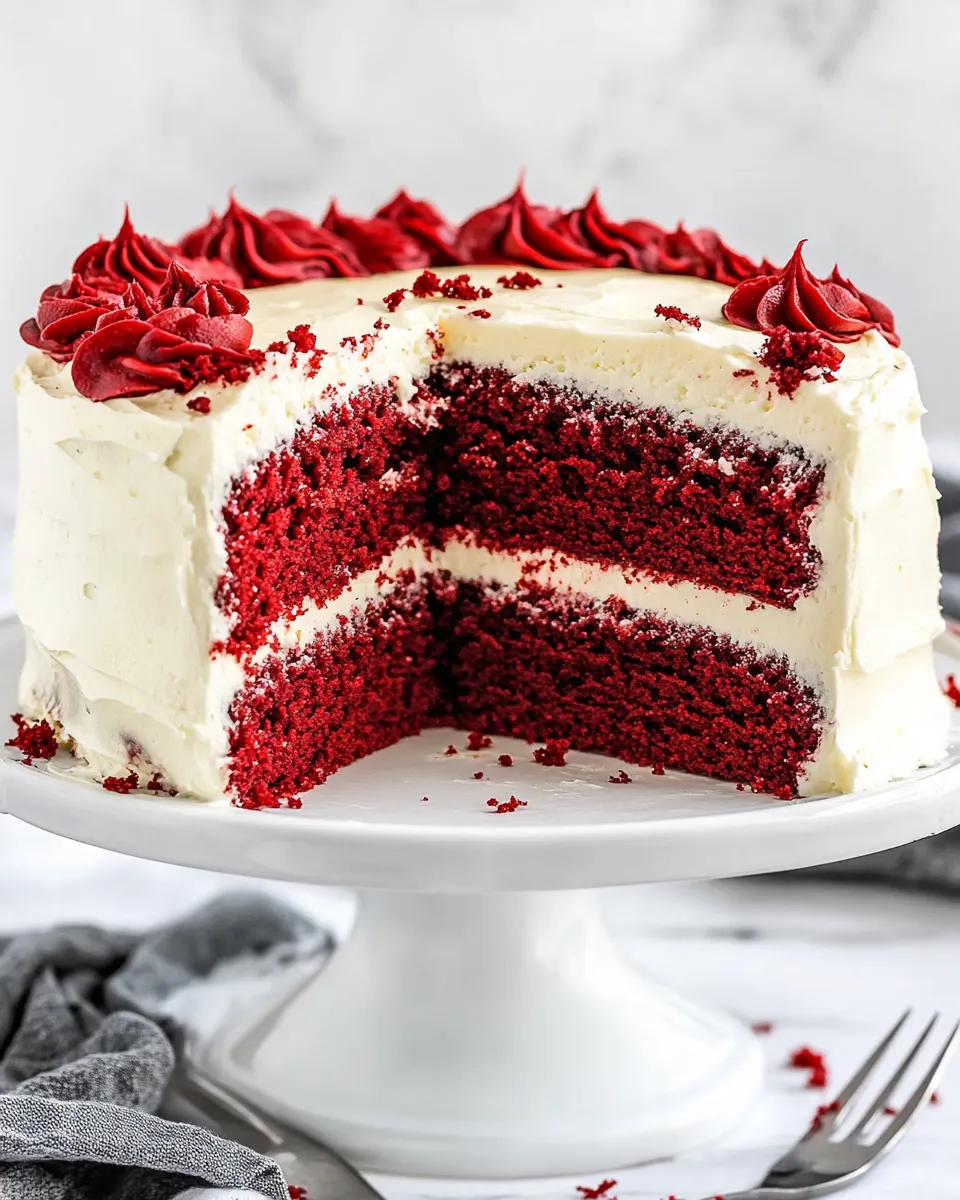
I bake a lot of cakes, and this red velvet is the one I reach for when I want a reliable showstopper. It’s tender, only lightly chocolate, and turns out a deep, inviting red without drama. The crumb is soft and moist, the crumbs are almost velvet to the touch — hence the name — and the cream cheese frosting is tangy, not cloying.
This recipe is practical and forgiving. It balances butter and oil so the cake stays moist even a day later. It uses buttermilk and a touch of vinegar to react with baking soda, which gives lift and a pleasant tender crumb. Everything you need is straightforward; the method is deliberate but not fussy.
I’ll walk you through the ingredients, the step-by-step directions exactly as they should be done, and the troubleshooting notes I wish I had the first time I tried it. If you’re baking for a celebration or just because you want a treat, follow these steps and you’ll get the result you want.
What Goes In

- 1/2 cup unsalted butter — room-temperature butter creamed with sugar gives lift and structure to the batter.
- 1 1/2 cups caster sugar — or fine white granulated sugar; sweetens and helps aerate when creamed with butter.
- 2 large eggs — add richness and help bind the cake.
- 1/4 cup cooking oil — adds extra moisture so the crumb stays tender the next day.
- 1 tablespoon unsweetened cocoa powder — plus 1 tablespoon extra for dusting; provides the subtle chocolate backbone red velvet relies on.
- 2 1/2 tablespoons red food colouring — liquid, not gel; gives the classic red color.
- 2 teaspoons pure vanilla extract — adds aromatic depth to both batter and frosting (appears twice in the ingredient list).
- 1 tablespoon white vinegar — brightens flavor and reacts with baking soda for lift.
- 2 1/2 cups plain cake flour — sifted, or all purpose/plain flour; cake flour yields a softer crumb but AP works if that’s what you have.
- 1 teaspoon baking soda — bi-carb soda; reacts with acidic buttermilk and vinegar to leaven the cake.
- 1 teaspoon salt — balances sweetness and strengthens the structure.
- 1 cup buttermilk — adds acidity and moisture; key for tender crumb and flavor.
- 14 ounces cream cheese — not spreadable, at room temperature; the base of the frosting, gives tang and silkiness.
- 1/2 cup unsalted butter — room temperature (for frosting); beat with cream cheese until light and smooth.
- 2 teaspoons pure vanilla extract — for the frosting; enhances the cream cheese flavor.
- 4 cups icing sugar — or confectioners; sweetens and firms the frosting to spreadable consistency.
- 1 tablespoon lemon juice — optional; a small bright note in frosting if you like a hint of citrus.
Red Velvet Cake in Steps
- Preheat oven to 350°F (175°C). Grease two 8-inch cake pans with butter or nonstick spray. Sift the extra 1 tablespoon of cocoa powder over the greased pans to dust them.
- In a large bowl, cream 1/2 cup unsalted butter (room temperature) and 1 1/2 cups caster sugar until light in color and fluffy.
- Add 2 large eggs one at a time, beating well after each addition until fully incorporated.
- In a small bowl, whisk together 1/4 cup cooking oil, 1 tablespoon unsweetened cocoa powder, 2 1/2 tablespoons red food colouring (liquid), and 2 teaspoons pure vanilla extract until smooth. Stir in 1 tablespoon white vinegar.
- Add the color/oil/vinegar mixture to the creamed butter, sugar, and eggs and beat until combined.
- Sift together 2 1/2 cups plain cake flour, 1 teaspoon baking soda, and 1 teaspoon salt.
- With the mixer on low, add half of the dry ingredients to the wet mixture and mix until just combined. Add half of the 1 cup buttermilk and mix until just combined. Repeat with the remaining dry ingredients and the remaining buttermilk, mixing until the batter is smooth but not overmixed.
- Divide the batter evenly between the two prepared pans and smooth the tops.
- Bake for 25–30 minutes, or until a toothpick inserted into the center comes out clean.
- Let the cakes cool in their pans for 10 minutes. Run a knife around the edges, invert the cakes onto a wire rack, remove the pans, and cool the cakes completely.
- While the cakes cool, make the frosting: beat 14 ounces cream cheese (room temperature), 1/2 cup unsalted butter (room temperature), and 2 teaspoons pure vanilla extract until smooth and slightly lighter in color, about 3–4 minutes.
- Gradually beat in 4 cups icing sugar until the frosting is light and fluffy. If the frosting is too thin, add a little more icing sugar and beat until you reach the desired consistency. If using, beat in 1 tablespoon lemon juice.
- If the cake tops are domed, level them with a serrated knife and reserve the trimmed pieces for decoration.
- Place one cake layer on a serving plate with the flat side down. Spoon about 1 1/2 to 2 cups of frosting onto that layer and spread evenly.
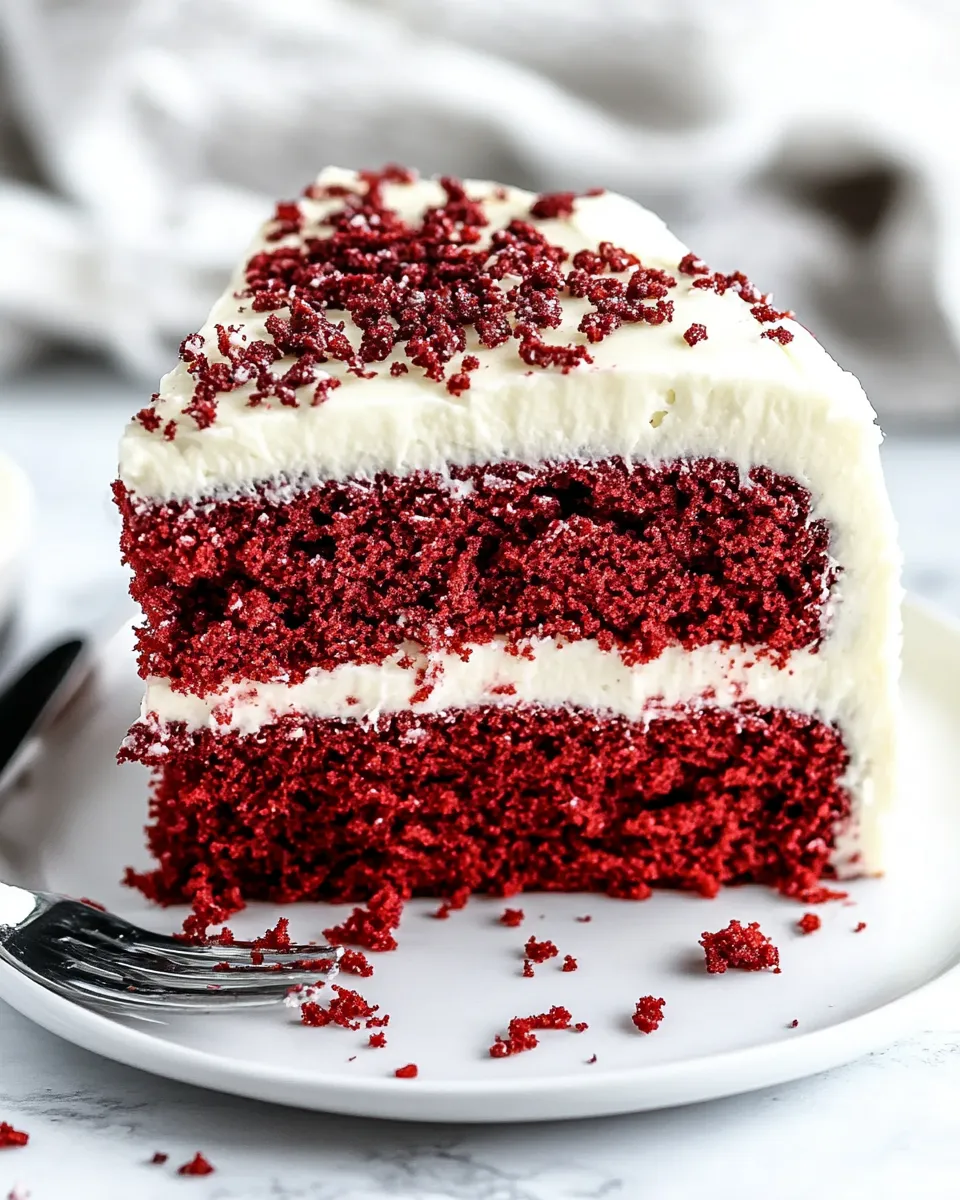
- Place the second cake layer on top (flat side down) and use the remaining frosting to cover the top and sides of the cake.
- Press the reserved cake crumbs into the sides or scatter them on top to decorate, if desired. Enjoy.
Why It Works Every Time
This recipe balances chemistry and technique. The buttermilk and vinegar provide acidity that reacts with the baking soda, giving the cake a reliable rise and a tender crumb. The small amount of cocoa powder adds that faint chocolate note we expect from a red velvet without turning the cake into a full chocolate cake. Using both butter and a little oil means you get flavor from butter and lasting moisture from oil — the texture holds up for a couple of days.
Temperature matters: room-temperature butter and eggs emulsify better, so the batter traps air when creamed. Mixing on low and folding in dry ingredients in stages prevents overdeveloping the gluten, which keeps the crumb soft. The cream cheese frosting is stabilized by beating the cream cheese and butter until smooth and then adding icing sugar gradually, which gives spreadability without becoming greasy.
Dairy-Free/Gluten-Free Swaps
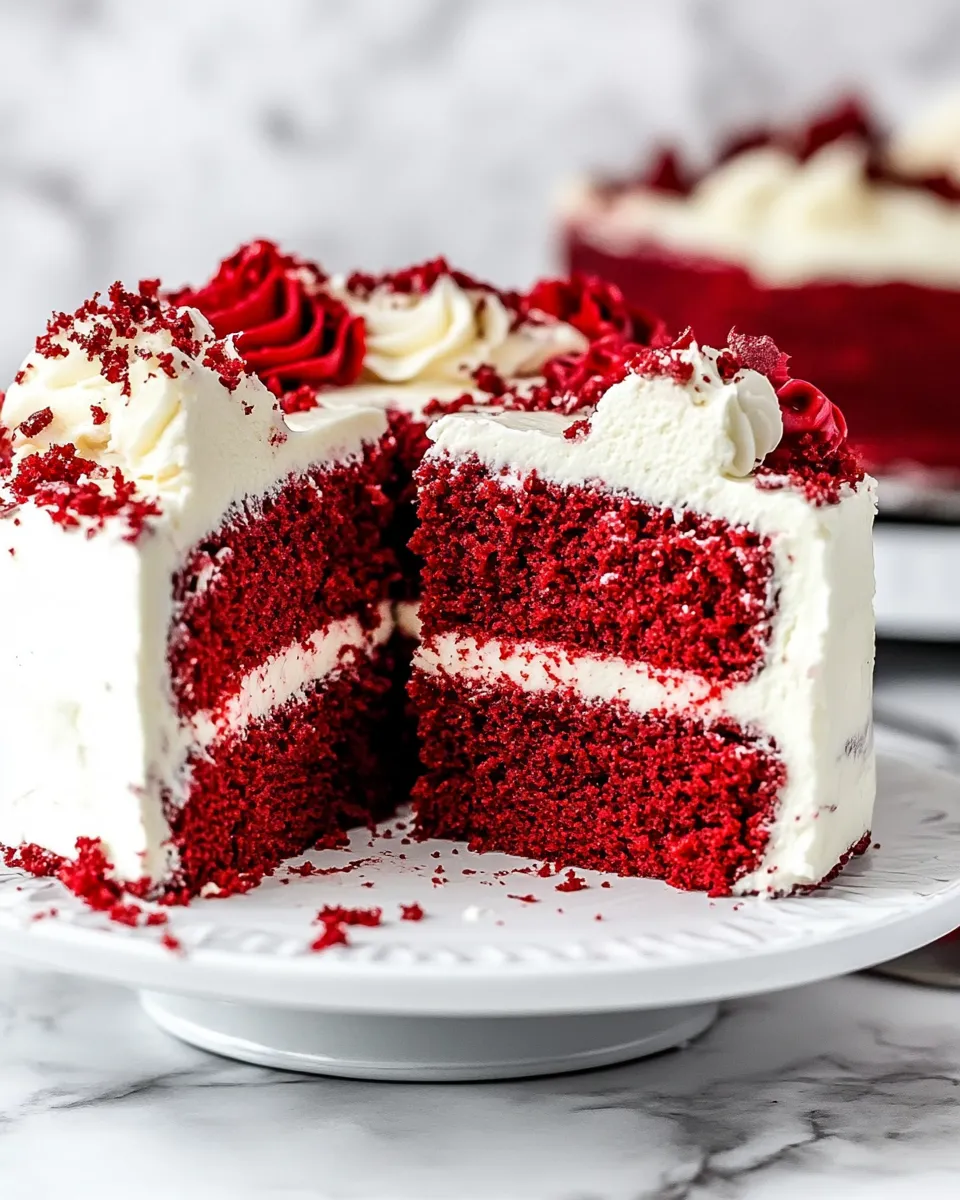
If you need dairy-free options, use a dairy-free block-style cream cheese and plant-based butter in equal volume; choose one designed for baking so it behaves like dairy cream cheese. For buttermilk, use unsweetened plant milk with a tablespoon of lemon juice or vinegar and let it sit briefly.
For a gluten-free version, swap in a trusted 1:1 gluten-free all-purpose flour blend that contains xanthan gum. Because flours vary, expect subtle texture differences; the cake may be slightly more fragile, so handle layers gently and chill briefly before frosting.
What’s in the Gear List
- Two 8-inch cake pans — as specified in the method for even layers.
- Electric mixer or stand mixer — creaming butter and sugar and making frosting is much faster and more consistent with a mixer.
- Sifter or fine-mesh sieve — for the flour and cocoa to avoid lumps and for dusting pans.
- Spatula and offset spatula — for folding batter and frosting smoothly.
- Wire rack — for cooling the cakes evenly and preventing soggy bottoms.
- Serrated knife or cake leveler — to level domed tops if necessary.
- Measuring cups and spoons — accurate measuring gives consistent results.
Missteps & Fixes
Dense or Heavy Cake
Cause: overmixing the batter after the flour goes in or using cold eggs/butter. Fix: mix only until ingredients are combined and use room-temperature eggs and butter. If batter seems unusually thick, check your flour measurement — spoon and level instead of scooping directly from the bag.
Top Cracks or Doming
Cause: oven temperature too high or batter over-aerated. Fix: verify oven temperature with an oven thermometer; rotate pans if your oven has hot spots. Level domes with a serrated knife once cooled slightly, and reserve trimmings for decoration as suggested.
Frosting Too Thin or Runny
Cause: too-warm butter/cream cheese or not enough icing sugar. Fix: chill the frosting briefly and beat in additional icing sugar a little at a time until spreadable. Avoid using softened-to-melted dairy — it should be room temperature, not warm.
Faint or Uneven Red Colour
Cause: inconsistent mixing of the liquid food colouring. Fix: whisk the oil/colour mixture well before adding, and ensure you use liquid colouring as the recipe specifies. You can increase the red food colouring slightly in small increments if you prefer a deeper hue, but note that it won’t change flavor.
Warm & Cool Weather Spins
In warm weather, cream cheese frosting softens quickly. Keep the assembled cake refrigerated until 30–60 minutes before serving, or chill briefly between decorating and serving. If transporting in heat, use a cooler or insulated bag with ice packs to keep the cake stable.
In cooler weather, serve the cake at room temperature so the frosting is soft and the flavors open up. If you want an autumnal twist without changing the recipe, serve slices with lightly warmed berries or a spoonful of caramelized fruit — these are serving ideas rather than recipe changes.
Notes on Ingredients
Cake flour vs. all-purpose: cake flour gives a finer, softer crumb because it’s lower in protein. If you use all-purpose, the cake will still work; just be mindful to avoid overmixing. Caster sugar is suggested because it dissolves faster than regular granulated sugar, giving a smoother texture, but fine granulated sugar is acceptable.
Use liquid red food colouring for consistency with this recipe. Gel pastes are more concentrated and may give an uneven color unless carefully measured and mixed. Unsweetened cocoa powder is used sparingly to build that chocolate undertone without overwhelming the red and tang.
Cream cheese should be block-style and allowed to come to room temperature so it creams smoothly with butter. If it’s too cold, you’ll get lumps; too warm and it becomes runny. The optional lemon juice brightens the frosting subtly — it’s truly optional, so taste as you go.
Refrigerate, Freeze, Reheat
Refrigerate the frosted cake for up to 3–4 days in an airtight cake carrier or well-wrapped. Because of the cream cheese frosting, refrigeration is recommended if you won’t finish the cake within a day at room temperature.
To freeze: freeze unfrosted baked layers wrapped tightly in plastic wrap and then foil for up to 2 months. Thaw overnight in the refrigerator, then bring to room temperature before frosting so crumbs don’t sweat into the frosting. You can also freeze a fully frosted cake, but expect some texture change in the frosting; thaw in the refrigerator for best results.
There’s no reheating step for cake slices — bring refrigerated slices to room temperature before serving for best flavor and texture. If you want a warm slice, a quick 10–15 second zap in the microwave will soften the frosting slightly; use short bursts to avoid melting.
Common Qs About Red Velvet Cake
Q: Is red velvet cake actually chocolate? A: It’s lightly chocolate. The small amount of cocoa provides a background chocolate note without making it a chocolate cake.
Q: Why use both vinegar and buttermilk? A: The vinegar boosts acidity and enhances the reaction with baking soda, which helps lift and tenderize the crumb. Buttermilk contributes both acidity and moisture.
Q: Can I reduce the food colouring? A: Yes. The color doesn’t affect bake chemistry, so reduce the colouring if you prefer a subtler hue. Mix carefully so color is even.
Q: Can I make this ahead? A: Bake the layers a day ahead, cool completely, wrap tightly, and refrigerate. Make the frosting the next day and assemble before serving.
Q: My frosting is gritty. What happened? A: That usually means the icing sugar wasn’t sifted or the cream cheese had lumps. Sift the icing sugar if it’s clumpy and make sure cream cheese is smooth before adding.
In Closing
This Red Velvet Cake is a dependable recipe that I use when I want something classic that still feels a little special. The method rewards patience — room-temperature ingredients, gentle mixing, and careful frosting — and the result is a tender, moist cake with a tangy-sweet frosting that’s never overpowering. Try it once exactly as written; once you’re comfortable, small swaps and decor choices are easy to make.
If you bake it, tell me how it turned out — I love hearing which tips helped you most. Happy baking.
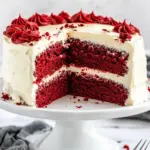
Best Red Velvet Cake
Ingredients
Ingredients
- 1/2 cupunsalted butterat room temperature
- 1 1/2 cupscaster sugaror fine white granulated sugar
- 2 largeeggs
- 1/4 cupcooking oil
- 1 tablespoonunsweetened cocoa powderplus 1 tablespoon extra for dusting
- 2 1/2 tablespoonsred food colouringliquid not gel
- 2 teaspoonspure vanilla extract
- 1 tablespoonwhite vinegar
- 2 1/2 cupsplain cake floursifted or all purpose/plain flour
- 1 teaspoonbaking sodabi-carb soda
- 1 teaspoonsalt
- 1 cupbuttermilk
- 14 ouncescream cheesenot spreadable at room temperature
- 1/2 cupunsalted butterat room temperature
- 2 teaspoonspure vanilla extract
- 4 cupsicing sugaror confectioners
- 1 tablespoonlemon juiceoptional – adds subtle hint of lemon
Instructions
Instructions
- Preheat oven to 350°F (175°C). Grease two 8-inch cake pans with butter or nonstick spray. Sift the extra 1 tablespoon of cocoa powder over the greased pans to dust them.
- In a large bowl, cream 1/2 cup unsalted butter (room temperature) and 1 1/2 cups caster sugar until light in color and fluffy.
- Add 2 large eggs one at a time, beating well after each addition until fully incorporated.
- In a small bowl, whisk together 1/4 cup cooking oil, 1 tablespoon unsweetened cocoa powder, 2 1/2 tablespoons red food colouring (liquid), and 2 teaspoons pure vanilla extract until smooth. Stir in 1 tablespoon white vinegar.
- Add the color/oil/vinegar mixture to the creamed butter, sugar, and eggs and beat until combined.
- Sift together 2 1/2 cups plain cake flour, 1 teaspoon baking soda, and 1 teaspoon salt.
- With the mixer on low, add half of the dry ingredients to the wet mixture and mix until just combined. Add half of the 1 cup buttermilk and mix until just combined. Repeat with the remaining dry ingredients and the remaining buttermilk, mixing until the batter is smooth but not overmixed.
- Divide the batter evenly between the two prepared pans and smooth the tops.
- Bake for 25–30 minutes, or until a toothpick inserted into the center comes out clean.
- Let the cakes cool in their pans for 10 minutes. Run a knife around the edges, invert the cakes onto a wire rack, remove the pans, and cool the cakes completely.
- While the cakes cool, make the frosting: beat 14 ounces cream cheese (room temperature), 1/2 cup unsalted butter (room temperature), and 2 teaspoons pure vanilla extract until smooth and slightly lighter in color, about 3–4 minutes.
- Gradually beat in 4 cups icing sugar until the frosting is light and fluffy. If the frosting is too thin, add a little more icing sugar and beat until you reach the desired consistency. If using, beat in 1 tablespoon lemon juice.
- If the cake tops are domed, level them with a serrated knife and reserve the trimmed pieces for decoration.
- Place one cake layer on a serving plate with the flat side down. Spoon about 1 1/2 to 2 cups of frosting onto that layer and spread evenly.
- Place the second cake layer on top (flat side down) and use the remaining frosting to cover the top and sides of the cake.
- Press the reserved cake crumbs into the sides or scatter them on top to decorate, if desired. Enjoy.
Equipment
- two 8-inch cake pans
- Large Mixing Bowl
- Small Bowl
- Sifter or fine mesh sieve
- Electric Mixer
- Wire Rack
- Serrated Knife
- Serving Plate
Notes
*To make your own buttermilk, mix 1 cup of full cream milk with 1 teaspoon vinegar before baking. Allow the milk to sour for 5-10 minutes.
Adapted from
The New York Times