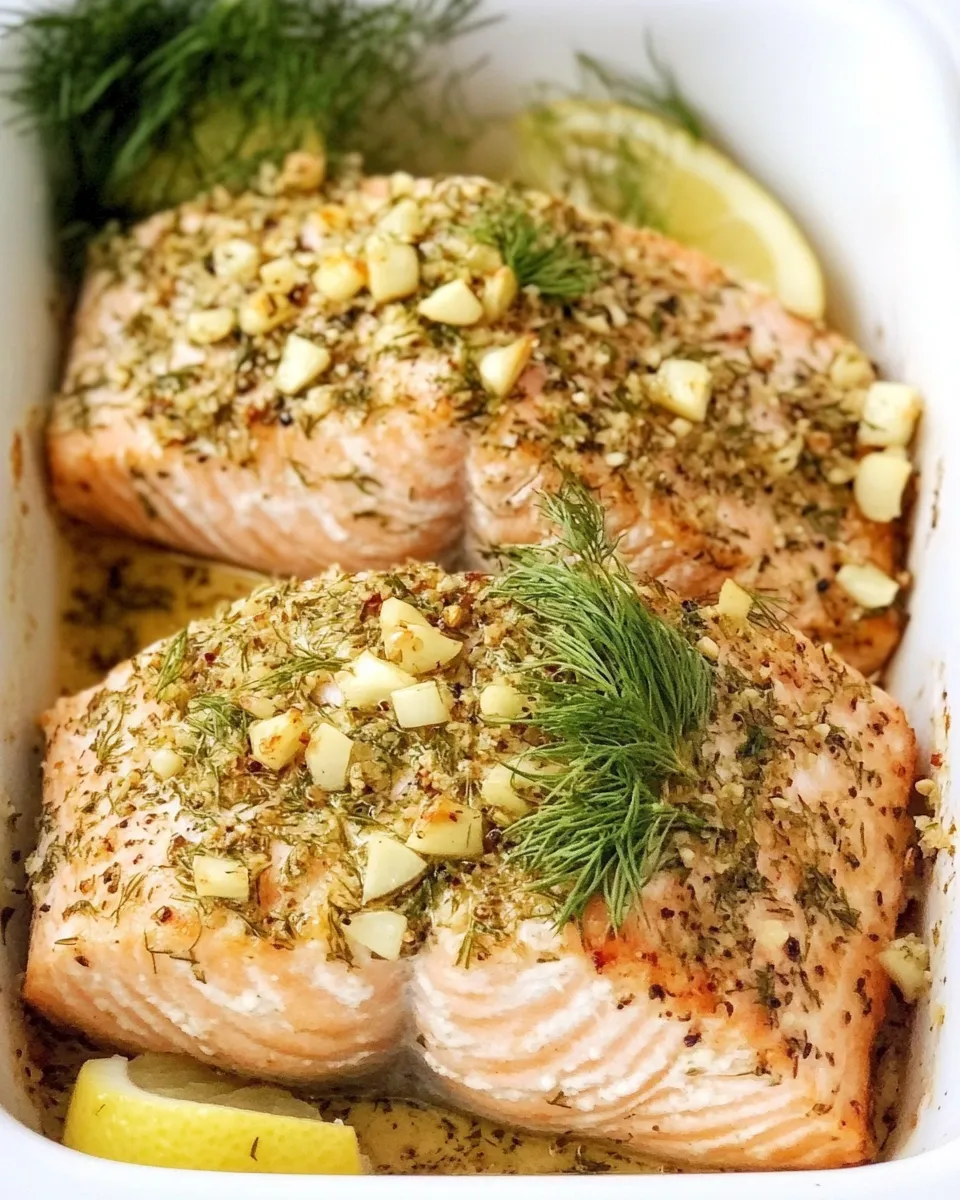
Baked Salmon with Dill and Garlic
This is my go-to weeknight recipe when I want dinner that feels thoughtful but doesn’t eat up the evening. The lemon, garlic, dill and olive oil make a bright, clean marinade that keeps the salmon moist while infusing it with flavor. Wrapping each fillet in foil creates a gentle steamy environment so the salmon stays tender and flakes perfectly.
I test this method on busy nights and on weekends when friends pop by—it’s forgiving, fast to assemble and scales well. You can prep the marinade ahead, tuck the fillets into the fridge, and finish with a short bake just before serving. Simple technique, reliably delicious outcome.
Below you’ll find a clear shopping guide, the exact ingredients and steps I use every time, plus practical swaps, troubleshooting, and serving ideas. No fuss—just good food on the table.
Your Shopping Guide

Buy the freshest salmon you can find without breaking the bank. Look for fillets with vibrant color and a clean, ocean smell—no fishy odor. If your market labels farmed vs. wild, decide based on budget and texture preference: wild tends to be firmer, farmed a bit fattier and milder. Aim for evenly sized fillets so they cook through at the same rate.
Fresh dill and lemons are key for bright flavor. Pick dill with crisp stems and fragrant fronds; limp greens will fade quickly. Choose garlic bulbs that are firm and heavy for their size. For the oil, use extra virgin olive oil you enjoy the taste of—it’s part of the marinade, so quality matters.
Finally, have basic kitchen staples on hand: aluminum foil for packets, a small mixing bowl for the marinade, and a rimmed baking sheet or dish to catch any drips. If you prefer to measure on the fly, keep your measuring spoons and cups accessible.
Method: Baked Salmon with Dill and Garlic
Ingredients
- 44-6 oz salmon fillets — the main protein; even thickness helps them cook uniformly.
- 3clovesgarlic, minced — builds savory, aromatic backbone in the marinade.
- 2tablespoonsfresh dill, chopped — adds brightness and herbal lift.
- 1teaspoonsalt — seasons the fish; adjust to taste if you’re using salted butter or a higher-sodium product.
- 1/2teaspoonfreshly ground black pepper — gives a gentle peppery note without overpowering.
- 3tablespoonsfreshly squeezed lemon juice — brings acidity to balance the oil and butter.
- 1/4cupextra virgin olive oil — emulsifies the marinade and helps carry flavor into the fillets.
- 2tablespoonsbutter, divided in 4 equal pieces — placed on each fillet for richness and to help baste while baking.
- Preheat the oven to 375 degrees F.
- In a small bowl, combine 3 cloves garlic (minced), 2 tablespoons fresh dill (chopped), 1 teaspoon salt, 1/2 teaspoon freshly ground black pepper, 3 tablespoons freshly squeezed lemon juice, and 1/4 cup extra virgin olive oil; stir to make the marinade.
- Place the salmon fillets in a glass baking dish and pour the marinade over them, turning the fillets to coat. Cover and refrigerate for at least 1 hour (preferably several hours), turning occasionally.
- Remove the salmon from the refrigerator. Divide the 2 tablespoons butter into 4 equal pieces. Tear or cut four sheets of aluminum foil large enough to wrap each fillet.
- Place one marinated fillet in the center of each foil sheet. Spoon some of the marinade from the baking dish over each fillet, place one butter piece on top of each fillet, then fold and seal the foil to form individual packets. Set the sealed packets in a baking dish or on a rimmed baking sheet to catch any drips.
- Bake the sealed packets in the preheated oven for 30–40 minutes, depending on the thickness of the fillets, until the salmon is opaque and flakes easily with a fork.
- Carefully open the foil packets (watch for hot steam) and serve the salmon immediately.
Why This Recipe Is Reliable
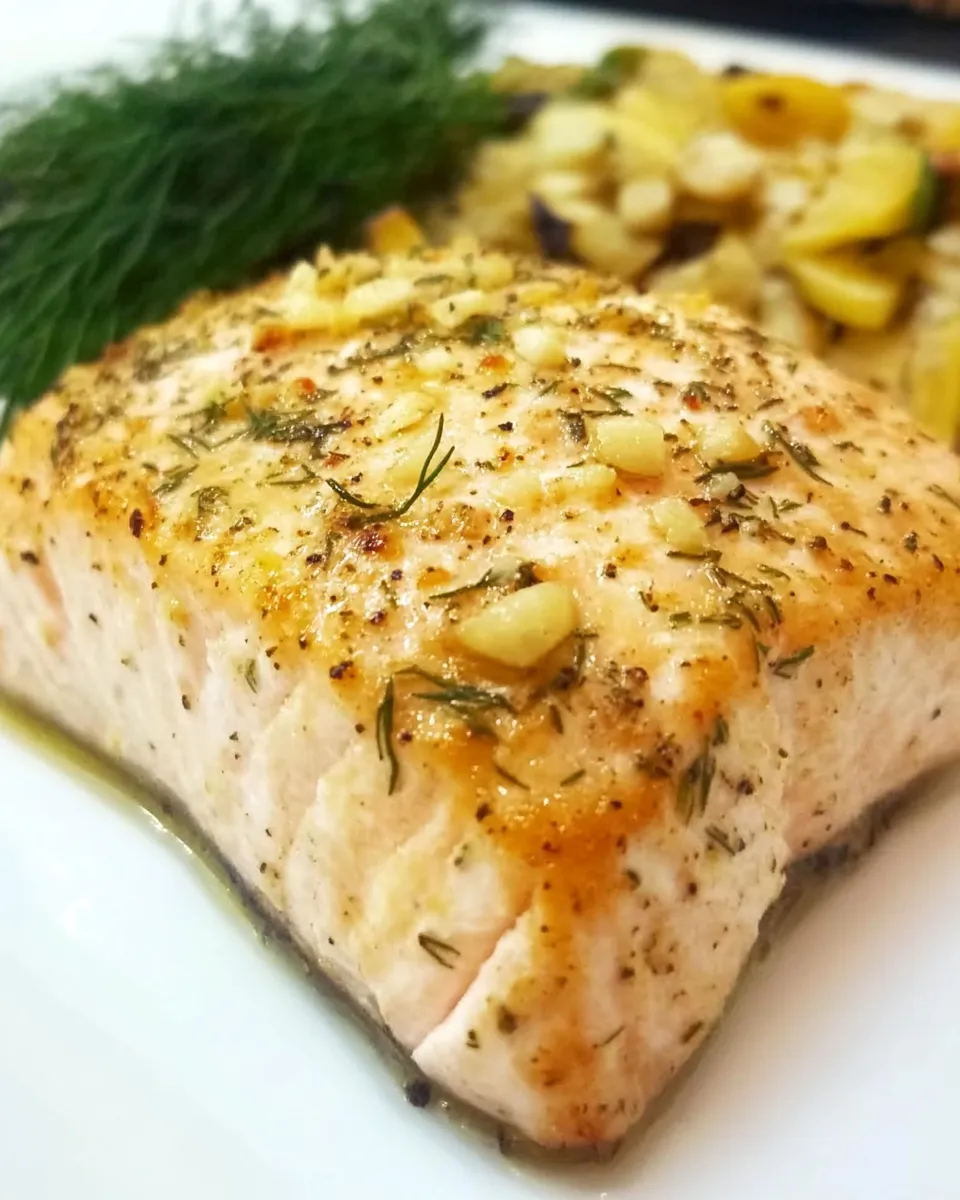
This method combines a bright, acid-forward marinade with gentle, enclosed baking. The lemon juice and olive oil penetrate the flesh without cooking it aggressively, while the foil creates steam that keeps the fillets tender. Dividing the butter into small pieces placed on each fillet ensures a glossy finish and adds mouthfeel without overwhelming the fish.
Oven temperature and packet cooking make the timing predictable. At 375°F the salmon warms through evenly; the 30–40 minute window accounts for variability in thickness. The packet technique also minimizes evaporation, so you get consistent texture every time.
Budget & Availability Swaps
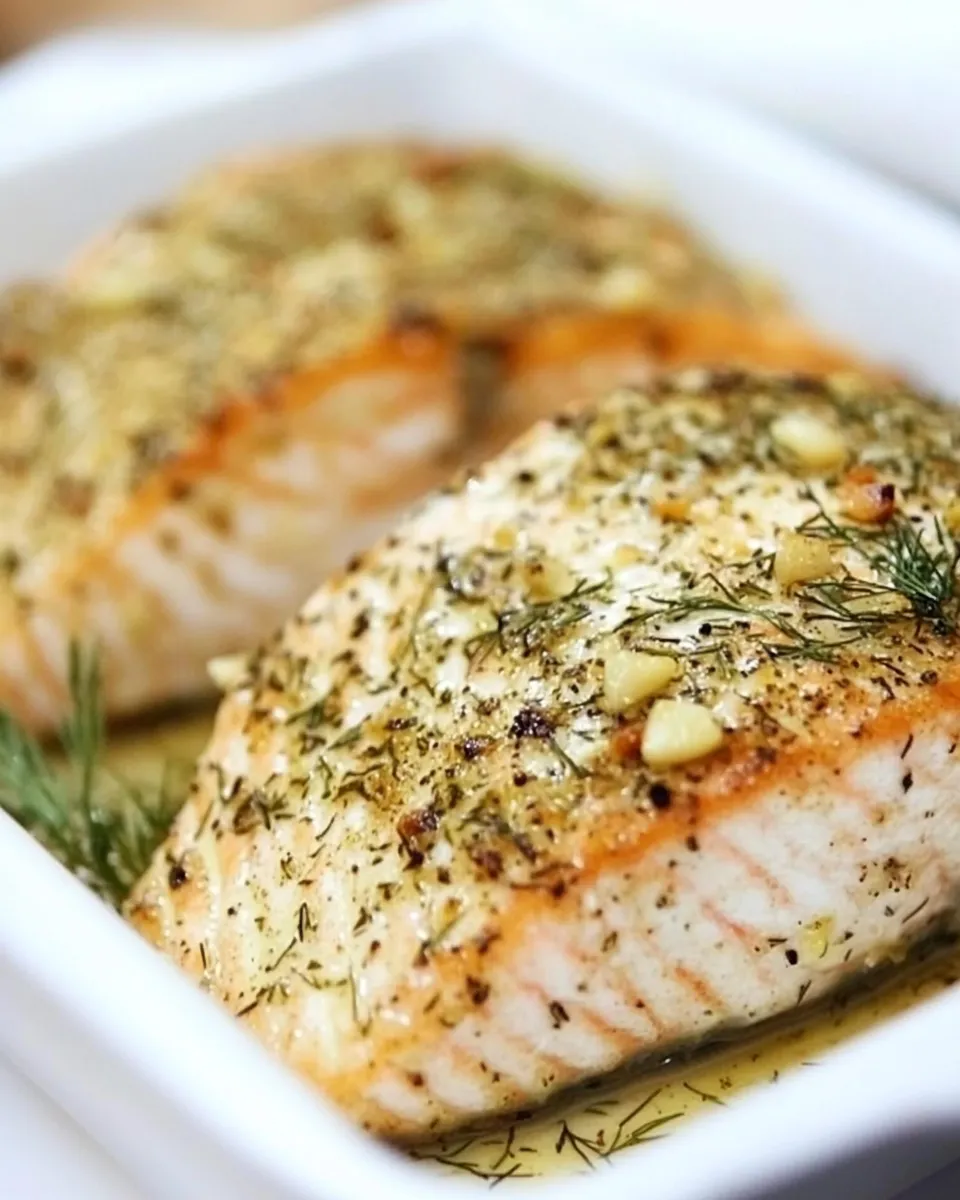
If salmon at your market is pricey, consider buying larger fillets and cutting them into portions yourself—it often works out cheaper. Frozen salmon of good quality is a fine option; thaw it fully in the fridge before marinating. For herbs, if fresh dill isn’t available, use a milder green like parsley, but adjust quantity—parsley is less aromatic so you might add a little more.
Instead of extra virgin olive oil you can use a neutral oil for a subtler taste. If lemons are out of season, bottled lemon juice will work in a pinch, though fresh always tastes brighter. Butter is integral to the finish; you can use a dairy-free spread if needed, but flavor and mouthfeel will change.
Equipment Breakdown
Essential items: a glass baking dish for marinating (glass won’t react with lemon), a small mixing bowl for the marinade, measuring spoons and cups, a sharp knife for trimming fillets, and aluminum foil to form packets. A rimmed baking sheet is helpful to contain any drips if you prefer not to set packets directly on the oven rack.
Optional but useful: an instant-read thermometer to check doneness (125–130°F for medium-rare to medium salmon is a target some prefer), kitchen shears to cut foil cleanly, and a spatula for transferring cooked fillets to plates without breaking them apart.
Watch Outs & How to Fix
Common issues and quick fixes
Problem: Salmon is dry. Fix: Check that the fillets weren’t overcooked—use the lower end of the time range for thinner pieces. Ensure packets are sealed well so steam does its job.
Problem: Marinade tastes flat. Fix: Freshness matters—use fresh dill and freshly squeezed lemon juice. If the lemon is weak, add a tiny pinch more salt to brighten flavors.
Problem: Foil sticks or tears. Fix: Use a double layer of foil if your sheets are thin; fold seams tightly and place packets seam-side up to minimize leaks. Catch drips with a rimmed baking sheet underneath.
Make It Year-Round
This recipe adapts well across seasons. In spring and summer, serve with simple green salads or new potatoes dressed lightly with lemon and herbs. In fall and winter, pair with roasted root vegetables or a warm grain salad for a heartier plate. Frozen salmon lets you enjoy this dish when fresh fish isn’t available—just plan extra thaw time in the fridge the day before.
Herbs can be adjusted: more dill in spring, a mix of dill and chives in summer. If fresh herbs are scarce, a smaller amount of dried dill can work—use roughly one-third the quantity and taste as you go.
Recipe Notes & Chef’s Commentary
Marinating time is flexible. I usually aim for several hours because it deepens flavor, but an hour does the job if you’re pressed for time. Turning the fillets occasionally while they marinate helps ensure even coating. The butter pieces on top are purposeful: they melt and baste the salmon from above while the packet holds steam from below.
When opening packets, tilt the seam away from your face to avoid steam burns. If you prefer a slightly crisper top, open the packet for the final 3–5 minutes and broil briefly, watching carefully so the garlic doesn’t burn.
Storage Pro Tips
Leftovers keep in an airtight container in the refrigerator for up to 2 days. Reheat gently—wrap a fillet in foil and warm at 300°F for 10–15 minutes, or microwave covered at medium power in short bursts to avoid drying the fish. Salmon freezes well: place cooled fillets in a shallow airtight container or vacuum-seal for up to 1 month; thaw in the fridge before reheating.
Do not refreeze salmon that was frozen and then thawed unless it was cooked first. For best texture on reheating, bring fillets back to room temperature briefly and avoid high heat.
Helpful Q&A
Q: Can I use skin-on fillets? A: Yes. Leave the skin on during marinating and baking; it helps hold the fillet together. If you prefer to eat without skin, it often separates easily after cooking.
Q: How do I know the salmon is done? A: Look for opaque color throughout and gentle flaking with a fork. For a precise check, an instant-read thermometer should register roughly 125–145°F depending on your preference for doneness.
Q: Can I double the recipe? A: Yes. Use a larger baking dish for marinating and bake packets on multiple racks if needed, rotating once for even heat. Ensure packets aren’t crowded so heat circulates.
Bring It to the Table
Serve the salmon straight from the opened packet or gently lift onto warm plates. Spoon any remaining juices from the packet over the fillet for extra flavor. Garnish with an extra sprig of fresh dill and thin lemon slices if you like a bright finish.
Pairings I love: a lemony couscous or orzo, simple steamed green beans tossed with olive oil and lemon zest, or a crisp green salad with a light vinaigrette. This dish also works beautifully with roasted asparagus or a potato gratin for a more substantial meal.
Make a double batch of marinade when you shop so you have it ready for future fillets. It keeps well in the fridge for a day and makes weeknight dinners feel effortless. Enjoy—this one’s a keeper in my rotation.
Baked Salmon with Dill and Garlic
Ingredients
Ingredients
- 44-6 oz salmon fillets
- 3 clovesgarlic minced
- 2 tablespoonsfresh dill chopped
- 1 teaspoonsalt
- 1/2 teaspoonfreshly ground black pepper
- 3 tablespoonsfreshly squeezed lemon juice
- 1/4 cupextra virgin olive oil
- 2 tablespoonsbutter divided in 4 equal pieces
Instructions
Instructions
- Preheat the oven to 375 degrees F.
- In a small bowl, combine 3 cloves garlic (minced), 2 tablespoons fresh dill (chopped), 1 teaspoon salt, 1/2 teaspoon freshly ground black pepper, 3 tablespoons freshly squeezed lemon juice, and 1/4 cup extra virgin olive oil; stir to make the marinade.
- Place the salmon fillets in a glass baking dish and pour the marinade over them, turning the fillets to coat. Cover and refrigerate for at least 1 hour (preferably several hours), turning occasionally.
- Remove the salmon from the refrigerator. Divide the 2 tablespoons butter into 4 equal pieces. Tear or cut four sheets of aluminum foil large enough to wrap each fillet.
- Place one marinated fillet in the center of each foil sheet. Spoon some of the marinade from the baking dish over each fillet, place one butter piece on top of each fillet, then fold and seal the foil to form individual packets. Set the sealed packets in a baking dish or on a rimmed baking sheet to catch any drips.
- Bake the sealed packets in the preheated oven for 30–40 minutes, depending on the thickness of the fillets, until the salmon is opaque and flakes easily with a fork.
- Carefully open the foil packets (watch for hot steam) and serve the salmon immediately.
Equipment
- Oven
- Small Bowl
- glass baking dish
- Aluminum Foil
- Rimmed Baking Sheet