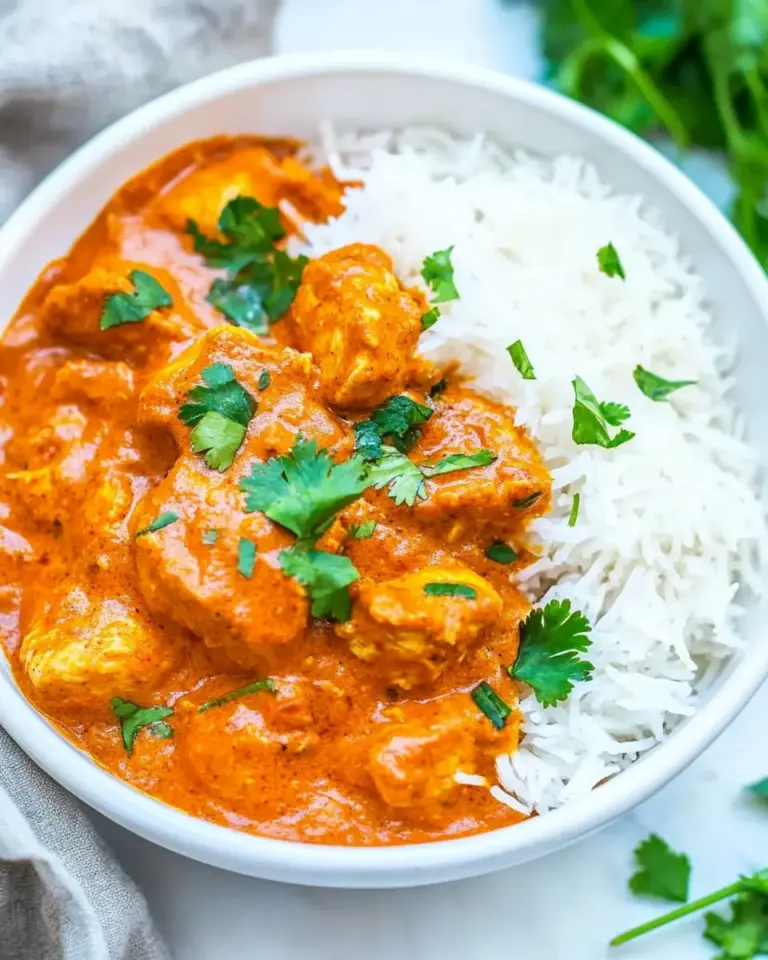
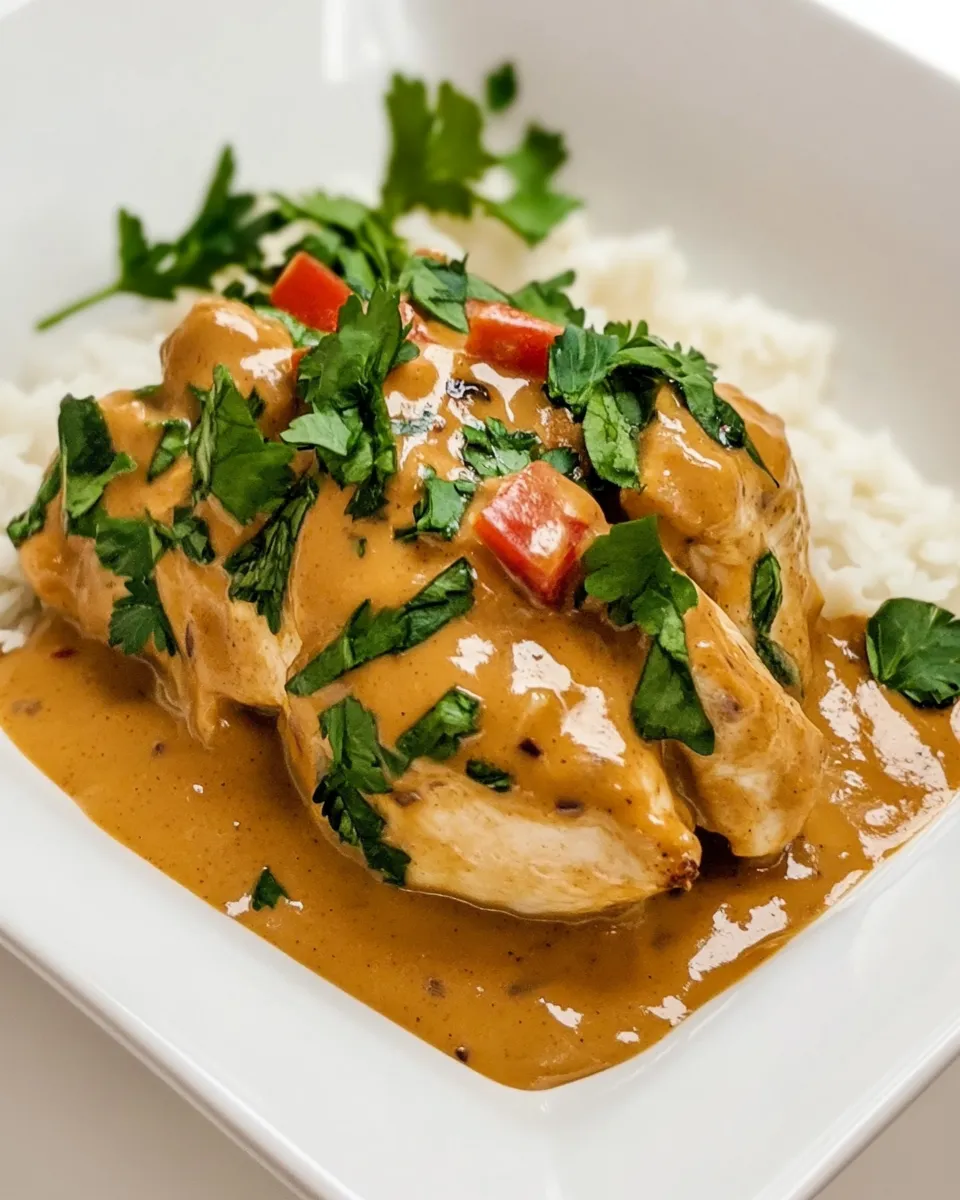
Chicken with Peanut Sauce
If you love quick weeknight dinners that taste like they took twice as long to make, this Chicken with Peanut Sauce is for you. It’s rich, slightly spicy, and silky-smooth—thanks to a coconut-peanut base that clings to tender, pan-seared chicken. The balance of tangy rice vinegar, savory soy sauce, and the gentle heat of red Thai curry paste makes every bite comforting and bright.
Why this recipe works

This version uses four boneless, skinless chicken breasts, trimmed and cut in half lengthwise so each piece cooks evenly and stays juicy. A simple skillet and about 20 minutes of hands-on time gets you a restaurant-worthy dinner without a lot of fuss. The sauce is whipped together with smooth natural peanut butter at room temperature and a can of unsweetened coconut milk that gives it body and a subtle tropical note. Freshly minced ginger and garlic add aromatic punch, while cilantro brings a final herbaceous lift.
Ingredients
- 4 boneless, skinless chicken breasts, trimmed and cut in half lengthwise
- 2 T minced ginger
- 1 T minced garlic
- 1/2 cup smooth natural peanut butter at room temperature (see notes)
- 1/4 cup rice vinegar (see notes)
- 3 T soy sauce
- 2 T Monkfruit Sweetener or sweetener of your choice
- 2 tsp. red Thai Curry Paste
- fresh ground black pepper to taste
- about 2 T peanut oil (depends on your pan)
- one 13.5 oz. can unsweetened coconut milk (see notes)
- 4 T finely chopped cilantro, plus more for garnish if desired (see notes)
Notes and substitutions
- Peanut butter: Use smooth, natural peanut butter that’s at room temperature so it blends into the sauce without lumps. If you prefer a different nut or seed, tahini works as a substitute but will shift the flavor profile.
- Rice vinegar: Provides bright acidity. If you don’t have rice vinegar, mild apple cider vinegar works in a pinch—use the same amount.
- Red Thai curry paste: Brands vary in heat. Start with the listed 2 teaspoons; you can add more later if you want more kick. Stir thoroughly so it disperses evenly in the sauce.
- Coconut milk: Unsweetened full-fat coconut milk gives the sauce richness and a silky texture. Light coconut milk will be thinner but still tasty.
- Cilantro: Adds freshness. If you don’t like cilantro, flat-leaf parsley is an acceptable swap.
- Soy sauce: Use a reduced-sodium variety if you prefer less salt. For a gluten-free version, substitute tamari.
Equipment
- Large skillet or frying pan
- Mixing bowl
- Whisk or fork
- Measuring spoons and cups
- Sharp knife and cutting board
Step-by-step instructions
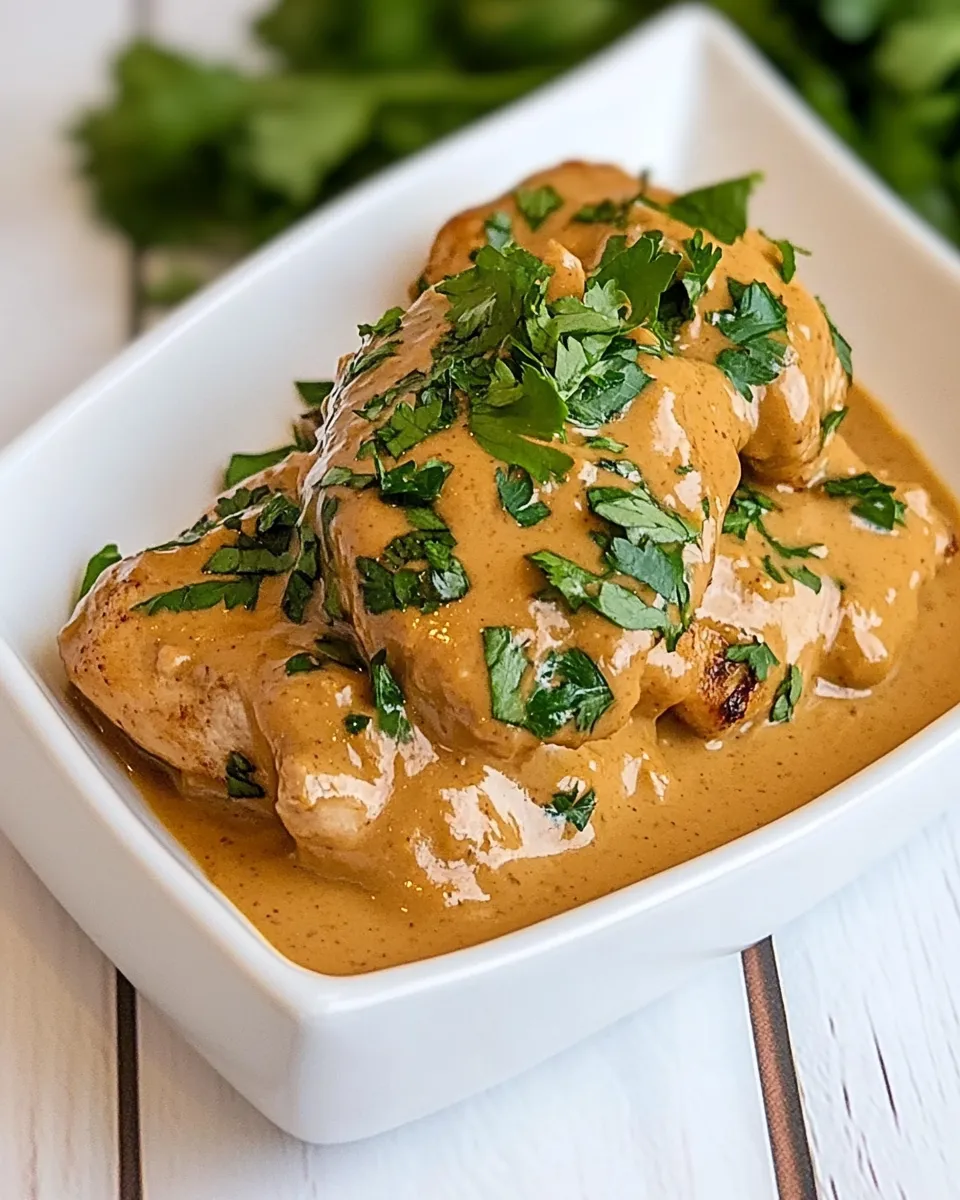
Follow these clear, ordered steps to make the dish. The recipe preserves the ingredient amounts exactly as listed above and follows the original preparation order, rewritten for clarity.
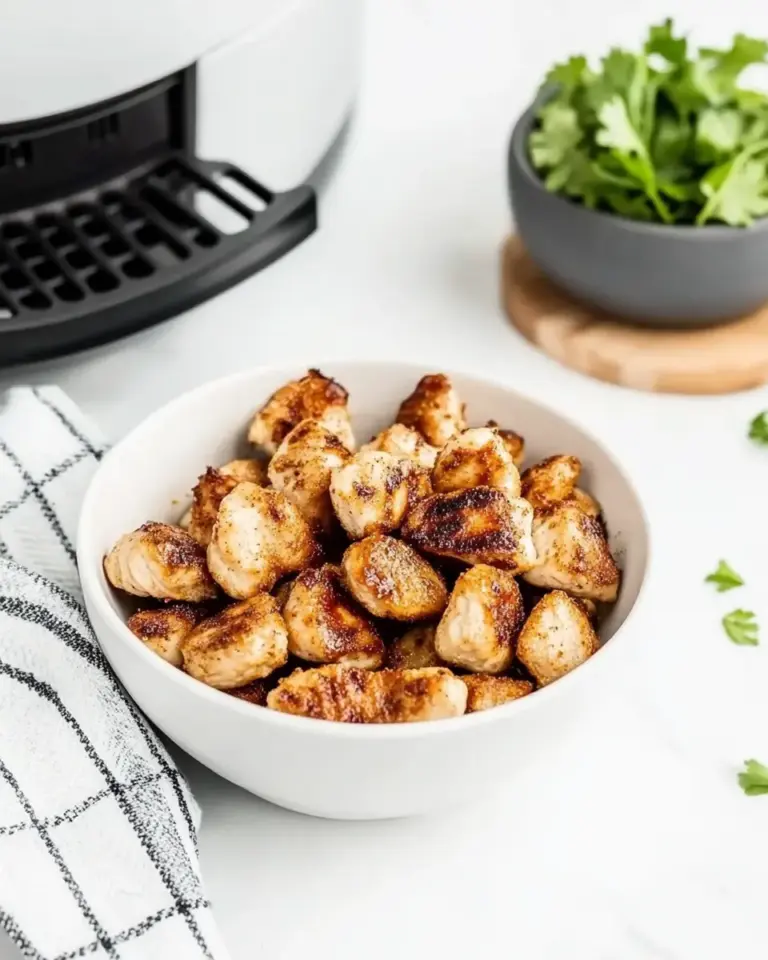
- Prepare the chicken: Trim any excess fat from the 4 boneless, skinless chicken breasts. Cut each breast in half lengthwise so you have thinner cutlets that will cook evenly. Pat the chicken dry with paper towels and season both sides lightly with fresh ground black pepper.
- Mix the sauce base: In a medium mixing bowl, combine 1/2 cup smooth natural peanut butter (at room temperature), 1/4 cup rice vinegar, 3 T soy sauce, 2 T Monkfruit Sweetener (or your preferred sweetener), and 2 tsp. red Thai curry paste. Whisk until smooth. The mixture will be thick; that’s normal.
- Add aromatics: Stir 2 T minced ginger and 1 T minced garlic into the peanut mixture so the flavors distribute evenly. Add a little more black pepper if you like.
- Thin the sauce with coconut milk: Open one 13.5 oz. can of unsweetened coconut milk and pour in about half at first. Whisk until the peanut butter thins and the sauce becomes pourable. Add more coconut milk as needed to reach a silky consistency that will coat the back of a spoon. Set the sauce aside.
- Heat the pan: Place a large skillet over medium-high heat. Add about 2 T peanut oil—use more or less depending on your pan size so the surface is lightly coated. Heat the oil until shimmer but not smoking.
- Cook the chicken: Add the chicken pieces to the hot skillet in a single layer, working in batches if necessary to avoid overcrowding. Cook for about 3–4 minutes per side, depending on thickness, until a golden crust forms and the internal temperature reaches 165°F (74°C). Transfer the cooked chicken to a plate and tent loosely with foil to keep warm.
- Combine chicken and sauce: Reduce the heat to low. Pour the prepared peanut-coconut sauce into the skillet, scraping up any browned bits from the bottom with a spatula to incorporate extra flavor. Warm the sauce gently for 1–2 minutes, stirring so it doesn’t stick or scorch.
- Finish the dish: Return the cooked chicken pieces to the pan, spooning the sauce over each piece. Let the chicken simmer in the sauce for 1–2 minutes so it absorbs the flavors and the sauce thickens slightly.
- Stir in cilantro: Remove the pan from the heat and stir 4 T finely chopped cilantro into the sauce so the herb softens but retains its brightness. Taste and adjust black pepper if desired.
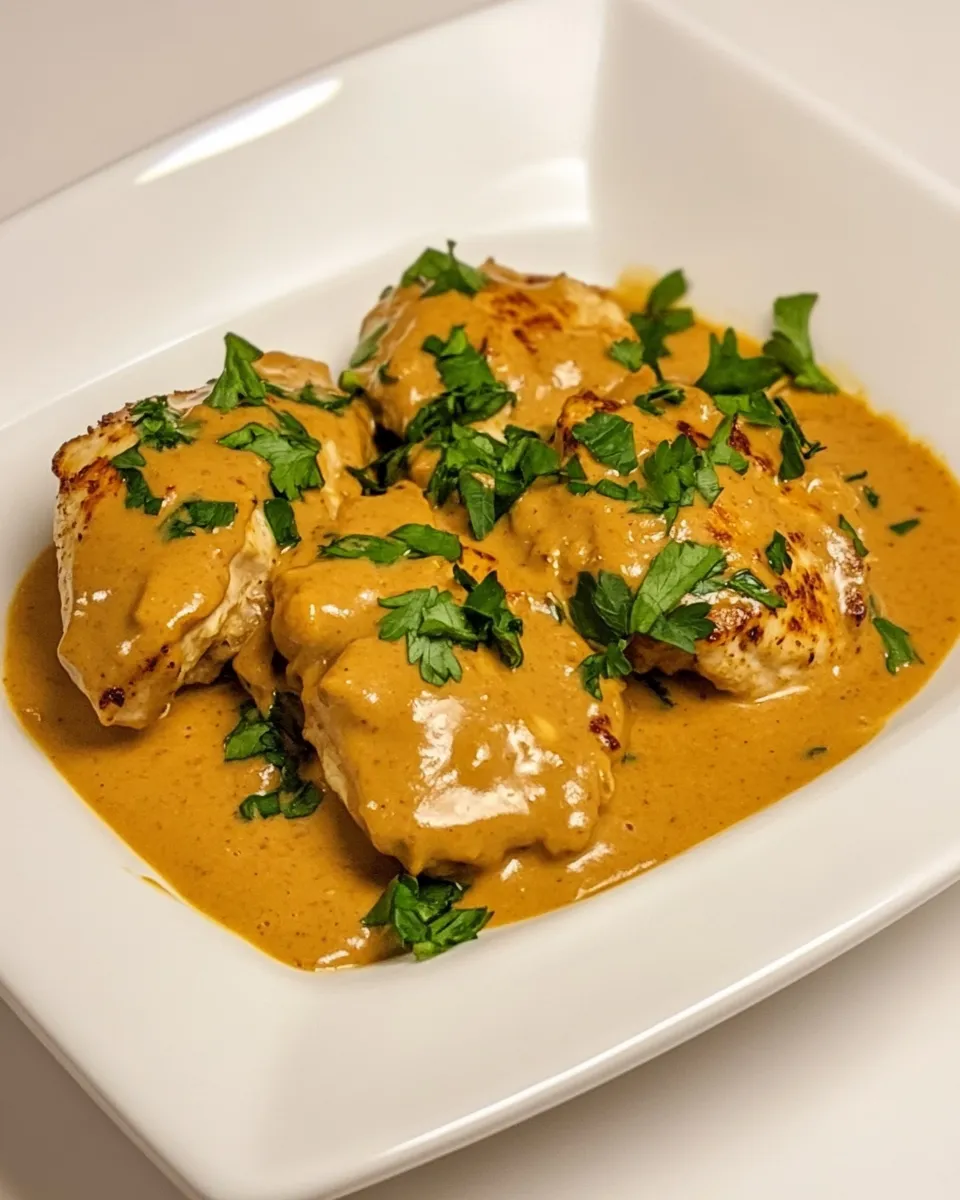
- Serve: Plate the chicken and spoon extra sauce over the top. Garnish with additional chopped cilantro if you like. This chicken pairs beautifully with steamed rice, noodles, or a bed of wilted greens.
Taste and texture
The sauce should be glossy and coat the chicken without being gluey. You’ll notice layers of flavor: the warm spice of ginger and curry paste up front, the nutty richness of peanut butter, and a bright lift from rice vinegar and cilantro. Coconut milk softens the heat and adds a smooth mouthfeel that makes each bite feel indulgent.
Serving suggestions
- Serve the chicken over jasmine rice or brown rice to soak up the sauce.
- For a lower-carb option, plate over cauliflower rice or a massaged kale salad.
- Top with roasted peanuts or sliced scallions for extra crunch and contrast.
- Pair with simple sides like steamed broccoli, snap peas, or a crisp cucumber salad to cut through the richness.
Make-ahead and storage
- Make the sauce up to 2 days ahead and refrigerate in an airtight container. Rewarm gently and whisk before using; it may thicken in the fridge and will loosen as it heats.
- Cooked chicken stores well in the refrigerator for up to 4 days. Reheat gently with a splash of coconut milk or water in a skillet so the meat stays moist.
- For freezing, place chicken and sauce in a freezer-safe container for up to 3 months. Thaw overnight in the refrigerator before reheating.
Quick tips
- Room temperature peanut butter blends best. If it’s cold and stiff, microwave the jar for 10–15 seconds or stir vigorously to loosen before measuring.
- Cutting the breasts in half lengthwise creates thinner portions that cook faster and stay tender—no drying out here.
- Use a thermometer to avoid overcooking; chicken is best at 165°F (74°C) internal temperature.
- Adjust sweetness and acidity: if the sauce tastes too tangy, add a touch more sweetener; if it’s too sweet, add a splash more rice vinegar or a pinch of salt.
Final thoughts
This Chicken with Peanut Sauce recipe is an easy way to elevate weeknight dinners with bold flavors and simple pantry ingredients. It’s adaptable—mild or spicy, thicker or saucier—so you can make it your own. The hands-on time is short, but the payoff is big: saucy, aromatic chicken that everyone will ask for again.
Chicken with Peanut Sauce
Ingredients
- 4 boneless skinless chicken breasts trimmed and each cut in half lengthwise
- 2 T ginger minced
- 1 T garlic minced
- 1/2 cup peanut butter smooth natural, at room temperature
- 1/4 cup rice vinegar
- 3 T soy sauce
- 2 T Monkfruit sweetener or sweetener of your choice
- 2 tsp red Thai curry paste
- fresh ground black pepper to taste
- about 2 T peanut oil or oil of choice, amount depends on pan
- 13.5 oz coconut milk one can, unsweetened
- 4 T cilantro finely chopped, plus more for garnish if desired
Instructions
- Trim any visible fat from the chicken breasts and cut each breast in half lengthwise to create 8 even pieces.
- Season both sides of the chicken with fresh ground black pepper.
- Heat about 2 tablespoons peanut oil in a large heavy frying pan over medium heat until shimmering.
- Add chicken pieces in a single layer and cook until nicely browned, about 5 minutes on the first side, then flip and cook 4–5 minutes more until an instant-read thermometer registers 165°F (75°C).
- Remove cooked chicken to a plate and tent with foil to keep warm while you make the sauce.
- Meanwhile, combine minced ginger, minced garlic, peanut butter, rice vinegar, soy sauce, Monkfruit sweetener, and red Thai curry paste in a food processor or blender and process until smooth; taste and add more curry paste if desired.
- Reduce the pan heat to low and pour in the coconut milk, scraping up any browned bits from the bottom of the pan.
- Stir the peanut butter mixture into the coconut milk and simmer gently for 2–3 minutes until heated through and slightly thickened.
- Add any juices from the resting chicken into the sauce, simmer another minute, then turn off the heat and stir in most of the chopped cilantro, reserving a bit for garnish.
- Serve the chicken hot with the peanut sauce spooned over and garnish with remaining cilantro if desired.
Equipment
- large heavy frying pan
- Food processor or blender
- Tongs or spatula
- Instant-read thermometer
- Cutting Board
- Knife
- Plate and foil
Notes
- Use smooth natural peanut butter at room temperature for easiest blending.
- Adjust red Thai curry paste to control spice level.
- An instant-read thermometer ensures chicken reaches 165°F (75°C).
- Rice vinegar and unsweetened coconut milk balance the sauce flavors.