Dutch Baby
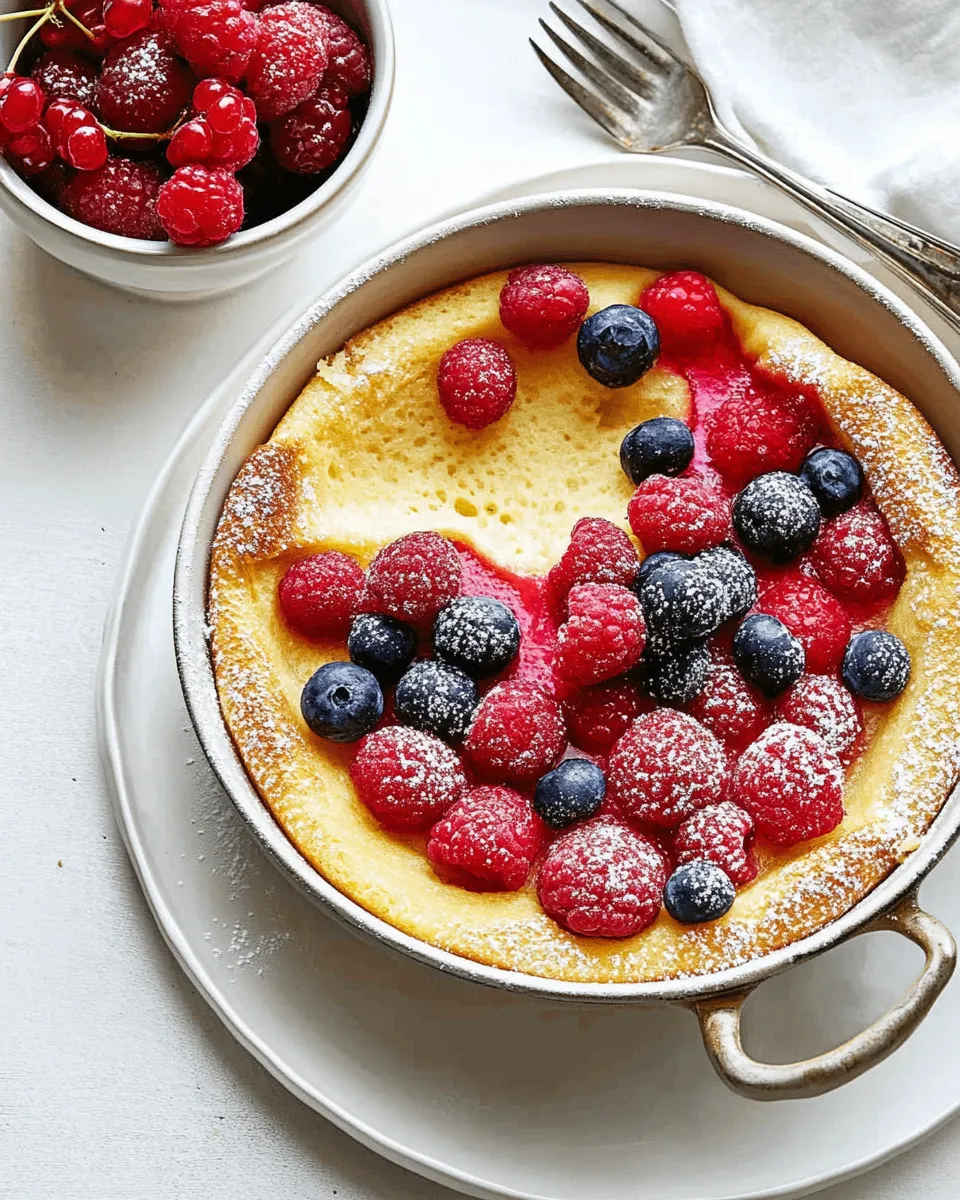
I make this Dutch baby any time I want an impressive, no-fuss breakfast that feels special. It puffs up dramatically in the oven, browns at the edges, and lands on the table warm and airy — all from a handful of pantry staples. There’s something satisfying about a recipe that demands very little attention but rewards you with a big, beautiful result.
This version uses a hot 10-inch cast-iron skillet and a simple blender batter. The technique is straightforward: preheat the skillet, blend a smooth batter, pour it into sizzling butter, and bake until puffed and golden. Finish with a dusting of powdered sugar and fresh berries for bright contrast.
What Goes Into Dutch Baby

Ingredients
- 3 large eggs, at room temperature — eggs give structure and the dramatic rise; room temperature helps the batter blend evenly.
- ½ cup all-purpose flour, spooned and leveled — the base of the batter; spooning and leveling prevents a dense result.
- ½ cup whole milk, at room temperature — adds richness and steam for lift; room temperature keeps batter smooth.
- 2 tablespoons cane sugar — a touch of sweetness to balance the butter and berries.
- ¼ teaspoon sea salt — enhances flavor and balances sweetness.
- Pinch nutmeg — a small aromatic note that deepens the flavor without overpowering.
- 2 tablespoons unsalted butter — melts into the hot skillet and crisps the edges; unsalted lets you control seasoning.
- Powdered sugar, for dusting — a light, classic finish when serving.
- Fresh berries, for serving — provide acidity, color, and freshness against the rich pancake.
Method: Dutch Baby
- Preheat the oven to 425°F. Place a 10-inch cast-iron skillet in the oven and let the skillet preheat for at least 5 minutes so it becomes very hot.
- While the skillet preheats, add to a blender: 3 large eggs (at room temperature), ½ cup all-purpose flour (spooned and leveled), ½ cup whole milk (at room temperature), 2 tablespoons cane sugar, ¼ teaspoon sea salt, and a pinch of nutmeg. Blend until the batter is completely smooth and free of lumps.
- Carefully remove the hot skillet from the oven using oven mitts. Add 2 tablespoons unsalted butter to the skillet and swirl the pan so the melted butter coats the bottom and sides.
- Pour the blended batter into the hot, butter-coated skillet (the butter may sizzle). Immediately return the skillet to the oven and bake for 13 to 16 minutes, until the edges are puffed and golden brown and the center is set.
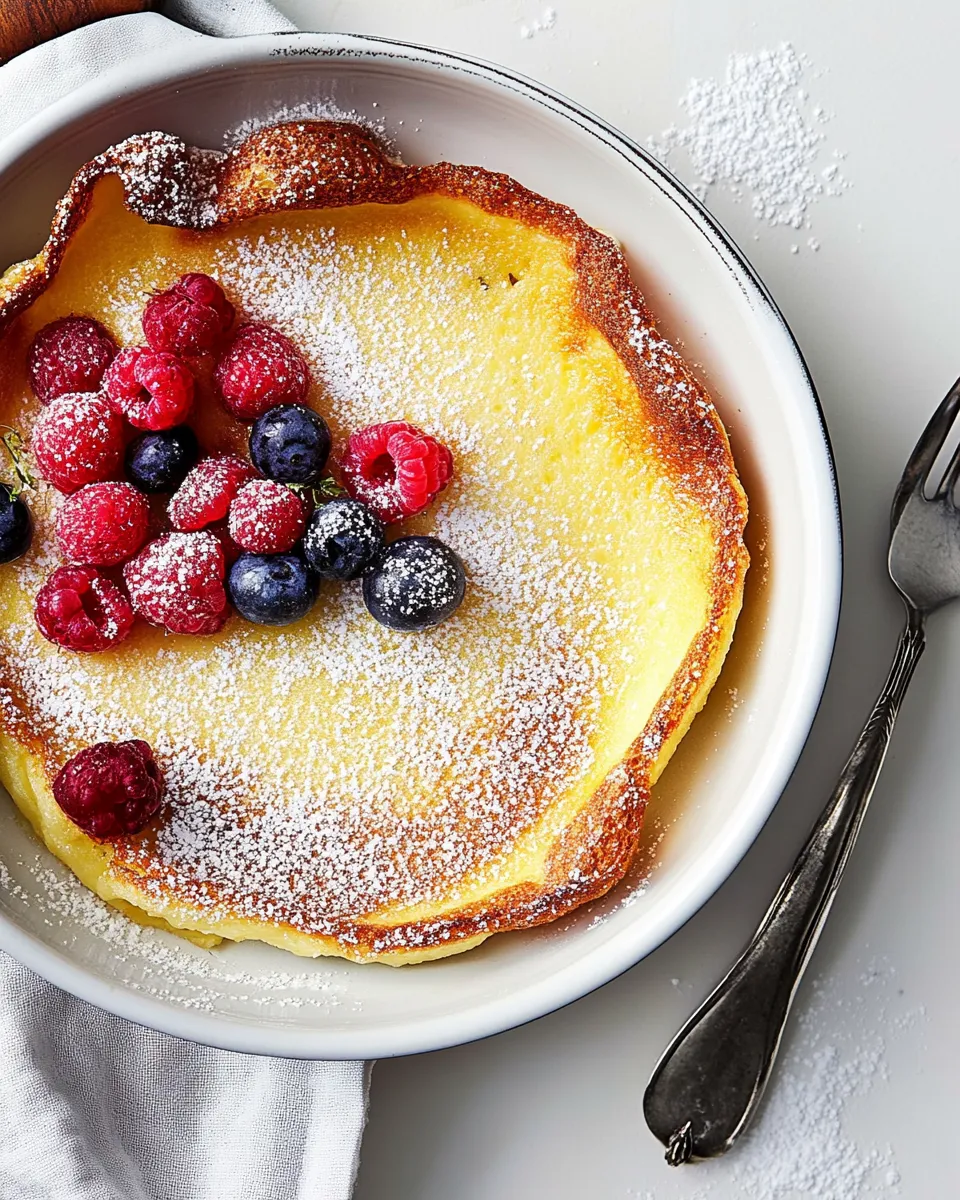
- Remove the skillet from the oven. Use a spatula to loosen and lift the Dutch baby from the pan, then transfer it to a serving dish. Dust with powdered sugar and serve with fresh berries.
Why This Recipe Works
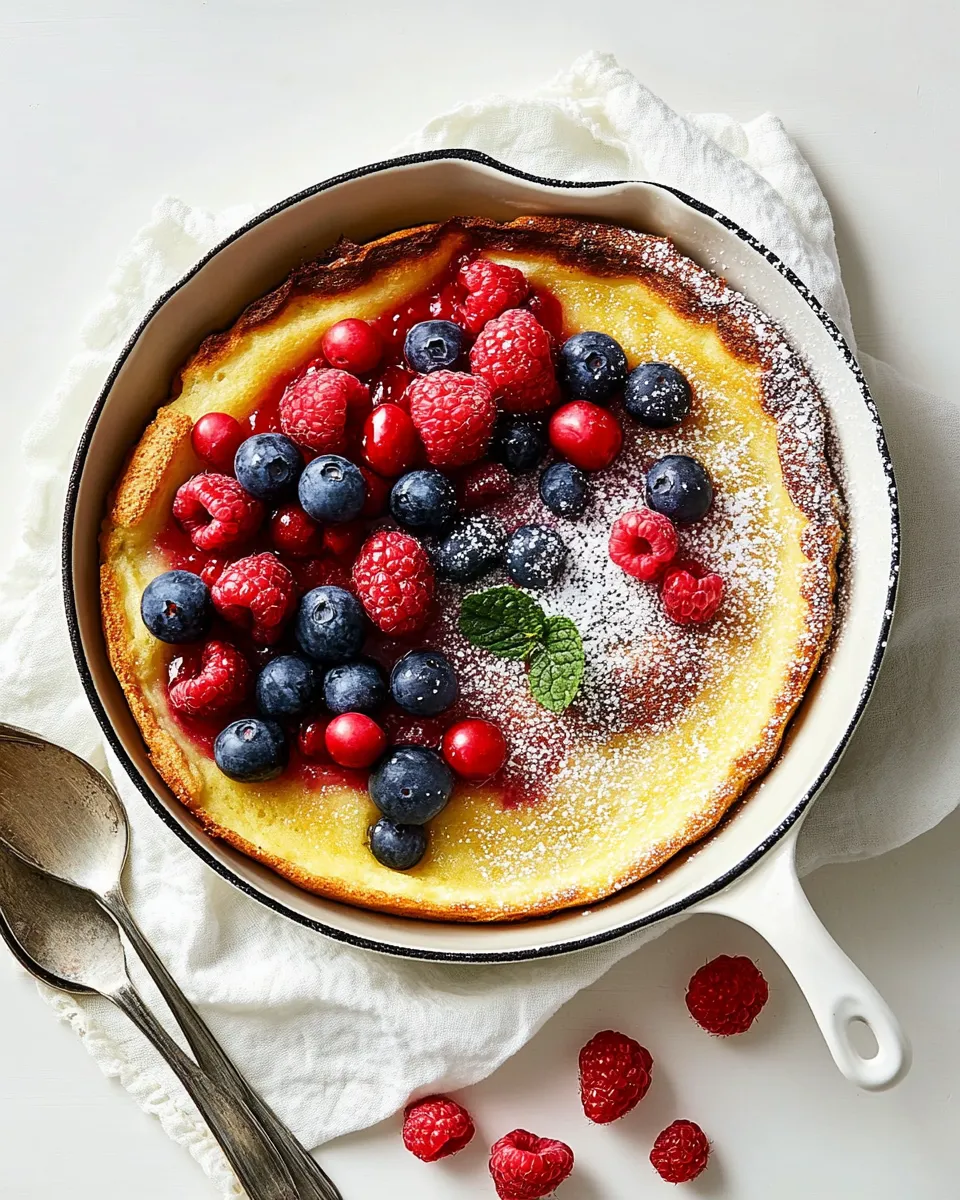
There are three simple things that make this Dutch baby reliable: high oven temperature, a hot skillet, and an egg-forward batter. The oven heat creates steam in the batter and sets it quickly, while the preheated skillet gives immediate contact heat so the edges puff and brown. Eggs are the main leavening mechanism here; they expand with steam and create that dramatic rise.
The blender does more than save time — it guarantees a silky, lump-free batter that bakes evenly. Using whole milk keeps the texture tender and adds flavor, and the small amount of sugar helps with browning and balance. Finally, finishing with powdered sugar and fresh berries adds contrast: sweetness, acidity, and a pop of freshness against the buttery pancake.
Easy Ingredient Swaps
- Milk — you can use lower-fat milk if you prefer a lighter batter; texture will be slightly less rich.
- Sugar — granulated sugar can replace cane sugar 1:1 if that’s what you have on hand.
- Butter — salted butter will work if unsalted isn’t available; reduce additional salt slightly.
- Berries — any fresh fruit works for serving: sliced stone fruit, stewed apples, or citrus segments bring different flavor profiles.
Kitchen Gear Checklist
- 10-inch cast-iron skillet (or oven-safe skillet of similar size)
- Blender (or a whisk and a bowl if you don’t have one)
- Measuring cups and spoons
- Oven mitts for removing the hot skillet
- Rubber spatula or flexible spatula for loosening the Dutch baby
Easy-to-Miss Gotchas
Preheating the skillet is non-negotiable. If the pan isn’t hot, you’ll miss the quick sizzle that helps the edges rocket upward. Give it at least five minutes in a fully preheated oven.
Blend the batter until smooth. Tiny lumps in the flour can lead to uneven texture. Also, don’t open the oven during baking — the sudden change in temperature can cause the Dutch baby to deflate prematurely.
When you remove it from the oven, transfer it promptly. The Dutch baby starts to fall as it cools; serving when it’s still warm preserves the best texture and presentation.
Smart Substitutions
Be thoughtful when substituting to keep the result predictable. If you swap whole milk for a thinner liquid, expect a slightly less tender crumb. If you omit the sugar entirely, the pancake will be less golden and slightly blander — add a bright topping to compensate.
For a dairy swap on the butter, use a cooking fat that melts well and has a neutral flavor. If you use salted butter, taste the batter (mindful of raw eggs) and reduce added salt if needed.
Notes on Ingredients
Eggs: They’re the backbone of this recipe. Room-temperature eggs incorporate more evenly and help the batter trap steam for lift.
All-purpose flour: Measure by spooning into the cup and leveling off. That avoids packing the flour and keeps the batter from getting heavy.
Whole milk: Adds fat and tenderness. Using cold milk can chill the batter and slow the rise, so bring it to room temperature with the eggs if possible.
Cane sugar and salt: Sugar contributes to browning; salt balances sweetness. Keep the amounts as written for a balanced taste.
Nutmeg: Just a pinch adds warmth and depth. It’s easy to overdo, so stick to a small amount.
Unsalted butter: Melts into the pan and helps create crispy, golden edges. Let it foam briefly in the hot skillet before pouring the batter so it coats the pan evenly.
Powdered sugar & berries: These are garnish and contrast. Dust the sugar just before serving so it doesn’t dissolve into the warm surface, and add berries for brightness.
Save for Later: Storage Tips
Leftover Dutch baby loses its puff quickly but still tastes good. Store refrigerated in an airtight container for up to 2 days. Reheat gently in a 350°F oven for 5–8 minutes to warm through and revive some edge crispness. Avoid microwaving if you want to keep texture; the microwave makes it soft and chewy.
If you’re planning to serve later the same day, warm it briefly in a low oven right before serving. Add the powdered sugar and berries after reheating so they stay fresh and bright.
Questions People Ask
Can I make the batter ahead of time? You can blend the batter and refrigerate it for a short time, but it’s best used within a few hours. Batter will sit safely in the fridge, but the lift is optimal when baked soon after blending.
Do I need a cast-iron skillet? A 10-inch cast-iron skillet is ideal because it holds heat well and gives the best rise and browning. An oven-safe stainless skillet can work in a pinch, but results may vary.
Can I double the recipe? Yes, but use two skillets or bake in separate batches. Overfilling a larger pan will change the thickness and baking time.
Why did my Dutch baby deflate? It will naturally fall as it cools. If it collapses dramatically during baking, the oven temperature might be too low or the skillet wasn’t hot enough to create the immediate steam needed for lift.
Hungry for More?
If you like this Dutch baby, try adapting the toppings: lemon curd with toasted almonds, sautéed apples with cinnamon, or a savory finish with grated cheese and herbs. This batter is forgiving and quick, so it’s a great base for both sweet and savory experiments.
Make it a routine — blender, hot pan, quick bake — and you’ll have a weekend-worthy breakfast in under 30 minutes. Serve it family-style from the skillet and enjoy the little moment of delight when it arrives at the table puffed and golden.

Dutch Baby
Ingredients
Ingredients
- 3 large eggs at room temperature
- 1/2 cupall-purpose flour spooned and leveled
- 1/2 cupwhole milk at room temperature
- 2 tablespoonscane sugar
- 1/4 teaspoonsea salt
- Pinchnutmeg
- 2 tablespoonsunsalted butter
- Powdered sugar for dusting
- Fresh berries for serving
Instructions
Instructions
- Preheat the oven to 425°F. Place a 10-inch cast-iron skillet in the oven and let the skillet preheat for at least 5 minutes so it becomes very hot.
- While the skillet preheats, add to a blender: 3 large eggs (at room temperature), ½ cup all-purpose flour (spooned and leveled), ½ cup whole milk (at room temperature), 2 tablespoons cane sugar, ¼ teaspoon sea salt, and a pinch of nutmeg. Blend until the batter is completely smooth and free of lumps.
- Carefully remove the hot skillet from the oven using oven mitts. Add 2 tablespoons unsalted butter to the skillet and swirl the pan so the melted butter coats the bottom and sides.
- Pour the blended batter into the hot, butter-coated skillet (the butter may sizzle). Immediately return the skillet to the oven and bake for 13 to 16 minutes, until the edges are puffed and golden brown and the center is set.
- Remove the skillet from the oven. Use a spatula to loosen and lift the Dutch baby from the pan, then transfer it to a serving dish. Dust with powdered sugar and serve with fresh berries.
Equipment
- Oven
- 10-inch cast-iron skillet
- Blender
- Oven mitts
- Spatula