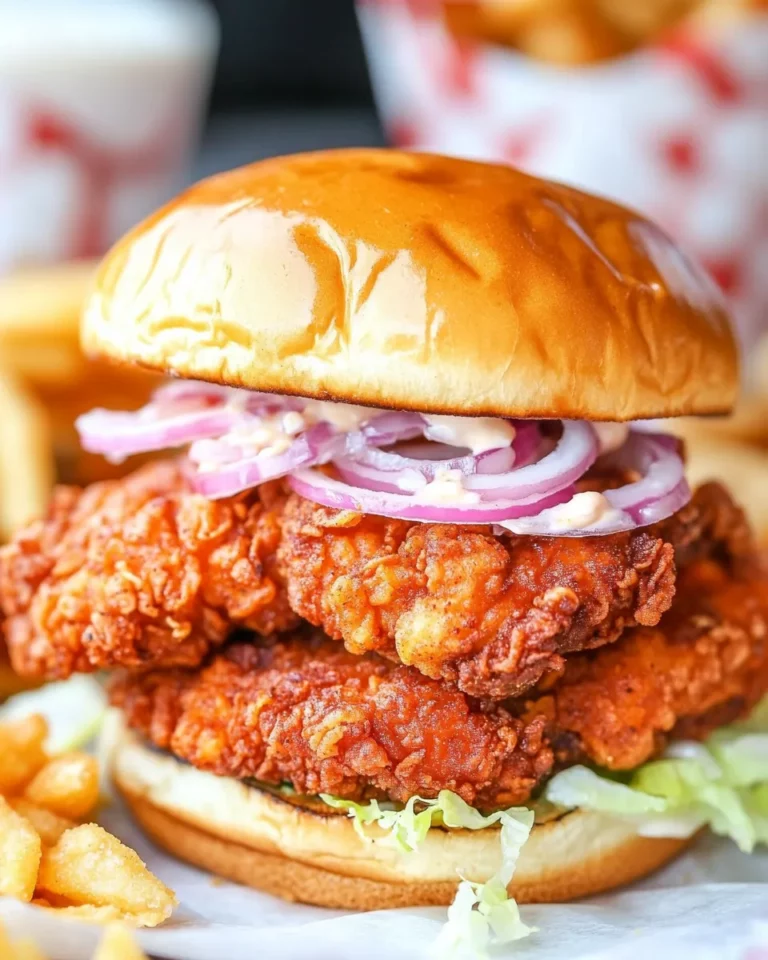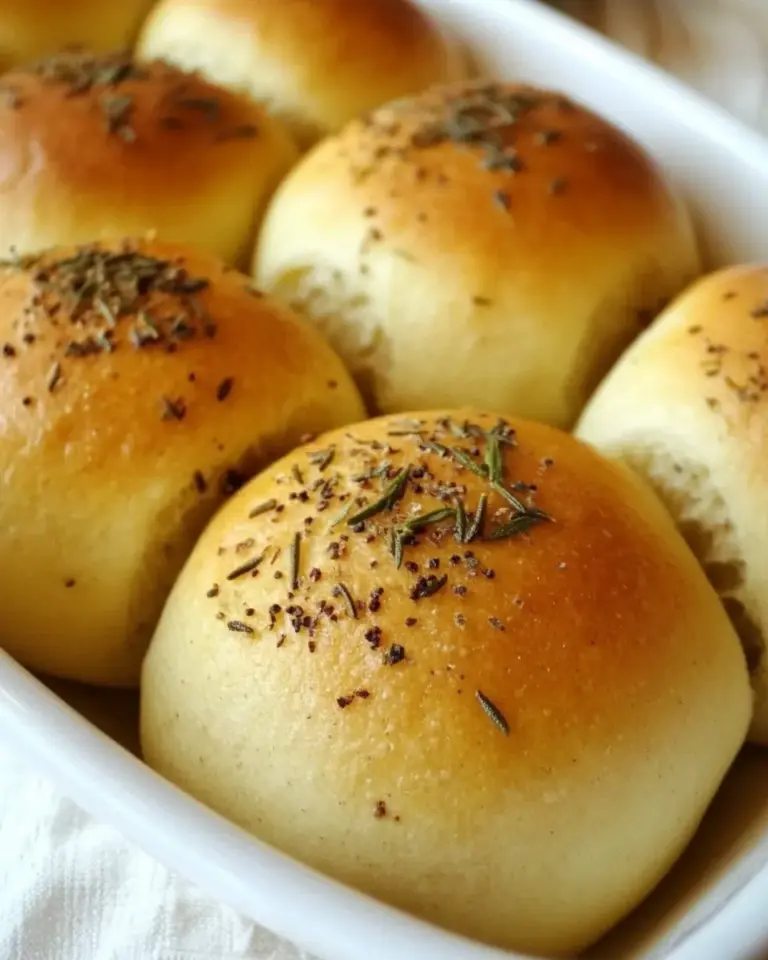
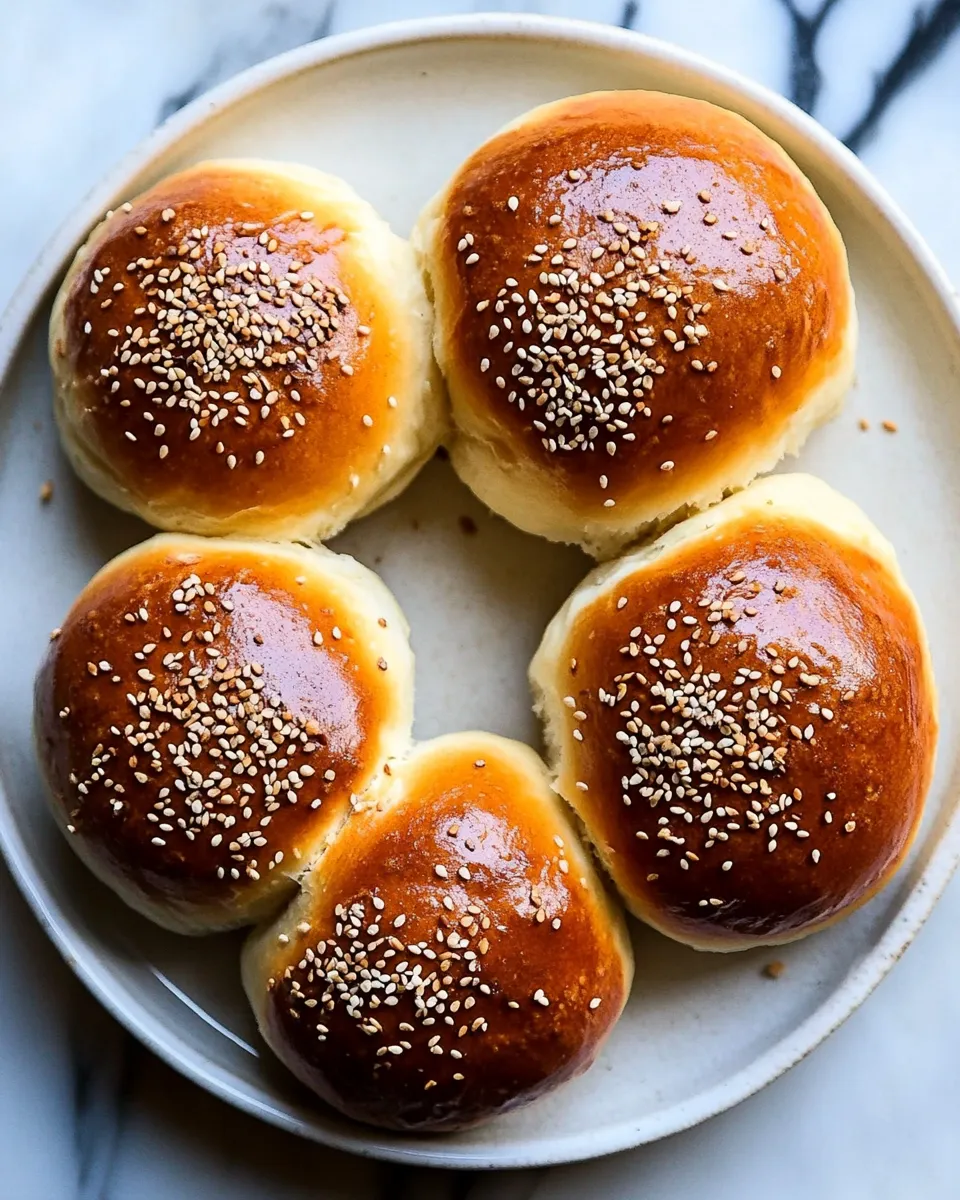
40 minute hamburger bun recipe
I make these buns when I want a warm, pillowy roll on the table fast. They’re the sort of recipe that turns weeknight burgers into something worth lingering over. No long rises, no complicated folding — just a straightforward rhythm and a reliable result.
There’s comfort in hands-on baking, but I know you don’t always have hours. This recipe trims time without skimping on texture or flavor. You’ll shape eight even buns, give them a short rest, slap on an egg wash, and bake. Simple, effective, and fast.
Read the steps once, gather your ingredients, and you’ll be surprised how often these make their way into dinner rotation. I’ll walk through what to gather, exactly how to follow each step, why the method works, and how to tweak or store the buns so they serve you well all week.
What You’ll Gather

- 2 tablespoons active dry yeast — helps the buns rise quickly; check freshness for best results.
- 1 cup plus 2 tablespoons warm water about 110 degrees — activates the yeast; aim for warm, not hot.
- 1/3 cup vegetable oil — keeps the crumb tender and adds richness without butter.
- 1/4 cup sugar — feeds the yeast and balances flavor for a golden crust.
- 1 large egg beaten — adds structure and moisture to the dough.
- 1 teaspoon salt — essential for flavor and controlling yeast activity.
- 3 to 3-1/2 cups all-purpose flour — the main structure; add gradually until dough is soft but not sticky.
- 1 egg yolk — used in the egg wash for shine and color.
- 1 TBSP water — mixed with the egg yolk to make the egg wash.
- 2 TBSP sesame seeds — for a classic, nutty topping; optional if you prefer plain tops.
Hamburger Bun: Step-by-Step Guide
- In a large bowl, stir together 2 tablespoons active dry yeast and 1 cup plus 2 tablespoons warm water (about 110°F).
- Add 1/3 cup vegetable oil and 1/4 cup sugar; stir briefly and let stand 5 minutes, until the mixture is foamy.
- Whisk in the 1 large beaten egg.
- Add 1 teaspoon salt and 3 cups all-purpose flour. Stir to form a soft dough, then gradually add up to the remaining 1/2 cup flour (total 3 to 3-1/2 cups) as needed so the dough is soft but not sticky.
- Knead the dough 3–5 minutes using a dough hook on a mixer until smooth and elastic. If kneading by hand, turn the dough onto a lightly floured surface and knead 3–5 minutes until smooth and elastic.
- Divide the dough into 8 equal pieces and shape each piece into a smooth ball.
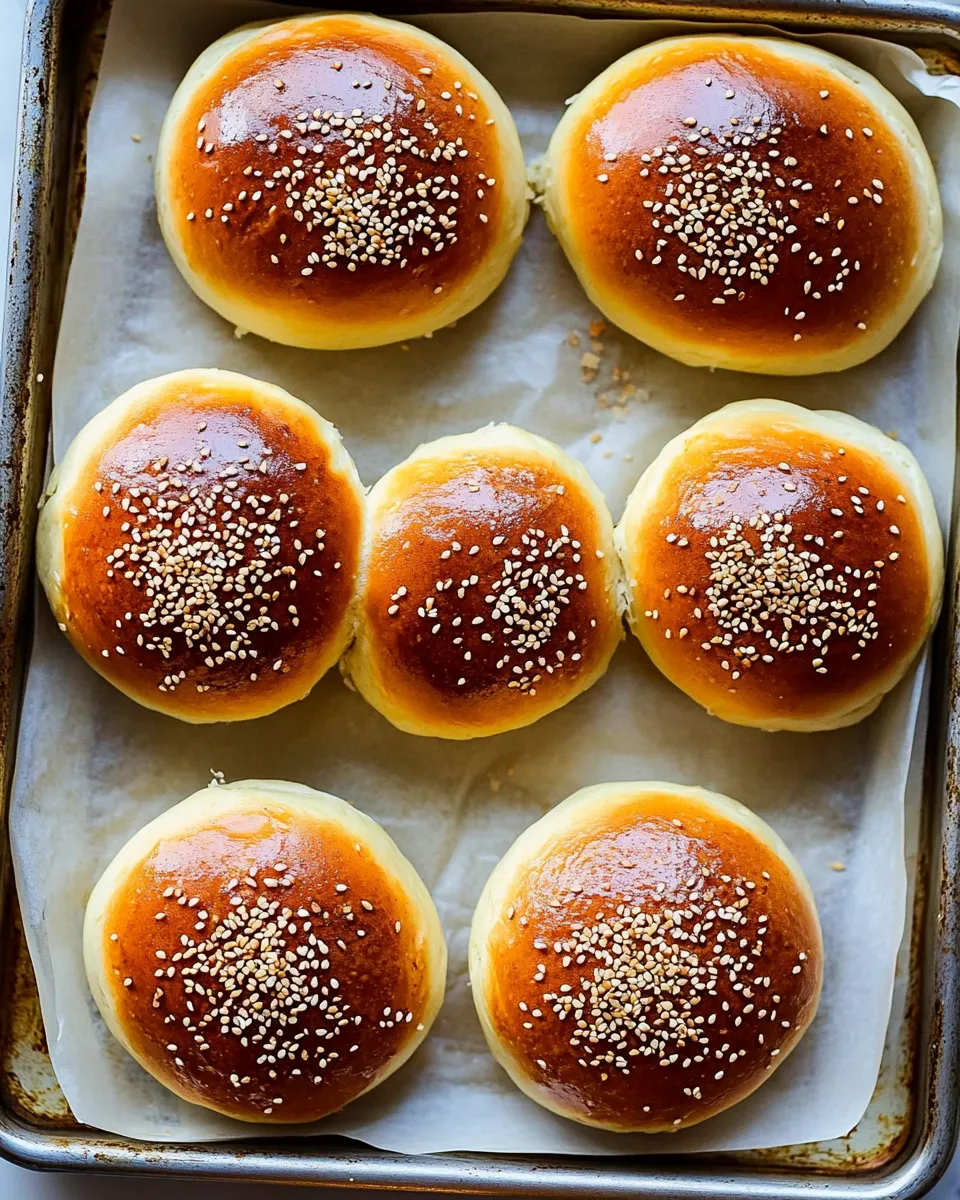
- Place the dough balls on a greased or lined baking sheet, spacing them evenly. Cover loosely with a kitchen towel and let rest for 10 minutes (this is a short rest; do not perform a full rise).
- While the buns rest, preheat the oven to 425°F.
- In a small bowl, whisk together the 1 egg yolk and 1 tablespoon water to make the egg wash.
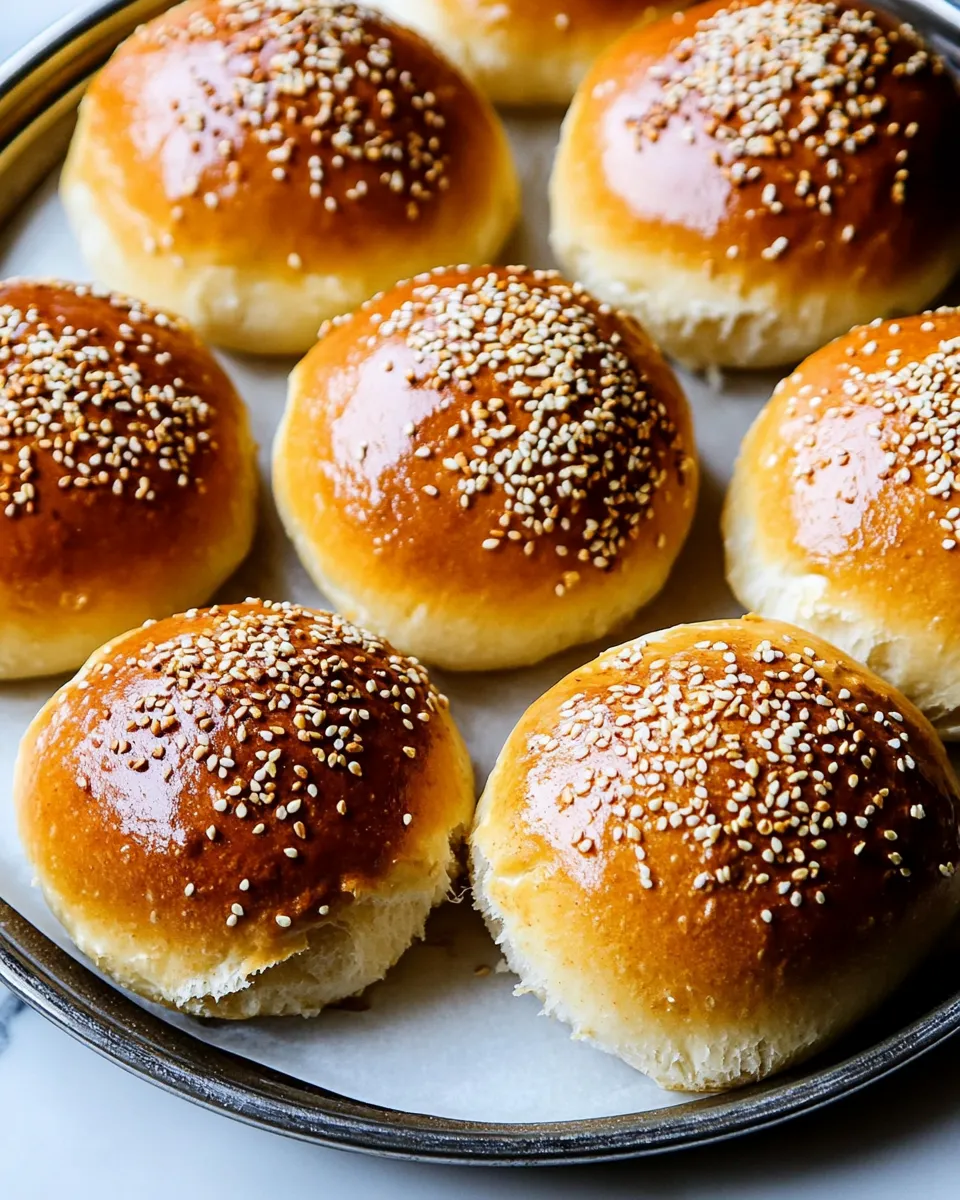
- After the 10-minute rest, brush the tops of the buns with the egg wash and sprinkle evenly with 2 tablespoons sesame seeds.
- Bake on the middle oven rack for 8–12 minutes, until the buns are golden brown. Remove from the oven and let cool slightly before serving.
Why This Hamburger Bun Stands Out
These buns strike a rare balance: quick turnaround and a soft, structured crumb. The short, targeted rest (not a full rise) keeps the process tight but still allows the yeast to create lift. The vegetable oil and beaten egg create tender, flexible dough that bakes with a lightly enriched flavor—perfect for sandwiching a juicy patty without falling apart.
At 425°F the oven gives the rolls a fast oven spring and a shiny, golden top from the egg wash. Sesame seeds add a familiar, slightly toasty note. This technique delivers a homemade bun that feels bakery-made but comes together in under an hour from start to finish.
Easy Ingredient Swaps
- Vegetable oil — swap for light olive oil or melted avocado oil for a different flavor profile.
- Sugar — use honey or maple syrup (measure by volume) if you prefer natural sweeteners; dough color and flavor will shift slightly.
- All-purpose flour — you can try 50% bread flour for a chewier bite; if using all bread flour, reduce added flour slightly to keep dough soft.
- Sesame seeds — swap for poppy seeds, coarse sea salt, or omit entirely if you want a plain top.
- Egg in dough — replace with an equal amount of mashed cooked potato or silken tofu for an eggless option, but texture will vary.
Must-Have Equipment
- Large mixing bowl — for combining yeast and liquids and giving the dough space to relax.
- Stand mixer with dough hook (optional) — speeds kneading. If you don’t have one, your hands will do fine.
- Baking sheet — a heavy sheet gives even browning. Line with parchment for easy cleanup.
- Kitchen towel or plastic wrap — to cover the dough during the short rest.
- Pastry brush — for applying the egg wash evenly.
- Kitchen scale or measuring cups/spoons — keep measurements accurate for consistent results.
Don’t Do This
- Don’t skip the foam test. If the yeast doesn’t foam after the 5-minute rest, the yeast is likely dead or the water was too hot or cold. Start over.
- Don’t over-flour. Add up to the extra 1/2 cup only as needed. Sticky dough is easier to shape and yields a softer crumb.
- Don’t give these buns a full rise. This recipe is designed for a short rest; a long rise changes texture and adds time, defeating the 40-minute promise.
- Don’t skip the egg wash if you want that classic glossy, golden top. It’s quick and makes a big visual difference.
- Don’t crowd the pan. Give the rolls even spacing so they brown uniformly and don’t fuse into one big roll.
Make It Year-Round
These buns are versatile across seasons. In cooler months the dough will rise more slowly; in warmer months it gets a faster reaction. Adjust by keeping the mixing bowl in a slightly warmer spot during winter, or use cooler water in summer if the dough seems too lively.
Serve suggestions by season:
- Spring — topped with fresh herb aioli and light vegetable slaws.
- Summer — charred burgers, ripe tomatoes, and crisp lettuce make these feel like a backyard classic.
- Fall — add caramelized onions and a slice of aged cheddar for deeper flavors.
- Winter — braised short rib sliders on these buns feel indulgent and comforting.
Behind-the-Scenes Notes
Timing and yeast behavior
This recipe relies on active dry yeast activating quickly. The 5-minute foam window is the checkpoint. If your yeast is a little older but still active, you may see slower foaming; allow a tiny bit more time but don’t exceed it dramatically.
Dough texture
The dough should end up soft and slightly tacky. If you add the full 3-1/2 cups of flour and it feels dry, you likely over-measured flour. Aim for a soft, smooth ball after 3–5 minutes of kneading.
Shaping
When shaping the dough into balls, create surface tension by pulling the dough underneath and pinching the seam closed. That surface tension helps the buns rise upwards and form a smooth dome.
Storing Tips & Timelines
- Room temperature — store baked buns in a breathable bag or wrapped in a kitchen towel for up to 2 days. They stay soft best when not sealed airtight at room temperature for long.
- Refrigerator — avoid refrigerating for storage; it dries breads faster. If you must store longer than 2 days, freeze.
- Freezer — cool completely, place in a single layer on a tray to flash-freeze, then transfer to a freezer bag for up to 3 months. Thaw at room temperature and rewarm in a 325°F oven for 5–8 minutes.
- Reheating — slice and toast, or wrap in foil and warm in the oven for a soft interior and refreshed crust.
Popular Questions
- Can I make larger or smaller buns? — Yes. Adjust shaping so you get fewer larger buns or more smaller slider-sized buns. Baking time will change; watch for golden color and an internal spring-back.
- Can I use instant yeast instead? — You can substitute instant yeast, but skip the initial proofing step and add yeast directly to the dry flour. Because the source steps call for proofing, I stick with active dry for this method.
- What if my buns come out dense? — Likely causes: under-proofed (didn’t allow the short rest to work), too much flour, or insufficient kneading. Aim for a soft, slightly tacky dough and 3–5 minutes of kneading.
- Can I make the dough ahead? — You could make the dough and refrigerate briefly, but this recipe is optimized for quick use. For best texture, bake within a few hours or freeze shaped buns before the short rest and thaw before egg wash and baking.
Before You Go
These buns are a small commitment with a big payoff. Keep the yeast fresh, measure flour thoughtfully, and don’t be afraid to shape with purpose. The method is forgiving and quick; practice once and you’ll have a reliable bun for every burger night.
If you try them, tell me how you topped them and what fillings you paired. I love hearing small variations that turn a simple bun into someone’s favorite sandwich. Happy baking — and enjoy that first warm bite.

40 minute hamburger bun recipe
Ingredients
Ingredients
- 2 tablespoonsactive dry yeast
- 1 cupplus 2 tablespoons warm waterabout 110 degrees
- 1/3 cupvegetable oil
- 1/4 cupsugar
- 1 large eggbeaten
- 1 teaspoonsalt
- 3 to 3-1/2 cupsall-purpose flour
- 1 egg yolk
- 1 TBSPwater
- 2 TBSPsesame seeds
Instructions
Instructions
- In a large bowl, stir together 2 tablespoons active dry yeast and 1 cup plus 2 tablespoons warm water (about 110°F).
- Add 1/3 cup vegetable oil and 1/4 cup sugar; stir briefly and let stand 5 minutes, until the mixture is foamy.
- Whisk in the 1 large beaten egg.
- Add 1 teaspoon salt and 3 cups all-purpose flour. Stir to form a soft dough, then gradually add up to the remaining 1/2 cup flour (total 3 to 3-1/2 cups) as needed so the dough is soft but not sticky.
- Knead the dough 3–5 minutes using a dough hook on a mixer until smooth and elastic. If kneading by hand, turn the dough onto a lightly floured surface and knead 3–5 minutes until smooth and elastic.
- Divide the dough into 8 equal pieces and shape each piece into a smooth ball.
- Place the dough balls on a greased or lined baking sheet, spacing them evenly. Cover loosely with a kitchen towel and let rest for 10 minutes (this is a short rest; do not perform a full rise).
- While the buns rest, preheat the oven to 425°F.
- In a small bowl, whisk together the 1 egg yolk and 1 tablespoon water to make the egg wash.
- After the 10-minute rest, brush the tops of the buns with the egg wash and sprinkle evenly with 2 tablespoons sesame seeds.
- Bake on the middle oven rack for 8–12 minutes, until the buns are golden brown. Remove from the oven and let cool slightly before serving.
Equipment
- Large Bowl
- mixer with dough hook (optional)
- Baking Sheet
- Kitchen Towel
- Small Bowl
- Pastry brush
Notes
Store buns in an airtight container for up to 2 days. Or, freeze for up to one month.