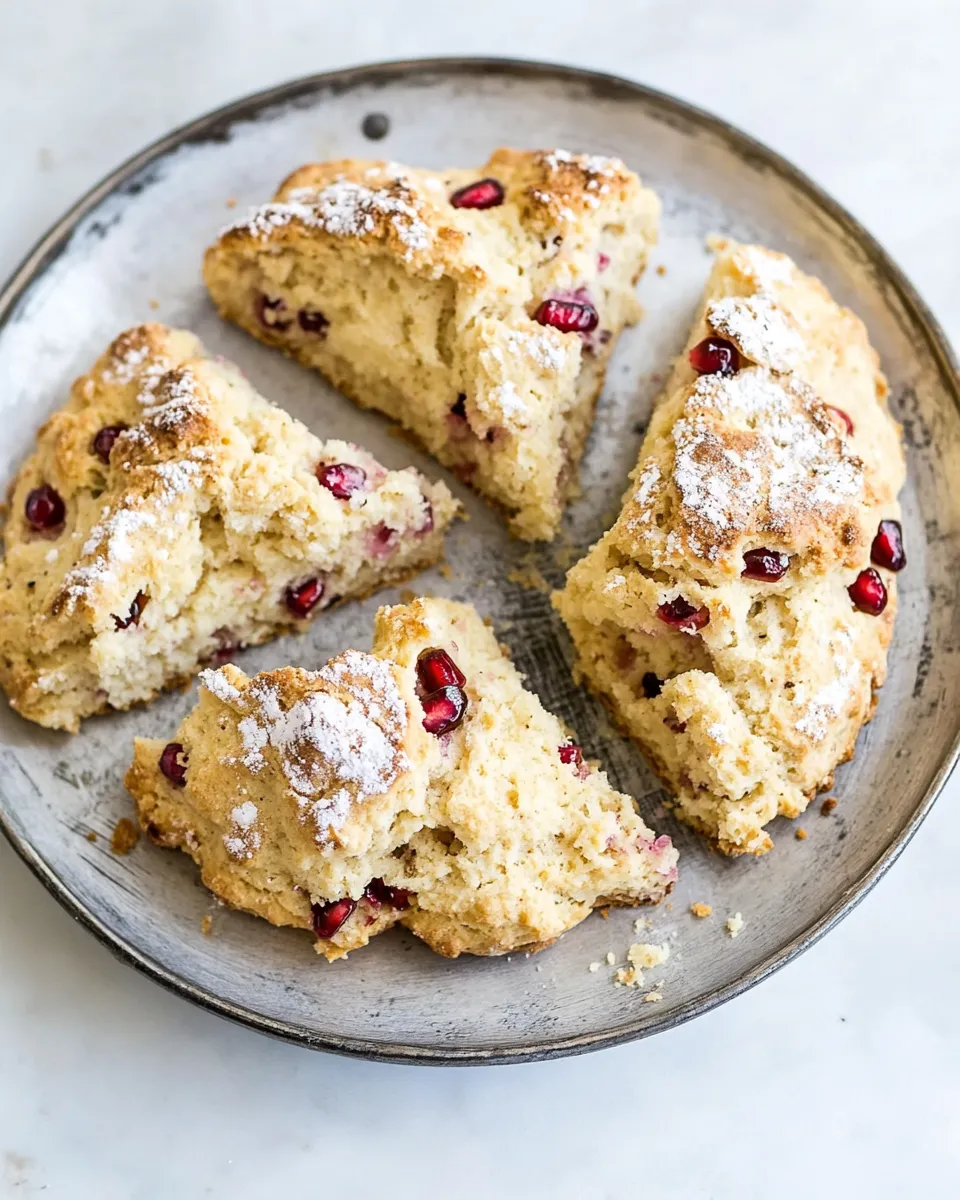
Quick and easy pomegranate scones
These scones are one of those reliably quick bakes that make weekday mornings feel a little special. They come together fast, use straightforward pantry staples, and fold in bright pomegranate seeds for a snap of acidity and color. If you want flaky, tender scones without fuss, this recipe is your new go-to.
I like that they don’t demand special ingredients or a long rest time. The butter is grated cold into the flour for quick lamination, and the dough is handled as little as possible so the scones stay tender. A simple sugar sprinkle on top gives a tiny crunch that contrasts nicely with the juicy seeds.
Make a batch, share them warm, and toast the leftovers. These are perfect with coffee, tea, or a smear of cream cheese. Below you’ll find everything from a short shopping guide to storage tips and answers to the little questions that come up while baking.
Your Shopping Guide

Before you start, gather the core items so the process flows. Buy a firm stick of unsalted butter and chill it well — cold butter is the reason the scones have flaky pockets. Choose a ripe pomegranate or pre-seeded pomegranate arils if you prefer convenience; either works, but whole seeds need gentle folding so they don’t bleed into the dough.
For the dairy, the recipe offers flexibility: evaporated milk, half & half, or cream. Evaporated milk is what I used; it gives a slightly richer texture without being heavy. If you pick evaporated milk, keep it chilled, and measure carefully. A single large egg binds the dough and adds color.
Other shopping tips: use a neutral, medium-grain sugar for the dough and a little extra for sprinkling. A small tub of baking powder and baking soda will keep your leaveners fresh — old baking powder can flatten scones quickly, so check the expiry.
Ingredients
- 2cupsflour — the structure for the scones; plain/all-purpose works best.
- 1/3cupsugar + and extra Tbsp for sprinkling — sweetness in the dough and a finishing crunch on top.
- 1tspbaking powder — primary leavener to give lift and a light crumb.
- 1/4tspbaking soda — works with the dairy for balanced rise and a tender crumb.
- 1/2tspsalt — balances the sweetness and enhances flavor.
- 8Tblsp butter1 stick or 113gm (cold or frozen) — cold butter creates flaky layers; freeze briefly if your kitchen is warm.
- 3/4cuppomegranate seeds — bursts of tartness; fold gently so they stay whole.
- 1/2cupevaporated milk or half & half or creamI guess full cream milk would work too, I used evaporated milk — liquid to bring the dough together; choose the richness you prefer.
- 1large free-range egg — binds and enriches the dough; whisk briefly before adding.
Pomegranate Scones Made Stepwise
- Preheat the oven to 400°F (200°C). Line a baking tray with parchment paper or lightly grease it.
- In a large bowl, whisk together 2cupsflour, 1/3cupsugar, 1tspbaking powder, 1/4tspbaking soda, and 1/2tspsalt.
- Using the large holes of a box grater, grate 8Tblsp butter1 stick or 113gm (cold or frozen) into the flour mixture. With your fingers, rub the butter into the flour until the mixture resembles coarse crumbs with some pea-sized bits remaining.
- Gently stir in 3/4cuppomegranate seeds so they are evenly distributed without being crushed.
- In a separate bowl, whisk 1/2cupevaporated milk or half & half or cream and 1large free-range egg until smooth.
- Pour the milk-and-egg mixture into the flour mixture. Use a fork to stir until a shaggy dough forms, stopping as soon as the dough comes together.
- Turn the dough onto a well-floured surface. Briefly knead it (about 4–6 turns) just until it holds together. Pat the dough into a single flattened disk roughly 1–1.5 inches (2.5–4 cm) thick.
- Flour a sharp knife or bench scraper and cut the disk into 8 equal triangles. Transfer the triangles to the prepared baking tray, leaving space between each scone.
- Sprinkle the top of the scones with the extra 1 tablespoon of sugar.
- Bake for about 15 minutes, until the scones are golden brown. Remove from the oven and cool on a wire rack for a few minutes before serving.
Why I Love This Recipe

It’s fast, dependable, and forgiving. The method cuts cold butter into the flour quickly, which is a great shortcut compared with dough lamination or cutting in with a pastry cutter. The result is tender scones with little flaky pockets — exactly what you want.
Pomegranate seeds add brightness without extra work. They keep the scones from feeling too sweet and give a nice contrast to the buttery dough. The balance of texture and acidity makes these a favorite when I want a small treat that feels special but doesn’t take much time.
Finally, the recipe is flexible enough to handle pantry swaps and a small learning curve with knife cuts — good for bakers of all levels.
What to Use Instead
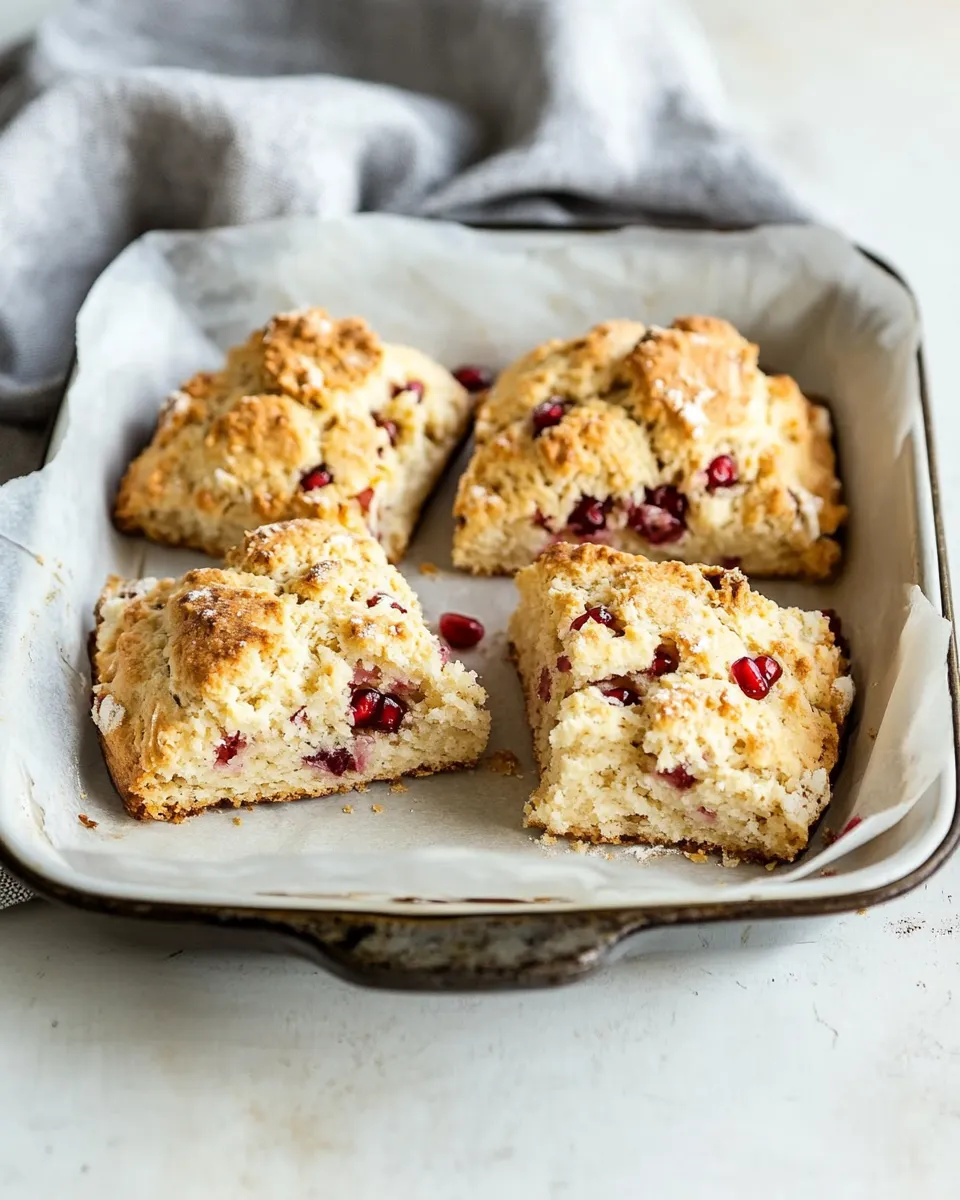
Want to make swaps? Here are safe substitutions that preserve texture:
- Milk choice — if you don’t have evaporated milk, use half & half or cream. Regular full-fat milk will work but produces a slightly less rich crumb.
- Fruit — if pomegranate isn’t available, try frozen cranberries or chopped dried cherries (rehydrated briefly). Reduce the flour slightly if using very juicy fruit.
- Butter — do not substitute cold butter with a soft spread; the cold, solid fat is key. If needed, use a block of cold margarine with similar water content, but flavor will differ.
Appliances & Accessories
Basic tools are all you need:
Must-haves
- Oven that can maintain 400°F / 200°C.
- Large mixing bowl and a smaller bowl for liquids.
- Box grater (large holes) for grating the butter quickly.
- Sharp knife or bench scraper to cut the disk into triangles.
- Baking tray and parchment paper or a lightly greased sheet.
Nice-to-haves
- Bench scraper for quick transfer of triangles to the tray.
- Wire rack to cool the scones evenly.
- Kitchen scale for more accurate measuring of butter if desired (113 g = 1 stick).
Frequent Missteps to Avoid
Keep these common mistakes in mind so the scones turn out well every time.
Overworking the dough. Knead only 4–6 turns. Too much handling develops gluten and makes scones tough. Stop as soon as the dough holds together.
Using warm butter. If the butter softens, the scones won’t be flaky. Grate it cold (or frozen briefly), and work quickly so it doesn’t soften before baking.
Crushing the pomegranate seeds. Fold them gently. If you mash the seeds into the dough, you’ll get spots of color but lose the pleasant bursts of juice.
Skipping the sugar sprinkle. That little tablespoon on top adds texture and a hint of caramelized sweetness that elevates the finished scones.
In-Season Swaps
Pomegranate shines in fall and winter, but the dough accepts other seasonal additions:
- Late summer: fold in a small handful of chopped blueberries or raspberries, gently and briefly.
- Autumn: try chopped apple pieces lightly tossed in a teaspoon of sugar to remove excess moisture, or fold in chopped pear.
- Winter: dried orange peel or a small amount of ground cinnamon can complement pomegranate nicely.
Recipe Notes & Chef’s Commentary
Measure the flour by spooning it into the cup and leveling it off or weigh it for precision; overpacked cups can dry out the dough. The recipe calls for 2cupsflour — if your dough seems dry, add a teaspoon of the milk mixture at a time, but avoid making it sticky.
Use a light touch when cutting the disk into triangles. Pressing down firmly compresses the dough and can reduce rise. Transfer the wedges to the tray with a bench scraper or thin spatula to preserve shape.
If you bake frequently, keep a jar of baking powder and a small kitchen thermometer handy; accurate oven temperature and fresh leaveners are simple things that make a big difference.
Refrigerate, Freeze, Reheat
Cool the scones completely before refrigerating. Stored in an airtight container, they keep in the fridge for 2–3 days. To freeze, wrap individually in plastic and place in a freezer bag; they keep well for up to 1 month.
Reheat in a 325°F (160°C) oven for 5–8 minutes from chilled, or 10–12 minutes from frozen (wrapped in foil for the frozen ones to prevent overbrowning). For a quick microwave reheat, use short bursts (10–15 seconds) to warm without drying out, but the oven gives the best texture.
Quick Questions
Q: Can I use whole wheat flour? A: You can replace up to half the flour with whole wheat, but the scones will be denser and need slightly more liquid.
Q: My pomegranates bled into the dough — what happened? A: The seeds were probably crushed during folding. Fold gently and try to keep the seeds whole.
Q: Can I make these vegan? A: The recipe relies on butter and egg; a vegan version would need tested swaps (plant-based butter and an egg replacer), and results will vary. I haven’t tested a vegan version with this exact method.
That’s a Wrap
These pomegranate scones are simple to prepare and deliver a dependable, bright result. Keep the butter cold, fold the seeds carefully, and don’t overwork the dough. In about 30 minutes from start to finish you’ll have warm, flaky scones with a pop of color and flavor — ideal for a quick breakfast or a thoughtful snack to share.
Make a batch, tuck a few into a paper bag, and share them warm with someone who appreciates a little homemade comfort. Happy baking.

Quick and easy pomegranate scones
Ingredients
Ingredients
- 2 cupsflour
- 1/3 cupsugar + and extra Tbsp for sprinkling
- 1 tspbaking powder
- 1/4 tspbaking soda
- 1/2 tspsalt
- 8 Tblsp butter1 stick or 113 gm cold or frozen
- 3/4 cuppomegranate seeds
- 1/2 cupevaporated milk or half & half or creamI guess full cream milk would work too I used evaporated milk
- 1 large free-range egg
Instructions
Instructions
- Preheat the oven to 400°F (200°C). Line a baking tray with parchment paper or lightly grease it.
- In a large bowl, whisk together 2cupsflour, 1/3cupsugar, 1tspbaking powder, 1/4tspbaking soda, and 1/2tspsalt.
- Using the large holes of a box grater, grate 8Tblsp butter1 stick or 113gm (cold or frozen) into the flour mixture. With your fingers, rub the butter into the flour until the mixture resembles coarse crumbs with some pea-sized bits remaining.
- Gently stir in 3/4cuppomegranate seeds so they are evenly distributed without being crushed.
- In a separate bowl, whisk 1/2cupevaporated milk or half & half or cream and 1large free-range egg until smooth.
- Pour the milk-and-egg mixture into the flour mixture. Use a fork to stir until a shaggy dough forms, stopping as soon as the dough comes together.
- Turn the dough onto a well-floured surface. Briefly knead it (about 4–6 turns) just until it holds together. Pat the dough into a single flattened disk roughly 1–1.5 inches (2.5–4 cm) thick.
- Flour a sharp knife or bench scraper and cut the disk into 8 equal triangles. Transfer the triangles to the prepared baking tray, leaving space between each scone.
- Sprinkle the top of the scones with the extra 1 tablespoon of sugar.
- Bake for about 15 minutes, until the scones are golden brown. Remove from the oven and cool on a wire rack for a few minutes before serving.
Equipment
- Mixing Bowl
- Box grater
- Fork
- baking tray
- Parchment Paper
- Knife or bench scraper
- Wire Rack
Notes
These pomegranate scones are best eaten on the day, freshly baked out hte oven.
They freeze well and can be reheated in the microwave.