
Traditional English Crumpets
I grew up on crumpets in a house that took tea seriously. They were the kind of thing you cooked slowly on a Saturday morning: the batter bubbling on the pan, the tops perforating into little trapdoors for butter to melt into. They’re not fussy, but they do reward patience and the right technique.
This recipe keeps the method straightforward and the ingredients honest — flour, milk, yeast, a touch of sugar and baking soda. You’ll get the characteristic holes on top and a chewy, tender interior when you follow the steps and the resting times. I’ll walk you through the why as well as the how, so you can troubleshoot and adapt without losing the classic texture.
The Ingredient Lineup

Ingredients
- 2 cups all-purpose flour (can substitute half bread flour) — provides structure; bread flour will give a slightly chewier crumpet if you use half as suggested.
- 1 teaspoon salt — balances flavor and strengthens the dough.
- 1 cup warm milk — hydrates the flour and feeds the yeast; should be warm, not hot.
- 2 teaspoons active dry yeast — the leavening agent that creates the bubbles and lift during the first rise.
- 1 teaspoon cane sugar — feeds the yeast to kickstart fermentation; the amount is small but important for a good rise.
- 1 cup warm water — used to dissolve the baking soda and loosen the batter to the right consistency.
- 1/2 teaspoon baking soda — added later to react with acids and trapped gases, helping form the signature holes and light texture.
Make Traditional English Crumpets: A Simple Method
- Stir the 1 teaspoon cane sugar and 2 teaspoons active dry yeast into the 1 cup warm milk. Let sit 10 minutes until frothy.
- In a large bowl (or the bowl of a stand mixer) combine the 2 cups all-purpose flour and 1 teaspoon salt.
- Pour the frothy yeast-milk into the flour mixture. Stir by hand until a thick batter/dough forms. If using a stand mixer, use the paddle attachment and beat about 3 minutes until a thick batter/dough forms.
- Cover the bowl loosely with plastic wrap or a towel and place in a warm spot for 1 to 2 hours, until the mixture has nearly doubled in size. This rise develops the bubbles that form the crumpet holes.
- While the dough is resting, warm 1 cup water and dissolve the 1/2 teaspoon baking soda in it.
- After the first rise, add the warm baking-soda water to the risen dough. Beat or stir for 1–2 minutes to incorporate; a few small lumps are fine.
- Cover the batter and let it rest in a warm place for at least 30 minutes. The batter should become noticeably bubbly.
- Grease the inside of your crumpet/English muffin rings. Lightly oil a frying pan or skillet and heat it over medium heat. Place the greased rings in the pan and allow them to warm for a minute or two.
- Once the rings and pan are warm, pour batter into each ring until slightly more than half full.
- Cook the crumpets on medium heat, watching closely. The tops will rise and develop holes; the bottoms should become lightly browned. This usually takes about 8–12 minutes but may vary by cookware and stovetop. Lower the heat if the bottoms brown too quickly.
- When the tops are set and holes are present and the bottoms are lightly browned, remove the rings. Either: a) flip the crumpets and cook the other side 1–2 minutes to lightly brown, or b) remove the crumpets from the rings and toast them later.
- Serve immediately with butter, jam, golden syrup, or honey. To reheat, toast; crumpets can be frozen — thaw before toasting.
- Optional: letting the batter rest longer than 30 minutes (after adding the baking-soda water) will produce more bubbles and a lighter texture if you prefer.
Reasons to Love Traditional English Crumpets
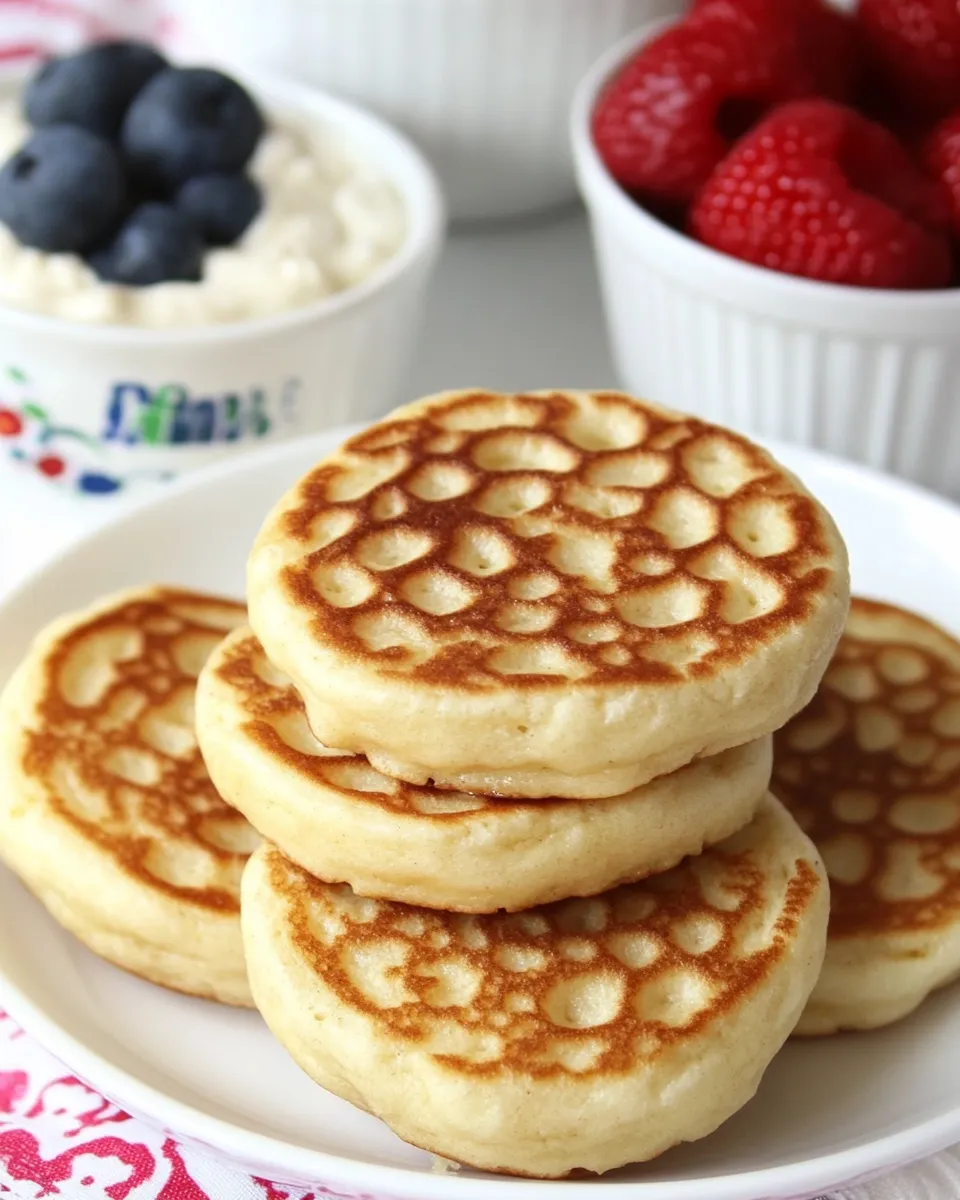
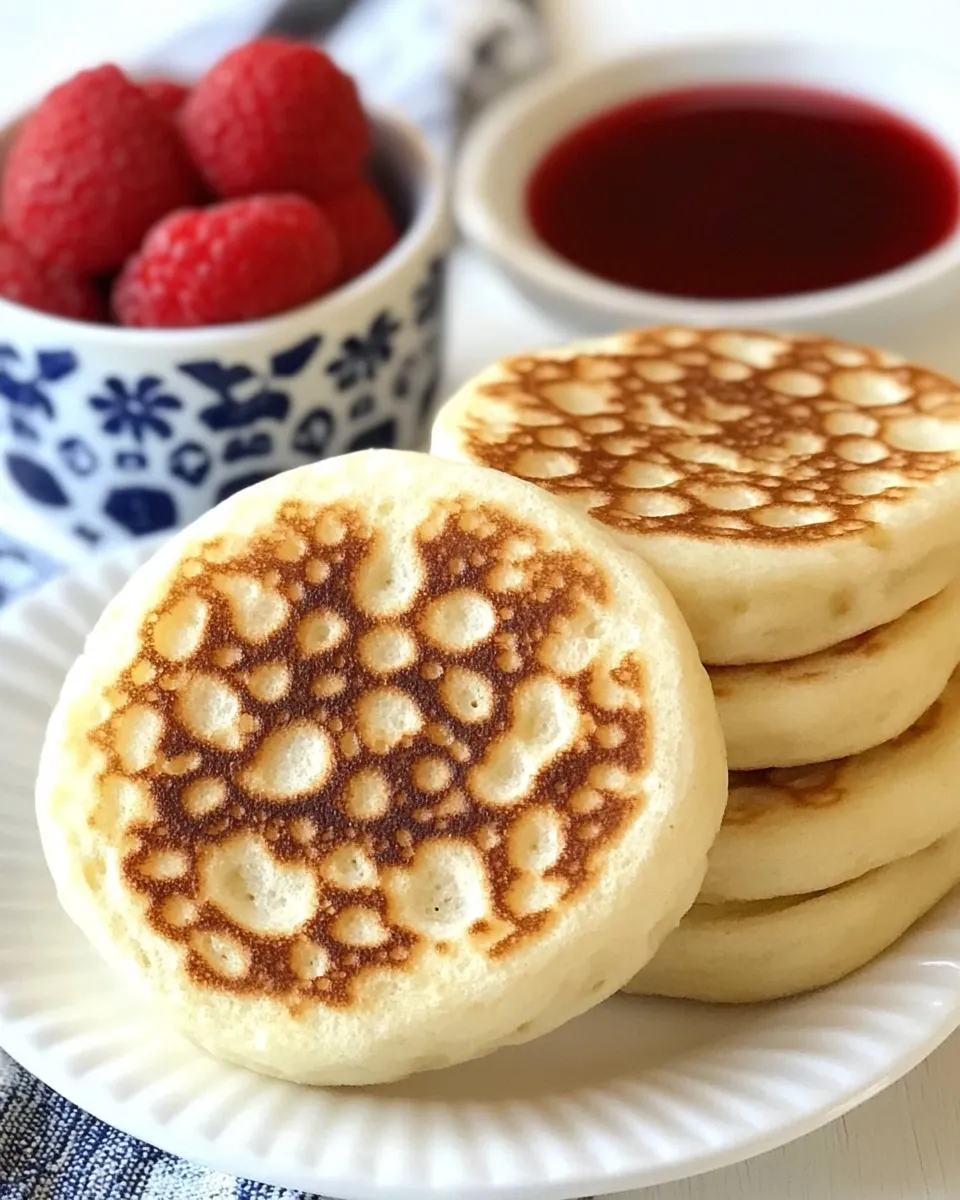
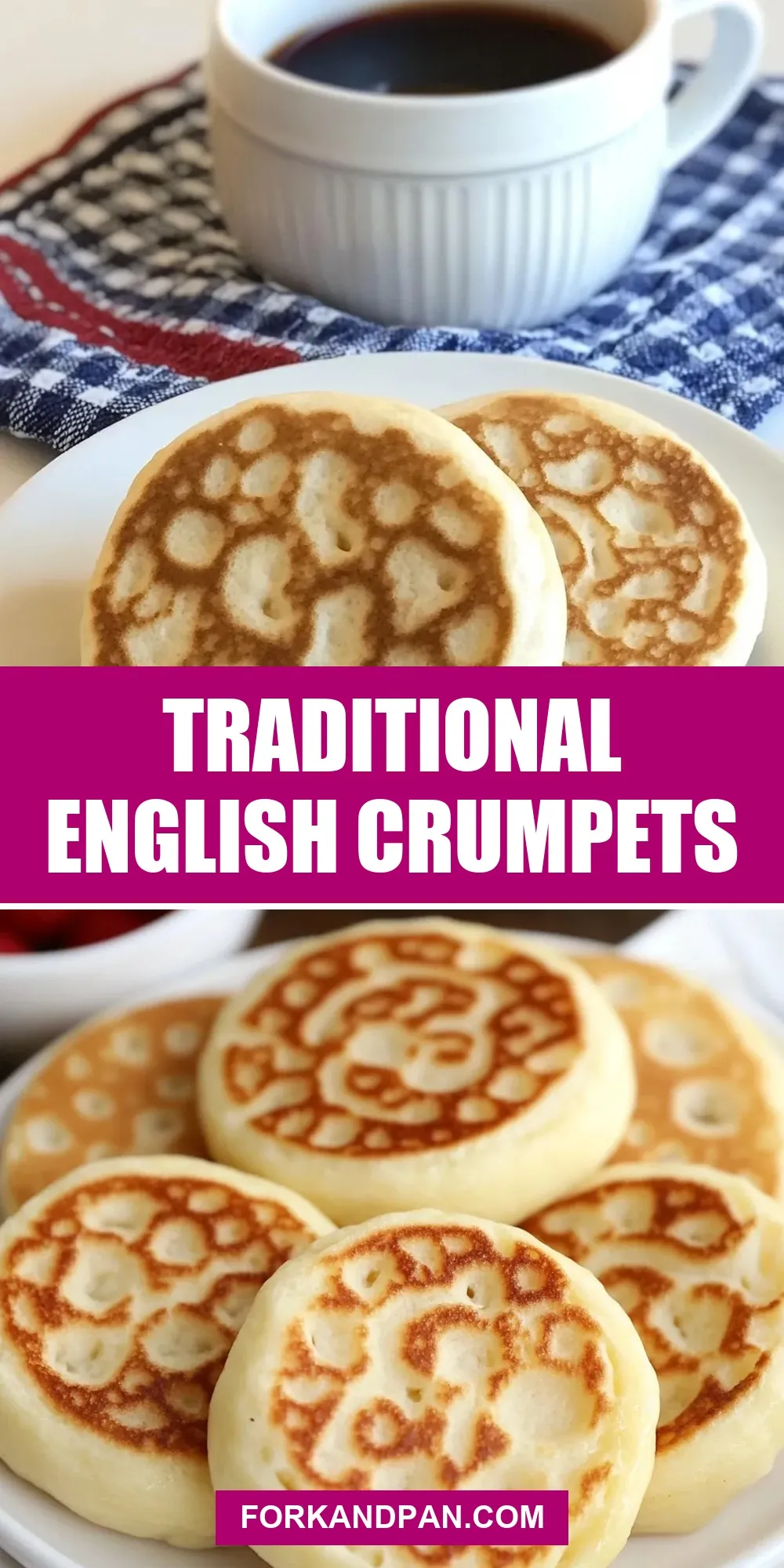
Crumpets hit a sweet spot: they’re simple to make but the result feels special. The craggy tops collect melted butter and spreads in the pockets, while the inside stays soft and tender. They’re slower-cooked comfort — not rushed, but not complicated either.
They’re versatile. Serve them for weekend breakfasts with butter and jam, as a savory base for smoked salmon and cream cheese, or keep them plain toasting and dolloping with whatever you have on hand. They also freeze and reheat well, so you can make a batch ahead and pull them out for quick breakfasts.
Smart Substitutions
- Flour swap — The ingredient list already notes you can substitute half of the all-purpose flour with bread flour. That’s the main, recommended swap and it’s about texture: more gluten, chewier bite.
- Slight sugar variation — The recipe uses 1 teaspoon cane sugar to wake the yeast. If you only have a similar granulated sugar, it will function the same in this small amount; stick to the quantity listed.
- Warm liquids only — Both the milk and the water must be warm, not hot. If they’re too hot you’ll kill the yeast or ruin the reaction with the baking soda; too cool and the yeast won’t activate quickly.
Gear Up: What to Grab
Good results come from small tools. You don’t need a commercial crumpet ring, but rings make the neat rounds we expect. If you don’t have rings you can use cleaned tuna cans with both ends removed, or cook freeform — the batter is thick enough to hold shape if you spoon it carefully.
- Crumpet or English muffin rings — for consistent shape and height.
- Heavy frying pan or skillet — distributes heat evenly. Nonstick is easiest for removing crumpets cleanly.
- Mixing bowl or stand mixer — both work; a stand mixer with a paddle attachment saves elbow grease for the initial beating.
- Measuring cups and spoons — accuracy matters for the batter consistency and yeast activation.
Common Errors (and Fixes)
These are the moments that trip people up and how to handle them.
- No bubbles after the first rise — your yeast may be old or the milk was too hot or too cold. Always test yeast by proofing in warm milk with sugar for 10 minutes; it should become frothy.
- Tops don’t develop holes — usually the first rise wasn’t long enough or the batter was too stiff. Let the mixture rise until nearly doubled, and after adding the baking-soda water give it the 30-minute second rest so bubbles form.
- Bottoms burn before tops set — the pan is too hot. Lower the heat and be patient. A thicker pan gives you more margin for error.
- Batter too thin or too thick — follow the temperatures and amounts carefully. The batter should be thicker than pancake batter but pourable; if it’s very loose, it won’t form the right top texture.
Make It Fit Your Plan
Want a make-ahead plan? Mix the batter through step 6 (after adding the baking-soda water and beating it in), then refrigerate overnight to develop flavor. Bring the batter back to room temperature and give it the 30-minute rest before cooking. This slows the process and deepens the flavor without changing the method.
Short on time? You can make the batter up to the first rise and keep it in a warm place to speed the process, but crumpets really benefit from the full rise and the second bubbly rest. If you must rush, prioritize the 30-minute rest after adding the baking-soda water — that’s crucial to the signature holes.
Flavor Logic
Why this mix of yeast and baking soda? The yeast provides slow fermentation and flavor, creating bubbles and structure during the first rise. The baking soda reacts with acids and the CO2 in the batter when added in warm water, encouraging rapid bubbling that opens the batter surface into those desirable holes. The timing — yeast first, baking soda last — gives you both good flavor and the distinctive crumpet texture.
Sugar is minimal; it’s present to get the yeast going, not to sweeten the crumpet. Salt strengthens the gluten network and keeps the flavor balanced. The warm liquids are about chemistry: yeast likes warmth, and warm water helps the baking soda activate effectively when added.
Refrigerate, Freeze, Reheat
Crumpets freeze and reheat well, which is one of their practical charms. Cool them completely, then layer between sheets of parchment in a sealed container or freezer bag. They’ll keep well for a month or two.
To reheat, toast gently from frozen or after thawing. To refresh freshly made crumpets, a quick 1–2 minute flip in a hot pan or a short time under a grill will re-crisp the bottom and revive the top texture.
Reader Q&A
Q: Can I use instant yeast?
A: The recipe specifically lists active dry yeast and the method assumes you proof it in warm milk with sugar for 10 minutes. If you switch to instant yeast, you would normally mix it with dry ingredients. For best, most reliable results follow the recipe as written with active dry yeast.
Q: My crumpets are dense. What did I do wrong?
A: Dense crumpets usually mean the rise phases were shortened or the yeast was weak. Make sure the milk is warm (about body temperature), the yeast is fresh, and the batter has nearly doubled in the first rise. Also allow the 30-minute rest after adding the baking-soda water so more bubbles form.
Q: Can I make them without rings?
A: Yes. The batter is thick enough to hold shape if you spoon it slowly into a hot, lightly oiled pan. The rounds will be less uniform, but the texture remains true to crumpets.
Bring It Home
These Traditional English Crumpets reward patience more than skill. Respect the rising times, mind your temperatures, and you’ll be rewarded with nooks and crannies perfect for melting butter. Make a batch, freeze half, and enjoy the rest toasted and topped however you like: simple butter, jam, or something savory. They’re humble, forgiving, and a lovely thing to share.
If you try this recipe, take note of your stove and pan behavior — adjust the heat so the tops set slowly and the bottoms brown gently. Once you’ve dialed it in, crumpet mornings become a reliable, comforting ritual.
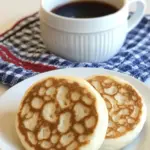
Traditional English Crumpets
Ingredients
Ingredients
- 2 cupsall-purpose flour can substitute half bread flour
- 1 teaspoonsalt
- 1 cupwarm milk
- 2 teaspoonsactive dry yeast
- 1 teaspooncane sugar
- 1 cupwarm water
- 1/2 teaspoonbaking soda
Instructions
Instructions
- Stir the 1 teaspoon cane sugar and 2 teaspoons active dry yeast into the 1 cup warm milk. Let sit 10 minutes until frothy.
- In a large bowl (or the bowl of a stand mixer) combine the 2 cups all-purpose flour and 1 teaspoon salt.
- Pour the frothy yeast-milk into the flour mixture. Stir by hand until a thick batter/dough forms. If using a stand mixer, use the paddle attachment and beat about 3 minutes until a thick batter/dough forms.
- Cover the bowl loosely with plastic wrap or a towel and place in a warm spot for 1 to 2 hours, until the mixture has nearly doubled in size. This rise develops the bubbles that form the crumpet holes.
- While the dough is resting, warm 1 cup water and dissolve the 1/2 teaspoon baking soda in it.
- After the first rise, add the warm baking-soda water to the risen dough. Beat or stir for 1–2 minutes to incorporate; a few small lumps are fine.
- Cover the batter and let it rest in a warm place for at least 30 minutes. The batter should become noticeably bubbly.
- Grease the inside of your crumpet/English muffin rings. Lightly oil a frying pan or skillet and heat it over medium heat. Place the greased rings in the pan and allow them to warm for a minute or two.
- Once the rings and pan are warm, pour batter into each ring until slightly more than half full.
- Cook the crumpets on medium heat, watching closely. The tops will rise and develop holes; the bottoms should become lightly browned. This usually takes about 8–12 minutes but may vary by cookware and stovetop. Lower the heat if the bottoms brown too quickly.
- When the tops are set and holes are present and the bottoms are lightly browned, remove the rings. Either: a) flip the crumpets and cook the other side 1–2 minutes to lightly brown, or b) remove the crumpets from the rings and toast them later.
- Serve immediately with butter, jam, golden syrup, or honey. To reheat, toast; crumpets can be frozen — thaw before toasting.
- Optional: letting the batter rest longer than 30 minutes (after adding the baking-soda water) will produce more bubbles and a lighter texture if you prefer.
Equipment
- Large Bowl
- Stand mixer (optional)
- paddle attachment (if using stand mixer)
- crumpet or English muffin rings
- Frying pan or skillet
- Spatula
- plastic wrap or towel