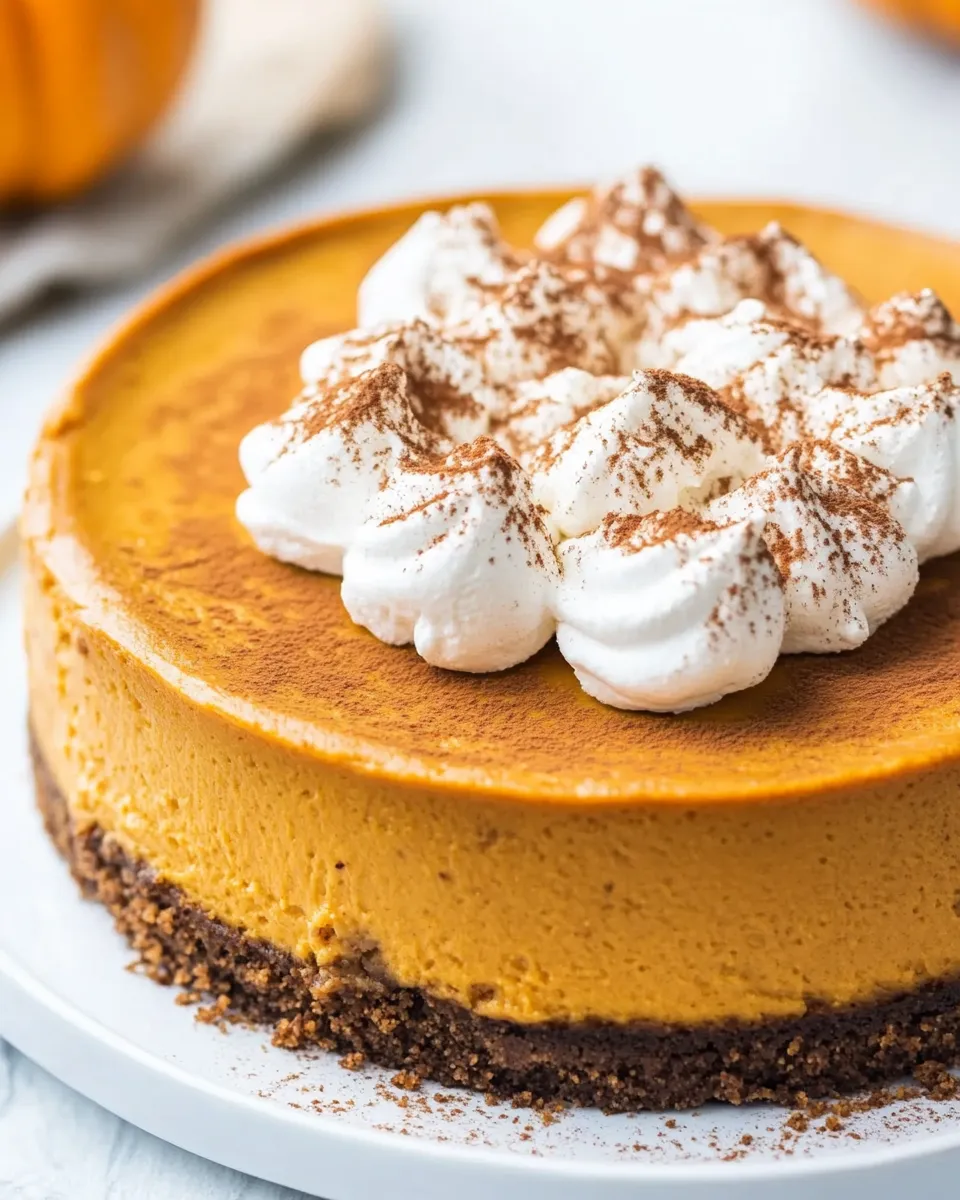
Pumpkin Cheesecake
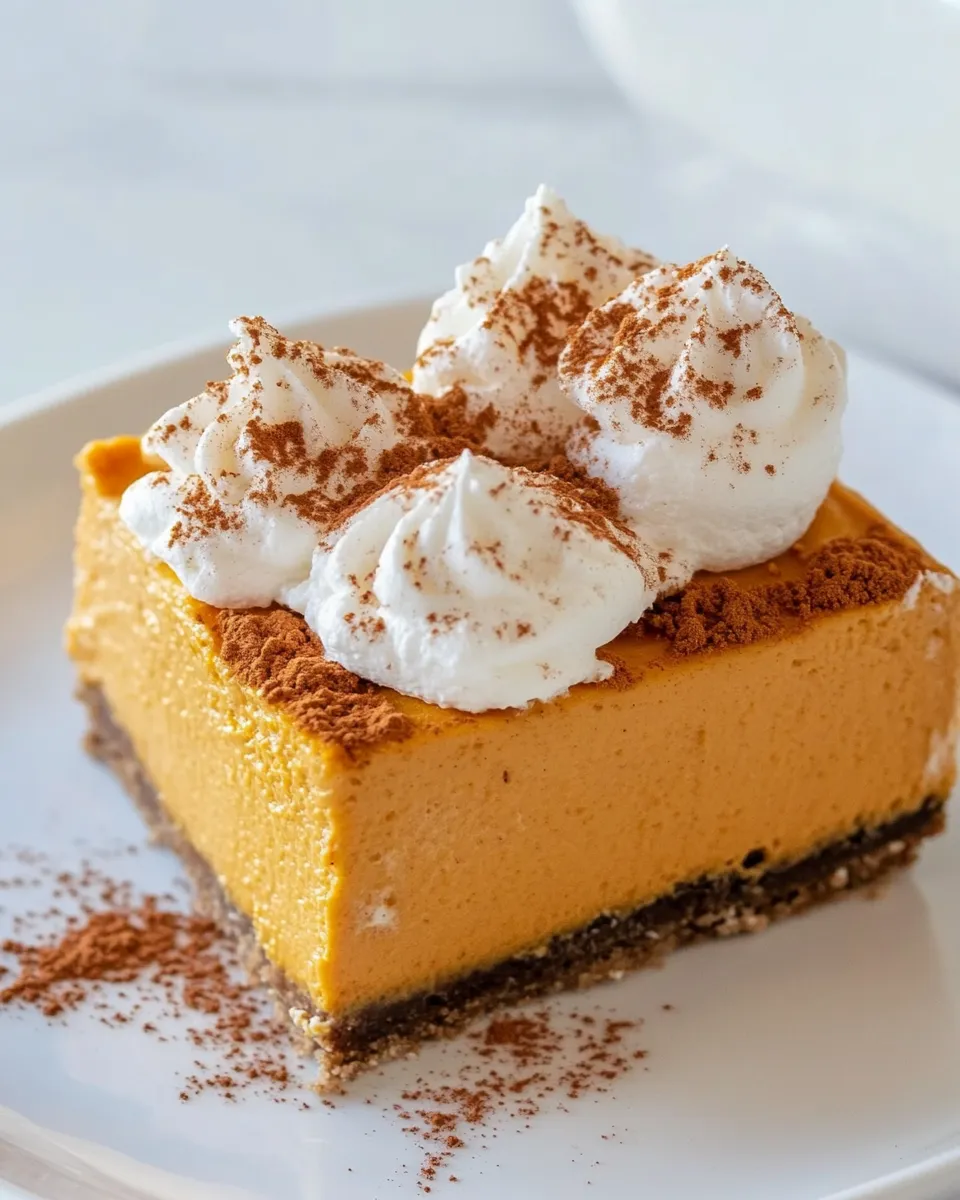
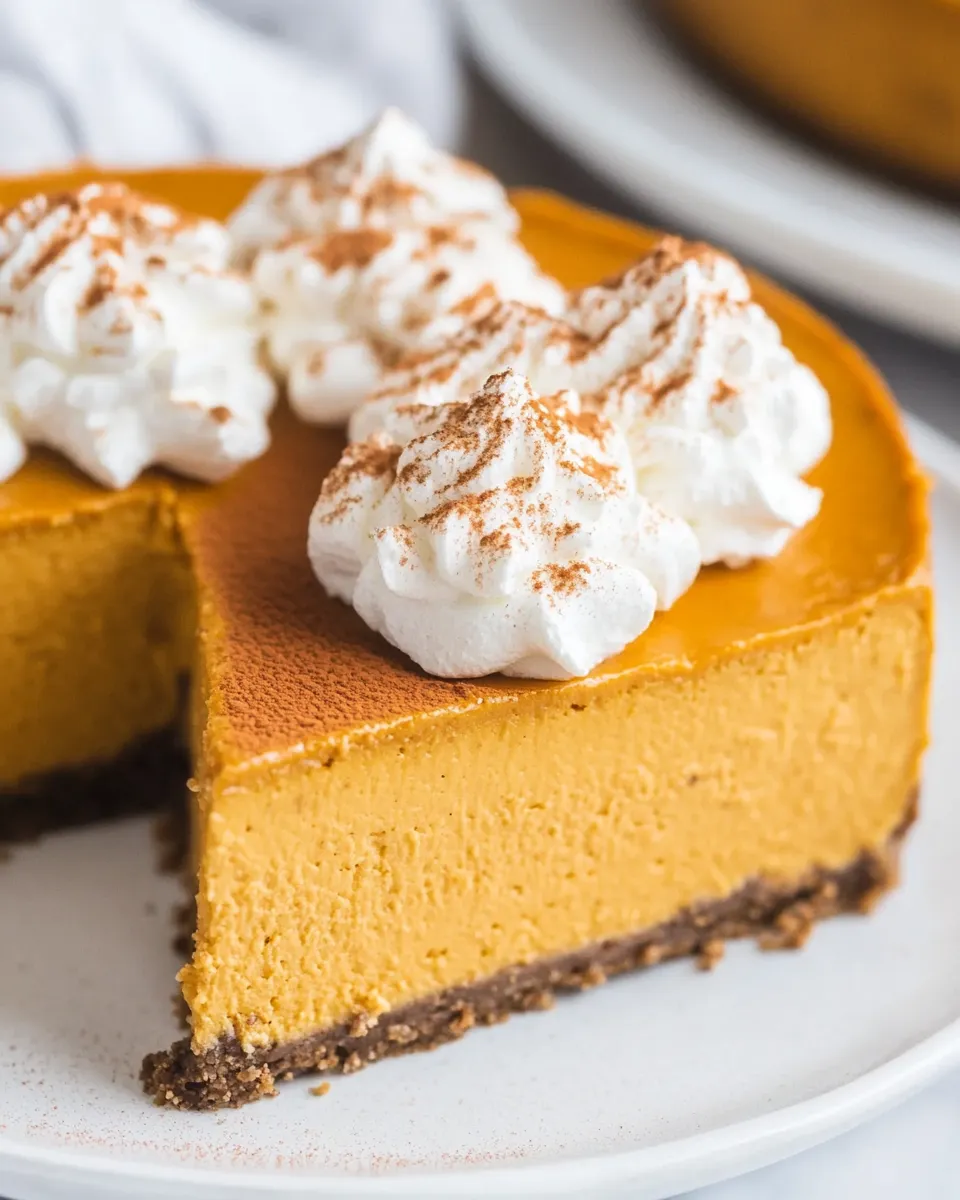
This pumpkin cheesecake is the kind of dessert I make when I want something impressive that still feels grounded — not too fussy, but utterly reliable. It has a crisp, lightly browned crust, a velvety pumpkin-spiced filling, and a cloud of vanilla-scented whipped cream on top. The techniques are straightforward; the results are what people remember.
Follow the steps and the small tips I share below and you’ll get even slices and a crack-free surface more often than not. There’s a bath, careful temperature control, and a slow cool-down — all of which make the texture smooth and creamy.
If you’re baking for company or just treating yourself, this recipe holds up beautifully to make-ahead planning. Read through the notes and storage tips so the timing matches your schedule; it keeps best when it’s given time to rest and chill.
Ingredient List

- 1 ½ cups graham cracker crumbs (about 12 sheets) — provides the crunchy, buttery base and structure for the crust.
- 1 tablespoon (12 g) granulated sugar — sweetens the crust just enough to balance the filling.
- 6 tablespoons (84 g) unsalted butter, melted — binds the crumbs and browns the crust; melted for easy mixing and pressing.
- 32 ounces (900 g) full fat cream cheese — softened to room temperature; the primary source of richness and creamy texture.
- ¾ cup (150 g) granulated sugar — adds sweetness and helps the filling set with a smooth finish.
- ½ cup (100 g) light brown sugar, lightly packed — brings a touch of molasses flavor that pairs well with pumpkin spice.
- 3 large eggs — at room temperature; they provide structure and a silkier texture when added gradually.
- 1 teaspoon (5 ml) pure vanilla extract — lifts and rounds the flavors.
- 15 oz can (425 g) pumpkin puree — the pumpkin flavor base; use pure pumpkin puree, not pumpkin pie filling.
- 1 tablespoon pumpkin pie spice — the spiced backbone; tins or homemade blends work the same here.
- 82 g sour cream — at room temperature; adds tang and helps the filling remain creamy during baking.
- ¼ teaspoon salt — balances sweetness and enhances overall flavor.
- 1 cup (240 ml) whipping cream — for the topping; whip until soft–medium peaks.
- 1 tablespoon powdered sugar — lightly sweetens the whipped cream without making it grainy.
- 1 teaspoon (5 ml) pure vanilla extract — in the whipped cream for a clean vanilla note.
Pumpkin Cheesecake: How It’s Done
- Position an oven rack in the lower-middle position and preheat the oven to 350°F (180°C) (160°C for a fan/convection oven). Lightly grease a 9-inch (23 cm) springform pan with butter and line the bottom and sides with parchment paper.
- Make the crust: place 1 ½ cups graham cracker crumbs (about 12 sheets) in a food processor and pulse to fine crumbs. In a bowl, stir the crumbs with 1 tablespoon (12 g) granulated sugar and 6 tablespoons (84 g) melted unsalted butter until evenly moistened.
- Press the crumb mixture firmly into the prepared springform pan, covering the bottom and pressing up the sides about ½ inch. Bake the crust for 8 minutes. Remove from the oven and cool on a wire rack while you prepare the filling.
- Wrap the outside of the springform pan with two layers of heavy-duty foil, covering the bottom and sides and sealing the foil to prevent water from seeping in.
- Bring a kettle or pot of water to a boil so hot water will be ready for the water bath when the cake goes into the oven.
- Prepare the filling: make sure the 32 ounces (900 g) cream cheese and the 3 large eggs are at room temperature. In a large bowl, beat the cream cheese with ¾ cup (150 g) granulated sugar and ½ cup (100 g) light brown sugar until smooth and creamy, about 3–4 minutes, scraping the bowl as needed.
- Add the eggs one at a time, beating only until each is incorporated. Then add 1 teaspoon (5 ml) pure vanilla extract, 15 oz can (425 g) pumpkin puree, 1 tablespoon pumpkin pie spice, 82 g sour cream (at room temperature), and ¼ teaspoon salt. Mix just until the batter is smooth and uniform; avoid overbeating.
- Pour the filling into the pre-baked crust and smooth the top with a spatula. Place the foil-wrapped springform pan in a larger roasting pan or baking dish.
- Carefully pour the hot (but not vigorously boiling) water into the larger pan until it reaches about halfway up the outside of the springform pan. Be careful not to splash water into the cheesecake.
- Bake at 350°F (180°C) for about 1 hour, or until the edges are set and the center still has a slight jiggle (it should not be liquid).
- Turn off the oven, crack the oven door open about 1–2 inches, and let the cheesecake cool in the oven until the oven temperature drops and the cake has settled, about 45 minutes to 1 hour.
- Remove the springform pan from the water bath, unwrap and discard the foil, and transfer the pan to a wire rack. Let the cheesecake cool to room temperature, then cover with plastic wrap and refrigerate until fully chilled and set, a minimum of 4 hours but preferably overnight.
- To release the cheesecake, run a thin knife around the edge between the cake and the pan, then unlatch the springform ring and remove it.
- Make the whipped cream topping: chill a mixing bowl and beaters if possible. In the cold bowl, combine 1 cup (240 ml) whipping cream, 1 tablespoon powdered sugar, and 1 teaspoon (5 ml) pure vanilla extract. Beat on high speed until soft–medium peaks form and the cream is fluffy (about 1½ minutes); do not overbeat.
- Spread or pipe the whipped cream on the chilled cheesecake and finish with a light dusting of pumpkin pie spice.
Why It Works Every Time
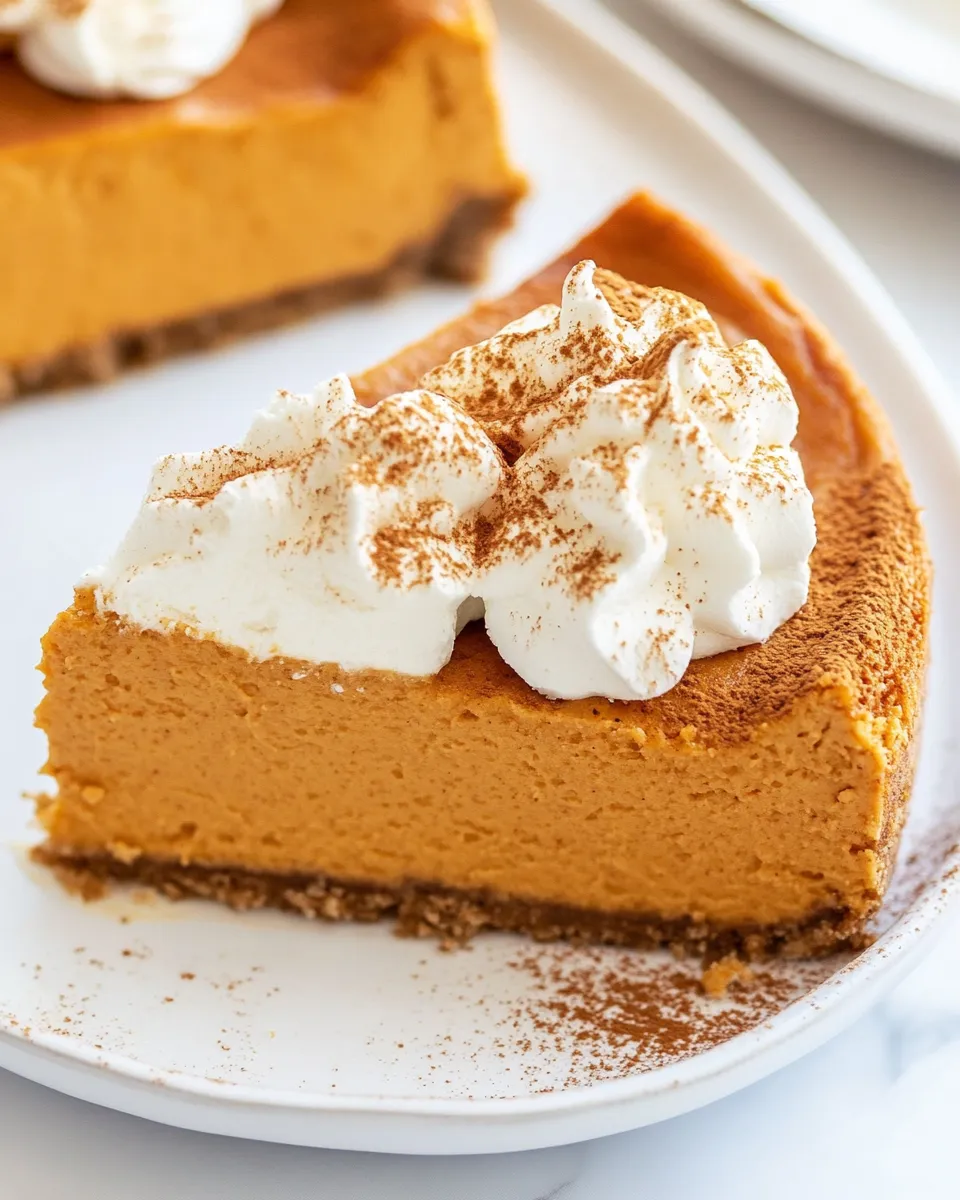
There are three technique-driven reasons this recipe succeeds: temperature control, a water bath, and careful mixing. Room-temperature cream cheese and eggs incorporate smoothly, preventing lumps that create dense pockets. A steady, gentle oven temperature cooks the custard without curdling or splitting.
The water bath does two jobs: it moderates the oven heat around the pan and adds humidity, which reduces surface cracking and encourages an even bake. Wrapping the pan in heavy-duty foil keeps the bath dry inside the springform.
Finally, folding in the eggs one at a time and mixing only until combined prevents too much air from being whipped into the batter. Less agitation equals a denser, silkier cake rather than an airy, cake-like texture that can fall or crack.
Easy Ingredient Swaps
- Graham cracker crumbs — replace with gingersnap crumbs or digestive biscuits for a warmer, spicier crust.
- Unsalted butter — if you only have salted butter, reduce added salt elsewhere or omit any final salt additions to keep balance.
- Full fat cream cheese — you can use reduced-fat varieties in a pinch, but texture will be softer and less rich.
- Light brown sugar — dark brown sugar can be used for a deeper molasses note.
- Pumpkin puree — if unavailable, canned sweet potato puree can be similar in texture and color; adjust spices to taste.
- Sour cream — plain Greek yogurt is a workable substitute if you prefer a tangy lift.
Kitchen Gear Checklist
- 9-inch (23 cm) springform pan — essential for easy removal and presentation.
- Parchment paper and heavy-duty foil — parchment lines the pan; foil wraps it for the water bath.
- Food processor (or resealable bag and rolling pin) — to make fine graham cracker crumbs quickly.
- Large mixing bowl and electric mixer (hand or stand) — for smooth, lump-free cream cheese mixing.
- Roasting pan or large baking dish — to hold the springform in the water bath.
- Wire rack — for cooling the pan evenly after baking.
- Spatula and thin knife — for smoothing the top and releasing the cake from the pan.
- Chilled mixing bowl and beaters — optional but helpful for whipping cream quickly.
Avoid These Mistakes
Don’t rush temperature. Cold cream cheese or eggs will cause lumps or an overworked batter. Plan to take the blocks of cream cheese out of the fridge about 1–2 hours before you start.
Don’t skip the foil. It may seem like one more step, but foil prevents water from seeping into the crust and ruining the filling. Two tight layers are worth the extra minute.
Don’t overbeat once the eggs go in. Mix until just incorporated. Overbeating traps air, which expands in the oven and then collapses or creates fissures when cooling.
Make It Year-Round
Although pumpkin is a fall favorite, this cheesecake can be enjoyed any time. Keep canned pumpkin on the pantry shelf and pumpkin pie spice in a sealed jar. They’re shelf-stable and ready for quick desserts or breakfast swirls.
For a lighter touch in warmer months, slice thin and serve with a simple berry compote instead of whipped cream. In winter, top with candied pecans or a drizzle of warm caramel for a richer presentation.
Little Things that Matter
Run a thin knife around the cake when it’s fully chilled, then warm the knife under hot water and dry it before the final pass. That warm blade makes removal cleaner and keeps the cake edge neat.
When measuring crumbs or sugars, use the spoon-and-level method for accuracy. Small differences in sugar or fat change texture in baked custards more than you might expect.
Chill the mixing bowl for the whipped cream and the beaters if you can. Cold equipment helps the cream reach soft–medium peaks quickly and cleanly.
Best Ways to Store
Store the cheesecake covered in the refrigerator for up to 4 days. Wrap the cake plate with a loose tent of plastic wrap or use a cake dome to prevent it from absorbing fridge odors.
For longer storage, the plain, fully cooled cheesecake (without whipped cream topping) can be wrapped tightly in plastic wrap and then foil, and frozen for up to 2 months. Thaw in the refrigerator overnight before finishing with whipped cream and serving.
Your Top Questions
Can I use pumpkin pie filling instead of pumpkin puree? No — pumpkin pie filling is already sweetened and spiced, which will throw off balance. Use plain pumpkin puree for predictable results.
Why did my cheesecake crack? Cracks usually come from rapid temperature changes, overbeating, or overbaking. Use the water bath, mix gently, and turn the oven off when the center still jiggles slightly. Let it cool slowly with the oven door cracked.
Can I bake this without a water bath? You can, but expect drier edges and a higher chance of cracks. If you skip the bath, reduce oven temperature slightly and watch closely near the end of the bake.
How far in advance can I make this? Make the cheesecake up to two days ahead and top with whipped cream on the day you serve. It holds and flavors improve after a night of chilling.
In Closing
This is a pumpkin cheesecake that reliably delivers a smooth texture and even spice thanks to a careful process: room temperature ingredients, a gentle water bath, and slow cooling. It’s great for holidays, dinner parties, or a weekend bake. Make it once following these steps and you’ll know how to repeat it with confidence. Happy baking — and if you give it a try, slice a generous piece for yourself first.
Pumpkin Cheesecake
Ingredients
Ingredients
- ?1 1/2 cupsgraham cracker crumbsabout 12 sheets
- ?1 tablespoon 12 ggranulated sugar
- ?6 tablespoons 84 gunsalted buttermelted
- ?32 ounces 900 gfull fat cream cheesesoftened to room temperature, See Note 1
- ?3/4 cup 150 ggranulated sugar
- ?1/2 cup 100 glight brown sugarlightly packed
- ?3 largeeggsat room temperature Note 1
- ?1 teaspoon 5 mlpure vanilla extract
- ?115 oz can 425 gpumpkin puree
- ?1 tablespoonpumpkin pie spice
- ??cup 82 gsour creamat room temperature
- ?1/4 teaspoonsalt
- ?1 cup 240 mlwhipping cream
- ?1 tablespoonpowdered sugar
- ?1 teaspoon 5 mlpure vanilla extract
Instructions
Instructions
- Position an oven rack in the lower-middle position and preheat the oven to 350°F (180°C) (160°C for a fan/convection oven). Lightly grease a 9-inch (23 cm) springform pan with butter and line the bottom and sides with parchment paper.
- Make the crust: place 1 ½ cups graham cracker crumbs (about 12 sheets) in a food processor and pulse to fine crumbs. In a bowl, stir the crumbs with 1 tablespoon (12 g) granulated sugar and 6 tablespoons (84 g) melted unsalted butter until evenly moistened.
- Press the crumb mixture firmly into the prepared springform pan, covering the bottom and pressing up the sides about ½ inch. Bake the crust for 8 minutes. Remove from the oven and cool on a wire rack while you prepare the filling.
- Wrap the outside of the springform pan with two layers of heavy-duty foil, covering the bottom and sides and sealing the foil to prevent water from seeping in.
- Bring a kettle or pot of water to a boil so hot water will be ready for the water bath when the cake goes into the oven.
- Prepare the filling: make sure the 32 ounces (900 g) cream cheese and the 3 large eggs are at room temperature. In a large bowl, beat the cream cheese with ¾ cup (150 g) granulated sugar and ½ cup (100 g) light brown sugar until smooth and creamy, about 3–4 minutes, scraping the bowl as needed.
- Add the eggs one at a time, beating only until each is incorporated. Then add 1 teaspoon (5 ml) pure vanilla extract, 15 oz can (425 g) pumpkin puree, 1 tablespoon pumpkin pie spice, 82 g sour cream (at room temperature), and ¼ teaspoon salt. Mix just until the batter is smooth and uniform; avoid overbeating.
- Pour the filling into the pre-baked crust and smooth the top with a spatula. Place the foil-wrapped springform pan in a larger roasting pan or baking dish.
- Carefully pour the hot (but not vigorously boiling) water into the larger pan until it reaches about halfway up the outside of the springform pan. Be careful not to splash water into the cheesecake.
- Bake at 350°F (180°C) for about 1 hour, or until the edges are set and the center still has a slight jiggle (it should not be liquid).
- Turn off the oven, crack the oven door open about 1–2 inches, and let the cheesecake cool in the oven until the oven temperature drops and the cake has settled, about 45 minutes to 1 hour.
- Remove the springform pan from the water bath, unwrap and discard the foil, and transfer the pan to a wire rack. Let the cheesecake cool to room temperature, then cover with plastic wrap and refrigerate until fully chilled and set, a minimum of 4 hours but preferably overnight.
- To release the cheesecake, run a thin knife around the edge between the cake and the pan, then unlatch the springform ring and remove it.
- Make the whipped cream topping: chill a mixing bowl and beaters if possible. In the cold bowl, combine 1 cup (240 ml) whipping cream, 1 tablespoon powdered sugar, and 1 teaspoon (5 ml) pure vanilla extract. Beat on high speed until soft–medium peaks form and the cream is fluffy (about 1½ minutes); do not overbeat.
- Spread or pipe the whipped cream on the chilled cheesecake and finish with a light dusting of pumpkin pie spice.
Equipment
- 9-inch springform pan
Notes
Baking with a water bath is very important.You should wrap your cheesecake pan in two layers of aluminum foil, then place it inside of a larger pan, such as a roasting pan or a large cake pan. Carefully place the set up in the oven. Fill the space around the cheesecake with boiling water, and carefully slide the pan back, and close the oven door. You may be tempted to skip this part, but your cheesecake will most definitely crack if you don’t use a water bath to bake it.