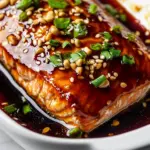
Honey Soy Salmon
Oven-baked salmon with a honey-soy glaze and cashew crust, served with roasted broccoli.
Servings: 5 servings
Ingredients
Ingredients
- 5 4-6 oz. eachsalmon filletsskin removed
- 4 cupsbroccoli florets
- 2 tablespoonsolive oil
- 1/4 teaspoonMcCormick® salt
- 1/8 teaspoonMcCormick® pepper
- 1/2 cuprawUNSALTED cashews finely chopped*
- 1 tablespoonbutter
- 1/4 cuplow sodium soy sauce
- 3 tablespoonshoney plus more for brushing
- 2 tablespoonsAsian sweet chili saucelike Mae Ploy
- 1 tablespoonsrice vinegar
- 1 tablespoonquality hoisin saucelike Lee Kum Kee or Kikkoman
- 1/2-1 teaspoonAsian hot chili saucelike Mae Ploy
- 1/2 teaspoonMcCormick Garlic Powder
- 1/4 teaspoonMcCormick® Ground Ginger
- 1/4 teaspoonMcCormick® onion powder
Instructions
Instructions
- Preheat oven to 400°F. Line a baking sheet with foil and spray the foil with nonstick cooking spray.
- In a medium bowl, whisk together the Honey Soy Sauce ingredients: 1/4 cup low sodium soy sauce, 3 tablespoons honey, 2 tablespoons Asian sweet chili sauce, 1 tablespoon rice vinegar, 1 tablespoon hoisin sauce, 1/2–1 teaspoon Asian hot chili sauce, 1/2 teaspoon McCormick® Garlic Powder, 1/4 teaspoon McCormick® Ground Ginger and 1/4 teaspoon McCormick® onion powder.
- Remove 1/4 cup of the mixture and place it in a shallow dish or a resealable plastic bag. Add the 5 salmon fillets (4–6 oz. each) to that reserved 1/4 cup, turning to coat. Marinate 30–60 minutes at room temperature. (Do not reuse this marinade for cooking or glazing after it has contacted raw fish; discard after removing the salmon.)
- While the salmon marinates, place the broccoli on the prepared baking sheet. Toss the broccoli with 2 tablespoons olive oil, 1/2 tablespoon of the remaining Honey Soy Sauce (from the bowl), 1/4 teaspoon McCormick® salt and 1/8 teaspoon McCormick® pepper. Spread the broccoli into a single layer in a row on the left side of the pan.
- Remove the salmon from the reserved marinade and pat each fillet dry with paper towels.
- Brush the top of each salmon fillet with approximately 1 tablespoon honey. Press the honey-coated side of each fillet into the 1/2 cup finely chopped raw unsalted cashews so the cashews adhere. Turn each fillet over and press additional cashews into any bare spots as needed.
- Place the cashew-coated salmon fillets on the baking sheet next to the broccoli in a single layer (cashew side up).
- Bake at 400°F for about 12–15 minutes, or until the salmon is cooked through and flakes easily with a fork. Cooking time will vary with fillet thickness.
- When the salmon has only a few minutes left to bake, make the glaze: Pour the remaining sauce (the sauce left in the bowl after reserving 1/4 cup for the salmon and using 1/2 tablespoon for the broccoli) into a small saucepan. Bring it to a simmer over medium heat and cook until it is thick enough to coat the back of a spoon.
- Remove the glaze from heat and stir in 1 tablespoon butter until melted and incorporated. If you want a thicker glaze, simmer longer before adding the butter; if the glaze becomes too thick, stir in a little water to reach the desired consistency.
- Serve the salmon with the Honey Soy Glaze spooned over or served on the side. (If you prefer the cashews to stay crunchy, serve the glaze on the side.)
Equipment
- Baking Sheet
- Foil
- Mixing Bowl
- Small Saucepan
- shallow dish or resealable plastic bag
- Paper Towels
Notes
Notes
*I like to roast my raw cashews before chopping for even more flavor. Roast at 400 degrees F for approximately 7 minutes, stirring occasionally. You can chop your cashews in your food processor for super quick chopping.
**Cooking time will vary depending on the size and thickness of your salmon fillets. Roast until the salmon is cooked through and flakes easily, 4 to 6 minutes for every 1/2-inch thickness of salmon. An instant-read thermometer into the thickest part of the fillet should read 120°F to 130°F for medium-rare or 135°F to 145°F for more well-done.
*I like to roast my raw cashews before chopping for even more flavor. Roast at 400 degrees F for approximately 7 minutes, stirring occasionally. You can chop your cashews in your food processor for super quick chopping.
**Cooking time will vary depending on the size and thickness of your salmon fillets. Roast until the salmon is cooked through and flakes easily, 4 to 6 minutes for every 1/2-inch thickness of salmon. An instant-read thermometer into the thickest part of the fillet should read 120°F to 130°F for medium-rare or 135°F to 145°F for more well-done.