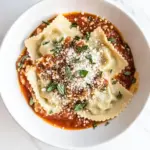
Homemade Ravioli Recipe
Handmade semolina ravioli filled with a seasoned beef and ricotta mixture for a classic, comforting pasta.
Servings: 48 ravioli
Ingredients
- 4 cups fine ground durum semolina flour
- 1 teaspoon sea salt (for dough)
- 4 large eggs (for dough)
- 1/4 cup extra virgin olive oil
- 1/2 cup cold water
- 4 eggs eggs (for filling)
- 1 pound ground beef
- 2 1/3 cups whole milk ricotta cheese
- 3/4 cup grated Pecorino Romano cheese
- 2 teaspoons sea salt (for filling)
- 1/4 teaspoon black pepper
- 1 teaspoon dried oregano
- 1 1/2 teaspoons garlic granules
Instructions
- Combine the 4 cups fine semolina flour and 1 teaspoon sea salt in a food processor and pulse 3–4 times to mix.
- Whisk together 4 large eggs, 1/4 cup extra virgin olive oil, and 1/2 cup cold water in a small bowl until blended.
- With the processor running on high, slowly pour the egg mixture into the flour mixture until the dough begins to form; add 1–2 tablespoons more water if needed.
- Process until the dough forms a tight ball and cleans the sides of the bowl, then turn it out and knead on a lightly floured surface for 2–3 minutes until soft and smooth.
- Cover the dough and let it rest for 20 minutes at room temperature.
- Meanwhile, make the filling: in a large bowl combine 1 pound ground beef, 2 1/3 cups ricotta, 3/4 cup grated Pecorino Romano, 4 eggs, 2 teaspoons sea salt, 1/4 teaspoon black pepper, 1 teaspoon dried oregano, and 1 1/2 teaspoons garlic granules; mix thoroughly and keep chilled until ready to fill.
- Divide the rested dough into 8 equal balls, flatten each slightly, and dust both sides with flour.
- Roll each dough ball through a pasta roller starting on the widest setting and finish on the second-to-last (thin) setting; lightly flour sheets and hang them on a drying rack as you go.
- Lightly flour a ravioli mold and lay one rolled sheet over it.
- Spoon 1 to 1 1/2 tablespoons of filling into each ravioli cavity (do not overfill) to fill 12 slots per sheet.
- Lay a second rolled sheet over the filled mold, dust with flour, then roll a rolling pin over the mold to seal and cut the ravioli.
- Remove excess dough, transfer the ravioli to a parchment-lined sheet tray, and repeat with the remaining sheets to make about 48 ravioli; re-roll scraps for other pasta if desired.
- Either freeze the ravioli on the sheet tray until firm for storage, or cook immediately: bring a large pot of salted water to a boil, add ravioli, and once they float cook 5–6 more minutes until the meat filling is cooked through.
- Serve with your preferred sauce such as pomodoro or meat-based spaghetti sauce.
Equipment
- Food Processor
- Mixing Bowls
- pasta roller
- ravioli mold
- Rolling Pin
- pasta drying rack
- Large Pot
- sheet tray lined with parchment
Notes
- You can freeze assembled ravioli on a sheet tray until firm before transferring to bags.
- Par-boil then ice-bath chilled ravioli before freezing to help them keep shape.
- Coat uncooked ravioli with 1–2 tablespoons olive oil to prevent sticking when storing.
- These keep frozen uncooked for up to 6 months.
- Reheat cooked ravioli by boiling 2–3 minutes or until hot.
- Use finely ground semolina; swap beef for loose Italian sausage if desired.